



الصفحة 78
الصفحة 78
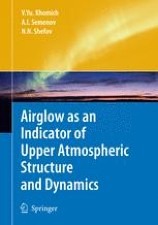
Airglow as an Indicator of Upper Atmospheric Structure and Dynamics
The book summarizes international progress over the last few decades in upper atmosphere airglow research. Measurement methods, theoretical concepts and empirical models of a wide spectrum of upper atmospheric emissions and their variability are considered. The book contains a detailed bibliography of studies related to the upper atmosphere airglow.
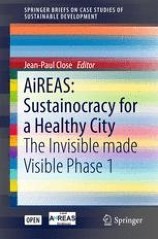
AiREAS : Sustainocracy for a Healthy City : The Invisible made Visible ; Phase 1
Describes the coming about and first results of the AiREAS "healthy city" cooperative in the city of Eindhoven and Province of North Brabant in the Netherlands. AiREAS is an initiative focused on the multidisciplinary co-creation of healthy cities using the core human value of human health and air quality as guiding principle for profound regional innovation. The unique group process that followed uses the complexity of the city of Eindhoven as living lab. It is an anthropology based initiative that invites directly to the same table of core innovative responsibility the local government, innovative business partners, scientific insights and reseach, and civilian participation.
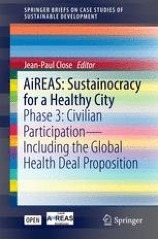
AiREAS : Sustainocracy for a healthy city : Phase 3 : Civilian participation – Including the global health deal proposition
This volume describes phase 3 of the AiREAS multidisciplinary cocreation effort to produce a Healthy City. Phase 1 referred to making visible the invisible from an air quality and human exposure perspective. Phase 2 studies air quality related to health and Phase 3 looks at air quality, health and lifestyle from the perspective of persuasion to innovative change. The three books together describe the coming about and first results of the AiREAS "healthy city" cooperative in the city of Eindhoven and Province of North Brabant in the Netherlands. AiREAS is an initiative focused on the multidisciplinary co-creation of healthy cities using the core human value of human health and air quality as guiding principle for profound regional innovation.
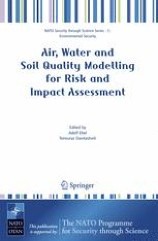
Air, Water and Soil Quality Modelling for Risk and Impact Assessment
This book is the result of the Proceedings of the NATO Advanced Research Workshop on Air, Water and Soil Quality Modelling for Risk and Impact Assessment,The aim of the NATO Advanced Research Workshop on was to further joint environmental compartment modelling and applications of control theory to environmental management. The articles of the proceedings provide an overview of ongoing research in this field regarding assessment of environmental risks and impacts. Besides selected issues of practical application they address questions of forward and inverse modelling, integrated treatment of environmental changes and economic impacts as well as aspects of future development of numerical environmental modelling.
Air quality integrated assessment : A European perspective
This book reports on the results of an extended survey conducted across Europe within the framework of the APPRAISAL FP7 project to determine the extent to which an integrated assessment approach to air quality is being adopted, on the one hand, by regional and local authorities to develop air quality plans and, on the other, by researchers. Following a detailed analysis of the role and structure of the components of an integrated assessment study, the results of the survey are considered from a variety of perspectives.
Air quality in airplane cabins and similar enclosed spaces
The editor of this volume invited a wide range of experts to provide an in-depth treatment of virtually all aspects of aircraft cabin air quality. The topics are covered at a level comprehensible to all who fly as well as being of sufficient depth to be informative to decision makers concerned with purchase, design, operation, and servicing of passenger aircraft. Topics are grouped under: Control of Aircraft Cabin Air Quality; Possible Effects of Low Humidity, Decreased Outside Air Flows; and Effects of Some Aircraft Malfunctions on Cabin Air Quality. The volume concludes with Air Quality Systems for Related Enclosed Spaces, in which chapters cover air quality in buildings, ships, submarines, and spacecraft, which provide novel approaches potentially applicable to aircraft.
Air Pollution Modeling and its Application XVII
This volume contains the papers and posters presented at the 27 NATO/CCMS International Technical Meeting on Air Pollution Modeling and Its Application held in Banff, Canada, 24-29 October 2004. The key topics at this ITM included: Role of Atmospheric Models in Air Pollution Policy and Abatement Strategies; Integrated Regional Modeling; Effects of Climate Change on Air Quality; Aerosols as Atmospheric Contaminants; New Developments; and Model Assessment and Verification. 104 participants from North and South America, Europe, Africa and Asia attended th the 27 ITM.
Air Pollution Modeling and Its Application XIX
The book is aimed at researchers and government policy makers who wish to keep abreast of the most recent developments in air pollution modelling and air quality issues. The book emphasizes the following key topics: 1. Local and urban scale modelling; 2. Regional and intercontinental modelling; 3. Data assimilation and air quality forecast; 4. Model assessment and verification; 5. Aerosols in the atmosphere; 6. Interactions between air quality and climate change; 7. Air quality and human health.

AIDS-Associated Viral Oncogenesis
AIDS-associated viral oncology is a significant healthcare problem. Since the identification of human immunodeficiency virus (HIV)-associated acquired immune disease syndrome (AIDS), the role of viruses in human cancers has become acutely apparent over the past twenty years. The understanding and treatment of AIDS-associated cancers has become a major concern among healthcare organizations. Human cancers that were once rare in the population have now become common within the HIV infected population.

AI sign language translator
People with disabilities are facing a lot of difficulties every day. Whether it is in social life, work or education environment, or in communication. The effect of assistive technologies in enhancing people with disabilities was huge. Assistive technologies refer to the term of products or related systems that are used to help people with disabilities to maintain or improve functioning and thereby promote well-being. These technologies allow people with difficulties to be more productive in life. Assistive technologies could be in many forms such as wheelchairs, communication products or other forms. In the communication products, many efforts have been made to develop systems or devices that assist individuals who have difficulty understanding and producing speech.
AI and IoT for smart city applications
Provides a valuable combination of relevant research works on developing smart city ecosystem from the artificial intelligence (AI) and Internet of things (IoT) perspective. The technical research works presented here are focused on a number of aspects of smart cities: smart mobility, smart living, smart environment, smart citizens, smart government, and smart waste management systems as well as related technologies and concepts. This edited book offers critical insight to the key underlying research themes within smart cities, highlighting the limitations of current developments and potential future directions.
Agroforestry in Europe : Current Status and Future Prospects
Brings together some of the most important current research in European agroforestry, and evaluates the current scope and future potential of agroforestry across the EU.While the majority of Europe’s agroforestry practices are currently focused in the Mediterranean, this volume draws together examples from a wide range of countries – including Greece, Spain, the UK, Hungary, Germany, Italy, the Netherlands, Switzerland, France and Slovenia. The book also covers a range of agroforestry types, including silvopastoralism – Europe’s predominant form of agroforestry – as well as alley cropping, forest farming, silvoarable systems and the use of trees for shelter. Through these examples the book also discusses the potential roles for these traditional land management systems in addressing both environmental issues such as water quality, biodiversity conservation, desertification, ecosystem services and socioeconomic issues such as rural population stabilization.
Agroecology now! : Transformations towards more just and sustainable food systems
Develops a framework for advancing agroecology transformations focusing on power, politics and governance. It explores the potential of agroecology as a sustainable and socially just alternative to today’s dominant food regime. Agroecology is an ecological approach to farming that addresses climate change and biodiversity loss while contributing to the Sustainable Development Goals
Agroecological transitions : From theory to practice in local participatory design
There is wide agreement on the need to change the prevalent agricultural models, given their negative impacts and their incompatibility with current societal issues. Agroecological transition has been promoted as a potential solution to the ecological, social and economic problems generated by these models. It however involves a systemic, multi-scale and transdisciplinary process. Due to this complexity, the overall picture of what farms and food systems “actually are” and “might be” may not be apparent at the individual level. Yet individuals’ knowledge and values provide complementary insights on how to proceed in deepening ecological modernisation. Expertise can also provide landmarks to be considered in that process. Because local stakeholders’ experience and skills are key resources in the adaptation and adoption of agroecological transition, new conceptual and methodological frameworks and tools have to be developed to support them in the design process of such a complex transition. This book presents feedback from the ‘Territorial Agroecological Transition in Action’- TATA-BOX research project, which was devoted to these specific issues.
Agriculture for Economic Development in Africa : Evidence from Ethiopia
This book explores the role of agriculture in long-term economic growth. With a particular focus on Ethiopia, the role of the state in igniting agricultural growth and in sustaining economic growth is highlighted as essential for low-income countries. Taking ideas from both economic history and development economics, the ability of Ethiopia and the rest of Africa to sustain recent rapid growth into something that can tackle the development agenda is discussed, alongside policy suggestions.
Agriculture and Climate Beyond 2015 : A New Perspective on Future Land Use Patterns
Interactions between agriculture, climate and patterns of land use are complex. Major changes in agriculture, and land use patterns are foreseen in the next couple of decades in response to shifts in climate, greenhouse gas management initiatives, population growth and other forces. The book explores key interactions between changes in agriculture, patterns of land use and efforts to reduce greenhouse emissions from agriculture. The volume is based on inter-disciplinary science and policy interactions, exploring the way land use may aid in addressing or be affected by the onset of climate change and alterations in food demand. Future forces shaping land use decisions are examined, and its sensitivity to climate change is highlighted. Patterns of land use and the agricultural role in climate change mitigation are explored. Also, policy and social responses to the new perspectives on future land use patterns are identified. The perspective of the book is beyond the year 2015.
Agricultural standards : The shape of the global food and fiber system
This original and informative collection of studies of agri-food standards in the modern economy addresses these and helps to define the scope of the emerging study of the politics of standards setting.

Agricultural Medicine : A Practical Guide
Covering both injury prevention and environmental h- ards, this innovative work is a practical guide for the family physician wo- ing in a rural area. The contents demonstrate the vitality of agromedicine and the vision and insight of the authors. The chapters on farm chemicals provide thorough information about the many types of chemicals commonly used in the farm environment, how they are applied, and the principles of diagnosis and management for family physicians treating patients for toxic chemical exposure.
Agricultural Implications of the Fukushima Nuclear Accident : The First Three Years
Consists of various topics, including radioactivity inspection of food products; decontamination trials for rice and livestock production; the state of contamination in wild animals and birds, trees, mushrooms, and timber; the dynamics of radioactivity distribution in mountain and paddy fields; damage incurred by the forestry and fishery industries; and the change in consumers’ minds. The last chapter introduces a real-time radioisotope imaging system, the forefront technique to visualize actual movement of cesium in soil and in plants. This is the only book to provide systematic data about the actual change of radioactivity, and thus is of great value for all researchers who wish to understand the effect of radioactive fallout on agriculture.
Agricultural Implications of the Fukushima Nuclear Accident (III)
Reports on studies undertaken at contaminated sites such as farmland, forests, and marine and freshwater environments, with a particular focus on livestock, wild plants and mushrooms, crops, and marine products in those environments. It also provides additional data collected in the subsequent years to show how the radioactivity levels in agricultural products and their growing environments have changed with time and the route by which radioactive materials entered agricultural products as well as their movement between different components (e.g., soil, water, and trees) within an environmental system (e.g., forests). The book covers various topics, including radioactivity testing of food products; decontamination trials for rice and livestock production; the state of contamination in, trees, mushrooms, and timber; the dynamics of radioactivity distribution in paddy fields and upland forests; damage incurred by the forestry and fishery industries; and the change in consumers’ attitudes. Chapter 19 introduces a real-time radioisotope imaging system, a pioneering technique to visualize the movement of cesium in soil and in plants.
