



الصفحة 78
الصفحة 78
Linear Models and Generalizations : Least Squares and Alternatives
Gives an up-to-date account of the theory and applications of linear models. The book can be used as a text for courses in statistics at the graduate level and as an accompanying text for courses in other areas. Some of the highlights in this book are as follows. A relatively extensive chapter on matrix theory (Appendix A) provides the necessary tools for proving theorems discussed in the text and offers a selection of classical and modern algebraic results that are useful in research work in econometrics, engineering, and optimization theory. The matrix theory of the last ten years has produced a series of fundamental results aboutthe de?niteness ofmatrices,especially forthe di?erences ofmatrices, which enable superiority comparisons of two biased estimates to be made for the ?rst time. We have attempted to provide a uni?ed theory of inference from linear models with minimal assumptions
Linear Functional Analysis
This introduction to the ideas and methods of linear functional analysis shows how familiar and useful concepts from finite-dimensional linear algebra can be extended or generalized to infinite-dimensional spaces. Aimed at advanced undergraduates in mathematics and physics, the book assumes a standard background of linear algebra, real analysis (including the theory of metric spaces), and Lebesgue integration, although an introductory chapter summarizes the requisite material. The initial chapters develop the theory of infinite-dimensional normed spaces, in particular Hilbert spaces, after which the emphasis shifts to studying operators between such spaces. Functional analysis has applications to a vast range of areas of mathematics; the final chapters discuss the particularly important areas of integral and differential equations.
Linear Estimation and Detection in Krylov Subspaces
Focuses on the foundations of linear estimation theory which is essential for effective signal processing. In its first part, it gives a comprehensive overview of several key methods like reduced-rank signal processing and Krylov subspace methods of numerical mathematics. Based on the derivation of the multistage Wiener filter in its most general form, the relationship between statistical signal processing and numerical mathematics is presented. In the second part, the theory is applied to iterative multiuser detection receivers (Turbo equalization) which are typically desired in wireless communication systems.
Linear Differential Equations and Group Theory from Riemann to Poincaré
A study of how a particular vision of the unity of mathematics, often called geometric function theory, was created in the 19th century. The central focus is on the convergence of three mathematical topics: the hypergeometric and related linear differential equations, group theory, and on-Euclidean geometry. The text for this second edition has been greatly expanded and revised, and the existing appendices enriched with historical accounts of the Riemann–Hilbert problem, the uniformization theorem, Picard–Vessiot theory, and the hypergeometric equation in higher dimensions. The exercises have been retained, making it possible to use the book as a companion to mathematics courses at the graduate level.
Linear and Generalized Linear Mixed Models and Their Applications
This book covers two major classes of mixed effects models, linear mixed models and generalized linear mixed models, and it presents an up-to-date account of theory and methods in analysis of these models as well as their applications in various fields. The book offers a systematic approach to inference about non-Gaussian linear mixed models. Furthermore, it has included recently developed methods, such as mixed model diagnostics, mixed model selection, and jackknife method in the context of mixed models.
Linear and Generalized Linear Mixed Models and Their Applications
This book covers two major classes of mixed effects models—linear mixed models and generalized linear mixed models—and it presents an up-to-date account of theory and methods in analysis of these models as well as their applications in various fields. It offers a systematic approach to inference about non-Gaussian linear mixed models. Furthermore, it discusses the latest developments and methods in the field, incorporating relevant updates since publication of the first edition. These include advances in high-dimensional linear mixed models in genome-wide association studies (GWAS), advances in inference about generalized linear mixed models with crossed random effects, new methods in mixed model prediction, mixed model selection, and mixed model diagnostics.
Linear Algebraic Monoids
The theory of linear algebraic monoids culminates in a coherent blend of algebraic groups, convex geometry, and semigroup theory. The book discusses all the key topics in detail, including classification, orbit structure, representations, universal constructions, and abstract analogues. An explicit cell decomposition is constructed for the wonderful compactification, as is a universal deformation for any semisimple group. A final chapter summarizes important connections with other areas of algebra and geometry. The book will serve as a solid basis for further research. Open problems are discussed as they arise and many useful exercises are included.
Linear Algebra Thoroughly Explained
Linear Algebra Thoroughly Explained provides a comprehensive introduction to the subject suitable for adoption as a self-contained text for courses at undergraduate and postgraduate level. The clear and comprehensive presentation of the basic theory is illustrated throughout with an abundance of worked examples. The book is written for teachers and students of linear algebra at all levels and across mathematics and the applied sciences, particularly physics and engineering.

Limits to the European Union’s Normative Power in a Post-conflict Society : EULEX and Peacebuilding in Kosovo
Investigates the EU’s peacebuilding activities in that country, in the light of the normative power theory in the post-conflict setting and peacebuilding theory. Ten years after the massive engagement of the EU in the country torn by war, the authors critically assess the effects of the EU projecting its normative power – the enforcement of its standards, ‘good’ or ‘bad’ – through the EULEX mission, taking into consideration also the local aspects, so far neglected in this field of research. Inspecting thoroughly the EULEX activities in the police, customs and judiciary sector.This open access book offers a comprehensive assessment of the EULEX mission, based on two Horizon2020 research projects: IECEU - Improving the Effectiveness of Capabilities in EU Conflict Prevention, and KOSNORTH – The European Union and its Normative Power in a Post-conflict Society: A Case Study of Northern Kosovo (Marie Sklodowska-Curie Individual Fellowship).
Limit Cycles of Differential Equations
Contains the lecture series originally delivered at the "Advanced Course on Limit Cycles of Differential Equations" in the Centre de Recerca Matemàtica Barcelona in 2006.The topics covered are the center-focus problem for polynomial vector fields, and the application of abelian integrals to limit cycle bifurcations. Both topics are related to Hilbert's sixteenth problem. In particular, the book will be of interest to students and researchers working in the qualitative theory of dynamical systems.
Light Scattering Reviews 3 : Light Scattering and Reflection
Ddevoted to modern knowledge and milestones in both experimental and theoretical techniques related to light scattering and radiative transport problems. It will consist of 3 parts comprising 11 contributions written by world leading experts in their respective fields. The general focus of the book will be on remote sensing of geophysical media. The first part will be devoted exclusively to studies of single light scattering by particles of different shapes and chemical compositions. The first chapter will review in situ measurements of cloud optical characteristics like cloud extinction and phase function, with the emphasis on ice clouds. Chapter 2 will cover opitcally soft particles common in marine environments and bio-suspensions while Chapter 3 will describe numerical techniques applicable not only to isotropic but also to chiral and anisotropic mdia. The final chapter in this part will deal with spatial symmetries in light scattering problems.
Light Scattering Reviews 2
Part of the ""Light Scattering Reviews"" series that is devoted to modern knowledge and milestones in both experimental and theoretical techniques related to light scattering and radiative transport problems. This work gives a picture of developments in the area of remote sensing and radiative transfer.

Light scattering by systems of particles : Null-field method with discrete sources : Theory and programs
Light Scattering by Systems of Particles comprehensively develops the theory of the null-field method, while covering almost all aspects and current applications. The "Null-field Method with Discrete Sources" is an extension of the Null-field Method (also called T-Matrix Method) to compute light scattering by arbitrarily shaped dielectric particles. This book incorporates FORTRAN programs and exemplary simulation results that demonstrate all aspects of the latest developments of the method. Worked examples of the application of the FORTRAN programs show readers how to adapt or modify the programs for their specific application.
Light Scattering by Optically Soft Particles: Theory and Applications
Deals with a particular class of approximation methods in the context of light scattering by small particles. This class of approximations has been termed as eikonal or soft particle approximations. The eikonal approximation was studied extensively in the potential scattering and then adopted in optical scattering problems. In this context, the eikonal and other soft particle approximations pertain to scatterers whose relative refractive index compared to surrounding medium is close to unity. The study of these approximations is very important because soft particles occur abundantly in nature. For example, the particles that occur in ocean optics, biomedical optics, atmospheric optics and in many industrial applications can be classified as soft particles. This book was written in recognition of the long-standing and current interest in the field of scattering approximations for soft particles. It should prove to be a useful addition for researchers in the field of light scattering.
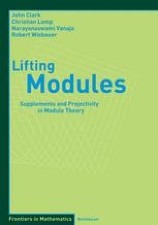
Lifting Modules : Supplements and Projectivity in Module Theory
Extending modules are generalizations of injective modules and, dually, lifting modules generalize projective supplemented modules. There is a certain asymmetry in this duality. While the theory of extending modules is well documented in monographs and text books, the purpose of our monograph is to provide a thorough study of supplements and projectivity conditions needed to investigate classes of modules related to lifting modules. The text begins with an introduction to small submodules, the radical, variations on projectivity, and hollow dimension. The subsequent chapters consider preradicals and torsion theories (in particular related to small modules), decompositions of modules (including the exchange property and local semi-T-nilpotency), supplements in modules (with specific emphasis on semilocal endomorphism rings), finishing with a long chapter on lifting modules, leading up their use in the theory of perfect rings, Harada rings, and quasi-Frobenius rings.
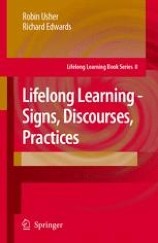
Lifelong Learning - Signs, Discourses, Practices
This text explores the different ways in which the various social practices in which people participate becomes signed as learning, how and why that occurs and with what consequences. It takes seriously the linguistic turn in social theory to draw upon semiotics and poststructuralism through which to explore the significance of lifelong learning as an emerging discourse in education. The text explores the different ways in which learning conveys meaning and is given meaning. Given this, lifelong learning therefore is a way, and a significant way, in which learning is fashioned. The text then explores the notion that, if learning is lifelong and lifewide, what precisely is learning as distinct from other social practices and how those practices are given meaning as learning.

Life System Modeling and Simulation; International Conference on Life System Modeling, and Simulation, LSMS 2007, Shanghai, China, September 14-17, 2007. Proceedings
The International Conference on Life System Modeling and Simulation (LSMS) was formed to bring together international researchers and practitioners in the field of life system modeling and simulation as well as life system-inspired theory and methodology. The arrival of the 21st century has been marked by a resurgence of research interest both in arriving at a systems-level und- standing of biology and in applying such knowledge in complex real-world appli- tions. Consequently, computational methods and intelligence in systems, biology, as well as bio-inspired computational intelligence, have emerged as key drivers for new computational methods. For this reason papers dealing with theory, techniques and real-world applications relating to these two themes were especially solicited.

Life Cycle Investing and Occupational Old-Age Provision in Switzerland
Florian Zainhofer uses the theory of life cycle investing, i.e. how we should optimally choose our savings rate and risky asset share throughout our lives, as a framework to study the implications of a potential BVG individualization. Following an introduction on the Swiss system of old-age provision, the author reviews recent life cycle models of portfolio choice and covers their numerical solution algorithms in depth. He presents an empirical analysis of Swiss workers’ earnings dynamics since these are important determinants of life cycle investment behavior. To further investigate the implications of a flexible contribution rate and risky asset share in the mandatory BVG, the author proposes a model adapted to Swiss conditions and parameterized with the estimated earnings dynamics.
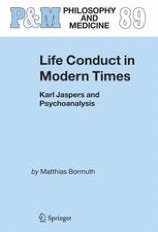
Life Conduct in Modern Times : Karl Jaspers and Psychoanalysis
This award-winning book investigates the critique of psychoanalysis formulated by the psychiatrist and philosopher Karl Jaspers (1883-1969) over a period of five decades. His arguments against Freud and his followers are examined from systematic perspectives. The study traces the medico-historical roots of Jasper’s criticism of psychoanalysis and then places it within the framework of scientific theory before devoting itself extensively to medico-ethical aspects of the controversy, which are ultimately treated in terms of a history of mentalities. According to this view, Jasper’s student Hannah Arendt saw to it that the philosopher be made aware of the socio-cultural impact which psychoanalysis was beginning to have in the U.S.A.
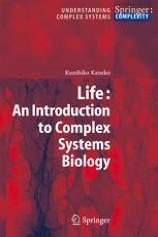
Life : An Introduction to Complex Systems Biology
What is life? Has molecular biology given us a satisfactory answer to this question? And if not, why, and how to carry on from there? This book examines life not from the reductionist point of view, but rather asks the question: what are the universal properties of living systems and how can one construct from there a phenomenological theory of life that leads naturally to complex processes such as reproductive cellular systems, evolution and differentiation? The presentation has been deliberately kept fairly non-technical so as to address a broad spectrum of students and researchers from the natural sciences and informatics.
