



الصفحة 77
الصفحة 77
Approaches to Fundamental Physics : An Assessment of Current Theoretical Ideas
This book presents contributions on particle theory, quantum field theory, general relativity, quantum gravity, string theory and cosmology. These represent the outcome of numerous discussions, taking place among the authors over a period of several years, about the research landscape of present-day fundamental theoretical physics. Indeed, the resultant book documents their attempt, out of their respective and highly specialized scientific positions, to find a way of communicating about methods, achievements and promises of the different approaches which shape the development of this field. It is therefore also an attempt to elucidate the connections between these approaches, and present them not as disjoint ventures but rather as facets of a common quest for understanding. Readers interested in fundamental approaches of theoretical physics will find this book highly stimulating and enlightening.
Applying reflective equilibrium : Towards the justification of a precautionary principle
This book provides the first explicit case study for an application of the method of reflective equilibrium (RE), using it to develop and defend a precautionary principle. It thereby makes an important and original contribution to questions of philosophical method and methodology. The book shows step-by-step how RE is applied, and develops a methodological framework which will be useful for everyone who wishes to use reflective equilibrium. With respect to precautionary principles, the book demonstrates how a rights-based precautionary principle can be constructed and defended.

Applied therapeutics : The clinical use of drugs
"Continually revised and updated for 50 years, Applied Therapeutics: The Clinical Use of Drugs is the gold standard for patient centered drug therapeutics. With its acclaimed case-based approach, it promotes mastery and application of the fundamentals of drug therapeutics. Featuring contributions from more than 200 experienced clinicians, every chapter reflects our ever-changing knowledge of drugs and the application of this knowledge to the individualized therapy of patients. As students progress from the General Principles section to chapters on specific diseases, they will benefit from practical problem-solving techniques that help devise effective evidence-based drug treatment plans"
Applied Stratigraphy
This book aims to incorporate major aspects and essential elements underpinning the modern applications and perspectives of stratigraphy. It focuses on traditional and innovative techniques and how these can be utilized in reconstructing the geological history of sedimentary basins and in solving manifold geological problems and phenomena. Each chapter summarizes contributions by leading researchers in the field. It is hoped that this book will provide the reader with key insights into all these aspects and applications.

Applied Stochastic Control of Jump Diffusions
The main purpose of the book is to give a rigorous, yet mostly nontechnical, introduction to the most important and useful solution methods of various types of stochastic control problems for jump diffusionsThe types of control problems covered include classical stochastic control, optimal stopping, impulse control and singular control. Both the dynamic programming method and the maximum principle method are discussed, as well as the relation between them. Corresponding verification theorems involving the Hamilton-Jacobi Bellman equation and/or (quasi-)variational inequalities are formulated. There are also chapters on the viscosity solution formulation and numerical methods.The text emphasises applications, mostly to finance. All the main results are illustrated by examples and exercises appear at the end of each chapter with complete solutions. This will help the reader understand the theory and see how to apply it.The book assumes some basic knowledge of stochastic analysis, measure theory and partial differential equations.
Applied scanning probe methods IV : Industrial applications
The sc- ning probes emerged as a new - strument for imaging with a p- cision suf?cient to delineate single atoms. At first there were two – the Scanning Tunneling Microscope, or STM, and the Atomic Force Mic- scope, or AFM. The STM relies on electrons tunneling between tip and sample whereas the AFM depends on the force acting on the tip when it was placed near the sample. These were quickly followed by the M- netic Force Microscope, MFM, and the Electrostatic Force Microscope, EFM. The MFM will image a single magnetic bit with features as small as 10nm. With the EFM one can monitor the charge of a single electron.
Applied scanning probe methods III : Characterization
The sc- ning probes emerged as a new - strument for imaging with a p- cision suf?cient to delineate single atoms. At first there were two – the Scanning Tunneling Microscope, or STM, and the Atomic Force Mic- scope, or AFM. The STM relies on electrons tunneling between tip and sample whereas the AFM depends on the force acting on the tip when it was placed near the sample. These were quickly followed by the M- netic Force Microscope, MFM, and the Electrostatic Force Microscope, EFM. The MFM will image a single magnetic bit with features as small as 10nm. With the EFM one can monitor the charge of a single electron.
Applied scanning probe methods II : Scanning probe microscopy techniques
The sc- ning probes emerged as a new - strument for imaging with a p- cision suf?cient to delineate single atoms. At first there were two – the Scanning Tunneling Microscope, or STM, and the Atomic Force Mic- scope, or AFM. The STM relies on electrons tunneling between tip and sample whereas the AFM depends on the force acting on the tip when it was placed near the sample. These were quickly followed by the M- netic Force Microscope, MFM, and the Electrostatic Force Microscope, EFM. The MFM will image a single magnetic bit with features as small as 10nm. With the EFM one can monitor the charge of a single electron.
Applied Remote Sensing for Urban Planning, Governance and Sustainability
Despite the promising and exciting possibilities presented by new and fast-developing remote sensing technologies applied to urban areas, there is still a gap perceived between the generally academic and research-focused spectrum of results offered by the “urban remote sensing” community and the application of these data and products by the local governmental bodies of urban cities and regions. While there is no end of interesting science questions that we can ask about cities, sometimes these questions don't match well with what the operational problems and concerns of a given city are. The authors present data from six urban regions from all over the world. They explain what the important questions are, and how one can use data and scientific skills to help answer them.
Applied Rasch Measurement : A Book of Exemplars : Papers in Honour of John P. Keeves
While the primary purpose of the book is a celebration of John’s contributions to the field of measurement, a second and related purpose is to provide a useful resource. We believe that the combination of the developmental history and theory of the method, the examples of its use in practice, some possible future directions, and software and data files will make this book a valuable resource for teachers and scholars of the Rasch method. This book is a tribute to Professor John P Keeves for the advocacy of the Rasch model in Australia.
Applied Probability and Statistics
This text is designed for a one-semester course on Probability and Statistics. The exposition unfolds systematically from an introductory chapter to such topics as random variables and vectors, stochastic processes, estimation, testing and regression. The topics are well chosen and the presentation is enriched by many examples from real life. Following every chapter, the reader will find many original, solved and unsolved problems and hundreds of multiple choice questions, enabling those unfamiliar with the topics to master them. Additionally appealing are the interesting historical notes on the mathematicians mentioned throughout and a useful bibliography. A distinguishing character of the book is the thorough and succinct handling of the various topics.
Applied Physics of Carbon Nanotubes : Fundamentals of Theory, Optics and Transport Devices
The book describes the state-of-the-art in fundamental, applied and device physics of nanotubes, including fabrication, manipulation and characterization for device applications; optics of nanotubes; transport and electromechanical devices and fundamentals of theory for applications. This information is critical to the field of nanoscience since nanotubes have the potential to become a very significant electronic material for decades to come. The book will benefit all all readers interested in the application of nanotubes, either in their theoretical foundations or in newly developed characterization tools that may enable practical device fabrication.

Applied Mathematics for Database Professionals
The math that you'll learn in this book will put you above the level of understanding of most database professionals today. You'll better understand the technology and be able to apply it more effectively. You'll avoid data anomalies like redundancy and inconsistency. Understanding whats in this book will take your mastery of relational technology to heights you may not have thought possible.
Applied Deep Learning with TensorFlow 2 : Learn to Implement Advanced Deep Learning Techniques with Python
Focuses on the fundamental concepts and at the same time on practical aspects of implementing neural networks and deep learning for your research projects. This book is designed so that you can focus on the parts you are interested in. You will explore topics as regularization, optimizers, optimization, metric analysis, and hyper-parameter tuning. In addition, you will learn the fundamentals ideas behind autoencoders and generative adversarial networks. All the code presented in the book will be available in the form of Jupyter notebooks which would allow you to try out all examples and extend them in interesting ways. A companion online book is available with the complete code for all examples discussed in the book and additional material more related to TensorFlow and Keras. All the code will be available in Jupyter notebook format and can be opened directly in Google Colab (no need to install anything locally) or downloaded on your own machine and tested locally. You will: Understand the fundamental concepts of how neural networks work / Learn the fundamental ideas behind autoencoders and generative adversarial networks / Be able to try all the examples with complete code examples that you can expand for your own projects / Have available a complete online companion book with examples and tutorials.
Applied Bioinformatics : An Introduction
In this book, anyone who can operate a PC, standard software and the Internet will learn to understand the biological basis of bioinformatics of the existence as well as the source and availability of bioinformatics software how to apply these tools and interpret results with confidence.This is aided by introductory chapters to important aspects of bioinformatics, detailed bioinformatics exercises, including solutions and a glossary of definitions and terminology relating to bioinformatics.
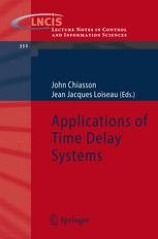
Applications of Time Delay Systems
This book provides an update of the latest research in control of time delay systems and applications by world leading experts. It will appeal to engineers, researchers and students in Control.

Applications of Gene-Based Technologies for Improving Animal Production and Health in Developing Countries
This book will help in bridging the wide gap between developed and developing countries, in the development and use of gene-based technologies, and to elucidate the current and future roles of such technologies in the developing world. It is a good reference source for researchers, students and policy-makers alike.
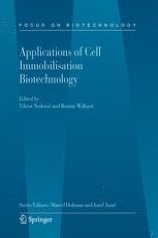
Applications of cell immobilisation biotechnology
Cell Immobilisation Biotechnology" is divided into the two book volumes, FOBI 8A and FOBI 8B. The FOBI 8A volume, Fundamentals of Cell Immobilisation Biotechnology, is dedicated to fundamental aspects of cell immobilisation while the present volume, FOBI 8B, Applications of Cell Immobilisation Biotechnology, deals with diverse applications of this technology.
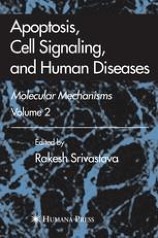
Apoptosis, cell signaling, and human diseases : Molecular mechanisms ; Vol.2
Volume 1 is divided into two sections: "Malignant Transformation and Metastasis" and "Molecular Basis of Disease Therapy." Volume 2 follows a similar structure and is divided into sections entitled "Kinases and Phosphate" and "Molecular Basis of Cell Death." All of the contributors are at the forefront of scientific discovery, and the reviews they present systemically examine the most exciting and innovative aspects of their particular areas of expertise. Researchers will find these volumes of major benefit as they search for novel and more effective treatments for human diseases.
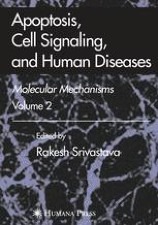
Apoptosis, cell signaling, and human diseases : Molecular mechanisms ; Vol.1
Volume 1 is divided into two sections: “Malignant Transformation and Metastasis” and “Molecular Basis of Disease Therapy.” Volume 2 follows a similar structure and is divided into sections entitled “Kinases and Phosphate” and “Molecular Basis of Cell Death.” All of the contributors are at the forefront of scientific discovery, and the reviews they present systemically examine the most exciting and innovative aspects of their particular areas of expertise. Researchers will find these volumes of major benefit as they search for novel and more effective treatments for human diseases.
