



الصفحة 77
الصفحة 77
Algorithms for Approximation ; Proceedings of the 5th International Conference, Chester, July 2005
Approximation methods are vital in many challenging applications of computational science and engineering. This is a collection of papers from world experts in a broad variety of relevant applications.

Algorithms and architectures for parallel processing ; 7th International Conference, ICA3PP 2007, Hangzhou, China, June 11-14, 2007, Proceedings
The improvements in computation and communication capabilities have enabled the creation of demanding applications in critical domains such as the environment, health, aerospace, and other areas of science and technology. Similarly, new classes of applications are enabled by the availability of heterogeneous large-scale distributed systems which are becoming available nowadays (based on technologies such as grid and peer-to-peer systems).Parallel computing systems exploit a large diversity of computer architectures, from supercomputers, shared-memory or distributed-memory multi processors, to local networks and clusters of p- sonal computers. With the recent emergence of multi core architectures, parallel computing is now set to achieve “mainstream” status. Approaches that have been advocated by parallel computing researchers in the past are now being utilized in a number of software libraries and hardware systems that are available for everyday use. Parallel computing ideas have also come to dominate areas such as multi user gaming (especially in the development of gaming engines based on “cell” arc- tectures).
Algorithmic learning theory ; Vol. 3734 ; 16th international conference, ALT 2005, Singapore, October 8-11, 2005, Proceedings
This volume contains the papers presented at the 16th Annual InternationalConference on Algorithmic Learning Theory (ALT 2005), which was held (Republic of Singapore), 2005. The main objective of theconference is to provide an interdisciplinary forum for the discussion of the the-oretical foundations of machine learning as well as their relevance to practicalapplications. The volume includes 30 technical contributions, which were selected by theprogram committee from 98 submissions.

Algebraic Methodology and Software Technology ; 11th International Conference, AMAST 2006, Kuressaare, Estonia, July 5-8, 2006, Proceedings
This is the proceedings of the 11th edition of the Algebraic Methodology and Software Technology (AMAST) conference series. The rst conference was held in the USA in 1989, and since then AMAST conferences have been held on (or near) fve diferent continents and have been hosted by many of the most prominent people and organizations in the ?eld. The AMAST initiative has always sought to have practical efects by dev- oping the science of software and basing it on a ?rm mathematical foundation. AMAST hasinterpretedsoftwaretechnologybroadly,andhas, for example, held AMAST workshops in areas as diverse as real-time systems and (natural) l- guage processing. Similarly, algebraic methodology is interpreted broadly and includes abstract algebra, category theory, logic, and a range of other ma- ematical subdisciplines.

Algebra and Coalgebra in Computer Science ; 2nd International Conference, CALCO 2007, Bergen, Norway, August 20-24, 2007, Proceedings
Addressing two basic areas of application for algebras and coalgebras - as mathematical objects as well as in the context of their application in computer science - the papers cover topics such as abstract models and logics, specialised models and calculi, algebraic and coalgebraic semantics, and system specification and verification.

Algebra 3 : Homological Algebra and Its Applications
Includes algebra, deals with important topics in homological algebra, including abstract theory of derived functors, sheaf co-homology, and an introduction to etale and l-adic co-homology. It contains four chapters which discuss homology theory in an abelian category together with some important and fundamental applications in geometry, topology, algebraic geometry (including basics in abstract algebraic geometry), and group theory.
Air quality integrated assessment : A European perspective
This book reports on the results of an extended survey conducted across Europe within the framework of the APPRAISAL FP7 project to determine the extent to which an integrated assessment approach to air quality is being adopted, on the one hand, by regional and local authorities to develop air quality plans and, on the other, by researchers. Following a detailed analysis of the role and structure of the components of an integrated assessment study, the results of the survey are considered from a variety of perspectives.
Air quality in airplane cabins and similar enclosed spaces
The editor of this volume invited a wide range of experts to provide an in-depth treatment of virtually all aspects of aircraft cabin air quality. The topics are covered at a level comprehensible to all who fly as well as being of sufficient depth to be informative to decision makers concerned with purchase, design, operation, and servicing of passenger aircraft. Topics are grouped under: Control of Aircraft Cabin Air Quality; Possible Effects of Low Humidity, Decreased Outside Air Flows; and Effects of Some Aircraft Malfunctions on Cabin Air Quality. The volume concludes with Air Quality Systems for Related Enclosed Spaces, in which chapters cover air quality in buildings, ships, submarines, and spacecraft, which provide novel approaches potentially applicable to aircraft.
Air Pollution Modeling and Its Application XIX
The book is aimed at researchers and government policy makers who wish to keep abreast of the most recent developments in air pollution modelling and air quality issues. The book emphasizes the following key topics: 1. Local and urban scale modelling; 2. Regional and intercontinental modelling; 3. Data assimilation and air quality forecast; 4. Model assessment and verification; 5. Aerosols in the atmosphere; 6. Interactions between air quality and climate change; 7. Air quality and human health.

AI journal submitting = تقديم المقالات بالذكاء الصنعي
Aims to develop a comprehensive platform to support academic writers in preparing their research papers in word file format, adhering to the Damascus University template. The platform leverages advanced artificial intelligence techniques to offer services such as grammatical and spelling correction, plagiarism detection, and citation analysis. It also provides comprehensive evaluation tools for peer reviewers, facilitating accurate and reliable feedback.The platform consists of four main components: • User Interface for Creating and Formatting Papers: Simplifies the entry and automatic formatting of texts according to the Damascus University template. / • Intelligent Language Correction System: Utilizes natural language processing techniques to enhance language quality and clarity. / • Citation Analysis and Plagiarism Detection Tool: Identifies improper citations and provides detailed reports on copied sections. / • Peer Review Support System: Offers advanced evaluation tools and AI-driven analytical reports for reviewers.This platform aims to improve the quality and integrity of academic research, streamline the formatting process, and enhance the efficiency of the peer review process, thereby elevating the level of scientific output at Damascus University.
AI in learning : Designing the future
AI (artificial intelligence) is predicted to radically change teaching and learning in both schools and industry causing radical disruption of work. AI can support well-being initiatives and lifelong learning but educational institutions and companies need to take the changing technology into account. Moving towards AI supported by digital tools requires a dramatic shift in the concept of learning, expertise and the businesses built off of it. Based on the latest research on AI and how it is changing learning and education, this book will focus on the enormous opportunities to expand educational settings with AI for learning in and beyond the traditional classroom. This book also introduces ethical challenges related to learning and education, while connecting human learning and machine learning.

AI home decorator
Presents the development of “DesignMate”, an innovative AI home decorator application designed to revolutionize interior design. With three main features powered by artificial intelligence, DesignMate simplifies and enhances the process of home decoration. The first feature leverages an Autoregressive transformer model trained on the extensive 3Dfront dataset to suggest room decor based on room layouts. The second feature employs Generative Adversarial Networks (GANs) to enhance the colors of specific room layouts. The third feature introduces an expert system that tailors decor options to user-entered conditions. DesignMate also introduces an integrated e-commerce platform dedicated to furniture, offering users a wide selection of high-quality items that perfectly complement their preferred room designs.
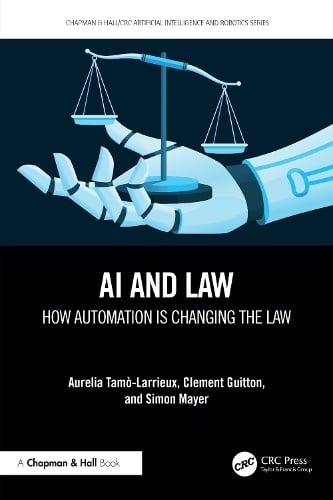
AI and law : How automation is changing the law
Provides insights into how AI is changing legal practice, government processes, and individuals’ access to those processes, encouraging each of us to consider how technological advances are changing the legal system. Particularly, and distinct from current debates on how to regulate AI, this books focuses on how the progressive merger between computational methods and legal rules changes the very structure and application of the law itself.
Agile Development with the ICONIX Process : People, Process, and Pragmatism
Describes how to apply ICONIX Process (a minimal, use case-driven modeling process) in an agile software project. It's full of practical advice for avoiding common agile pitfalls. Further, the book defines a core agile subset so those of you who want to get agile need not spend years learning to do it. Instead, you can simply read this book and apply the core subset of techniques. The book follows a real-life .NET/C# project from inception and UML modeling, to working code through several iterations. You can then go on-line to compare the finished product with the initial set of use cases. The book also introduces several extensions to the core ICONIX Process, including combining test-driven development (TDD) with up-front design to maximize both approaches (with examples using Java and JUnit). And the book incorporates persona analysis to drive the projects goals and reduce requirements churn.
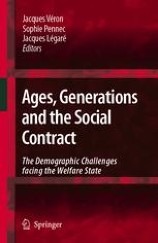
Ages, generations and the social contract : The demographic challenges facing the welfare state
Our societies are ageing. The Family is changing. Labour force behaviour is evolving. How is the organisation of family and collective solidarity adapting in this context of longer life spans, low fertility, and work that is simultaneously scarce and abundant? The welfare states are currently facing three main challenges: ensure satisfactory living conditions for the elderly without increasing the cost burden on the active population, reduce social inequality, and maintain equity between successive generations. In this book, researchers from different countries compare their experiences and offer contrasting views on the future of social protection. They consider the theoretical aspects of the intergenerational debate, relations between generations within the family, the living standards of elderly people, and the question of social time.
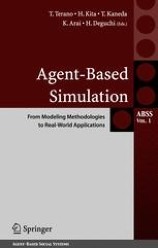
Agent-Based Simulation : From Modeling Methodologies to Real-World Applications; Post Proceedings of the Third International Workshop on Agent-Based Approaches in Economic and Social Complex Systems 2004
Agent-based modeling/simulation is an emerging field that uses bottom-up and experimental analysis in the social sciences. Selected research from that presented at the Third International Workshop on Agent-Based Approaches in Economic and Social Complex Systems 2004, held in May 2004 in Kyoto, Japan, is included in this book. The aim of the workshop was to employ the bottom-up approach to social and economic problems by modeling, simulation, and analysis using a software agent. This research area is an emerging interdisciplinary field among the social sciences and computer science, attracting broad attention because it introduces a simulation-based experimental approach to problems that are becoming increasingly complex in an era of globalization and innovation in information technology. The state-of-the-art research and findings presented in this book will be indispensable tools for anyone involved in this rapidly growing discipline.
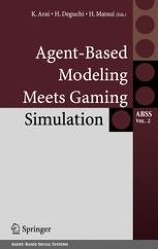
Agent-Based Modeling Meets Gaming Simulation
Provides a good example of the diverse scope and standard of research achieved in simulation and gaming today. The theme of the special session at ISAGA2003 was Agent-Based Modeling Meets Gaming Simulation. Nowadays, agent-based simulation is becoming very popular for modeling and solving complex social phenomena. It is also used to arrive at practical solutions to social problems. At the same time, however, the validity of simulation does not exist in the magni?cence of the model. R. Axelrod stresses the simplicity of the agent-based simulation model through the “Keep it simple, stupid” (KISS) principle: As an ideal, simple modeling is essential.
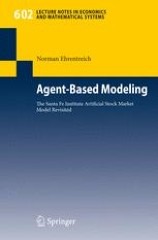
Agent-based modeling : The Santa Fe Institute artificial stock market model revisited
An excellent reference to both the learning, and empirical literature in finance." (Krzysztof Piasecki, Zentralblatt MATH, Vol. 1141, 2008) "Norman Ehrentreich was one of the daring few to take on the model, and he has summarized his work and findings in this excellent book. … It is useful primer for anyone interested in getting started in the area of agent-based finance. … It is essential reading for anyone interested in the dynamics of the SFI market in particular, but I also recommend it for others as a useful resource on agent-based financial market design as well." (Blake LeBaron, Journal of Artificial Societies and Social Simulation, Vol. 12 (2), March, 2009)
Agent-based computational modelling : Applications in demography, social, economic and environmental sciences
The present book describes the methodology to set up agent-based models and to study emerging patterns in complex adaptive systems resulting from multi-agent interaction. It offers the application of agent-based models in demography, social and economic sciences and environmental sciences. It presents and combines different approaches how to implement agent-based computational models and tools in an integrative manner that can be extended to other cases.
Agent-Based Approaches in Economic and Social Complex Systems IV ; Post Proceedings of The AESCS International Workshop 2005
Agent-Based Modeling/Simulation (ABM/ABS) is an emerging field that enables bottom-up and experimental analysis in social sciences such as economics, management, sociology and politics. The chapters of this book are the selected papers from those presented the Third International Workshop on Agent-Based Approaches in Economic and Social Complex Systems held in Tokyo, Japan in 2005. Articles in this book covers methodological issues, computational model/software, combination with gaming simulation, and real-world applications to economic, management/organizational and social issues.
