



الصفحة 76
الصفحة 76

Computational Plasticity
The different chapters of this book present recent progress and future research directions in the field of computational plasticity. A common line of many contributions is that a stronger interaction between the phenomenological and micromechanical modelling of plasticity behaviour is apparent and the use of inverse identification techniques is also more prominent. The development of adaptive strategies for plasticity problems continues to be a challenging goal, while it is interesting to note the permanence of element modelling as a research issue. Industrial forming processes, geomechanics, steel and concrete structures form the core of the applications of the different numerical methods presented in the book.

Computational Multiscale Modeling of Fluids and Solids : Theory and Applications
The book includes the micro-scale, the meso-scale and the macro-scale. The chapters follow this classification. The book will explain in detail many tricks of the trade of some of the most important methods and techniques that are used to simulate materials on the perspective levels of spatial and temporal resolution. Case studies are occasionally included to further illustrate some methods or theoretical considerations. Example applications for all techniques are provided, some of which are from the author’s own contributions to some of the research areas. Methods are explained, if possible, on the basis of the original publications but also references to standard text books established in the various fields are mentioned.

Computational Modelling of Concrete and Concrete Structures
Serves as an important reference for both academics and professionals, stimulating new research directions in the field of computational modelling of concrete and its application to the analysis of concrete structures.

Computational Mind : A Complex Dynamics Perspective
Computational Mind: A Complex Dynamics Perspective is a graduate–level monographic textbook in the field of Computational Intelligence. It presents a modern dynamical theory of the computational mind, combining cognitive psychology, artificial and computational intelligence, and chaos theory with quantum consciousness and computation. The book introduces to human and computational mind, comparing and contrasting main themes of cognitive psychology, artificial and computational intelligence. It presents brain/mind dynamics from the chaos theory perspective, including sections on chaos in human EEG, basics of nonlinear dynamics and chaos, techniques of chaos control, synchronization in chaotic systems and complexity in humanoid robots. This book presents modern theory of quantum computational mind, including sections on Dirac–Feynman quantum dynamics, quantum consciousness, and quantum computation using Josephson junctions. The book is designed as a one–semester course for computer scientists, engineers, physicists and applied mathematicians, both in industry and academia. It includes a strong bibliography on the subject and detailed index.

Computational Methods in Transport : Verification and Validation
The focus of this book deals with a cross cutting issue affecting all particle transport algorithms and applications; verification and validation (V&V). In other words, are the equations being solved correctly and are the correct equations being solved? Verification and validation assures a scientist, engineer or mathematician that a simulation code is a mirror of reality and not just an expensive computer game. In this book, we will learn what the astrophysicist, atmospheric scientist, mathematician or nuclear engineer do to assess the accuracy of their code. What convergence studies, what error analysis, what problems do each field use to benchmark and ascertain the accuracy of their transport simulations.

Computational Methods in Financial Engineering : Essays in Honour of Manfred Gilli
The focus of this book is the development of computational methods and analytical models in financial engineering that rely on computation. The book contains eighteen chapters written by leading researchers in the area on portfolio optimization and option pricing; estimation and classification; banking; risk and macroeconomic modelling. It explores and brings together current research tools and will be of interest to researchers, analysts and practitioners in policy and investment decisions in economics and finance. "This book collects frontier work by researchers in computational economics in a tribute to Manfred Gilli, a leading member of this community. Contributions cover many of the topics researched by Gilli during his career: portfolio optimization and option pricing, estimation and classification, as well as banking, risk and macroeconomic modeling. The editors have put together a remarkable panorama of the rapidly growing and diversifying field of computational economics and finance

Computational methods for protein structure prediction and modeling ; Vol.1 : Basic Characterization
Volume one of this two volume sequence focuses on the basic characterization of known protein structures as well as structure prediction from protein sequence information. The 11 chapters provide an overview of the field, covering key topics in modeling, force fields, classification, computational methods, and struture prediction.

Computational methods for nanoscale applications : Particles, plasmons and waves
Computational Methods for Nanoscale Applications: Particles, Plasmons and Waves presents new perspectives on modern nanoscale problems where fundamental science meets technology and computer modeling. This book describes well-known computational techniques such as finite-difference schemes, finite element analysis and Ewald summation, as well as a new finite-difference calculus of Flexible Local Approximation MEthods (FLAME) that qualitatively improves the numerical accuracy in a variety of problems. Application areas in the book include long-range particle interactions in homogeneous and heterogeneous media, electrostatics of colloidal systems, wave propagation in photonic crystals, photonic band structure, plasmon field enhancement, and metamaterials with backward waves and negative refraction.

Computational Mechanics of Composite Materials : Sensitivity, Randomness and Multiscale Behaviour
The Engineering Materials and Processes series focuses on all forms of materials and the processes used to synthesise and formulate them as they relate to the various engineering disciplines. The series deals with a diverse range of materials: ceramics; metals (ferrous and non-ferrous); semiconductors; composites, polymers biomimetics etc. Each monograph in the series will be written by a specialist and will demonstrate how enhancements in materials and the processes associated with them can improve performance in the field of engineering in which they are used.

Computational Materials Chemistry : Methods and Applications
As a result of the advancements in algorithms and the huge increase in speed of computers over the past decade, electronic structure calculations have evolved into a valuable tool for characterizing surface species and for elucidating the pathways for their formation and reactivity. It is also now possible to calculate, including electric field effects, STM images for surface structures. To date the calculation of such images has been dominated by density functional methods, primarily because the computational cost of - curate wave-function based calculations using either realistic cluster or slab models would be prohibitive. DFT calculations have proven especially valuable for elucidating chemical processes on silicon and other semiconductor surfaces. However, it is also clear that some of the systems to which DFT methods have been applied have large non-dynamical correlation effects, which may not be properly handled by the current generation of Kohn-Sham-based density functionals. For example, our CASSCF calculations on the Si(001)/acetylene system reveal that at some geometries there is extensive 86 configuration mixing. This, in turn, could signal problems for DFT cal- lations on these systems.

Computational Intelligence, Theory and Applications ; International Conference 9th Fuzzy Days in Dortmund, Germany, Sept. 18-20, 2006 Proceedings
This book constitutes the refereed proceedings of the 9th Dortmund Fuzzy Days, held in Dortmund, Germany, 2006. The Fuzzy Days conference has established itself as an international forum for the discussion of new results in the field of Computational Intelligence. All the papers had to undergo a thorough review guaranteeing a solid quality of the programme. The papers are devoted to foundational and practical issues in fuzzy systems, neural networks, evolutionary algorithms, and machine learning and thus cover the whole range of computational intelligence.

Computational Intelligence, Theory and Applications ; International Conference 8th Fuzzy Days in Dortmund, Germany, Sept. 29-Oct. 01, 2004 Proceedings
This book constitutes the refereed proceedings of the 8th Dortmund Fuzzy Days, held in Dortmund, Germany, 2004. The Fuzzy-Days conference has established itself as an international forum for the discussion of new results in the field of Computational Intelligence. All the papers had to undergo a thorough review guaranteeing a solid quality of the programme. The papers are devoted to foundational and practical issues in fuzzy systems, neural networks, evolutionary algorithms, and machine learning and thus cover the whole range of computational intelligence.

Computational intelligence in biomedicine and bioinformatics : Current trends and applications
The purpose of this book is to provide an overview of powerful state-of-the-art methodologies that are currently utilized for biomedicine and/ or bioinformatics-oriented applications, so that researchers working in those fields could learn of new methods to help them tackle their problems.

Computational intelligence for remote sensing
This book is a composition of different points of view regarding the application of Computational Intelligence techniques and methods to Remote Sensing data and applications. The book covers a broad range of topics, starting from the hardware design of hyperspectral sensors, and data handling problems, namely data compression and watermarking issues, as well as autonomous web services.

Computational intelligence based on lattice theory
The emergence of lattice theory within the field of computational intelligence (CI) is partially due to its proven effectiveness in neural computation. Moreover, lattice theory has the potential to unify a number of diverse concepts and aid in the cross-fertilization of both tools and ideas within the numerous subfields of CI. The compilation of this eighteen-chapter book is an initiative towards proliferating established knowledge in the hope to further expand it. This edited book is a balanced synthesis of four parts emphasizing, in turn, neural computation, mathematical morphology, machine learning, and (fuzzy) inference/logic. The articles here demonstrate how lattice theory may suggest viable alternatives in practical clustering, classification, pattern analysis, and regression applications.

Computational intelligence and bioinspired systems ; 8th International Work-conference on artificial neural networks, IWANN 2005, Vilanova i la Geltrú, Barcelona, Spain, June 8-10, 2005, Proceedings
We present in this volume the collection of finally accepted papers of the eighth edition of the “IWANN” conference (“International Work-Conference on Artificial Neural Networks”). This biennial meeting focuses on the foundations, theory, models and applications of systems inspired by nature (neural networks, fuzzy logic and evolutionary systems). For scientists, engineers and professionals working in the area, this is a very good way to get solid and competitive applications. We are facing a real revolution with the emergence of embedded intelligence in many artificial systems (systems covering diverse fields: industry, domotics, leisure, healthcare, … ). So we are convinced that an enormous amount of work must be, and should be, still done. Many pieces of the puzzle must be built and placed into their proper positions, offering us new and solid theories and models (necessary tools) for the application and praxis of these current paradigms. The above-mentioned concepts were the main reason for the subtitle of the IWANN 2005 edition: “Computational Intelligence and Bioinspired Systems.” papers was addressing the following topics: 1. Mathematical and theoretical methods in computational intelligence.

Computational intelligence ; Vol. 174 : Engineering of hybrid systems
Hybrid Intelligent Systems has become an important research topic in computer science and a key application field in science and engineering. This book offers a gentle introduction to the engineering aspects of hybrid intelligent systems, also emphasizing the interrelation with the main intelligent technologies such as genetic algorithms? evolutionary computation, neural networks, fuzzy systems, evolvable hardware, DNA computing, artificial immune systems. A unitary whole of theory and application, the book provides readers with the fundamentals, background information, and practical methods.

Computational intelligence : A compendium
Computational Intelligence paradigms have proven effective on real-world problems in virtually all disciplines including Science, Engineering, Business, healthcare, Management and Avionics. This handbook includes contributions from the leading international experts in their respective fields. There are twenty five chapters grouped in the following ten parts covering theoretical aspects and practical applications.
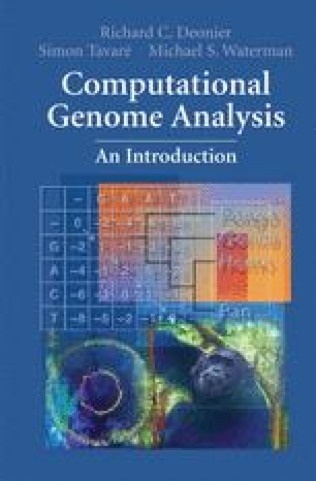
Computational genome analysis : An introduction
Computational Genome Analysis: An Introduction presents the foundations of key problems in computational molecular biology and bioinformatics. It focuses on computational and statistical principles applied to genomes, and introduces the mathematics and statistics that are crucial for understanding these applications. The book is appropriate for a one-semester course for advanced undergraduate or beginning graduate students, and it can also introduce computational biology to computer scientists, mathematicians, or biologists who are extending their interests into this exciting field.

Computational formalism : Art history and machine learning
"Computational Formalism investigates examples of art historical analysis in the fields of computer and information sciences, and frames this research in the context of art historiography. The use of machine learning to analyze art images has ushered in a renewed interest in formalism in art history, but these new techniques create new critical challenges for the field"
