



الصفحة 74
الصفحة 74

Modern Food Microbiology
With 30 revised and updated chapters, the new edition of this classic text brings benefits to professors and students alike who will find new sections on proteobacteria, bottled water, food sanitizers (eletrolyzed oxidating water, ozone, chlorine, activin, chitosans, endolysins, etc.), bicontrol, biosensors quorum sensing, molecular genetic methods of analysis, food safety objectives, noroviruses, and prions. The book builds on the trusted and established sections on food preservation by modified atmosphere, high pressure and pulsed electric field processing, food-borne pathogens, food regulations, fresh-cut produce, new food products, and risk assessment and analysis. In-depth references, appendixes, illustrations, index and thorough updating of taxonomies make this an essential for every food scientist.

Modern Ferrite Technology
odern Ferrite Technology ; 2nd ed. offers the readers an expert overview of the latest ferrite advances as well as their applications in electronic components. This volume develops the interplay among material properties, component specification and device requirements using ferrites. Throughout, emphasis is placed on practical technological concerns as opposed to mathematical and physical aspects of the subject. The book traces the origin of the magnetic effect in ferrites from the level of the simplest particle and then increases the scope to include larger hierarchies. From the desired magnetic properties, the author deduces the physical and chemical material parameters, taking into consideration major chemistry, impurity levels, ceramic microstructures and grain boundary effects. He then discusses the processing conditions and associated conditions required for implementation. In addition to conventional ceramic techniques, he describes non-conventional methods such as co-precipitation, co-spray roasting and single crystal growth.

Modern Control Systems ; 13th ed.
Presents the structure of feedback control theory and to provide a sequence of exciting discoveries. The book demonstrates various real-world, global engineering problems while touching on evolving design strategies like green technology. Some of the themes at-hand include climate change, clean water, sustainability, waste management, emissions reduction, and minimizing energy. Throughout the text, students apply theory to the design and analysis of control systems.

Modern Biogeochemistry : Environmental Risk Assessment
At present, quantitative ecological risk assessment is widely used in different contexts, however very often without an understanding of the natural mechanisms that drive the processes of environmental and human risk. Its application is often accompanied by high uncertainty about risk values. On the other hand, the sustainability of modern technoecosystems is known because of their natural biogeochemical cycling that has been transformed to various extents by anthropogenic studies. Accordingly our understanding of the principal mechanisms that drive the biogeochemical food webs allows us to present a quantitative ecological risk assessment and to propose technological solutions for management of various ERA enterprises. It also enables us to devise a powerful mechanism for ecological insurance, to assign responsibilities and protect rights while managing the control of damage from natural and anthropogenic accidents and catastrophes.

Modern avenues in metal-nucleic acid chemistry
Provides a timely overview of selected relevant developments in a field which previously had a pronounced focus on fundamental chemistry aspects such as coordination principles, structural chemistry, and consequences for biological processes and disease-related medicinal issues. More recently, also as a consequence of the advent of supramolecular chemistry, advancements in nanochemistry, and new bio-analytical methods, novel aspects of this field have emerged. MILS-25 gives a state-of-the-art account on the present state of research in this field, addressing, among others, porous materials, non-covalent interactions, stimuli-responsive bioconjugates, DNA-templated metal arrays and nanoclusters, genotyping, guanine quadruplexes, and riboswitches.
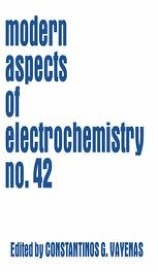
Modern Aspects of Electrochemistry ; Vol. 42
MODERN ASPECTS OF ELECTROCHEMISTRY No. 42 Edited by Constantinos Vayenas University of Patras, Greece Topics in Number 42 include: The electrochemistry and electrocatalysis of Ruthenium in regards to the development of electrodes for Polymer Electrolyte Membrane (PEM) fuel cells Breakthroughs in Solid Oxide Fuel Cell (SOFC) anodes and cathodes leading to improved electrocatalysis Electrocatalysis of the electrochemical reduction of CO2 on numerous metals The interfacial phenomena of electrodeposition and codeposition, and the need for new theoretical analyses of the electrode-electrolyte interface Advantages of scanning tunneling microscopy (STM) in understanding the basics of catalysis, electrocatalysis and electrodeposition The role of electrochemistry in emerging technologies including electrodeposition and electroforming at the micro and nano levels, semiconductor and information storage, including magnetic storage devices.

Modern Aspects of Electrochemistry ; Vol. 41
The 41st volume in this series covers a range of topics that touch on issues of potential interest to those working in electrochemistry-related fields. … Overall, this text contains a diverse collection of topics that would be of varying degrees of interest to the broader electrochemistry community. More likely, the individual chapters would be most valued by specialists working in these areas."As the most recent volume of a successful series established 1954 and carefully continued this book provides a timely collection of four review papers covering widely distributed aspects of electrochemistry in representative contributions.

Modern Aspects of Electrochemistry ; Vol. 39
This volume of Modern Aspects covers a wide spread of topics presented in an authoritative, informative and instructive manner by some internationally renowned specialists. Professors Politzer and Dr. Murray provide a comprehensive description of the various theoretical treatments of solute-solvent interactions, including ion-solvent interactions. Both continuum and discrete molecular models for the solvent molecules are discussed, including Monte Carlo and molecular dynamics simulations. The advantages and drawbacks of the resulting models and computational approaches are discussed and the impressive progress made in predicting the properties of molecular and ionic solutions is surveyed.

Modern Aspects of Electrochemistry ; Vol. 38
Solid State Electrochemistry encompassing modern equilibria concepts, thermodymanics and kinetics of charge carriers in solids.,Electron transfer processes, with special sections devoted to hydration of the proton and its heterogeneous transfer.Electrosorption at electrodes and its relevance to electrocatalysis and electrodeposition of metals,The behavior of Pt and other alloy electrocatalyst crystallites used as the electrode materials for phosphoric acid electrolyte fuel-cells.Applications of reflexology and electron microscopy to the materials science aspect of metal electrodes.Electroplating of metal matrix composites by codeposition of suspended particles, a process that has improved physical and electrochemical properties.

Modern Aryne Chemistry
The book reveiws the recent use of aryne chemistry for the development of new multicomponent reactions. New advances in this area has shown rapid emergence of a new class of reactions classified under rearrangement reactions. The author also includes information on aryne methods that have been employed for the synthesis of several natural products. The simplicity and sophistication of the synthetic strategy using arynes can serve as a springboard for organic chemists to explore new possibilities and imagine applications of the concept of arynes.

Models, Mysteries, and Magic of Molecules
Molecular behaviour, which is no less than magical, holds the key to the understanding, not only of chemistry, but of all biology and of life itself. It is a mystery why molecular behaviour should remain poorly understood and why the authoritative theories of physics have produced no more than superficial models to elucidate this vital issue. This book explores the common ground to guide chemists, biologists, crystallographers, spectroscopists and theorists into a deeper recognition of their individual relevance towards painting a holistic picture of scientific endeavour. This effort to stimulate interest in multidisciplinary research is rare, if not unique.

Models of the Atomic Nucleus
Models of the Atomic Nucleus is a largely non-technical introduction to nuclear theory – an attempt to explain the nucleus in a way that makes nuclear physics as comprehensible as chemistry or cell biology. Unlike many other scientific fields, the "popularization" of nuclear physics has not previously been successful because many fundamental issues remain controversial and a unified theory of nuclear structure has not yet been established. The theme developed in this book is that the many models of nuclear theory each provide a partial perspective on the nucleus and that the many models can in fact be integrated into a coherent whole and expressed in terms of a lattice of nucleons.
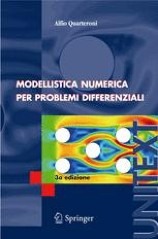
Modellistica Numerica per Problemi Differenziali = Numerical Modeling for Differential Problems
This text introduces the fundamental concepts for the numerical modeling of partial differential problems. We consider the classic linear elliptic, parabolic and hyperbolic equations, but also other equations, such as those of diffusion and transport, of Navier-Stokes, and the conservation laws. Numerous physical examples underlying these equations are provided, their main mathematical properties are studied, then numerical resolution methods based on finite elements, finite differences, finite volumes and spectral methods are proposed and analyzed. In particular, the algorithmic and computer implementation aspects are discussed and some easy-to-use programs in C ++ language are provided. The text does not presuppose an advanced mathematical knowledge of partial differential equations: the strictly indispensable concepts in this regard are reported in the Appendix. The volume is therefore suitable for students of scientific degree courses (Engineering, Mathematics, Physics, Chemistry, Information Sciences) and recommended for researchers from the academic and extra-academic world who want to approach this interesting branch of applied mathematics.

Modelling, State Observation and Diagnosis of Quantised Systems
The book concerns quantised systems which emerge from continuous-variable systems by quantising the values of all signals. It is shown how this leads to an abstract system description by means of a stochastic automaton. Based on stochastic automata, new methods for the solution to state observation and fault diagnostic problems are derived. The methods are extended to networks of stochastic automata, allowing component-oriented modelling and, thus, to deal with complex systems. The practical applicability and usefulness of the approach is shown at several examples.

Modelling, Computation and Optimization in Information Systems and Management Sciences ; 2nd International Conference MCO 2008, Metz, France - Luxembourg, September 8-10, 2008. Proceedings
This book constitutes the refereed proceedings of the Second International Conference MCO 2008, Metz, France, September 2008.The 65 revised full papers presented were carefully reviewed and selected from 160 submissions. The papers are organized in topical sections on optimization and decision making; data mining theory, systems and applications; computer vision and image processing; computer communications and networks; optimization and search techniques for security, reliability, trust.

Modelling, Analysis and Optimization of Biosystems
Mathematical models in biology and medicine cannot be based on natural laws as it is the case with physics and chemistry. This is due to the fact that biological and medical processes are concerned with living organisms. Mathematical models, however, can be used as a language by which certain aspects of biological or medical processes can be expressed. In general, several mathematical models can be designed in order to describe a biological or medical process and there is no unique criterion which model gives the best description. This book presents several of these models and shows applications of them to different biological and medical problems. The book shows that operations research expertise is necessary in respect to modeling, analysis and optimization of biosystems.

Modelling our Changing World
This book focuses on the concepts, tools and techniques needed to successfully model ever-changing time-series data. It emphasizes the need for general models to account for the complexities of the modern world and how these can be applied to a range of issues facing Earth, from modelling volcanic eruptions, carbon dioxide emissions and global temperatures, to modelling unemployment rates, wage inflation and population growth.

Modelling Land-Use Change : Progress and Applications
land-use change simulation modelling is a relatively new and dynamic field of study and this book provides a full overview of the topic, a wide range of applications (both geographically and thematically), a mix of theory and practice, a synthesis of recent research progress, and educational material for students and teachers.
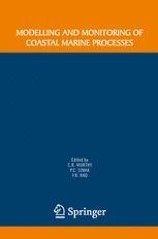
Modelling and Monitoring of Coastal Marine Processes
Although numerous books have been written on both monitoring and modelling of coastal oceans, there is a practical need for an introductory multi-disciplinary volume to non-specialists in this field. The articles commisioned for this book, organized into four major themes, are written by experts in their disciplines while the text is intended for scientists who do not have extensive training in marine sciences and coastal zone management. As such, the articles in this monograph can be a valuable reference for practicing professionals.

Modelling and Development of Intelligent Systems ; 6th International Conference, MDIS 2019, Sibiu, Romania, October 3–5, 2019, Revised Selected Papers
This volume constitutes the refereed proceedings of the 6th International Conference on Modelling and Development of Intelligent Systems, MDIS 2019, held in Sibiu, Romania, in October 2019. The 13 revised full papers presented in the volume were carefully reviewed and selected from 31 submissions. The papers are organized in topical sections on adaptive systems; conceptual modelling; data mining; intelligent systems for decision support; machine learning.
