



الصفحة 72
الصفحة 72
Mathematical Modelling of Biosystems
This volume is an interdisciplinary book, which introduces, in a very readable way, state of the art research in the fundamental topics of mathematical modelling of Biosystems. These topics include: the study of Biological Growth and its mechanisms, the coupling of pattern to form via theorems of Differential Geometry, the human immunodeficiency virus dynamics, the inverse folding problem and the possibility of analysing true protein backbone flexibility, the Biclustering techniques for the organization of microarray data, the analytical approach to the modelling of biomolecular structure via Steiner trees, the action of biocides on resistance mechanisms of mutated and phenotypic bacteria strains, a description of the fundamental processes for the distribution and abundances of species towards a unified theory of Ecology, and a special introduction to Protein Physics aiming to explain the all-or-none first order phase transitions from native to denatured states.
Mathematical Modeling of Biological Systems ; Vol. II : Epidemiology, Evolution and Ecology,Immunology, Neural Systems and the Brain, and Innovative Mathematical Methods
This two-volume, interdisciplinary work is a unified presentation of a broad range of state-of-the-art topics in the rapidly growing field of mathematical modeling in the biological sciences. Highlighted throughout both works are mathematical and computational approaches to examine central problems in the life sciences, ranging from the organizational principles of individual cells to the dynamics of large populations.
Mathematical Modeling of Biological Systems ; Vol. I : Cellular Biophysics, Regulatory Networks, Development, Biomedicine, and Data Analysis
This two-volume, interdisciplinary work is a unified presentation of a broad range of state-of-the-art topics in the rapidly growing field of mathematical modeling in the biological sciences. Highlighted throughout both works are mathematical and computational approaches to examine central problems in the life sciences, ranging from the organizational principles of individual cells to the dynamics of large populations.
Mathematical Methods in Computer Science : Essays in Memory of Thomas Beth
This Festschrift volume contains the proceedings of the conference Mathematical Methods in Computer Science, MMICS 2008, which was held during December 17-19, 2008, in Karlsruhe, Germany, in memory of Thomas Beth.The themes of the conference reflected the many interests of Thomas Beth. Although, these interests might seem diverse, mathematical methods and especially algebra as a language constituted the common denominator of all of his scientific achievements.
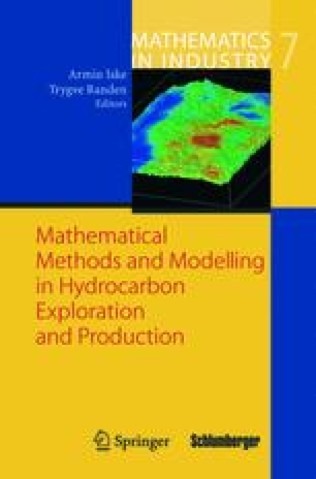
Mathematical methods and modelling in hydrocarbon exploration and production
Hydrocarbon exploration and production incorporate great technology challenges for the oil and gas industry. In order to meet the world's future demand for oil and gas, further technological advance is needed, which in turn requires research across multiple disciplines, including mathematics, geophysics, geology, petroleum engineering, signal processing, and computer science. This book addresses important aspects and fundamental concepts in hydrocarbon exploration and production. Moreover, new developments and recent advances in the relevant research areas are discussed, whereby special emphasis is placed on mathematical methods and modelling. The book reflects the multi-disciplinary character of the hydrocarbon production workflow, ranging from seismic data imaging, seismic analysis and interpretation and geological model building, to numerical reservoir simulation. Various challenges concerning the production workflow are discussed in detail.

Mathematical Foundations of Computer Science 2008 ; 33rd International Symposium, MFCS 2008, Toru´n, Poland, August 25-29, 2008. Proceedings
Constitutes the refereed proceedings of the 33rd International Symposium on Mathematical Foundations of Computer Science, MFCS 2008, held in Torun, Poland, in August 2008.The 45 revised full papers presented together with 5 invited lectures were carefully reviewed and selected from 119 submissions. All current aspects in theoretical computer science and its mathematical foundations are addressed, ranging from algorithmic game theory, algorithms and data structures, artificial intelligence, automata and formal languages, bioinformatics, complexity, concurrency and petrinets, cryptography and security, logic and formal specifications, models of computations, parallel and distributed computing, semantics and verification.

Mathematical Foundations of Computer Science 2007 ; 32nd International Symposium, MFCS 2007 Ceský Krumlov, Czech Republic, August 26-31, 2007, Proceedings
This book constitutes the refereed proceedings of the 32nd International Symposium on Mathematical Foundations of Computer Science, MFCS 2007, held in Cesk?? Krumlov, Czech Republic, August 26-31, 2007. All current aspects in theoretical computer science and its mathematical foundations are addressed.

Mathematical foundations of computer science 2006 ; 31st International Symposium, MFCS 2006, Stará Lesná, Slovakia, August 28-September 1, 2006, Proceedings
This book constitutes the refereed proceedings of the 31st International Symposium on Mathematical Foundations of Computer Science, MFCS 2006, held in Stará Lesná, Slovakia in August/September 2006. The 62 revised full papers presented together with the full papers or abstracts of 7 invited talks were carefully reviewed and selected from 174 submissions. All current aspects in theoretical computer science and its mathematical foundations are addressed, ranging from algorithms and data structures, to complexity, automata, semantics, logic, formal specifications, models of computation, concurrency theory, computational geometry, parallel and distributed computing, networks, bioinformatics, quantum computing, cryptography, knowledge-based systems, and artificial intelligence.

Mathematical Foundations of Computer Science 2005 ; 30th International Symposium, MFCS 2005, Gdansk, Poland, August29-September 2. 2005, Proceedings
Constitutes the proceedings of the 30th International Symposium on Mathematical Foundations of Computer Science, MFCS 2005, held in Gdansk, Poland in August/September 2005. The 62 papers address various aspects in theoretical computer science, ranging from quantum computing, approximation, automata, circuits, scheduling, games, and more.
Mathematical Formulas for Economists
This collection of formulas constitutes a compendium of mathematics for eco nomics and business. It contains the most important formulas, statements and algorithms in this significant subfield of modern mathematics and addresses primarily students of economics or business at universities, colleges and trade schools. But people dealing with practical or applied problems will also find this collection to be an efiicient and easy-to-use work of reference. First the book treats mathematical symbols and constants, sets and state ments, number systems and their arithmetic as well as fundamentals of com binatorics. The chapter on sequences and series is followed by mathematics of finance, the representation of functions of one and several independent vari ables, their differential and integral calculus and by differential and difference equations. In each case special emphasis is placed on applications and models in economics. The chapter on linear algebra deals with matrices, vectors, determinants and systems of linear equations. This is followed by the representation of struc tures and algorithms of linear programming. Finally, the reader finds formu las on descriptive statistics (data analysis, ratios, inventory and time series analysis), on probability theory (events, probabilities, random variables and distributions) and on inductive statistics (point and interval estimates, tests). Some important tables complete the work.
Mathematical and Statistical Methods in Insurance and Finance
The interaction between mathematicians and statisticians reveals to be an effective approach to the analysis of insurance and financial problems, in particular in an operative perspective. The Maf2006 conference, held at the University of Salerno in 2006, had precisely this purpose and the collection here published gathers some of the papers presented at the conference and successively worked out to this aim. They cover a wide variety of subjects in insurance and financial fields, all treated in light of the successful cooperation between the two quantitative methods.

Materials Handbook : A Concise Desktop Reference
The unique and practical Materials Handbook (second edition) provides quick and easy access to data on the physical and chemical properties of all classes of materials. The second edition has been much expanded to include whole new families of materials while many of the existing families are broadened and refined with new material and up-to-date information. Particular emphasis is placed on the properties of common industrial materials in each class.

Materials for Springs
“Materials for springs” is basically intended for engineers related to spring materials and technologies who graduated from metallurgical or mechanical engineering courses in technical high school, or in other higher engineering schools, as well as those who are related to the purchase or sales of spring materials. The first chapter introduces into the fundamental selection processes of spring materials including the information sources on materials database. It is followed by the basic mechanisms and theories of spring failures such as fatigue fracture, creep/stress relaxation and stress corrosion cracking of metallic materials.

Matematica generale con il calcolatore
By introducing mathematical objects, it teaches students how to use a computer to perform numerical and symbolic calculations, define a function and calculate its values, plot and explore graphs, and execute simple algorithms. The course is rich in examples, applications, and models, drawn from economics, physics, biology, statistics, and mathematics itself. The analysis of these models constitutes, in a certain sense, the true purpose of the mathematical theory covered. Automatic calculation tools (mathematics software, spreadsheets) are used extensively to explore and illustrate concepts and properties. Mathcad® software, in particular, was used, both as a calculation tool and as a simple yet powerful programming language. Considerable space is devoted to approximation, emphasizing the distinction between numerical and symbolic calculation; to algorithms as a synthesis of the syntactic and semantic aspects of mathematical objects; and to computer simulation, interpreted as a "physical" experiment and a source of conjecture. The ability to use a calculator marks a sort of "democratization" of mathematics: even complex results, which have always required a broad background of knowledge and laborious calculations, are now quickly accessible to anyone who understands the meaning of mathematical objects and knows how to use the syntax.
Mastering Oracle SQL and SQL*Plus
This exceptional book explains fundamentals in detail, supported by realistic examples, while most other books on the market do not properly cover such basics. If you work with relational databases you need to understand the SQL language. And you will gain full competence to define, access, and manipulate data in an Oracle database, if you do so following this book's guidance.
Markov Chains : Models, Algorithms and Applications
Markov chains are a particularly powerful and widely used tool for analyzing a variety of stochastic (probabilistic) systems over time. This monograph will present a series of Markov models, starting from the basic models and then building up to higher-order models. Included in the higher-order discussions are multivariate models, higher-order multivariate models, and higher-order hidden models. In each case, the focus is on the important kinds of applications that can be made with the class of models being considered in the current chapter. Special attention is given to numerical algorithms that can efficiently solve the models. Therefore, Markov Chains: Models, Algorithms and Applications outlines recent developments of Markov chain models for modeling queueing sequences, Internet, re-manufacturing systems, reverse logistics, inventory systems, bio-informatics, DNA sequences, genetic networks, data mining, and many other practical systems.

Marketing research Tutoring in University
After having a wide look over similar and competitive universities it seems that there is a large number of students who need extra help to pass in some courses. This project enhances the importance of having reference of tutoring in universities. while searching on several problems to discuss, it turned out to have explicit and intrinsic needs lead me to choose this topic. Now I'm going to link between what was studied during the previous years at the university and how I’ll practice it in order to analyze data, choose specific questions & scurvies and then analyzing all the answers in the correct way.
Marketing metrics : Leverage analytics and data to optimize marketing strategies
Featuring examples from a range of organizations including Coca-Cola and Mercedes-Benz, it shows how to create a strategy which leverages consumer data for customer-centric marketing, establishes the ROI of channels and campaigns, strengthens brands and creates data-driven product strategies. Covering the range of new global laws that impact consumer privacy and data collection and usage, Marketing Metrics shows how to use data in a non-invasive, secure and ethical way.
Marketing effectiveness and accountability in SMEs : A multimethodological approach
Sheds light on marketing effectiveness and accountability marketing in small and medium-sized enterprises (SMEs). Using a multi-method investigation, it includes a knowledge inquiry of marketing knowledge and customer knowledge, a qualitative inquiry utilizing semi structured interviews and thematic data analysis, a quantitative analysis utilizing survey and structural equations modelling, and a case study that employs both narrative (storytelling) data analysis and an accountability audit with a techno marketing SME.

Marketing Analytics : A Practical Guide to Improving Consumer Insights Using Data Techniques
Simplifies intimidating data, segmentation and predictive analytics tools for everyday use in business, using real-world marketing problems to apply to a range of practical scenarios / Provides accessibility and insightful application of techniques regardless of experience level
