



الصفحة 71
الصفحة 71
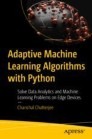
Adaptive Machine Learning Algorithms with Python : Solve Data Analytics and Machine Learing Problems on Edge Devices
Learn to use adaptive algorithms to solve real-world streaming data problems. This book covers a multitude of data processing challenges, ranging from the simple to the complex. At each step, you will gain insight into real-world use cases, find solutions, explore code used to solve these problems, and create new algorithms for your own use. You will: Apply adaptive algorithms to practical applications and examples / Understand the relevant data representation features and computational models for time-varying multi-dimensional data / Derive adaptive algorithms for mean, median, covariance, eigenvectors (PCA) and generalized eigenvectors with experiments on real data / Speed up your algorithms and put them to use on real-world stationary and non-stationary data / Master the applications of adaptive algorithms on critical edge device computation applications
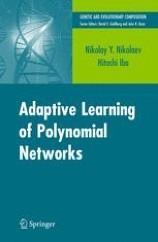
Adaptive Learning of Polynomial Networks : Genetic Programming, Backpropagation and Bayesian Methods
This book provides theoretical and practical knowledge for develop ment of algorithms that infer linear and nonlinear models. It offers a methodology for inductive learning of polynomial neural network mod els from data. The design of such tools contributes to better statistical data modelling when addressing tasks from various areas like system identification, chaotic time-series prediction, financial forecasting and data mining. The main claim is that the model identification process involves several equally important steps: finding the model structure, estimating the model weight parameters, and tuning these weights with respect to the adopted assumptions about the underlying data distrib ution. When the learning process is organized according to these steps, performed together one after the other or separately, one may expect to discover models that generalize well.

Adaptive Hypermedia and Adaptive Web-Based Systems ; Second International Conference, AH 2002 Malaga, Spain, May 29 - 31, 2002 Proceedings
This book constitutes the refereed proceedings of the Second International Conference on Adaptive Hypermedia and Adaptive Web-Based Systems, AH 2002, held in Malaga, Spain, in May 2002.The 33 revised full papers and 23 short papers presented were carefully reviewed and selected from 109 submissions. Also included are three invited contributions, 30 posters, and 5 presentations given at the associated doctoral constortium. Among the topics covered are adaptive hypertext and hypermedia, user modeling, adaptive learning, adaptive tutoring systems, information retrieval, educational hypermedia systems, Web adaption, adaptive navigation, adaption and personalization.
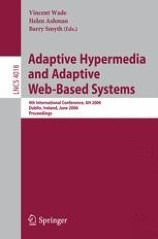
Adaptive Hypermedia and Adaptive Web-Based Systems ; 4th International Conference, AH 2006, Dublin, Ireland, June 21-23, 2006, Proceedings
Here are the refereed proceedings of the 4th International Conference on Adaptive Hypermedia and Adaptive Web-Based Systems, AH 2006, held in Dublin, Ireland, June 2006. The book presents 22 revised full papers and 19 revised short papers together with abstracts of 3 keynotes, 12 poster papers, and 14 doctoral consortium posters. Topics include pioneering theories, techniques, and innovative technologies to provide dynamic personalization, adaptation, and contextualization of hypermedia resources and services.
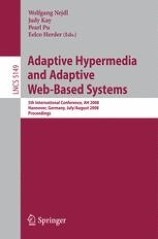
Adaptive Hypermedia and Adaptive Web-Based Systems : 5th International Conference, AH 2008, Hannover, Germany, July 29 - August 1, 2008. Proceedings
This book constitutes the refereed proceedings of the 5th International Conference on Adaptive Hypermedia and Adaptive Web-Based Systems, AH 2008, held in Hannover, Germany in July 2008.
Adaptive Cooperation between Driver and Assistant System : Improving Road Safety
One of the next challenges in vehicular technology field is to improve drastically the road safety. Current developments are focusing on both vehicle platform and diverse assistance systems. This book presents a new engineering approach based on lean vehicle architecture ready for the drive-by-wire technology.
Adaptive Business Intelligence
In the modern information era, managers must recognize the competitive opportunities represented by decision-support tools. Adaptive business intelligence systems combine prediction and optimization techniques to assist decision makers in complex, rapidly changing environments. These systems address the fundamental questions: What is likely to happen in the future? And what is the best decision right now? Adaptive Business Intelligence includes elements of data mining, predictive modeling, forecasting, optimization, and adaptability.
Adaptive Autonomous Secure Cyber Systems
Establishes scientific foundations for adaptive autonomous cyber systems and ultimately brings about a more secure and reliable Internet. The recent advances in adaptive cyber defense (ACD) have developed a range of new ACD techniques and methodologies for reasoning in an adaptive environment.
Adaptive and Personalized Semantic Web
Web Personalization can be defined as any set of actions that can tailor the Web experience to a particular user or set of users. To achieve effective personalization, organizations must rely on all available data, including the usage and click-stream data (reflecting user behaviour), the site content, the site structure, domain knowledge, as well as user demographics and profiles. In addition, efficient and intelligent techniques are needed to mine this data for actionable knowledge, and to effectively use the discovered knowledge to enhance the users' Web experience.

Adaptive and natural computing algorithms ; Proceedings of the International Conference in Coimbra, Portugal, 2005
The ICANNGA series of Conferences has been organised since 1993 and has a long history of promoting the principles and understanding of computational intelligence paradigms within the scientific community and is a reference for established workers in this area.and this book about Proceedings of the International Conference in Coimbra, Portugal, 2005 including Topics Artificial Intelligence Simulation and Modeling / Mathematics of Computing / Computer Applications
Adaptive and Natural Computing Algorithms ; 8th International Conference, ICANNGA 2007, Warsaw, Poland, April 11-14, 2007, Proceedings, Part II
The ICANNGA series of conferences has been organized since 1993 and has a long history of promoting the principles and understanding of computational intelligence paradigms within the scientifc community. the ICANNGA series has established itself as a reference for scientists and practitioners in this area. The series has also been of value to young researchers wishing both to extend their knowledge and experience and to meet experienced professionals in their ?elds. In a rapidly advancing world, where technology and engineering change d- matically, new challenges in computer science compel us to broaden the c- ference scope in order to take into account new developments.
Adaptive agents and multi-agent systems III : Adaptation and multi-Agent learning ; 5th, 6th, and 7th European Symposium, ALAMAS 2005-2007 on Adaptive and Learning Agents and Multi-Agent Systems, Revised Selected Papers
This book contains selected and revised papers of the European Symposium on Adaptive and Learning Agents and Multi-Agent Systems (ALAMAS).
Adaptive agents and multi-agent systems II : Adaptation and multi-agent learning
Adaptive agents and multi-agent systems is an emerging and exciting interdisciplinary area of research and development involving artificial intelligence, software engineering, and developmental biology, as well as cognitive and social science. This book presents 17 revised and carefully reviewed papers taken from two workshops on the topic as well as 2 invited papers by leading researchers in the area. The papers deal with various aspects of machine learning, adaptation, and evolution in the context of agent systems and autonomous agents.

Active mining ; 2nd International workshop, AM 2003, Maebashi, Japan, October 28, 2003, revised selected papers
"This volume contains the papers selected for presentation at the 2nd Inter- tional Workshop on Active Mining (AM 2003) which was organized in conju- tion with the 14th International Symposium on Methodologies for Intelligent Systems (ISMIS 2003), The workshop was organized by the Maebashi Institute of Technology for shed light on the future development of active mining. "This volume contains : Topics Database Management / Artificial Intelligence / Algorithm Analysis and Problem Complexity / Health Informatics / Bioinformatics
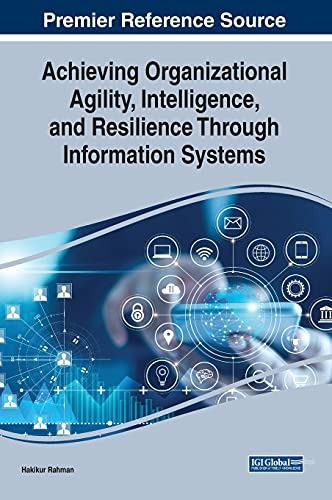
Achieving organizational agility, intelligence, and resilience through information systems
Presents the latest scholarly research on the widespread integration of technological innovations around the globe and examines how organizational agility, intelligence and resilience interprets, affects, and improves the entrepreneurship around the globe

Accessing and Sharing the Benefits of the Genomics Revolution
This edited volume explores the legal, economic and political context for the debate about intellectual property rights for traditional knowledge and genetic resources and critically analyses the theory and practice of access and benefits sharing efforts around the world. The book also investigates the current flashpoints—the David and Goliath battle between Monsanto and Percy Schmeiser over farmers’ rights; the dispute over coexistence of GM and organic production; and the ownership and control of human genetic materials stored in human gene banks around the world.
Accessible access 2003
In that book we tried very hard not to simply list everything that we knew about the product. Instead we tried to act as intelligent filters, presenting only the essential information that you need to get started. Every screen shot has been retaken and every section has been re-checked to ensure, not only that it still works, but also that it is actually still relevant. We have re-written parts where the product has changed and also added some. For example, there is a new section on Object Dependencies and a whole new chapter about Data Access Pages - helping you to put your Access database onto an intranet.

Access to medicines and vaccines : Implementing flexibilities under intellectual property law
This book is the outcome of a Global Forum on Innovation, Intellectual Property and Access to Medicines held in December 2019 at the Max Plank Instititute in Munich, organised by the South Centre and the Max Plank Institute. The academics and experts from international organisations participating have contributed chapters to this book. The book is for policy makers (in Ministries of Health, Ministries of Trade, Ministries of Foreign Affairs, patent offices), but also relevant for academics (law, trade, public health), on the flexibilities available in the Agreement on Trade Related Aspects of Intellectual Property Rights (TRIPS) of the World Trade Organization to promote access to medicines.

Academic Integrity in Canada : An Enduring and Essential Challenge
Firmly grounded in the scholarly literature globally, it engages with the experience of local practicioners. It presents aspects of academic integrity that is specific to Canada, such as the existence of an "honour culture", rather than relying on an "honour code". It also includes Indigenous voices and perspectives that challenge traditional understandings of intellectual property, as well as new understandings that have arisen as a consequence of Covid-19 and the significant shift to online and remote learning.

Abstraction, Reformulation, and Approximation ; 7th International Symposium, SARA 2007, Whistler, Canada, July 18-21, 2007, Proceedings
This volume contains the proceedings of SARA 2007, the seventh symposium, held at Whistler Village, British Columbia, Canada, July 18-21. Three distinguished speakers were invited to give keynote presentations, and their abstracts are included herein,It has been recognized since the inception of artificial intelligence that abstractions, problem reformulations and approximations (AR&A) are central to human common-sense reasoning and problem solving and to the ability of systems to reason effectively in complex domains.AR&A techniques have been used in a variety of problem-solving settings, including automated reasoning, cognitive modelling.
