



الصفحة 71
الصفحة 71

Limnology and Aquatic Birds ; Proceedings of the Fourth Conference Working Group on Aquatic Birds of Societas Internationalis Limnologiae (SIL), Sackville, New Brunswick, Canada, August 3-7, 2003
The importance of habitat conservation for the protection of birds has become widely acknowledged and accepted by natural resource managers and the general public. Papers presented in this volume further our understanding of the important role that limnology has in determining habitat suitability for waterbirds. Long-term population monitoring of waterbirds is an important tool in our quest to understand the role waterbirds play in their environment. Continued population declines of many species of aquatic birds indicate the need for additional understanding of how human activities negatively impact water quality and bird populations and what mitigative actions can be taken. The main objective of the Working Group on Aquatic Birds of the International Limnological Society (SIL) is to integrate waterbirds into hydrobiology and treat waterbird studies in a limnological context. To achieve this goal, the Working Group organizes conferences to facilitate communications among limnologists interested in aquatic birds and ornithologists interested in the aquatic habitat. The efforts of the SIL Working Group on aquatic birds has resulted in a new emphasis on the links between aquatic birds and their environment

Light Shadow Space : Architectural Rendering with Cinema 4D®
The visualization of light in space, its effect on model cubature and scenery, is one of the great challenges in architectural rendering. This is a decisive reason for the use of 3D tools – both for architecture offices and students. This volume features a number of exercises that enable the reader to learn how to light architecture models correctly. Complete virtual 3D scenarios are included that allow for the step-by-step construction of a lighting set up with the help of Cinema 4D® software that creates a realistic spatial impression. The tutorials are complemented by a chapter on the use of Cinema 4D®, importing CAD models and light sources as well as shadow types, which have been revised and expanded in the 9.5 and 10 version.
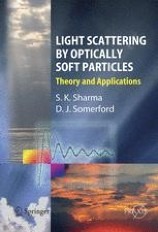
Light Scattering by Optically Soft Particles: Theory and Applications
Deals with a particular class of approximation methods in the context of light scattering by small particles. This class of approximations has been termed as eikonal or soft particle approximations. The eikonal approximation was studied extensively in the potential scattering and then adopted in optical scattering problems. In this context, the eikonal and other soft particle approximations pertain to scatterers whose relative refractive index compared to surrounding medium is close to unity. The study of these approximations is very important because soft particles occur abundantly in nature. For example, the particles that occur in ocean optics, biomedical optics, atmospheric optics and in many industrial applications can be classified as soft particles. This book was written in recognition of the long-standing and current interest in the field of scattering approximations for soft particles. It should prove to be a useful addition for researchers in the field of light scattering.

Light earth building : a handbook for building with wood and earth
Light clay, which is light in weight and easy to work, is presented here as a versatile and forward-looking building material for modern computer-aided timber construction and the renewal of historic timber-framed buildings with clay infill. The balanced building physics properties of the material, which can be controlled through the mixing proportions, make it suitable for resource-efficient building in various different climate zones. Thermal storage, sound insulation, protection against moisture and fire in conventional timber construction are improved, and the construction is simplified.
Life in Extreme Environments
Investigating life processes under extreme conditions can also bring clues for understanding and predicting ecosystems' responses to global changes. Furthermore, this area of research has a wide application potential in the fields of (bio)technoloty, chemical industry, pharmaceutics, biomedicine or cosmetics.
Life Cycle Management
This book provides insight into the Life Cycle Management (LCM) concept and the progress in its implementation. LCM is a management concept applied in industrial and service sectors to improve products and services, while enhancing the overall sustainability performance of business and its value chains. In this regard, LCM is an opportunity to differentiate through sustainability performance on the market place, working with all departments of a company such as research and development, procurement and marketing, and to enhance the collaboration with stakeholders along a company’s value chain. LCM is used beyond short-term business success and aims at long-term achievements by minimizing environmental and socio-economic burden, while maximizing economic and social value.

Life Cycle Investing and Occupational Old-Age Provision in Switzerland
Florian Zainhofer uses the theory of life cycle investing, i.e. how we should optimally choose our savings rate and risky asset share throughout our lives, as a framework to study the implications of a potential BVG individualization. Following an introduction on the Swiss system of old-age provision, the author reviews recent life cycle models of portfolio choice and covers their numerical solution algorithms in depth. He presents an empirical analysis of Swiss workers’ earnings dynamics since these are important determinants of life cycle investment behavior. To further investigate the implications of a flexible contribution rate and risky asset share in the mandatory BVG, the author proposes a model adapted to Swiss conditions and parameterized with the estimated earnings dynamics.
Life Conduct in Modern Times : Karl Jaspers and Psychoanalysis
This award-winning book investigates the critique of psychoanalysis formulated by the psychiatrist and philosopher Karl Jaspers (1883-1969) over a period of five decades. His arguments against Freud and his followers are examined from systematic perspectives. The study traces the medico-historical roots of Jasper’s criticism of psychoanalysis and then places it within the framework of scientific theory before devoting itself extensively to medico-ethical aspects of the controversy, which are ultimately treated in terms of a history of mentalities. According to this view, Jasper’s student Hannah Arendt saw to it that the philosopher be made aware of the socio-cultural impact which psychoanalysis was beginning to have in the U.S.A.
Life - As a Matter of Fat : The Emerging Science of Lipidomics
Lipids are as important for life as proteins, sugars, and genes. The present book gives a multi-disciplinary perspective on the physics of life and the particular role played by lipids and the lipid-bilayer component of cell membranes. The book is aimed at undergraduate students and young research workers within physics, chemistry, biochemistry, molecular biology, nutrition, as well as pharmaceutical and biomedical sciences. The emphasis is on the physical properties of lipid membranes seen as soft and molecularly structured interfaces. By combining and synthesizing insights obtained from a variety of recent studies, an attempt is made to clarify what membrane structure is and how it can be quantitatively described. Furthermore, it is shown how biological function mediated by membranes is controlled by lipid membrane structure and organization on length scales ranging from the size of the individual molecule, across molecular assemblies of proteins and lipid domains in the range of nanometers, to the size of whole cells. Applications of lipids in nano-technology and biomedicine are also described.

Lie Algebras and Applications
This book, designed for advanced graduate students and post-graduate researchers, provides an introduction to Lie algebras and some of their applications to the spectroscopy of molecules, atoms, nuclei and hadrons. In the first part, a concise exposition is given of the basic concepts of Lie algebras, their representations and their invariants. The second part contains a description of how Lie algebras are used in practice in the treatment of bosonic and fermionic systems. Physical applications considered include rotations and vibrations of molecules (vibron model), collective modes in nuclei (interacting boson model), the atomic shell model, the nuclear shell model, and the quark model of hadrons. One of the key concepts in the application of Lie algebraic methods in physics, that of spectrum generating algebras and their associated dynamic symmetries, is also discussed. The book contains many examples that help to elucidate the abstract algebraic definitions. It provides a summary of many formulas of practical interest, such as the eigenvalues of Casimir operators and the dimensions of the representations of all classical Lie algebras.
Library and information sciences : Trends and research
Introduces the opportunities and challenges faced by the library and information literacy profession and discusses the key role of librarians in the future of information literacy education. Next, it covers trends in LIS education by examining the vision of the iSchool movement and detailing its practice in Syracuse University. The book then covers issues in information seeking and retrieval by showing how visual data mining technology can be used to detect the relationship and pattern between terms on the Q&A of a social media site. It also includes a case study regarding tracing information seeking behavior and usage on a multimedia website.

Leveraging the Semantics of Topics Maps ; 2nd International Conference on Topic Maps Research and Applications, TMRA 2006, Leipzig, Germany, October 11-12, 2006, Revised Selected papers
The papers in this volume were presented at TMRA 2006, the International Conference on Topic Maps Research and Applications, held October 11–12, 2006, in Leipzig, Germany. TMRA 2006 was the second conference of an annual series of international conferences dedicated to Topic Maps in research and industry.
Let's talk : How English conversation works
Banter, chit-chat, gossip, natter, tete-a-tete: these are just a few of the terms for the varied ways in which we interact with one another through conversation. David Crystal explores the factors that motivate so many different kinds of talk and reveals the rules we use unconsciously, even in the most routine exchanges of everyday conversation. We tend to think of conversation as something spontaneous, instinctive, habitual.
Les cancers ovariens = Ovarian cancers
Deals with ovarian cancers and their therapeutic management. Besides the epithelial tumors which are the most frequent, the rarer tumors, with attenuated malignancy, germ cells or of the ovarian stroma are also studied. Specialists from multiple backgrounds each deliver in their field the most recent knowledge on the fundamental aspects of the disease, its genetic, epidemiological and prognostic characteristics and its pathological peculiarities. Modern means of diagnosis are presented. The surgical technique, including laparoscopy, is detailed at the different stages of the disease. The therapeutic strategy aims to position the surgery and chemotherapy according to the stage. The current place of radiotherapy and isotopic therapies is indicated. Some more specific aspects are discussed, screening, lymph node dissection, the “second look”, intraperitoneal chemotherapy with or without hyperthermia, treatment of the elderly, monitoring after treatment… as well as the emergence of targeted therapies.
Legionella Pneumophila : Pathogenesis and Immunity
Legionella pneumophila is an emerging human pathogen that resides in natural environments as a parasite of freshwater. The volume brings together all of the lastest research on this pathogen, the interest in which is rapidly growing.
Legal Programming : Designing Legally Compliant RFID and Software Agent Architectures for Retail Processes and Beyond
LEGAL PROGRAMMING: Designing Legally Compliant RFID and Software Agent Architectures for Retail Processes and Beyond provides a process-oriented discussion of the legal concerns presented by agent-based technologies, processes and programming. It offers a general outline of the potential legal difficulties that could arise in relation to them, focusing on the programming of negotiation and contracting processes in a privacy, consumer and commercial context. The authors will elucidate how it is possible to create form of legal framework and design methodology for transaction agents, applicable in any environment and not just in a specific proprietary framework, that provides the right level of compliance and trust. Key elements considered include the design and programming of legally compliant methods, the determination of rights in respect of objects and variables, and ontologies and programming frameworks for agent interactions. Examples are used to illustrate the points made and provide a practical perspective.
Lectures on Quantum Gravity
A primary goal was to foster interaction and communication between participants from different cultures, both in the layman’s sense of the term and in terms of approaches to quantum gravity. We hope that the links formed by students and the school will persist throughout their professional lives, continuing to promote interaction and the essential exchange of ideas that drives research forward. This volume contains improved and updated versions of the lectures given at the School. It has been prepared both as a reminder for the participants, and so that these pedagogical introductions can be made available to others who were unable to attend. We expect them to serve students of all ages well.
Lectures in Astrobiology ; Vol. II
Based on material delivered at several summer schools, this book is the first comprehensive textbook at the graduate level encompassing all aspects associated with the emerging field of astrobiology. Volume II gathers another set of extensive lectures covering topics so diverse as the formation and the distribution of elements in the Universe, the concept of habitability from both the planetologists' and the biologists' point of view and artificial life. The contributions are held together by the common goal to understand better the origin of life, its evolution and possible existence outside the Earth's realm.
Lecture Notes on General Medicine for Dental Practice : A System based Approach with Dental Management Considerations
Offers a system based approach covering a broad range of topics in general medicine for dental practice. The book includes chapters on history taking and patient interview, general physical examination, system specific examination, common health related complaints, systemic infections, and diseases of the gastrointestinal, cardiovascular, respiratory, neurological, immunological, renal, endocrinal, dermatological and musculoskeletal systems. Nutritional disorders, psychiatric disorders, the female patient with menstrual, menopause and pregnancy related disorders, dental management of patients taking medications for systemic conditions and medical emergencies in dental practice have also been discussed in some detail.
Learning the language of dentistry : disciplinary corpora in the teaching of English for specific academic purposes
Explores the affordances of disciplinary corpora for the teaching and learning of the language of dentistry, within the field of English for Specific Academic Purposes (ESAP). We extract disciplinary register features and vocabulary from three key genres of the dentistry discipline (published experimental research articles, case reports, and novice/professional research reports within the Dental Public Health domain), before integrating these features into ESAP pedagogy in the form of corpus-based ESAP materials that promote student-led direct engagement with disciplinary corpora – an approach known as 'data-driven learning'. This book is a timely and relevant addition to the field of corpus linguistics and ESAP, and is especially targeted at ESAP professionals who are required to teach disciplinary discourses but who may struggle to know what to teach as non-experts of the target discipline.
