



الصفحة 7
الصفحة 7

Group Coordination and Cooperative Control
Group coordination and cooperative control are topics currently receiving a lot of interest. Coordinating the motion of a group of relatively simple and inexpensive agents can cover a larger operational area and achieve complex tasks exceeding the abilities of a single agent. This enables applications such as teams of robots for de-mining operations, aerospace formation flying for survey, fleets of AUVs for oceanographic mapping, and ships doing coordinated towing operations. This volume contains the contributions of the workshop. The book covers a wide range of subjects within the area of group coordination and cooperative control, and forms a valuable and up-to-date text on the newer trends in group coordination and cooperative control.

Grippers in Motion : The Fascination of Automated Handling Tasks
This book shows you how to ensure process reliability on the basis of combining the right components with advanced application know-how. By explaining basic preconditions of the gripping process and highlighting the milestones of automation history, we guide you all the way through to the center of the handling process – the workpiece. Its ambient conditions and setup are clearly defined as well as the process of setting grippers in motion. Starting with simple linear movements up to multi-axis kinematics, you are provided with the details for practical solutions.

Graph-based representations in pattern recognition ; 6th IAPR-TC-15 International Workshop, GbRPR 2007, Alicante, Spain, June 11-13, 2007, Proceedings
Constitutes the refereed proceedings of the 6th IAPR-TC-15 International Workshop on Graph-Based Representations in Pattern Recognition, GbRPR 2007, held in Alicante, Spain in June 2007.

Global optimization ; Vol. 85 : Scientific and engineering case studies
Optimization models based on a nonlinear systems description often possess multiple local optima. The objective of global optimization (GO) is to find the best possible solution of multiextremal problems. Global Optimization: Selected Case Studies illustrates the applicability of GO modeling techniques and solution strategies to real-world problems.The contributed chapters cover a broad range of applications from agroecosystem management, assembly line design, bioinformatics, biophysics, black box systems optimization, cellular mobile network design, chemical process optimization, chemical product design, composite structure design, computational modeling of atomic and molecular structures, controller design for induction motors, electrical engineering design, feeding strategies in animal husbandry, the inverse position problem in kinematics, laser design, learning in neural nets, mechanical engineering design, numerical solution of equations, radiotherapy planning, robot design, and satellite data analysis. The solution strategies discussed encompass a range of practically viable methods, including both theoretically rigorous and heuristic approaches.

Global design to gain a competitive edge : An holistic and collaborative design approach based on computational tools
Global Design to Gain a Competitive Edge collects together papers from the 2008 International Conference on Advanced Design and Manufacture (ICADAM). Recent advancements, emerging trends and new challenges in the fields of design and manufacturing are covered, with a particular focus on the understanding of the impact of distributed team-based design and manufacture on research and industrial practices for global companies.

Geometrical dynamics of complex systems : A unified modelling approach to physics, control, biomechanics, neurodynamics and psycho-socio-economical dynamics
This volume presents a comprehensive introduction into rigorous geometrical dynamics of complex systems of various natures. By "complex systems", in this book are meant high-dimensional nonlinear systems, which can be (but not necessarily are) adaptive. This monograph proposes a unified geometrical approach to dynamics of complex systems of various kinds: engineering, physical, biophysical, psychophysical, sociophysical, econophysical, etc. The main objective of this book is to show that high-dimensional nonlinear systems in "real life" can be modeled and analyzed using rigorous mathematics, which enables their complete predictability and controllability, as if they were linear systems.

Geometric Modeling and Processing - GMP 2006 ; 4th International Conference, GMP 2006, Pittsburgh, PA, USA, July 26-28, 2006, Proceedings
This book constitutes the refereed proceedings of the 4th International Conference on Geometric Modeling and Processing, GMP 2006, held in Pittsburgh, PA, USA in July 2006. The 36 revised full papers and 21 revised short papers presented were carefully reviewed and selected from a total of 84 submissions. All current issues in the area of geometric modeling and processing are addressed and the impact in such areas as computer graphics, computer vision, machining, robotics, and scientific visualization is shown. The papers are organized in topical sections on shape reconstruction, curves and surfaces, geometric processing, shape deformation, shape description, shape recognition, geometric modeling, subdivision surfaces, and engineering applications.

Geometric Fundamentals of Robotics
Geometric Fundamentals of Robotics provides an elegant introduction to the geometric concepts that are important to applications in robotics. This second edition is still unique in providing a deep understanding of the subject: rather than focusing on computational results in kinematics and robotics, it includes significant state-of-the art material that reflects important advances in the field, connecting robotics back to mathematical fundamentals in group theory and geometry.

Genetic Systems Programming : Theory and Experiences
This book is devoted to reporting innovative and significant progress about the contribution of genetic programming in systems programming. The contributions of this book clearly demonstrate that genetic programming is very effective in solving hard and yet-open problems in systems programming. Followed by an introductory chapter, in the remaining contributed chapters, the reader can easily learn about systems where genetic programming can be applied successfully. These include but are not limited to, information security systems, compilers, data mining systems, stock market prediction systems, robots and automatic programming.

Genetic Programming Theory and Practice V
Genetic Programming Theory and Practice V was developed from the fifth workshop at the University of Michigan’s Center for the Study of Complex Systems to facilitate the exchange of ideas and information related to the rapidly advancing field of Genetic Programming (GP). Contributions from the foremost international researchers and practitioners in the GP arena examine the similarities and differences between theoretical and empirical results on real-world problems. The text explores the synergy between theory and practice, producing a comprehensive view of the state of the art in GP application.

Genetic Programming Theory and Practice IV
Genetic Programming Theory and Practice IV was developed from the fourth workshop at the University of Michigan’s Center for the Study of Complex Systems to facilitate the exchange of ideas and information related to the rapidly advancing field of Genetic Programming (GP). Contributions from the foremost international researchers and practitioners in the GP arena examine the similarities and differences between theoretical and empirical results on real-world problems.

Fuzzy Systems Engineering : Theory and Practice
This book is devoted to reporting innovative and significant progress in fuzzy system engineering. Given the maturation of fuzzy logic, this book is dedicated to exploring the recent breakthroughs in fuzziness and soft computing in favour of intelligent system engineering. This monograph presents novel developments of the fuzzy theory as well as interesting applications of the fuzzy logic exploiting the theory to engineer intelligent systems.

Fuzzy multi-criteria decision making : Theory and applications with recent developments
In trying to make a satisfactory decision when imprecise and multicriteria situations are involved, a decision maker has to use a fuzzy multicriteria decision making method. Fuzzy Multi-Criteria Decision Making (MCDM) presents fuzzy multiattribute and multiobjective decision-making methodologies by distinguished MCDM researchers. In summarizing the concepts and results of the most popular fuzzy multicriteria methods, using numerical examples, this work examines all the fuzzy multicriteria methods recently developed, such as fuzzy AHP, fuzzy TOPSIS, interactive fuzzy multiobjective stochastic linear programming, fuzzy multiobjective dynamic programming, grey fuzzy multiobjective optimization, fuzzy multiobjective geometric programming, and more.

Future tech : How to capture value from disruptive industry trends
In Future Tech, the author reveals that true change only results from combining the forces of science and technology, policy and regulation, new business models (i.e. sharing economy) and social dynamics (whether or not people adopt it). Whether these four forces align explains why some technologies, such as AI, blockchain, robotics, synthetic biology and 3D printing, stick and why others fail.
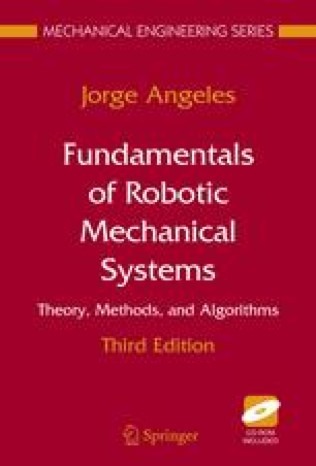
Fundamentals of Robotic Mechanical Systems : Theory, Methods, and Algorithms
Fundamentals of Robotic Mechanical Systems, Third Edition addresses robots at large - such as multi-fingered hands, walking machines, flight simulators, and machine tools - that rely on mechanical systems to perform their tasks. The author establishes the foundations on which the design, control, and implementation of the underlying mechanical subsystems are based. The treatment assumes familiarity with some calculus, linear algebra, and elementary mechanics; however, the elements of rigid-body mechanics and linear transformations are reviewed in the first chapters, making the presentation self-contained.

Fundamentals of Multibody Dynamics : Theory and Applications
This textbook—a result of the author’s many years of research and teaching—brings together diverse concepts of dynamics, combining the efforts of many researchers in the field of mechanics. Bridging the gap between dynamics and engineering applications such as microrobotics, virtual reality simulation of interactive mechanical systems, nanomechanics, flexible biosystems, crash simulation, and biomechanics, the book puts into perspective the importance of modeling in the dynamic simulation and solution of problems in these fields.

Fundamentals of electrical drives
This brings us to the purpose of this book namely to help students and engineers appreciate and understand the fundamental concepts of modern electrical drives. An interactive learning approach is taken in this text: theory and calculations are augmented by generic models which are transposed to a simulation platform. The 'build and play' method used in this text visualizes the dynamic operation of a comprehensive set of modules ranging from an inductance to a novel 'ideal rotating transformer' (IRTF). This module is at the center of the generic models used in this text to explore the dynamic and steady state operation of grid and converter fed induction, synchronous and DC machines. The section on modulation and control emphasizes the role of power electronics and digital signal processors in drives. Downloadable files that accompany this text have an extensive set of 'build and play' tutorials, in Simulink R° and Caspoc. The latter is a simulation platform which allows direct access to the 'build and play' modules, without further licensing needs. All figures in this text are included in the downloadable files in order to help with the preparation of customized Power Point type lecture material.

Functional Imaging and Modeling of the Heart ; 4th International Conference, Salt Lake City, UT, USA, June 7-9, 2007
This book constitutes the refereed proceedings of the 4th International Conference on Functional Imaging and Modeling of the Heart, FIMH 2007, held in Salt Lake City, UT, USA in June 2007.

Functional imaging and modeling of the heart ; 3rd International workshop, FIMH 2005, Barcelona, Spain, June 2-4, 2005, Proceedings
The FIMH conference was the ?rst attempt to agglutinate researchers from several complementary but often i- lated ?elds: cardiac imaging, signal and image processing, applied mathematics and physics, biomedical engineering and computer science, cardiology, radi- ogy, biology, and physiology. In the ?rst two editions, the conference received an enthusiastic acceptance by experts of all these communities. FIMH was ori- nally started as a European event and has increasingly attracted more and more people from the US and Asia. This edition of FIMH received the largest number of submissions so far with a result of 47 papers being accepted as either oral presentations or posters. There were a number of submissions from non-EU institutions which con?rms the growing interest in this series of meetings. All papers were reviewed by up to four reviewers. The accepted contributions were organized into 8 oral sessions and 3 poster sessions complemented by a number of invited talks. This year we tried to allocate as many papers as possible as oral presentations to facilitate more active participation and to stimulate multidisciplinary discussions.

Fun with algorithms ; 4th International conference, FUN 2007, Castiglioncello, Italy, June 3-5, 2007, Proceedings
This book constitutes the refereed proceedings of the 4th International Conference on Fun with Algorithms, FUN 2007, held in Castiglioncello, Italy in June 2007.
