



الصفحة 7
الصفحة 7

Dimensions of the Sustainable City
The CityForm consortium’s latest book, Dimensions of the Sustainable City, is the first book to report on an empirical multi-disciplinary study specifically designed to address urban sustainability. Drawing together the various dimensions of sustainability – economic, social, transport, energy and ecological – the book examines their relationships both to each other and to urban form. The book investigates the sustainability dimensions of cities through a series of projects based on a common list of elements of urban form, and which draw on the consortium’s latest research to review the sustainability issues of each dimension. The elements of urban form include density, land use, location, accessibility, transport infrastructure and characteristics of the built environment.

Digital Towns : Accelerating and Measuring the Digital Transformation of Rural Societies and Economies
This book explores the digital transformation of small and rural towns, in particular, how to measure the evolution and development of digital towns. In addition to access to resources, competition from urban and global markets, and population trends, rural communities present lesser access and use of digital technologies and have lower digital competencies and skills than their urban counterparts. Consequently, they experience less beneficial outcomes from increased digitalisation than urban areas. This book defines what a digital town is and explores digitalisation from the perspective of the four basic economic sectors in towns - individuals and households, businesses, the public sector, and civil society - and three types of enabling infrastructure - digital connectivity, education, and governance.

Digital Technologies in Construction Engineering : Selected Papers
Includes the latest advances, innovations, and applications in the field of construction engineering, as presented by researchers and engineers at the Digital Technologies in Construction Engineering conference, held in Belgorod, Russia, on June 8-9, 2021. It covers highly diverse topics, including industrial and civil construction, building materials; environmental engineering and protection; sustainability; structure safety and special construction structures. The contributions, which were selected by means of a rigorous international peer-review process, highlight numerous exciting ideas that will spur novel research directions and foster multidisciplinary collaborations.

Development of Al-Sumaria axis (Al- Sumaria Bus Station) = تطوير محور السومرية
يهدف هذا المشروع إلى تطوير محور السومرية في دمشق بما يتناسب مع أهمية موقعه الاستراتيجي، وذلك من خلال إعادة تخطيط وتنظيم المنطقة عمرانياً. ركّزنا بشكل خاص على إعادة تصميم محطة السومرية (الكراج) نظراً لدورها المحوري في ربط العاصمة دمشق بالمناطق الجنوبية والجنوبية الغربية داخل القطر، إضافة إلى كونها مركزاً لوسائل النقل الخارجي نحو الأردن ولبنان والمملكة العربية السعودية. جاءت الحاجة إلى إعادة التصميم بسبب الازدحام الكبير وتنوع وسائط النقل العاملة في الموقع من حافلات وسيرفيسات وتاكسيات، ما يؤدي إلى تداخل في الحركة المرورية وصعوبة في إدارة المواصلات. اعتمدنا في دراستنا على تحليل واقع المحور الحالي من النواحي العمرانية والمرورية، ثم وضع مخطط شامل يضمن انسيابية الحركة وتنظيم خطوط النقل. يتضمن التصميم المقترح تطوير بنية تحتية أكثر كفاءة مع تخصيص مسارات واضحة لكل نوع من المركبات، إضافة إلى تحسين المرافق والخدمات داخل المحطة لتلبية احتياجات الركاب.

Designing with the wind : Climate-derived architecture
This book explores wind-adaptive architectural design blending the parametric design with digital simulations and suggests a novel approach for specific, even extreme conditions, as the first step in creating architecture that can act in response to the nature around. The chapters propose an urban and architectural design that emerges from the specific wind microclimate of the design site and responds to the changes in the ambient wind conditions. The book looks closely at A) the interdisciplinary wind-driven design method for architects, engineers, and urbanists employing open-source software for CFD analysis and B) the tensegrity-membrane adaptive building façades.

Designing Urban Food Policies : Concepts and Approaches
This book is for scientists and experts who work on urban food policies. It provides a conceptual framework for understanding the urban food system sustainability and how it can be tackled by local governments. Written by a collective of researchers, this book describes the existing conceptual frameworks for an analysis of urban food policies, at the crossroads of the concepts of food system and sustainable city.

Designing urban agriculture : A complete guide to the planning, design, construction, maintenance and management of edible landscapes
About the intersection of ecology, design, and community. Showcasing projects and designers from around the world who are forging new paths to the sustainable city through urban agriculture landscapes, it creates a dialogue on the ways to invite food back into the city and pave a path to healthier communities and environments.This full-color guide begins with a foundation of ecological principles and the idea that the food shed is part of a city's urban systems network. It outlines a design process based on systems thinking and developed for a lifecycle or regenerative-based approach. It also presents strategies, tools, and guidelines that enable informed decisions on planning, designing, budgeting, constructing, maintaining, marketing, and increasing the sustainability of this re-invented cityscape.

Designing Sustainable Technologies, Products and Policies : From Science to Innovation
This open access book provides insight into the implementation of Life Cycle approaches along the entire business value chain, supporting environmental, social and economic sustainability related to the development of industrial technologies, products, services and policies; and the development and management of smart agricultural systems, smart mobility systems, urban infrastructures and energy for the built environment. The book is based on papers presented at the 8th International Life Cycle Management Conference that took place from September 3-6, 2017 in Luxembourg, and which was organized by the Luxembourg Institute of Science and Technology (LIST) and the University of Luxembourg in the framework of the LCM Conference Series.

Designing sustainable cities
Emphasizes new ways of designing for a sustainable city and urban environment. From several angles the future of our urbanism is illuminated. From a philosophical point of view, the city is seen as an organism, following complex ecosystemic principles, shining light on indigenous perspectives to become beneficial for sustainable design and core questions are asked whether current architectural practice is really sustainable. Simultaneously concrete practices are presented for cities in transformation, focusing on green infrastructure, smart city principles and health.

Designing sustainable and resilient cities : Small interventions for stronger urban food-water-energy management
Explores the link between the food-water-energy nexus and sustainability, and the extraordinary value that small tweaks to this nexus can achieve for more resilient cities and communities. Using data from Urban Living Labs in six participating cities (Eindhoven, Gdansk, Miami, Southend-on-Sea, Taipei and Uppsala) to co-define context-specific challenges, the results from each city are collated into an Integrated Decision Support System to guide and improve robust decision making on future urban development. The book presents contributions from CRUNCH, a transdisciplinary team of scholars and practitioners whose expertise spans urban climate modelling; food, water and energy management; the design of resilient public space; collecting better urban data; and the development of smart city technology. Whilst previous works on the food-water-energy nexus have focused on large, transnational cases, this book explores local ways to use the food-water-energy nexus to improve urban resilience.

Designing landscape architectural education : Studio ecologies for unpredictable futures
Asks designers and academic practitioners to describe their own work through an ecological lens, and then to articulate design approaches for developing new practices in landscape architecture teaching. Designing Landscape Architectural Education: Studio Ecologies for Unpredictable Futures, the Landscape Architecture Design Studio Companion serves as a resource for academic practitioners in the preparation and delivery of 'design-research studios' and students seeking guidance for design methodologies as a part of their landscape architectural education. It draws on the manifold issues of the climate crisis as a set of drivers to examine the utilisation of a range of innovative design approaches to address the current and future priorities of the discipline.
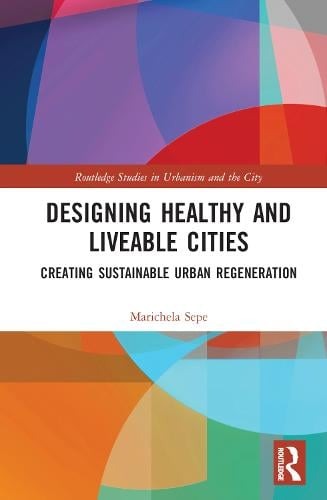
Designing healthy and liveable cities : Creating sustainable urban regeneration
Aim of this book is, after the definition of the field of investigation concerning sustainable regeneration trough topics such as resilience, adaptation, health and mixed connections, to illustrate the present-day approaches to the analysis and design of healthy places, and in particular the original Healthy Pl@ce Design method, flexible and repeatable in different contexts. The method aims at: identifying sustainable urban liveability and healthy and the factors which make places liveable and healthy from the user's point of view and identifying design interventions to enhance or create both urban liveability and health. Emblematic case studies carried out in Europe, USA and China - Bordeaux, Copenhagen, Hamburg, Madrid, Newcastle, Nice, Dublin, Vancouver and Wuhan - constitute the empirical part of the Book detailed with surveys, questionnaires, images and maps.

Designing a world-class architecture firm : The people, stories, and strategies behind HOK
Offers exclusive insights into the revolutionary strategies behind one of the top ten largest architecture firms in the world. Written with dashes of memoir by the former CEO, Patrick MacLeamy, this book offers practicing architecture professionals in small to mid-sized firms and other design professionals such as interior designers and urban planners with detailed guidance for reinvigorating company culture, establishing financial metrics, attracting and retaining talent, diversifying services and firm expansion. This book is flavored with dozens of quirky stories from MacLeamy's time at the helm of HOK, and while it is not a design book - MacLeamy offers insights into many of HOK's most iconic projects, including: Smithsonian National Air and Space Museum in Washington, D.C., Oriole Park at Camden Yards in Baltimore, MD, and more

Design studio ; Vol.1 : Everything needs to change : Architecture and the climate emergency
Everything Needs to Change. Exploring architecture and the climate emergency, editors Sofie Pelsmakers (author of Environmental Design Sourcebook) and Nick Newman (climate activist and Director at Studio Bark), are channelling the message of Greta Thunberg to inspire, enthuse and inform the next generation of architects.

Dense + Green cities : Architecture as urban ecosystem
In which ways does a "green building" contribute to the ecology of its surroundings? And how can ecologically designed urban districts, with their green and blue networks, link up with the elements and technologies of building design? All dimensions of "green building" are investigated in this book in an effort to understand and evaluate some of the most recent and innovative Dense+Green Cities in Asia, the Americas and Europe.

Dense + Green : Innovative building types for sustainable urban architecture
Explores new architectural typologies that emerge from the integration of green components such as sky terraces, vertical parks and green facades, in high-density buildings. In-depth case studies on the most relevant building types are complemented by expert essays that demonstrate the current paradigm shift in the sustainable urban environment.

Deltas in the Anthropocene
The Anthropocene is the human-dominated modern era that has accelerated social, environmental and climate change across the world in the last few decades. This open access book examines the challenges the Anthropocene presents to the sustainable management of deltas, both the many threats as well as the opportunities.

Decoupling Control
Decoupling or non-interactive control has attracted considerable research attention since the 1960s when control engineers started to deal with multivariable systems. The theory and design techniques for decoupling control have now, more or less matured for linear time-invariant systems, yet there is no single book which focuses on such an important topic. The present monograph fills this gap by presenting a fairly comprehensive and detailed treatment of decoupling theory and relevant design methods. Decoupling control under the framework of polynomial transfer function and frequency response settings, is included as well as the disturbance decoupling problem. The emphasis here is on special or relatively new compensation schemes such as (true and virtual) feedforward control and disturbance observers, rather than use of feedback control alone. The results are presented in a self-contained way and only the knowledge of basic linear systems theory is assumed of the reader.

Decoding the city urbanism in the Age of Big Data
Shows how Big Data change reality and, hence, the way we deal with the city. They demonstrate how the Lab interprets digital data as material that can be used for the formulation of a different urban future. The publication also looks at the negative aspects of the city-related data acquisition and control.

Data augmented design : Embracing new data for sustainable urban planning and design
This book offers an essential introduction to a new urban planning and design methodology called Data Augmented Design (DAD) and its evolution and progresses, highlighting data driven methods, urban planning and design applications and related theories. The authors draw on many kinds of data, including big, open, and conventional data, and discuss cutting-edge technologies that illustrate DAD as a future-oriented design framework in terms of its focus on multi-data, multi-method, multi-stage and multi-scale sustainable urban planning. In four sections and ten chapters, the book presents case studies to address the core concepts of DAD, the first type of applications of DAD that emerged in redevelopment-oriented planning and design, the second type committed to the planning and design for urban expansion, and the future-oriented applications of DAD to advance sustainable technologies and the future structural form of the built environment. The book is geared towards a broad readership, ranging from researchers and students of urban planning, urban design, urban geography, urban economics, and urban sociology, to practitioners in the areas of urban planning and design.
