



الصفحة 7
الصفحة 7
Apoptosis, cell signaling, and human diseases : Molecular mechanisms ; Vol.1
Volume 1 is divided into two sections: “Malignant Transformation and Metastasis” and “Molecular Basis of Disease Therapy.” Volume 2 follows a similar structure and is divided into sections entitled “Kinases and Phosphate” and “Molecular Basis of Cell Death.” All of the contributors are at the forefront of scientific discovery, and the reviews they present systemically examine the most exciting and innovative aspects of their particular areas of expertise. Researchers will find these volumes of major benefit as they search for novel and more effective treatments for human diseases.

Apitherapy and therapeutic properties
Apitherapy is an alternate therapy that relies on the usage of honeybee products, most importantly bee venom for the treatment of many human diseases. Bee venom contains several active molecules such as peptides and enzymes that have advantageous potential in treating inflammation and central nervous system diseases, such as Parkinson’s disease, and Alzheimer’s disease and autoimmume diseases like reumatic and atherosclerosis .Bee venom (BV) is usually associated with pain since, when humans are stung by bees,local inflammation and even an allergic reaction can be produced. It also consists of a mixture of proteins and peptides, including enzymes such as Melittin and phospholipase A2 (PLA2) are the most abundant and studied compounds of BV Stings of hymenoptera can induce IgE-mediated hypersensitivity reactions in venom-allergic patients, ranging from local up to severe systemic reactions and even fatal anaphylaxis. skin is larger than any other organ in humans.
Anti-Neutrophil Cytoplasmic Antibody (ANCA) Associated Vasculitis
Covers all aspects of Anti-Neutrophil Cytoplasmic Antibody (ANCA) Associated Vasculitis (AAV). The expression refers to a group of diseases, characterized by destruction and inflammation of small vessels. The clinical signs vary and affect several organs, such as the kidney, lung, skin, nervous system and others. presents recently acquired knowledge on pathogenesis, diagnosis, and therapy with the aim of promoting a more holistic approach to these conditions. AAVs are systemic autoimmune diseases of unknown cause that affect small (to medium) sized blood vessels. They include granulomatosis with polyangiitis (formerly Wegener's granulomatosis), microscopic polyangiitis, and eosinophilic granulomatosis with polyangiitis (formerly Churg–Strauss syndrome).

Angiotensin converting enzyme inhibitors and application
It is now a little over 10 years since the introduction of drugs that inhibit the angiotensin converting enzyme (ACE). Angiotensin converting enzyme inhibitors are a class of oral medications that act primarily through blockade of the angiotensin converting enzyme. This enzyme converts angiotensin I to angiotensin II. Angiotensin II causes vasoconstriction increasing afterload, thus increasing systemic blood pressure. Angiotensin contributes to the production of aldosterone, which normally acts to retain sodium and water.
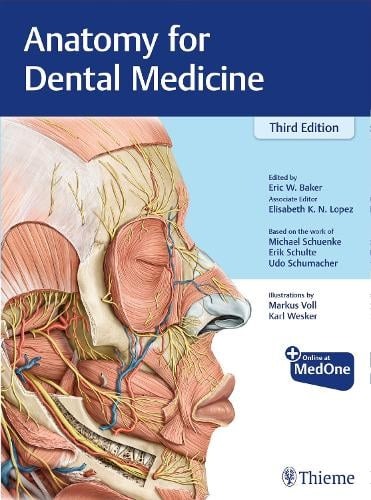
Anatomy for Dental Medicine
Strikes an optimal balance between systemic and regional approaches to complex head and neck anatomy. Award-winning full-color illustrations, succinct text, summary tables, and questions put anatomical structures and knowledge into a practical context. NEW! Additional radiologic images and landmark features throughoutNEW! Reorganized brain/nerve sectionsNEW! Expanded clinical question appendix including patient box questions in the style of the INBDENEW! Factual question appendix places greater emphasis on areas including the skull, larynx, cross sectional anatomy, body below the neck, and local anesthesia

Anand's Human Anatomy for Dental Students
Presents with six sections. The initial part of first section deals with general anatomy, a must for laying foundation of body structure, chapter 4 is ""organization of body"", gives a comprehensive overview of composition of body, its various parts with essentials of regional anatomy of limbs, thorax and abdomen. Subsequent chapters till chapter no. 17 deals with systemic anatomy, i.e. anatomy of various systems of body with their clinical significance.
Anafilassi in pediatria = Anaphylaxis in pediatrics
Anaphylaxis is defined as an immediate systemic reaction due to the rapid IgE mediated release of potent mediators from tissue mast cells and peripheral blood basophils and represents a generalized clinical condition that includes skin, respiratory, cardiovascular and gastrointestinal signs and symptoms. It includes various clinical pictures, which derive from the association of symptoms such as urticaria, angioedema, vomiting, diarrhea, asthma, dyspnoea, edema of the glottis, hypotension, shock, etc., not always easy to identify, which however require a timely and correct diagnostic approach. .

An overview of systemic lupus erythematosus (SLE) : Pathogenesis, classification, and management
Systemic lupus erythematosus (SLE), commonly referred to as lupus, is a complex and chronic autoimmune disorder that poses significant challenges to patients and healthcare providers alike. Affecting predominantly women of childbearing age, over 90% of those diagnosed are female, resulting in a striking female-to-male ratio of approximately 9:1. This condition exemplifies the intricate interplay between immune dysregulation and tissue damage, influenced by a combination of genetic predispositions, environmental triggers, hormonal factors, and immunological aberrations
Alpine Industrial Landscapes : Towards a New Approach for Brownfield Redevelopment in Mountain Regions
This book presents a pioneering research on brownfield redevelopment in mountain regions, and specifically in the European Alps. The origins and causes, the actual conditions as well as the future challenges and potentials of mountain brownfields are investigated from an interdisciplinary yet landscape-centered perspective. Through the reasoned combination of research-by-design methods and case-study analysis, the book explores the infrastructural relevance of these sites for the specific mountain territory, while advancing an innovative structuralist-systemic approach for their physical and functional transformation. The book includes, among others, a first transnational geo-mapping of Alpine brownfields, whose impressive outcomes in terms of site numbers and distribution can only confirm the urgency of this research.

Agroecological transitions : From theory to practice in local participatory design
There is wide agreement on the need to change the prevalent agricultural models, given their negative impacts and their incompatibility with current societal issues. Agroecological transition has been promoted as a potential solution to the ecological, social and economic problems generated by these models. It however involves a systemic, multi-scale and transdisciplinary process. Due to this complexity, the overall picture of what farms and food systems “actually are” and “might be” may not be apparent at the individual level. Yet individuals’ knowledge and values provide complementary insights on how to proceed in deepening ecological modernisation. Expertise can also provide landmarks to be considered in that process. Because local stakeholders’ experience and skills are key resources in the adaptation and adoption of agroecological transition, new conceptual and methodological frameworks and tools have to be developed to support them in the design process of such a complex transition. This book presents feedback from the ‘Territorial Agroecological Transition in Action’- TATA-BOX research project, which was devoted to these specific issues.

Advances in psoriasis : A multisystemic guide
Provides an up-to-date and highly informative textbook on psoriasis. The understanding of the mechanisms behind the disease and the available treatment options have continued to develop rapidly in recent times, with this vital resource covering the latest in these management options, including targeted T-cell therapy, the use of immunomodulators, systemic therapies, and ultraviolet and laser therapy. In addition, it provides a detailed overview of the pathophysiology, comorbidities, epidemiology and triggers of the disease.
Advances in endodontics and periodontics
Aims to improve the state of the art in relation to the most relevant advances in Endodontics and Periodontics. Topics addressed in this Special Issue include alternative treatment strategies such as “green” antimicrobials, the relationship with systemic diseases, new devices and materials which enable a reduction in therapy failures, as well as updating evidence-based knowledge pertaining to endodontics and periodontics.

Advances in Breast Cancer Management, 2nd ed.
Advances in Breast Cancer Management, Second Edition will highlight many of the important advances that have transformed our understanding of the biology and therapeutics of breast cancer.

A rose armed with thorns : Spinoza’s Philosophy under a novel lens
Presents a systemic analysis of Spinoza’s philosophy and challenges the traditional views. It deals with Spinoza’s concepts of substance, truth conditions, attributes, and the first, second, and supreme grades of knowledge. Based upon an analysis of the relevant details in all of Spinoza’s philosophical works, reveals many important points, including the following: Spinoza’s system is not, nor is meant to be, a foundational-deductive system but was meant to be a coherent system of a network model. Spinoza’s reality is not made in the image of a mathematical model. Imaginatio, the first grade of knowledge, and ratio, the second grade, are parts or properties of the supreme grade of knowledge, scientia intuitiva, which is their essence.

A Clinician's guide to systemic effects of periodontal diseases
Serves as an ideal, easy-to-use reference for the practicing health professional. It summarizes the latest research on the systemic effects of periodontal diseases, discusses how the results of this research will impact on clinical practice, and aims to help the clinician to answer questions that may be posed by patients, medical colleagues, and the media.

A Climate of Justice : An Ethical Foundation for Environmentalism
This book helps readers combine history, politics, and ethics to address the most pressing problem facing the world today: environmental survival. In A Climate of Justice, Marvin Brown connects the environmental crisis to basic questions of economic, social, and racial justice. Brown shows how our current social climate maintains systemic injustices, and he uncovers resources for change through a civic ethics of repair and reciprocity.
