



الصفحة 7
الصفحة 7
Atoms, molecules and photons : An introduction to atomic- molecular- and quantum physics
This introduction to Atomic and Molecular Physics explains how our present model of atoms and molecules has been developed over the last two centuries both by many experimental discoveries and, from the theoretical side, by the introduction of quantum physics to the adequate description of micro-particles. It illustrates the wave model of particles by many examples and shows the limits of classical description. The interaction of electromagnetic radiation with atoms and molecules and its potential for spectroscopy is outlined in more detail and in particular lasers as modern spectroscopic tools are discussed more thoroughly. Many examples and problems with solutions are offered to encourage readers to actively engage in experimentation.
Atomic and Nuclear Analytical Methods : XRF, Mössbauer, XPS, NAA and Ion-Beam Spectroscopic Techniques
This book is a blend of analytical methods based on the phenomenon of atomic and nuclear physics. It comprises comprehensive presentations about X-ray Fluorescence (XRF), Mössbauer Spectroscopy (MS), X-ray Photoelectron Spectroscopy (XPS), Neutron- Activation Analysis (NAA), Particle Induced X-ray Emission Analysis (PIXE), Rutherford Backscattering Analysis (RBS), Elastic Recoil Detection (ERD), Nuclear Reaction Analysis (NRA), Particle Induced Gamma-ray Emission Analysis (PIGE), and Accelerator Mass Spectrometry (AMS). These techniques are commonly applied in the fields of medicine, biology, environmental studies, archaeology or geology et al. and pursued in major international research laboratories.
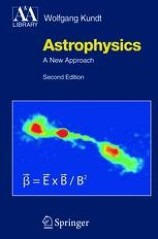
Astrophysics : A new approach
For a quantitative understanding of the physics of the universe - from the solar system through the milky way to clusters of galaxies all the way to cosmology - these edited lecture notes are perhaps among the most concise and also among the most critical ones: Astrophysics has not yet stood the redundancy test of laboratory physics, hence should be wary of early interpretations. Special chapters are devoted to magnetic and radiation processes, supernovae, disks, black-hole candidacy, bipolar flows, cosmic rays, gamma-ray bursts, image distortions, and special sources. At the same time, planet earth is viewed as the arena for life, with plants and animals having evolved to homo sapiens during cosmic time. -- This text is unique in covering the basic qualitative and quantitative tools, formulae as well as numbers, needed for the precise interpretation of frontline phenomena in astrophysical research. The author compares mainstream interpretations with new and even controversial ones he wishes to emphasize.
Assessing Climate Change : Temperatures, Solar Radiation, and Heat Balance
The chapters of the book attempt to answer a number of essential questions in relation to global warming and climate change. He begins by showing how the earth’s climate has varied in the past, discussing ice ages, the Holocene period since the end of the last ice age, particularly during the past 1000 years. He investigates the reliability of "proxies" for historical temperatures and assesses the hockey stick version of global temperatures for the past millennium. To do this effectively he looks carefully at how well near surface temperatures of land and ocean on earth have been monitored during the past 100 years or more, and looks at the utility and significance of a single global average temperature

Arum palaestenium in cancer therapies
Cancer is a very complicated sequence of disease conditions progressing gradually with a generalized loss of growth control.1–3 There were only a few options of cancer treatment for patients for many decades which include surgery, radiation therapy, and chemotherapy as single treatments or in combination.4,5 But recently, many pathways involved in cancer therapy progression and how they can be targeted has improved dramatically, with combinatorial strategies, involving multiple targeted therapies or “traditional” chemotherapeutics, such as the taxanes and platinum compounds, being found to have a synergistic effect.6 New approaches, such as drugs, biological molecules, and immune-mediated therapies, are being used for treatment.
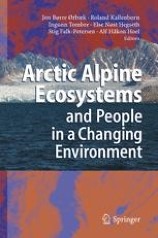
Arctic Alpine ecosystems and people in a changing environment
This book addresses the significant environmental changes experienced by high latitude and high altitude ecosystems at the beginning of the 21st c- tury. Increased temperatures and precipitation, reduction in sea ice and glacier ice, the increased levels of UV-radiation and the long-range tra- ported contaminants in arctic and alpine regions are stress factors that challenge terrestrial and aquatic ecosystems. The large natural variation in the physical parameters of these extreme environments is a key factor in structuring the biodiversity and biotic productivity, and the effect of the new stress factors can be critical for the population structures and the - teraction between species. These changes may also have socio-economic effects if the changes affect the bio-production, which form the basis for the marine and terrestrial food chains. The book is uniquely multidisciplinary and provides examples of va- ous aspects of contemporary environmental change in arctic and alpine - gions. The 21 chapters of the book are organised under the fields of •Climate change and ecosystem response, •Long range transport of poll- ants and ecological impacts, and •UV radiation and biological effects, each also including aspects of the •Socio-economic effects of environmental change. The introductory chapter presents and explains the internal c- nection and integration of all chapters.
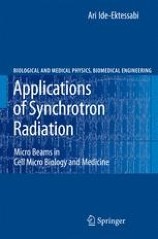
Applications of Synchrotron Radiation : Micro Beams in Cell Micro Biology and Medicine
This book demonstrates the applications of synchrotron radiation in certain aspects of cell microbiology, specifically non-destructive elemental analyses, chemical-state analyses and imaging (distribution) of the elements within a cell. The basics for understanding and applications of synchrotron radiation are also described to make the contents easier to be understood for a wide group of researchers in medical and biological sciences who might not be familiar with the physics of synchrotron radiation. The two main techniques that are discussed in this book are the x-ray fluorescence spectroscopy (XRF) and the x-ray fine structure analysis (XAFS).
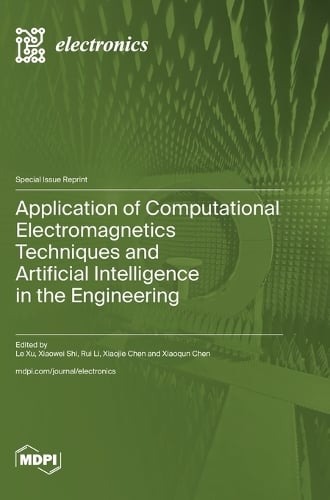
Application of computational electromagnetics techniques and artificial intelligence in the engineering
Introduces the latest developments in electromagnetic computing and artificial intelligence technology. Artificial intelligence technology can be applied to the modeling, analysis, and optimization design of microwave equipment, solving the routing problem of self-organizing networks in small unmanned aerial vehicle systems, calculating the radiation characteristics of antenna arrays on large electrical platforms, analyzing the impact of electromagnetic wave coupling on electronic devices, simulating the field distribution characteristics of electronic devices, and so on. With the help of artificial intelligence, designers can more conveniently, quickly, and accurately solve engineering problems.
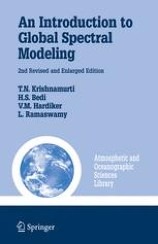
An Introduction to Global Spectral Modeling
Numerical weather prediction is receiving increased attention as weather forecasters aim to improve the numerical models used to forecast the weather. This is a textbook on global spectral modeling, which is an important component for global weather forecasts at numerous operational centers. This book covers all areas of model development including numerical analysis, treatment of clouds, mountains, radiation, precipitation processes, and the surface layers over land and the ocean. The objectives of this book are to provide a systematic and sequential background for students, researchers, and operational weather forecasters in order to develop comprehensive weather forecast models. This is designed for a one semester introductory graduate level course on weather prediction methodologies. As a prerequisite it requires a basic background in meteorology, applied mathematics, and numerical analysis.
Algal Chemical Ecology
This is the first ever book devoted entirely to the chemical ecology of algae. Algae from both marine and freshwater habitats are covered, as are macroalgae (seaweeds) and microalgae (including phytoplankton). While its main emphasis is on the ecological rather than chemical aspects of the field, the book also includes a unique introductory chapter intended as a primer on algal natural products chemistry for ecologists. It elucidates the roles of chemical defenses in various regions and habitats, of DMSP, oxidative burst responses, and herbivore offense. Topics such as algal sensory chemical ecology and defenses against ultraviolet radiation are also treated, and an introduction to the chemical ecology of phytoplankton is provided.

AJCC Cancer Staging Atlas : AJCC Cancer Staging Illustrations in PowerPoint® From the AJCC Cancer Staging Atlas
The AJCC Cancer Staging Atlas contains black-and-white illustrations, created exclusively for the book, depicting the anatomic extent of disease for tumor (T), regional lymph node (N), and distant metastasis (M). The images provide thorough anatomic depictions to clarify critical structures and allow the reader to instantly visualize the progressive extent of malignant disease. Numerous labels identify important anatomic structures.

Agricultural Implications of the Fukushima Nuclear Accident (III)
Reports on studies undertaken at contaminated sites such as farmland, forests, and marine and freshwater environments, with a particular focus on livestock, wild plants and mushrooms, crops, and marine products in those environments. It also provides additional data collected in the subsequent years to show how the radioactivity levels in agricultural products and their growing environments have changed with time and the route by which radioactive materials entered agricultural products as well as their movement between different components (e.g., soil, water, and trees) within an environmental system (e.g., forests). The book covers various topics, including radioactivity testing of food products; decontamination trials for rice and livestock production; the state of contamination in, trees, mushrooms, and timber; the dynamics of radioactivity distribution in paddy fields and upland forests; damage incurred by the forestry and fishery industries; and the change in consumers’ attitudes. Chapter 19 introduces a real-time radioisotope imaging system, a pioneering technique to visualize the movement of cesium in soil and in plants.
African Biodiversity : molecules, organisms, ecosystems
BIOTA is an interdisciplinary research project focusing on sustainable use and conservation of biodiversity in Africa (http://www.biote-africa.de). Session titles were Biogeography and Speciation Processes, Phylogenetic Patterns and Systematics, Diversity Declines and Conservation, and Applied Biodiversity Informatics
Aerosol Optics : Light Absorption and Scattering by Particles in the Atmosphere
Provides a comprehensive review of available techniques for the remote sensing of aerosols. Although mostly satellite remote sensing is considered, ground-based techniques are also discussed.describes techniques for the determination of the column concentration of aerosol particles and their optical sizing using spaceborne optical instrumentation. The majority of the techniques described in this book use a so-called "library method". This method relies upon the precalculated top-of-atmosphere reflectances (TOAR) for vaious atmospheric aerosol types. The comparison of measured and calculated TOARS allows one to characterize the optically-equivalent aerosol state.
Aeronomy of the Middle Atmosphere : Chemistry and Physics of the Stratosphere and Mesosphere
Provides a comprehensive view of the chemical, dynamical, and radiative processes that affect ozone and other chemicals in the stratosphere and mesosphere. Over recent decades our understanding of these processes has increased dramatically. The discovery of the Antarctic ozone hole has shown that human activities can lead to major changes in our environment.
Advances in Radiation Oncology in Lung Cancer
This volume is unique in being devoted solely to the radiation oncology of lung cancer, and will be of great value to all who are involved in the diagnosis and treatment of the disease. Both non-small cell and small cell lung cancer are considered in detail. Current state of the art treatment strategies and novel approaches that promise further improvements in outcome are explained and evaluated, with the aid of high-quality illustrations. Treatment-related toxicity is discussed, and further individual chapters focus on topics such as quality of life studies, prognostic factors and pitfalls in the design and analysis of clinical trials.

Advances in microwave and radio frequency processing ; Report from the 8th International conference on microwave and high-frequency heating held in Bayreuth, Germany, September 3-7, 2001
Recent applications of microwave and high-frequency radiation in the field of materials processing, chemical synthesis, food processing and in the biomedical area are presented. The book also covers fundamentals of matter radiation interaction, modeling of processes, hardware development, measurement techniques as well as current regulations for industrial applications of microwave and radio frequency heating.

Advanced Radiation Sources and Applications ; Proceedings of the NATO Advanced Research Workshop, held in Nor-Hamberd, Yerevan, Armenia, August 29 - September 2, 2004
A NATO Advanced Research Workshop on ”Advanced Radiation Sources and Applications” Hosted by the Yerevan Physics Institute, Yerevan, Armenia, 30 invited researchers from former Soviet Union and NATO countries gathered at Nor-Hamberd, Yerevan, on the slopes of Mount Aragats to discuss recent theoretical as well as expe- mental developments on means of producing photons from mostly low energy electrons.
Advanced Quantum Mechanics
Discusses nonrelativistic multi-particle systems, relativistic wave equations and relativistic quantum fields. Characteristic of the author´s work are the comprehensive mathematical discussions in which all intermediate steps are derived and where numerous examples of application and exercises help the reader gain a thorough working knowledge of the subject. The topics treated in the book lay the foundation for advanced studies in solid-state physics, nuclear and elementary particle physics. This text both extends and complements Schwabl´s introductory Quantum Mechanics, which covers nonrelativistic quantum mechanics and offers a short treatment of the quantization of the radiation field. The fourth edition has been thoroughly revised with new material having been added. Furthermore, the layout of the figures has been unified, which should facilitate comprehension.

Advanced Quantum Mechanics
Advanced Quantum Mechanics, the second volume on quantum mechanics by Franz Schwabl, discusses nonrelativistic multi-particle systems, relativistic wave equations and relativistic fields. Characteristic of Schwabl’s work, this volume features a compelling mathematical presentation in which all intermediate steps are derived and where numerous examples for application and exercises help the reader to gain a thorough working knowledge of the subject. The treatment of relativistic wave equations and their symmetries and the fundamentals of quantum field theory lay the foundations for advanced studies in solid-state physics, nuclear and elementary particle physics. This text extends and complements Schwabl’s introductory Quantum Mechanics, which covers nonrelativistic quantum mechanics and offers a short treatment of the quantization of the radiation field. New material has been added to this third edition of Advanced Quantum Mechanics on Bose gases, the Lorentz covariance of the Dirac equation, and the ‘hole theory’ in the chapter "Physical Interpretation of the Solutions to the Dirac Equation."
