



الصفحة 7
الصفحة 7

Investigating the Body in the Victorian Asylum : Doctors, Patients, and Practices
This book explores how the body was investigated in the late nineteenth-century asylum in Britain. As more and more Victorian asylum doctors looked to the bodily fabric to reveal the ‘truth’ of mental disease, a whole host of techniques and technologies were brought to bear upon the patient's body. These practices encompassed the clinical and the pathological, from testing the patient's reflexes to dissecting the brain.

Introduction to Wave Scattering, Localization and Mesoscopic Phenomena
Waves represent a classic topic of study in physics, mathematics, and engineering. Many modern technologies are based on our understanding of waves and their interaction with matter. In the past thirty years there have been some revolutionary developments in the study of waves. The present volume is the only available source which details these developments in a systematic manner, with the aim of reaching a broad audience of non-experts. It is an important resource book for those interested in understanding the physics underlying nanotechnology and mesoscopic phenomena, as well as for bridging the gap between the textbooks and research frontiers in any wave related topic. A special feature of this volume is the treatment of classical and quantum mechanical waves within a unified framework, thus facilitating an understanding of similarities and differences between the two.

Introduction to data systems : Building from Python
Encompassing a broad range of forms and sources of data, this textbook introduces data systems through a progressive presentation. Introduction to Data Systems covers data acquisition starting with local files, then progresses to data acquired from relational databases, from REST APIs and through web scraping. It teaches data forms/formats from tidy data to relationally defined sets of tables to hierarchical structure like XML and JSON using data models to convey the structure, operations, and constraints of each data form.

Introduction to Computational Biology : An Evolutionary Approach
Molecular biology has changed dramatically over the past two decades. Until the early 1990s genes were studied one at a time by small teams of researchers; today entire genomes are sequenced by internationally collaborating laboratories. In the bygone gene-centered era the accumulation of data was the rate-limiting step in research. Now that step is often data interpretation. This is increasingly dependent on computational methods and as a consequence, computational biology has emerged in the past decade as a new subdiscipline of biology. This introduction to computational biology is centered on the analysis of molecular sequence data. There are two closely connected aspects to biological sequences: (i) their relative position in the space of all other sequences, and (ii) their movement through this sequence space in evolutionary time. Accordingly, the first part of the book deals with classical methods of sequence analysis: pairwise alignment, exact string matching, multiple alignment, and hidden Markov models. In the second part evolutionary time takes center stage and phylogenetic reconstruction, the analysis of sequence variation, and the dynamics of genes in populations are explained in detail. In addition, the book contains a computer program with a graphical user interface that allows the reader to experiment with a number of key concepts developed by the authors.

Introduction to Complex Analysis in Several Variables
This book gives a comprehensive introduction to complex analysis in several variables. It clearly focusses on special topics in complex analysis rather than trying to encompass as much material as possible. Many cross-references to other parts of mathematics, such as functional analysis or algebras, are pointed out in order to broaden the view and the understanding of the chosen topics. A major focus is extension phenomena alien to the one-dimensional theory, which are expressed in the famous Hartog's Kugelsatz, the theorem of Cartan-Thullen, and Bochner's theorem.

Introducing Biological Rhythms : A Primer on the Temporal Organization of Life, with Implications for Health, Society, Reproduction, and the Natural Environment
Biological rhythms are a fundamental property of all life and encompass a wide range of frequencies, from seconds to a century or more. Introducing Biological Rhythms is a primer that serves to introduce individuals to the area of biological rhythms. It describes the major characteristics and discusses the implications and applications of these rhythms, while citing scientific results and references. Also, the primer includes essays that provide in-depth historic and other background information for those interested in more specific topics or concepts. Introducing Biological Rhythms covers a basic cross-section of the field of chronobiology clearly enough so that it can be understood by a novice, or an undergraduate student, but it is also sufficiently technical and detailed for the scientist.

Intraspecific Genetic Diversity : Monitoring, Conservation, and Management
Population and evolutionary genetics have been quickly developing ?elds of biological research over the past decades. This book compiles our current understanding of genetic processes in natural populations. In addition, the book provides the author’s original ideas and concepts based on the data obtained by himself and his close coworkers. The author introduces his pioneering concept of population genetic stability,and much of thebook is concerned with the factors and conditions of such stability. Why does genetic stability matter so much? Altukhov argues that the sustainable use of natural resources, including genetic resources of popu- tions, critically depends on the maintenance of their stability. The preser- tion of well-adapted genetic characteristics from one generation to the next is essential for this stability. Traditionally, population genetics has been - cusedonevolution andthe role of evolutionary factorsinshapinggenetic structures of populations. While the idea of a population as a dynamic unit of evolution has been widely accepted, the signi?cance of genetic stability and its implications for the long-term survival of populations and species have not been fully appreciated.

Intestinal Microorganisms of Termites and Other Invertebrates
Soil microorganisms play a major role in the degradation and recycling of organic material. Microbes are involved in the food web and strongly contribute to soil fertility. In the past, attention was mainly directed towards free-living or particle-bound microorganisms, while the role of intestinal microbes of soil animals has been neglected. For the first time, "Intestinal Microorganisms of Termites and Other Invertebrates" focuses on the microbes in gut systems of soil animals. It starts with a profound overview of the biology of soil invertebrates. A major part deals with the gut microbiota of termites, the best investigated gut system of invertebrates. Termites are important soil processors in tropical and subtropical regions. Insight is given into the intestinal microbiota of further relevant primary litter decomposers, such as earthworms, springtails, millipeds, and woodlice. Novel techniques for studying intestinal microbes complete the volume.

Interventions for Persisting Ductus Arteriosus in the Preterm Infant
Over the past few years a remarkably rapid evolution in the professional level of neonatology and in the survival of immature infants has been witnessed. Persisting ductus arteriosus is common in this population and is associated with impaired longterm outcome. Many uncertainties exist concerning indication, approach, best time, and side effects of necessary measurements and interventions to avoid later neurodevelopmental handicaps of the survivors. Experts in neonatology and pediatric cardiology give their opinion in this book. We are sure it will help to define the level of evidence and to develop standards of intervention for persisting ductus arteriosus in Europe. Adequate dealing with the ductus will become a challenge for every perinatal center.

Interphases and Mesophases in Polymer Crystallization III
In polymer crystallization the challenge is to identify and clarify the transformations by which chain molecules pass from a disordered, molten state to the ordered supra-molecular organization known as the semi-crystalline state. The subject is highly relevant in terms of both basic science and technology; it is indeed clear that many modern applications require complete control of the structure and the morphology of polymers from macroscopic dimensions down to below the nanoscale. As a simple example, making the crystallites in a polymer fiber equally oriented and reducing the number of chain folds (or hairpins) therein, usually turn out to be very favorable requisites for mechanical performance . .This series presents critical reviews of the present and future trends in polymer and biopolymer science including chemistry, physical chemistry, physics and material science. It is adressed to ali scientists at universities and in industry who wish to keep abreast of advances in the topics covered

International reflections on the Netherlands didactics of mathematics : Visions on and experiences with realistic mathematics education
This book, inspired by the ICME 13 Thematic Afternoon on “European Didactic Traditions”, takes readers on a journey with mathematics education researchers, developers and educators in eighteen countries, who reflect on their experiences with Realistic Mathematics Education (RME), the domain-specific instruction theory for mathematics education developed in the Netherlands since the late 1960s. Authors from outside the Netherlands discuss what aspects of RME appeal to them, their criticisms of RME and their past and current RME-based projects.
International Handbook of Research in Arts Education
Providing a distillation of knowledge in the various disciplines of arts education (dance, drama, music, literature and poetry and visual arts), the Handbook synthesizes existing research literature, helps define the past, and contributes to shaping the substantive and methodological future of the respective and integrated disciplines of arts education. While research can at times seem distant from practice, the Handbook aims to maintain connection with the lived practice of art and of education, capturing the vibrancy and best thinking in the field of theory and practice. The Handbook is organized into 13 sections, each centering on a major area or issue in arts education research. These areas include: History of arts education, curriculum, evaluation, cultural centers, appreciation, composition, informal learning, child culture, creativity, the body, spirituality, and technology. The individual chapters address cross-cultural research related to the central theme of the section from the perspectives of the particular arts discipline. Interludes provide reflective thoughts on the theme.

International Handbook of Juvenile Justice
This comprehensive reference work presents an in-depth analysis on the juvenile justice systems of 19 different countries, both in EU-member states (old and new) and in the United States and Canada. The book is the result of research conducted by a group of outstanding scholars working in the field of juvenile justice. The book reflects a collective concern about trends in juvenile justice over the past two decades; trends that have begun to blur the difference between criminal and juvenile justice. The introduction highlights similarities and differences between the various systems, identifying three clusters of countries with a similar approach to juvenile justice. In particular, differences are found between the Anglo-Saxon countries, and continental Europe.
International handbook of educational policy
This Handbook presents contemporary and emergent trends in educational policy research, in over ?fty chapters written by nearly ninety leading researchers from a number of countries. It is organized into ?ve broad sections which capture many of the current dominant educational policy foci and at the same time situate current understandings historically, in terms of both how they are conceptualized and in terms of past policy practice. The chapters themselves are empirically grounded, providing illustrations of the conceptual implications c- tained within them as well as allowing for comparisons across them. The se- re?exivity within chapters with respect to jurisdictional particularities and c- trasts allows readers to consider not only a range of approaches to policy analysis but also the ways in which policies and policy ideas play out in di?erent times and places. The sections move from a focus on prevailing policy tendencies through increasingly critical and ‘‘outsider’’ perspectives on policy.

International aviation law for aerodrome planning
The objective of to provide ICAO, States, competent authorities and aerodrome operators with a comprehensive overview of legal challenges related to international aerodrome planning. Answers to derived legal questions as well as recommendations thereafter shall help to enhance regulatory systems and to establish a safer aerodrome environment worldwide. Compliant aerodrome planning has an immense impact on the safety of passengers, personnel, aircraft – and of course the airport.

Intermediate accounting
Gives students the opportunity to develop problem-solving skills, apply their judgment, and work with real company financials. After mastering these essential skills, students will be ready to pass the CPA exam, and be able to think like real accountants
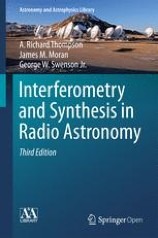
Interferometry and Synthesis in Radio Astronomy
This book is open access under a CC BY-NC 4.0 license.The third edition of this indispensable book in radio interferometry provides extensive updates to the second edition, including results and technical advances from the past decade; discussion of arrays that now span the full range of the radio part of the electromagnetic spectrum observable from the ground, 10 MHz to 1 THz; an analysis of factors that affect array speed; and an expanded discussion of digital signal-processing techniques and of scintillation phenomena and the effects of atmospheric water vapor on image distortion, among many other topics.

Interface Oral Health Science 2007 ; Proceedings of the 2nd International Symposium for Interface Oral Health Science, Held in Sendai, Japan, Between 18 and 19 February, 2007
Interface Oral Health Science is a major theme for next-generation dental research. That theme is based on the innovative concept that healthy oral function is provided by biological and biomechanical harmony among three systems: oral tissues including the teeth, mucosa, bones, and muscles (host); parasitic microorganisms of the oral cavity (parasites); and biomaterials. The concept posits that oral diseases such as dental caries, periodontal disease, and tempo- mandibular disorders should be interpreted as interface diseases that result from disruption of the intact interfaces among these systems. The uniqueness of this concept rests on the fact that it not only encompasses the entire fi eld of dentistry and dental care, but also expands the common ground shared with many other fields, including medicine, pharmaceutical science, agriculture, material science, and engineering.

Intelligent system algorithms and applications in science and technology
Explores the application of intelligent techniques in various fields of engineering and technology. It addresses diverse topics in such areas as machine learning-based intelligent systems for healthcare, applications of artificial intelligence and the Internet of Things, intelligent data analytics techniques, intelligent network systems and applications, and inequalities and process control systems. The authors explore the full breadth of the field, which encompasses data analysis, image processing, speech processing and recognition, medical science and healthcare monitoring, smart irrigation systems, insurance and banking, robotics and process control, and more.

Intelligent Leadership : Constructs for Thinking Education Leaders
This book pulls together the thinking of 16 educators with diverse backgrounds and experiences, all of whom hold keen interests in harnessing the forces that can improve educational opportunity for students. Becoming an effective education leader requires more than a passing knowledge of leadership theory; it also requires knowledge of what works in education and an on-going commitment to thinking about how leadership dynamics and pedagogical theory intersect within contextual realities. Intelligent Leadership: Constructs for Thinking Education Leaders is intended to stimulate the thinking of every educator who aspires to influence decision-making and to provide direction to their school, district or institution.
