



الصفحة 7
الصفحة 7
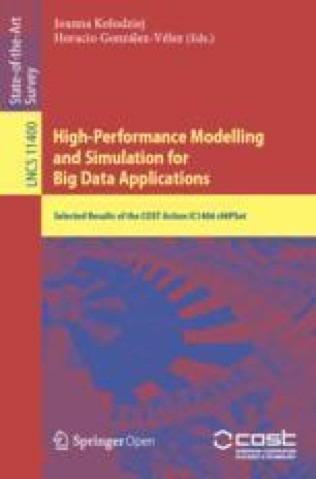
High-Performance Modelling and Simulation for Big Data Applications: Selected Results of the COST Action IC1406 cHiPSet
This book is the final compendium of case studies emanated from “High-Performance Modelling and Simulation for Big Data Applications” (cHiPSet).cHiPSet has created a sustainable reference network linking applied research in High Performance Computing (HPC) and Modelling & Simulation to tangibly address Big Data challenges.cHiPSet has also endeavoured to use and exploit results through Open Science practices, i.e., open access publication, open access to data repositories, and open-source software development. A testament to this philosophy, this compendium is set to become a required reference for the fast-changing fields of HPC, Big Data, and Modelling & Simulation.

Hermeneutics and Hindu Thought : Toward a Fusion of Horizons
The emergence of Hinduism as a field of study in the Western academia coincides with the development of modern hermeneutics. Despite this coemergence, and the rich possibilities inherent in a dialectical encounter between the theories of modern and pre-modern hermeneutics and those of Hindu hermeneutical traditions, this potential has not been tapped within the boundaries of religious studies. This volume sets out to initiate such an interface.Some essays in this volume, such as those by Shrinivas Tilak, Sharada Sugirtharajah, and Purushottama Bilimoria examine the impact of Western hermeneutics on the Indian religious landscape.

Hermann Cohens Critical Idealism
Publications on Cohen in the English language are small in number and this volume aims to fill the gap. It offers an analysis of Cohen’s System of Philosophy - the three-volume classic on logic, ethics, and aesthetics - and his writings on Judaism and religion. The book highlights Cohen’s contributions in these fields, including his discussions with Maimonides, Leibniz, Kant, and Hegel. It demonstrates the congeniality of Cohen’s critical idealism as expounded in the System and his writings on Judaism, and offers an overview of contemporary Cohen research.

Heinz Werner and Developmental Science
This book will be of interest to developmental psychologists, sociologists and historians of science, philosophers, practitioners working in special education and neuropsychology, and for general readers interested in the history of ideas and life courses of scientists.

Hegels Idea of the Good Life : From Virtue to Freedom, Early Writings and Mature Political Philosophy
In Hegel’s Idea of the Good Life, Joshua D. Goldstein presents the first book-length study of the development and meaning of Hegel’s account of human flourishing.Hegel’s Idea of the Good Life provides extensive analysis of the foundational essays in the formation of Hegel’s youthful thought (including the Tübingen essay, Berne Fragments, The Life of Jesus) as well as the structuring features of his mature political philosophy (including a critical reconstruction of freedom, ethical institutions, and experience within the Philosophy of Right).

Hebrew Scholasticism in the Fifteenth Century : A History and Source Book
This book aims to respond to this need. After a historical introduction, where a "state of the art" about research on the relationship between Jewish philosophy and science and Latin Scholasticism in the thirtheenth-fifteenth centuries is given, the book consists of four chapters. Each of them offers a general bio-bibliographical survey of one or two key-authors of fifteenth-century "Hebrew Scholasticism", followed by English translations of some of their most significant "Scholastic" works or of some parts of them: Abraham Bibago’s "Treatise on the Plurality of Forms", Baruch Ibn Ya’ish’s commentaries on Aristotle’s "Nicomachean Ethics" and "De anima", Eli Habillo’s introduction to Antonius Andreas’s commentary on the "Metaphysics", Judah Messer Leon’s commentary on Aristotle’s "Physics" and questions on Porphyry’s "Isagoge".

Health and Modernity : The Role of Theory in Health Promotion
Health and Modernity proceeds from the thesis that contemporary health promotion is, by definition, inextricably linked to its social context. The authors discuss global challenges in terms of cultural capital, risk and causality, systems theory, and the dynamic between individual and community.

Harnessing the Power of the Criminal Corpse
This book is the culmination of many years of research on what happened to the bodies of executed criminals in the past. Focusing on the eighteenth and nineteenth centuries, it looks at the consequences of the 1752 Murder Act. These criminal bodies had a crucial role in the history of medicine, and the history of crime, and great symbolic resonance in literature and popular culture. Starting with a consideration of the criminal corpse in the medieval and early modern periods, chapters go on to review the histories of criminal justice, of medical history and of gibbeting under the Murder Act, and ends with some discussion of the afterlives of the corpse, in literature, folklore and in contemporary medical ethics. Using sophisticated insights from cultural history, archaeology, literature, philosophy and ethics as well as medical and crime history, this book is a uniquely interdisciplinary take on a fascinating historical phenomenon.

Hardware Verification with SystemVerilog : An Object-Oriented Framework
Verification is increasingly complex, and SystemVerilog is one of the languages that the verification community is turning to. However, no language by itself can guarantee success without proper techniques. Object-oriented programming (OOP), with its focus on managing complexity, is ideally suited to this task. With this handbook—the first to focus on applying OOP to SystemVerilog—we’ll show how to manage complexity by using layers of abstraction and base classes. By adapting these techniques, you will write more "reasonable" code, and build efficient and reusable verification components. Both a learning tool and a reference, this handbook contains hundreds of real-world code snippets and three professional verification-system examples.

Hardware Verification with C++ : A Practitioner’s Handbook
Part I makes the case for C++, and shows a standard verification system using object-oriented programming (OOP). Part II presents two open-source C++ libraries that enable efficient verification with C++ -- Teal, a C++ to Verilog interface, and Truss, a standard verification framework. Part III focuses on OOP with examples from real verification projects. Part IV puts it all together showing complete block-level and system-level verification systems. "The handbook provides a clear understanding of object-oriented programming, and how it applies to hardware verification. It is clear to me that C++, together with Teal and Truss, could form a strong platform for the next generation of hardware verification."

Happiness—Concept, Measurement and Promotion
This book defines happiness intuitively and explores several common conceptual mistakes with regard to happiness. It then moves on to address topical issues including, but not limited to, whether money can buy you happiness, why happiness is ultimately the only thing of intrinsic value, and the various factors important for happiness. It also presents a more reliable and interpersonally comparable method for measuring happiness and discusses twelve factors, from A to L, that are crucial for individual happiness: attitude, balance, confidence, dignity, engagement, family/friends, gratitude, health, ideals, joyfulness, kindness and love.

Happiness is the Wrong Metric : A Liberal Communitarian Response to Populism
This timely book addresses the conflict between globalism and nationalism. It provides a liberal communitarian response to the rise of populism occurring in many democracies. The book highlights the role of communities next to that of the state and the market. It spells out the policy implications of liberal communitarianism for privacy, freedom of the press, and much else. In a ersuasive argument that speaks to politics today from Europe to the United States to Australia, the author offers a compelling vision of hope. Above all, the book offers a framework for dealing with moral challenges people face as they seek happiness but also to live up to their responsibilities to others and the common good.

Hans Christian Ørsted and the Romantic Legacy in Science : Ideas, Disciplines, Practices
This volume owes its origin to the perception of a puzzling paradox. Hans Christian Ørsted, the great Danish scientist and philosopher, was one of the founders of modern physics through his experimental discovery in 1820 of the interaction of electricity and magnetism—a key step and model for the further unification of the forces of nature. Followers such as Maxwell and Einstein were, and today searchers worldwide are, enchanted by the hope for a completion of that grand program. In addition to Ørsted’s discovery of electromagnetism, his work in science included other fields, chiefly high-pressure physics and acoustics.

Handbook on Tunnels and Underground Works ; Vol.1 : Concept – Basic Principles of Design
Provides a new, global, updated, thorough, clear and practical risk-based approach to tunnelling design and construction methods, and discusses detailed examples of solutions applied to relevant case histories. It provides the following features and benefits: updated vision on tunnelling design, tools, materials and construction balanced mix of theory, technology and applied experience different and harmonized points of view from academics, professionals and contractors easy consultation in the form of a handbook risk-oriented approach to tunnelling problems.

Handbook of Population
The Handbook of Population is organized for classroom as well as reference use. It is divided into four sections – Population Structure, Population Processes, Population and the Social Sciences, and Applied Demography – and includes both an Introduction and an Epilogue by the editors. Part I, Population Structure, contains chapters on population size and growth, age and sex composition, marriage and family structure, and demographic analyses of gender, aging, race and ethnicity, and the labor force. Part II is focused on population processes, and includes chapters on fertility, infant and adult mortality, internal and international migration, and the demography of social stratification. Part III reflects the growing multidisciplinary nature of demography. Finally, Part IV recognizes the varied practical applications of demographic perspectives and data to national and global issues and problems.

Handbook of philosophical logic ; Vol.13 ; 2nd ed.
in this book achapter on non-monotoniclogic a chapter on combinatory logic and calculus We feltat the time(1979)that non-monotonic logic was not ready fora chapter yet and that combinatory logic and calculus was toofar re-moved.1Non-monotonic logic is now a very major area of philosophi-cal logic, alongside default logics, labelled deductive systems,fibring log-ics, multi-dimensional,multi modal and substructur allogics. Intensive re-examinations offragments of classical logic have produced fresh insights,includingat time decision procedures and equivalence with non-classical systems

Handbook of philosophical logic ; Vol. 14
I would like to take this opportunity to put forward my current views about logic in computer science, computational linguistics and arti?cial intelligence. In the early 1980s the perception of the role of logic in computer science was that of a speci?cation and reasoning tool and that of a basis for possibly neat computer languages. The computer scientist was manipulating data structures and the use of logic was one of his options.

Handbook of philosophical logic : Vol.12
The first edition of the Handbook of Philosophical Logic (four volumes) was published in the period 1983-1989 and has proven to be an invaluable reference work to both students and researchers in formal philosophy, language and logic. The second edition of the Handbook is intended to comprise some 18 volumes and will provide a very up-to-date authoritative, in-depth coverage of all major topics in philosophical logic and its applications in many cutting-edge fields relating to computer science, language, argumentation, etc. The volumes will no longer be as topic-oriented as with the first edition because of the way the subject has evolved over the last 15 years or so. However the volumes will follow some natural groupings of chapters. Audience: Students and researchers whose work or interests involve philosophical logic and its applications

Handbook of Pediatric Cardiovascular Drugs
The Handbook of Pediatric Cardiovascular Drugs provides the health care practitioner with general clinical and practical guidelines regarding the use of pediatric cardiovascular drugs. It reviews basic pediatric cardiovascular principles and satisfies the need for a pocket reference handbook tailored to meet the daily challenges of practitioners caring for pediatric cardiac patients.

Handbook of International Investment Law and Policy
The Handbook will feature more than 80 contributions from leading experts (academics, lawyers, government officials), including Vivienne Bath, M. Sornarajah, Mélida Hodgson, Rahul Donde, Roberto Echandi, Andrew Mitchell, Ernst-Ulrich Petersmann, Christina L. Beharry, Krista Nadakavukaren Schefer, Leon Trakman, Prabhash Ranjan, Emmanuel Jacomy, Mariel Dimsey, Stavros Brekoulakis, Romesh Weeramantry, Nathalie Bernasconi-Osterwalder, David Collins, Damilola S. Olawuyi, Katia Fach Gomez, Jaemin Lee, Alejandro Carballo-Leyda, Patrick W. Pearsall, Mark Feldman, Surya Deva, Luke Nottage, Rafael Leal-Arcas, James Nedumpara, Rodrigo Polanco, etc.
