



الصفحة 7
الصفحة 7
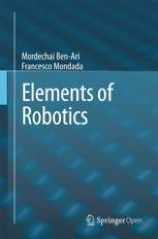
Elements of Robotics
Bridges the gap between playing with robots in school and studying robotics at the upper undergraduate and graduate levels to prepare for careers in industry and research. Robotic algorithms are presented formally, but using only mathematics known by high-school and first-year college students, such as calculus, matrices and probability. Concepts and algorithms are explained through detailed diagrams and calculations.

Eigenvalues, Inequalities, and Ergodic Theory
A problem of broad interest – the estimation of the spectral gap for matrices or differential operators (Markov chains or diffusions) – is covered in this book. The area has a wide range of applications, and provides a tool to describe the phase transitions and the effectiveness of random algorithms. In particular, the book studies a subset of the general problem, taking some approaches that have, up till now, only appeared largely in the Chinese literature.Eigenvalues, Inequalities and Ergodic Theory serves as an introduction to this developing field, and provides an overview of the methods used, in an accessible and concise manner.

eHealth Solutions for Healthcare Disparities
eHealth Solutions for Health Care Disparities brings these currents together, challenging readers to use, promote, and develop new technology-based methods for closing these gaps. The book examines cyber-strategies with the greatest potential toward effective, equitable care, improved service delivery and better health outcomes for all.
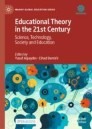
Educational Theory in the 21st Century : Science, Technology, Society and Education
This book reviews the effects of the twenty-first century scientific-technological and social developments on the educational theory. The first part handles the subject, focusing on technology and educational philosophy. In the second part, the implications of new human and social conceptions towards the education paradigms are examined. In the chapters of the last part of the book, more practical dimensions of education are discussed. Transforming school designs, school management, learning-teaching approaches and teacher competencies are discussed in the context of broader social, cultural and technological changes.

Education to Build Back Better : What Can We Learn from Education Reform for a Post-pandemic World
This book examines the implications of the COVID-19 Pandemic for education systems and argues that major education reforms will be necessary, particularly in the Global South, to address the learning loss caused by the pandemic. To inform those reforms, knowledge about the implementation reforms in the Global South is necessary, and such knowledge is seriously lacking as the existing literature on the implementation of educational change focused principally in reforms in countries in the Global North. This book contributes to address this gap by examining five major education reforms in India, Egypt, Taiwan, Vietnam, and Senegal, and by presenting two novel approaches to climate change education using a bottoms up strategy of reform.

Education Policies in the 21st Century : Comparative Perspectives
Explores the agenda of education policies in the 21st century. In the first part of the book, education is handled from a historical and political framework, and the effects of the change of states and policies on education are examined. In the second part, the effects of changes in the economy on education policies and economies’ demands from educational institutions are examined. In the last section, current policies in the international education sector, which is growing day by day as a result of increasing globalization and internationalization, are examined and future trends are tried to be revealed. In articles written by academics from different universities all over the world, the topics are presented in a comparative perspective.

Economic evolution and equilibrium : Bridging the gap
This work uses various model frameworks to study the evolution of equilibria in an open loop evolving economy in which the model characteristics evolve without any directional restrictions except for continuity.

E-Commerce : Concepts, Principles, and Application
Discusses the background of e-commerce, the basic knowledge of e-commerce, the basic models of e-commerce, the basic principles of e-commerce and the cases of e-commerce. This book has formed a theoretical system of e-commerce with a clear integration boundary. The introduction of the systematic theory is guided by the background of e-commerce, centered on the model of e-commerce, paved with the principles of e-commerce and integrated with the cutting-edge cases.

Ecological and Health Effects of Building Materials
Deals with the present adverse effects of using precarious building materials on the ecology and human health. Also, the detailed discussions on the novel and greener construction materials and their utilization as an alternative to the conventional harmful existing methods and materials are also presented in the subsequent chapters. This book helps to fill the research gaps in the existing prior-art knowledge in the field of sustainable construction and green building materials and methods giving due importance to ecology and health, specifically to the fields of sustainable structural engineering, sustainable geotechnical engineering, sustainable road engineering, etc.

Earthquake disaster simulation of civil infrastructures : From tall buildings to urban areas
Covers a range of numerical modeling approaches, higher performance computation methods, and high fidelity visualization techniques for earthquake disaster simulation of tall buildings and urban areas. It also demonstrates successful engineering applications of the proposed methodologies to typical landmark projects (e.g., Shanghai Tower and CITIC Tower, two of the world's tallest buildings; Beijing CBD and San Francisco Bay Area).

Dynamics AX : A guide to microsoft axapta
The world’s leading Axapta 3.0 experts will take you from Axapta novice to pro in this book. This authoritative and comprehensive guide walks you gently through the bulk of what you need to know to productively apply the system in the real worldwith real data, sizing guidelines, deployment architectures, and code. By the book’s end, you will have acquired practical hands-on experience. You’ll be able to get Axapta 3.0 up and running, and identify gaps between the out-of-the-box product and your actual business needs. You’ll also know how to automate real-world business functions.

Drawing Climate : Visualising Invisible Elements of Architecture
Investigates the history, theory and applications of climatic design in the built environment examining architecture and landscapes from various time periods. Based on a collaboration between the University of Sydney and the National University of Singapore, the book brings together contributing authors from Australia, Singapore, and the United States.

Do Exclusionary Rules Ensure a Fair Trial? : A Comparative Perspective on Evidentiary Rules
This publication discusses exclusionary rules in different criminal justice systems. It is based on the findings of a research project in comparative law with a focus on the question of whether or not a fair trial can be secured through evidence exclusion. Part I explains the legal framework in which exclusionary rules function in six legal systems: Germany, Switzerland, People’s Republic of China, Taiwan, Singapore, and the United States. Part II is dedicated to selected issues identified as crucial for the assessment of exclusionary rules. These chapters highlight the delicate balance of interests required in the exclusion of potentially relevant information from a criminal trial and discusses possible approaches to alleviate the legal hurdles involved.

DNA barcoding : Methods and protocols
Covers the latest advancements and methods used to study DNA barcoding. The chapters in this book are organized into six parts: theory, DNA manipulation, specialized barcoding methods, analysis of DNA barcodes, completing a successful DNA barcode project, and barcoding as citizen science. Part One looks at several theoretical issues in DNA barcoding concerned with DNA barcodes that can and should be used. Part Two discusses protocols for processing samples into DNA barcodes, including DNA isolation, sequencing and managing samples, and the resulting DNA barcodes. Part Three explores the next generation of DNA barcoding such as FRET-based detection, dual nanopore detection, skimming, and closed-tube methods. Part Four addresses programs and websites that handle DNA barcoding data, and includes character-based approaches, barcode gap methods, integrated approaches, and Barcode of Life Database

Distributed computing in sensor systems ; 3rd IEEE International Conference, DCOSS 2007, Santa Fe, NM, USA, June 18-20, 2007, Proceedings
The book covering the areas of algorithms, applications, and systems, thus bridging the gap between theory and practice and between the broader field of distributed computing and the specific issues arising in sensor networks and related systems.

Discovery science ; Vol. 3735 ; 8th International Conference, DS 2005, Singapore, October 8-11, 2005, Proceedings
This book constitutes the refereed proceedings of the 8th International Conference on Discovery Science, DS 2005, held in Singapore in October 2005, co-located with the International Conference on Algorithmic Learning Theory (ALT 2005). The 21 revised long papers and the 6 revised regular papers presented together with 9 project reports and 5 invited papers were carefully reviewed and selected from 112 submissions. The papers cover all issues in the area of automating scientific discovery or working on tools for supporting the human process of discovery in science.

Dilute III-V Nitride Semiconductors and Material Systems : Physics and Technology
A major current challenge for semiconductor devices is to develop materials for the next generation of optical communication systems and solar power conversion applications. Recently, extensive research has revealed that an introduction of only a few percentages of nitrogen into III-V semiconductor lattice leads to a dramatic reduction of the band gap. This discovery has opened the possibility of using these material systems for applications ranging from lasers to solar cells. Physics and Technology of Dilute III-V Nitride Semiconductors & Novel Dilute Nitride Material Systems reviews the current status of research and development in dilute III-V nitrides, with 24 chapters from prominent research groups covering recent progress in growth techniques, experimental characterization of band structure, defects carrier transport, transport properties, dynamic behavior of N atoms, device applications, modeling of device design, novel optoelectronic integrated circuits, and novel nitrogen containing III-V materials.

Digital Restorative Dentistry : A Guide to Materials, Equipment, and Clinical Procedures
Offers up-to-date, readily understandable guidance on the materials and equipment employed in digital restorative dentistry and on the specific clinical procedures that may be performed using the new technologies. The key components of digital restorative dentistry – image acquisition, prosthetic/restorative design, and fabrication – are fully addressed. Readers will find helpful information on scanners, the software for prosthetic design, and the materials and technologies for prosthesis fabrication, including laser sintering, 3D printing, CAD/CAM, and laser ablation. The section on clinical procedures explains all aspects of the use of digital technologies in the treatment of patients requiring removable partial dentures, complete dentures, fixed partial prostheses, crowns, endodontics, and implant surgery and prosthodontics. The field of restorative and prosthetic dentistry is undergoing rapid transition as these new technologies come to play an increasingly central role in everyday dental practice. In bridging the knowledge gap that this technological revolution has created in the field of dentistry, the book will satisfy the needs of both dentists and dental students.

Diastema (diagnosis & management)
Management strategies for midline diastema include addressing the underlying cause, habit correction, and potential orthodontic or restorative treatments. Orthodontic options like traditional braces, clear aligners, and lingual braces are effective in closing the gaps. Restorative treatments such as composite bonding, porcelain veneers, and ceramic crowns also offer solutions, with each method tailored to the patient’s specific needs. Despite numerous studies on environmental factors influencing diastema, the genetic basis remains under researched. Proper diagnosis, treatment planning, and long-term retention are crucial for successful diastema management.

Development of trans-free lipid systems and their use in food products
Encompasses the work of leading researchers discussing, from a scientific and technological perspective, the latest and most innovative approaches to structure edible oils without the use of trans fats. Additionally, the authors discuss practical uses and technical limitations associated with the use of "structured edible oils" in different food systems. Appealing to researchers and professionals working in lipid science, food chemistry and fat metabolism, it fills the gap in the literature for a book in this fast-changing field.
