



الصفحة 7
الصفحة 7
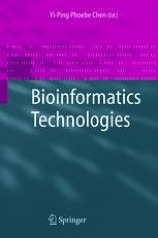
Bioinformatics technologies
Solving modern biological problems requires advanced computational methods. Bioinformatics evolved from the active interaction of two fast-developing disciplines, biology and information technology. The central issue of this emerging field is the transformation of often distributed and unstructured biological data into meaningful information. This book describes the application of well-established concepts and techniques from areas like data mining, machine learning, database technologies, and visualization techniques to problems like protein data analysis, genome analysis and sequence databases. Chen has collected contributions from leading researchers in each area. The chapters can be read independently, as each offers a complete overview of its specific area, or, combined, this monograph is a comprehensive treatment that will appeal to students, researchers, and R&D professionals in industry who need a state-of-the-art introduction into this challenging and exciting young field.
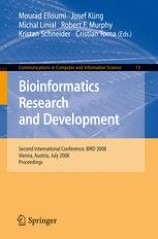
Bioinformatics research and development ; 2nd International Conference, BIRD 2008 Vienna, Austria, July 7-9, 2008 Proceedings
This book constitutes the refereed proceedings of the Second International Bioinformatics Research and Development Conference, BIRD 2008, held in Vienna, Austria in July 2008.

Bioinformatics research and development ; 1st International Conference, BIRD 2007, Berlin, Germany, March 12-14, 2007, Proceedings
This volume covers a wide range of topics related to bioinformatics like microarray data, genomics, single nucleotide polymorphism, sequence analysis, systems biology, medical applications, proteomics, information systems.

Bioinformatics research and applications ; 3rd International Symposium,ISBRA 2007, Atlanta, GA, USA, May 7-10, 2007, Proceedings
This book including clustering and classification, gene expression analysis, gene networks, genome analysis, motif finding, pathways, protein structure prediction, protein domain interactions, phylogenetics, and software tools.

Bioinformatics research and applications : 4th International Symposium, ISBRA 2008, Atlanta, GA, USA, May 6-9, 2008. Proceedings
This book constitutes the refereed proceedings of the Fourth International Symposium on Bioinformatics Research and Applications, ISBRA 2008, held in Atlanta, GA, USA in May 2008.
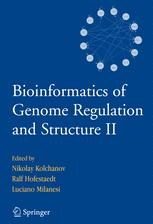
Bioinformatics of genome regulation and structure II
The conference was organized by the Laboratory of Theoretical Genetics, Institute of Cytology and Genetics, Siberian Branch of the Russian Academy of Sciences, Novosibirsk, Russia. The material covers the most recent topics in bioinformatics, including (i) regulatory genomic sequences: databases, knowledge bases, computer analysis, modeling, and recognition; (ii) large-scale genome analysis and functional annotation; (iii) gene structure detection and prediction; (iv) comparative and evolutionary genomics; (v) computer analysis of genome polymorphism and evolution; computer analysis and modeling of transcription, splicing, and translation; structural computational biology: structure- function organization of genomic DNA, RNA, and proteins; (vi) gene networks, signal transduction pathways, and genetically controlled metabolic pathways: databases, knowledge bases, computer analysis, and modeling; principles of organization, operation, and evolution; (vii) data warehousing, knowledge discovery and data mining; and (viii) analysis of basic patterns of genome operation, organization, and evolution.
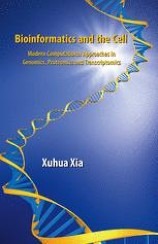
Bioinformatics and the cell : Modern computational approaches in genomics, proteomics and transcriptomics
"Xuhua Xia’s Bioinformatics and the Cell is a welcome addition to the bourgeoning field of bioinformatics text books. Xia stakes out a too-often neglected middle ground in bioinformatics by presenting a work that emphasizes methods’ biological utility without eschewing algorithmic formalism. Readers will find a well-rounded presentation of bioinformatics techniques employed in genomics, transcriptomics and proteomics – unified throughout by the common theme of molecular evolution."
Bioinformatics and Computational Biology Solutions Using R and Bioconductor
Bioconductor is a widely used open source and open development software project for the analysis and comprehension of data arising from high-throughput experimentation in genomics and molecular biology. Bioconductor is rooted in the open source statistical computing environment R. This volume's coverage is broad and ranges across most of the key capabilities of the Bioconductor project, including: Importation and preprocessing of high-throughput data from microarray, proteomic, and flow cytometry platforms / Curation and delivery of biological metadata for use in statistical modeling and interpretation. / Statistical analysis of high-throughput data, including machine learning and visualization,modeling and visualization of graphs and networks. This book is a dynamic document. Code underlying all of the computations that are shown is made available on a companion website, and readers can reproduce every number, figure, and table on their own computers.
Bioinformatics : Problem Solving Paradigms
This book highlights basic paradigms of problem analysis and algorithm design in the context of core bioinformatics problems. Mathematically demanding themes are put across to the reader by properly chosen representations with the aid of lots of illustrations.
Bioinformatics
In this textbook present mathematical models in bioinformatics and they describe the biological problems that inspire the computer science tools used to handle the enormous data sets involved. The first part of the book covers the mathematical and computational methods, while the practical applications are presented in the second part. The mathematical presentation is descriptive and avoids unnecessary formalism, and yet remains clear and precise. Emphasis is laid on motivation through biological problems and cross applications. Each of the four chapters in the first part is accompanied by exercises and problems to support an understanding of the techniques presented. Each of the six chapters of the second part is devoted to some specific application domain: sequence alignment, molecular phylogenetics and coalescence theory, genomics, proteomics, RNA, and DNA microarrays. Each chapter concludes with a problems and projects section, to deepen the reader's understanding and to allow for the design of derived methods. Many of the projects involve publicly available software and/or Web-based bioinformatics depositories. Finally, the book closes with a thorough bibliography, reaching from classic research results to very recent findings, providing many pointers for future research.Overall, this volume is ideally suited for a senior undergraduate or graduate course on bioinformatics, with a strong focus on its mathematical and computer science background.
Bioengineering in cell and tissue research
This book reviews the latest technological developments of bioengineering approaches in cell and tissue research. It is meant to have life and spirit, and to become a pioneer in technology and sciences, especially the life science. The chapters are written by excellent scientists on advanced, frontier technology and address scientific questions that need considerable thinking in terms of engineering.
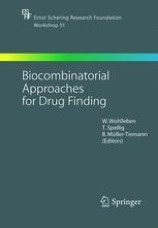
Biocombinatorial approaches for drug finding
Genome- and proteome-based research is generating a significant increase in the number of available drug targets. Correspondingly there is an increasing need for novel, diverse compounds, particularly based on natural compounds, as screening resource
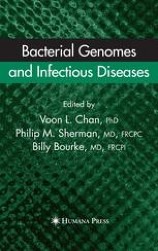
Bacterial Genomes and Infectious Diseases
This book imparts fundamental knowledge on the structure, organization, and evolution of bacterial genomes. The value and power of comparative genomics and proteomics, bioinformatics, microarrays, and knockout animal models in analyzing genomes, bacteria-host interactions and disease are demonstrated. Also discussed are the genomes of virulent and nonvirulent strains and species, origin and evolution of pathogens, different models of bacteria-host interactions, and diseases mechanisms.
Bacterial chromatin : Methods and protocols
Brings together new and updated methods to explore the structure and function of bacterial chromatin from molecular to the cellular scale. Chapters detail experimental protocols of in vivo and in vitro approaches, approaches to genome structure modeling, and data analysis. Written in the highly successful Methods in Molecular Biology series format, chapters include introductions to their respective topics, lists of the necessary materials and reagents, step-by-step, readily reproducible laboratory protocols, and key tips on troubleshooting and avoiding known pitfalls.
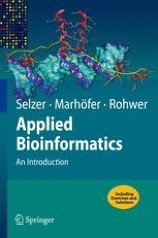
Applied Bioinformatics : An Introduction
In this book, anyone who can operate a PC, standard software and the Internet will learn to understand the biological basis of bioinformatics of the existence as well as the source and availability of bioinformatics software how to apply these tools and interpret results with confidence.This is aided by introductory chapters to important aspects of bioinformatics, detailed bioinformatics exercises, including solutions and a glossary of definitions and terminology relating to bioinformatics.
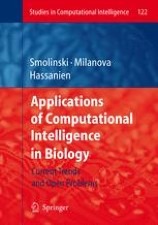
Applications of computational intelligence in biology : Current trends and open problems
The purpose of this book is to provide a medium for such an exchange of expertise and concerns. In order to achieve the goal, we have solicited cont- butions from both computational intelligence as well as biology researchers.
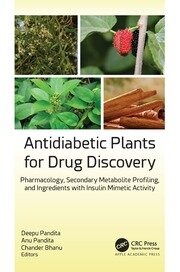
Antidiabetic plants for drug discovery pharmacology, secondary metabolite profiling, and ingredients with insulin mimetic activity
Takes an in-depth look at the potential pharmacological applications of 11 important antidiabetic plants, examining their antihyperglycemic, hypoglycemic, and anti-lipidemic properties along with current genome editing research perspectives. Plant natural products, or phytoconstituents, are promising candidates for antidiabetic pharmacological actions. The phytoconstituents, such as fl avonoids, terpenoids, saponins, carotenoids, alkaloids and glycosides, play vital roles in the current and future potent antidiabetic drug development programs. Each chapter reviews a particular plant with antidiabetic properties, explaining the therapeutic aspects, its active antidiabetic compounds, and relevant genome editing technology.
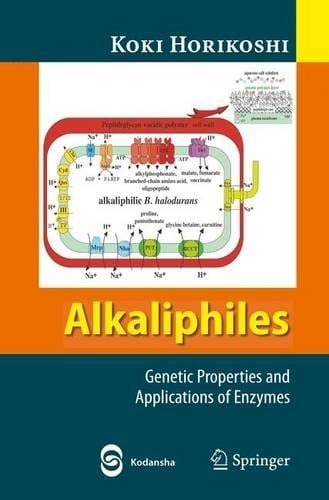
Alkaliphiles : Genetic properties and applications of enzymes
The pioneering work of Dr. Koki Horikoshi on the discovery, research and applications of alkaliphilic bacteria are described here in their entirety. The isolation, distribution and taxonomy of alkaliphilic microorganisms as well as their cell structure and physiology are discussed for a basic understanding of these entities. The molecular biology and genome sequencing of some alkaliphilic bacterial strains are also presented. Part II of the volume focuses on enzymes of alkaliphiles and their applications. These include alkaline proteases, starch-degrading enzymes and numerous others. Some of these enzymes are currently in wide commercial use as laundry detergent additives and in wastewater treatment. Alkaliphiles are a relatively recent field of research that will no doubt provide avenues to a wide range of further discoveries and applications for a new generation of workers in bioscience and technology.
Algorithms in Bioinformatics ; Vol.4175 : 6th International Workshop, WABI 2006, Zurich, Switzerland, September 11-13, 2006, Proceedings
This book constitutes the refereed proceedings of the 6th International Workshop on Algorithms in Bioinformatics, WABI 2006, held in Zurich, Switzerland in September 2006 in the course of the ALGO 2006 conference meetings. The 36 revised full papers presented were carefully reviewed and selected from 100 submissions. All current issues of algorithms in bioinformatics are addressed, ranging from mathematical tools to experimental studies of approximation algorithms and reports on significant computational analyses. Numerous biological problems are dealt with, including genetic mapping, sequence alignment and sequence analysis, phylogeny, comparative genomics, and protein structure. For the first time also machine-learning approaches along with combinatorial optimization are covered.
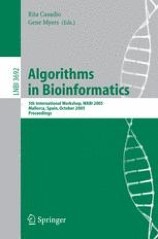
Algorithms in Bioinformatics ; Vol. 3692 ; 5th international workshop, WABI 2005, Mallorca, Spain, October 3-6, 2005, Proceedings
this book present the proceedings of the 5th Workshop on Algorithmsin Bioinformatics (WABI 2005) which took place in Spain, 2005. The Workshop on Algorithms in Bioinformatics highlights research workspecifically developed to address algorithmic problems in biosequence analysis. The emphasis is therefore on statistical and probabilistic algorithms that addressimportant problems in the field of molecular and structural biology. the workshop aims to present recent research results, includingsignificant work in progress, and to identify and explore directions of futureresearch.Original research papers (including significant work in progress) or state-of-the-art surveys were solicited on all aspects of algorithms in bioinformatics,including, but not limited to: exact and approximate algorithms for genomics,genetics, sequence analysis, gene and signal recognition, alignment, molecularevolution, phylogenetics, structure determination or prediction, gene expressionand gene networks, proteomics, functional genomics, and drug design.
