



الصفحة 7
الصفحة 7

Master dentistry ; Vol.2 : Restorative dentistry, paediatric dentistry and orthodontics
Provides a comprehensive overview of core elements of restorative adult and paediatric dentistry that students will need in order to pass their final exams. Edited by Professor Giles McCracken, the book provides key details and an overall broad summary of the multiple facets of restorative dentistry, pediatric dentistry and orthodontics. It includes conscious sedation, anxiety management and how law, ethics and professionalism interface with the delivery of dentistry. The book has been fully updated to include developments in restorative dentistry, the latest materials and new technology, and is ideal for undergraduate students, vocational trainees and those preparing for post-graduate examinations.

Manual of Digital Earth
This book offers a summary of the development of Digital Earth over the past twenty years. By reviewing the initial vision of Digital Earth, the evolution of that vision, the relevant key technologies, and the role of Digital Earth in helping people respond to global challenges, this publication reveals how and why Digital Earth is becoming vital for acquiring, processing, analysing and mining the rapidly growing volume of global data sets about the Earth.
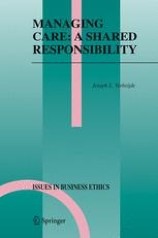
Managing Care : A Shared Responsibility
The concept of genuine responsibility, recognizing the complexity of health care and the need for stakeholder-specific interpretations of responsibility, proposes as the underlying premise of responsibility (at least in regard to health care) the social agreement that distributive choices should be made on the basis of the premise of deliberate reciprocity. When all parties share the same foundation on which the notion of responsibility is built the resulting trust and cooperation among stakeholders enables them to find morally appropriate solutions in reforming health care.This book that is at the same time provocative and important. It proposes to change the way we think about deploying healthcare resources. It will accomplish its goal for readers who are willing to be challenged at a basic level. Intellectually sound and a very good read too.
Managing Agile Business Technology : The Business and Technology Relationship Model in Practice
Describes in detail how the BTRM, combined with a focus on value creation and value delivery, will enable continuous change, in the context of current, emerging and future technologies. It illustrates the potential for real-time insight and control not previously considered and provides a wide range of information to plan an implementation, understand where AI can be applied, and its importance in the world of self-managing systems.

Man as a place of God : Levinas' Hermeneutics of Kenosis
Man as a Place of God is an examination of Levinas’ philosophy of religion in the light of his ethics and anthropology. It provides a lively introduction to the main themes of Levinas’ thought and offers critical perspectives on Levinas by relating his work to that of Heidegger, Ricoeur, Rorty, Derrida and Vattimo.
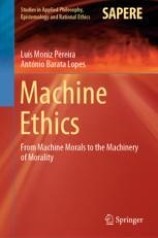
Machine Ethics : From Machine Morals to the Machinery of Morality
Offers the first systematic guide to machine ethics, bridging between computer science, social sciences and philosophy. Based on a dialogue between an AI scientist and a novelist philosopher, the book discusses important findings on which moral values machines can be taught and how. In turn, it investigates what kind of artificial intelligence (AI) people do actually want.
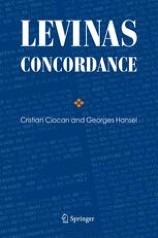
Levinas Concordance
The concrete impact of the Levinasian philosophy upon the variousdirections of thinking – from ontology and ethics to Jewish thought, theolo-gy, aesthetics or feminism – attests moreover the great significance of thissingular figure of our times.For more than three decades now his philosophy has come to be thesubject of many doctoral theses, articles and books. The complete “Levinasbibliography” counts currently thousands of titles in more than ten lan-guages. The important contribution that a Levinas Concordancewould bring asa valuable instrument for exegetes,

Leibniz and the natural world : Activity, passivity and corporeal substances in Leibniz's Philosophy
In the present book, Pauline Phemister argues against traditional Anglo-American interpretations of Leibniz as an idealist who conceives ultimate reality as a plurality of mind-like immaterial beings and for whom physical bodies are ultimately unreal and our perceptions of them illusory. Re-reading the texts without the prior assumption of idealism allows the more material aspects of Leibniz's metaphysics to emerge. Leibniz is found to advance a synthesis of idealism and materialism. His ontology posits indivisible, living, animal-like corporeal substances as the real metaphysical constituents of the universe; his epistemology combines sense-experience and reason; and his ethics fuses confused perceptions and insensible appetites with distinct perceptions and rational choice. In the light of his sustained commitment to the reality of bodies, Phemister re-examines his dynamics, the doctrine of pre-established harmony and his views on freedom.
Leibniz : What Kind of Rationalist?
The chapters of the book are the result of intense discussion in the course of an international conference focused on the title question of this book, and were selected in view of their contribution to this topic. They are clustered in thematically organized parts. No effort has been made to hide the controversies underlying the different interpretations of Leibniz’s “rationalism” – in each particular domain and as a whole. On the contrary, the editor firmly believes that only through a variety of conflicting interpretive perspectives can the multi-faceted nature of an oeuvre of such a magnitude and variety as Leibniz’s be brought to light and understood as it deserves.

Leadership today : Practices for personal and professional performance
Provides a clear understanding of leadership needs in today’s business world, explained within the scope of hard and soft leadership skills. It captures qualities and skills such as spirituality, empathy, moral behavior, mindfulness, empathy, problem solving, self-confidence, ambition, knowledge, global understanding, and information technology. This text explains and provides guidelines for the implementation of each skill and includes examples from contemporary and historical leaders inviting the reader to consider each quality and engage in self-reflection. This book deviates from excessive theoretical descriptions presenting a timely, hands-on approach to leadership.
Leadership and Business Ethics ; 2nd ed.
Seeks to overcome the marginal status of business ethics in universities, business, and enterprise by demonstrating that virtue ethics is an important step in the direction of an adequate response to the leadership issue. This new edition of a popular work points to new ways of achieving an ever more urgent coalescence of ethics and business. It proposes practical advice and viable suggestions to business people on what is right and wrong in business. The volume makes a vital contribution in the area of education that should serve the ongoing development of top leaders.
Leadership and Business Ethics ; 1st ed.
Seeks to contribute to a more adequate coalescence of ethics and business with innovative models for such coalescence, for the mutual benefit of business ethicists, professors teaching in the undergraduate and MBA classroom, corporate executives, and businesspeople. While each of the contributions in this collection is distinct, each invites us to examine our own mind sets about corporate responsibility and the future of free enterprise as Western multinational corporations expand into a global economy. This collection of essays helps to refocus our conceptual work about commerce and business practices in this new century of global enterprise.
Le bouddhisme et la médecine traditionnelle de lInde = Buddhism and traditional medicine from India
Aims to return to ancient India, to the sources of Buddhism. It is a question of comparing the religious bodies of Buddhism of the origins with the treatises relating to Ayurveda, the medicine practiced in India at that time.
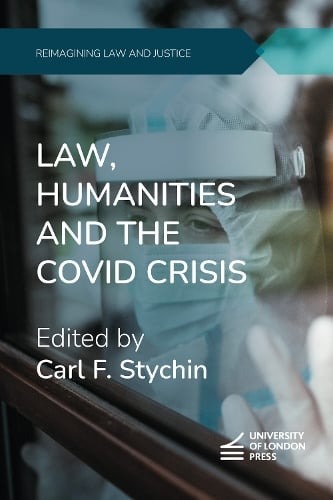
Law, Humanities and the COVID Crisis
Seeks to address the immediacy of COVID-19 by focusing on the implications of the virus in a wider interdisciplinary context Law, Humanities and the COVID Crisis</i> sets out a framework for understanding the COVID-19 virus beyond its epidemiological constraints, asking us to question the very definition of what it means to be human. Researchers from around the world offer their critical reflections on the past, present, and future of this period of sociocultural upheaval and the tremendous suffering that has laid bare fundamental imbalances in our society.
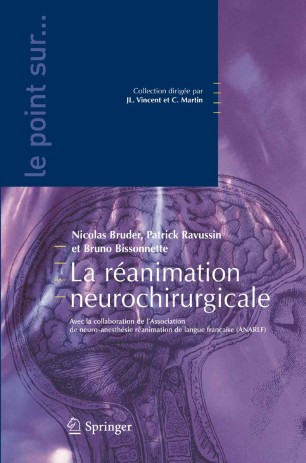
La réanimation neurochirurgicale = Neurosurgical resuscitation
«decade of the brain », s’est ajouté en clinique humaine le développement des nouvelles techniques d’imagerie. Ceci a permis d'enterrer enfin certaines idées anciennes et de développer de nouvelles stratégies thérapeutiques fondées sur une meilleure compréhension des mécanismes physiopathologiques de l’agression cérébrale en transposant les résultats de la recherche fondamentale dans la pratique de tous les jours. Il ne fait aucun doute que le médecin, qu'il soit anesthésiste, réanimateur, urgentiste, qui serait passé « à côté » de cette période concernant la prise en charge globale du cerveau agressé se retrouverait distancé face à la prise en charge actuelle et n’aurait pas en main les moyens d’en comprendre sa justification. L’association de neuro-anesthésie réanimation de langue Française
Kantianism for animals : A radical kantian animal ethic
The book gives readers in animal ethics an accessible introduction to Kant’s views on our duties to others, and his view that we have only ‘indirect’ duties regarding animals. It then investigates how one would have to depart from Kant in order to recognise that animals matter morally for their own sake. The result is a deliberately amended version of Kantianism which nevertheless remains faithful to central aspects of Kant’s thought. The book’s final part illustrates the framework’s use in applied contexts, addressing the issues of using animals as mere means, the ethics of veganism and vegetarianism, and environmental protection.
Complementary and Alternative Medicine : Ethics, the Patient, and the Physician
Complementary and Alternative Medicine examines the real-life implications of patient issues and the healthcare system in which care is delivered. Because complementary and alternative medicine (CAM) are not presently considered to be a part of conventional medicine, this book discusses the effect that CAM has on patients, physicians, healthcare, and policymakers. Also included are the implications that CAM has on traditional patient-physician relationships as well as the physician's ethical obligations on this subject.
Competence and Vulnerability in Biomedical Research
In this book, the author develops a novel justificatory framework for making judgments of decisional competence to consent to biomedical research with reference to five groups of cognitively vulnerable individuals - older children and adolescents, adults with intellectual disabilities, adults with depression, adults with schizophrenia and adults with dementia, including Alzheimer’s disease.
Compendium of civil Engineering education strategies : Case studies and examples
Compiles proven strategies and information on civil engineering education and the skills necessary for successful practice of civil engineering such as critical thinking, design thinking, leadership, and communication skills. It also addresses other relevant topics including professional ethics, global perspectives, assessment, recruitment, retention, and more.
Clinical Bioethics : A Search for the Foundations
Clinical Bioethics. A Search for the Foundations compares major theoretical models in the foundation of clinical bioethics and explains medicine as a normative practice. The goals of medicine are discussed with particular reference to the subjectivisation of health and the rationalisation of health care institutions. This volume provides a consistent reconstruction of bioethical judgment both at the level of epistemological statute and institutional context, i.e. clinical ethics committees and clinical ethics consultation.
