



الصفحة 7
الصفحة 7
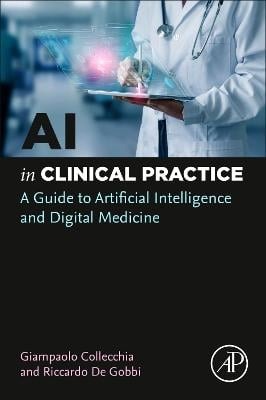
AI in clinical practice : A guide to artificial intelligence and digital medicine
Explains how artificial intelligence is applied to medicine, illustrating not only its enormous potential but also ancillary issues and the limits and risks inherent in its use on a large scale. The book focuses on the intersection between medicine and AI and its implications on the impact of human health care delivery. Topics discussed include wearable devices, health data, Internet of Things, virtual reality, robotic assistance system, and digital intelligence in the health sector. Additionally, sections discuss diagnostics and decision-making systems and machine/deep learning in clinical setting.

AI in banking : Practical applications and case studies
Delves into the application of AI from theory to practice, offering detailed insights into AI project design and code implementation across eleven business scenarios in four major sectors: retail banking, e-banking, bank credit, and tech operations. it provides hands-on examples of various technologies, including automatic machine learning, integrated learning, graph computation, recommendation systems, causal inference, generative adversarial networks, supervised learning, unsupervised learning, computer vision, reinforcement learning, fuzzy control, automatic control, speech recognition, semantic understanding, bayesian networks, edge computing, and more. this book stands as a rare and practical guide to AI projects in the banking industry.

AI and UX : Why artificial intelligence needs user experience
Great effort has been put forth to continuously make AI “smarter.” But, will smarter always equal more successful AI? It is not just about getting a product to market, but about getting the product into a user’s hands in a form that will be embraced. This demands examining the product from the perspective of the user. Authors Gavin Lew and Robert Schumacher have written AI and UX to examine just how product managers and designers can best strike this balance. From exploring the history of the parallel journeys of AI and UX, to investigating past product examples and failures, to practical expert knowledge on how to best execute a positive user experience, AI and UX examines all angles of how AI can best be developed within a UX framework.

AI 2020 : Advances in artificial intelligence ; 33rd Australasian Joint Conference, AI 2020, Canberra, ACT, Australia, November 29–30, 2020, Proceedings
Constitutes the proceedings of the 33rd Australasian Joint Conference on Artificial Intelligence, AI 2020, held in Canberra, ACT, Australia, in November 2020.* The 36 full papers presented in this volume were carefully reviewed and selected from 57 submissions. The paper were organized in topical sections named: applications; evolutionary computation; fairness and ethics; games and swarms; and machine learning.

Advances in image enhancement
In the era of the internet of things, images have played important roles in human–computer interactions, and with the arrival of big data technology, people have higher requirements regarding image quality, especially for images collected in dark light. This can be addressed through the development of camera hardware quality, i.e., the resolution and exposure time of cameras, which may require high computational costs. As an alternative, image enhancement techniques can exact salient features to improve the quality of captured images according to the differences in diverse features, although they suffer from some challenges, i.e., a low contrast, artifacts, and overexposure, thus making it decidedly necessary to determine how to use advanced image enhancement techniques.

Advances in Computational Collective Intelligence ; 12th International Conference, ICCCI 2020, Da Nang, Vietnam, November 30 – December 3, 2020, Proceedings
Constitutes refereed proceedings of the 12th International Conference on International Conference on Computational Collective Intelligence, ICCCI 2020, held in Da Nang, Vietnam, in November – December 2020. Due to the the COVID-19 pandemic the conference was held online. The 68 papers were thoroughly reviewed and selected from 314 submissions. The papers are organized according to the following topical sections: data mining and machine learning; deep learning and applications for industry 4.0; recommender systems; computer vision techniques; decision support and control systems; intelligent management information systems; innovations in intelligent systems; intelligent modeling and simulation approaches for games and real world systems; experience enhanced intelligence to IoT; data driven IoT for smart society; applications of collective intelligence; natural language processing; low resource languages processing; computational collective intelligence and natural language processing.
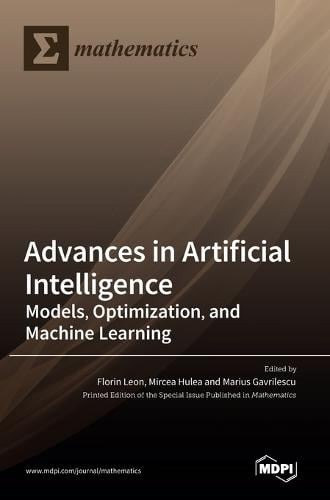
Advances in artificial intelligence: models, optimization, and machine learning
Contains all the articles accepted and published in the Special Issue “Advances in Artificial Intelligence: Models, Optimization, and Machine Learning” of the MDPI Mathematics journal, which covers a wide range of topics connected to the theory and applications of artificial intelligence and its subfields. These topics include, among others, deep learning and classic machine learning algorithms, neural modelling, architectures and learning algorithms, biologically inspired optimization algorithms, algorithms for autonomous driving, probabilistic models and Bayesian reasoning, intelligent agents and multiagent systems.

Advancement of Deep Learning and its Applications in Object Detection and Recognition
In just the past five years, deep learning has taken the world by surprise, driving rapid progress in fields as diverse as computer vision, natural language processing, automatic speech recognition, etc. This book presents an introduction to deep learning and various applications of deep learning such as recommendation systems, text recognition, diabetic retinopathy prediction of breast cancer, prediction of epilepsy, sentiment, fake news detection, software defect prediction and protein function prediction.

Advanced technique and future perspective for next generation optical fiber communications
Optical fiber communication industry has gained unprecedented opportunities and achieved rapid progress in recent years. However, with the increase of data transmission volume and the enhancement of transmission demand, the optical communication field still needs to be upgraded to better meet the challenges in the future development. Artificial intelligence technology in optical communication and optical network is still in its infancy, but the existing achievements show great application potential. In the future, with the further development of artificial intelligence technology, AI algorithms combining channel characteristics and physical properties will shine in optical communication. This reprint introduces some recent advances in optical fiber communication and optical network, and provides alternative directions for the development of the next generation optical fiber communication technology.
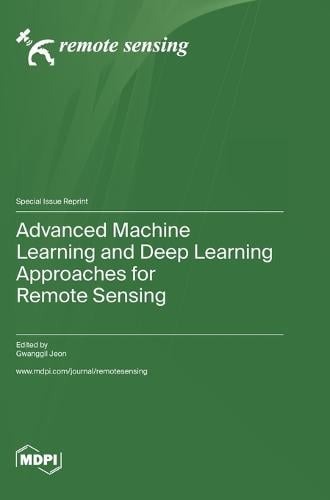
Advanced machine learning and deep learning approaches for remote sensing
Provides research on how technologies such as artificial intelligence-based machine learning and deep learning can be applied to remote sensing. Through this, we can see the process of solving the existing problems of image and image signal processing for remote sensing. These techniques are computationally intensive and require the help of high-performance computing devices. With the development of devices such as GPUs, remote sensing technology, and aerial sensing technology, it is possible to monitor the Earth with high-resolution images and to obtain vast amounts of Earth observation data. The papers published in this reprint describe recent advances in big data processing and artificial intelligence-based technologies for remote sensing technology.
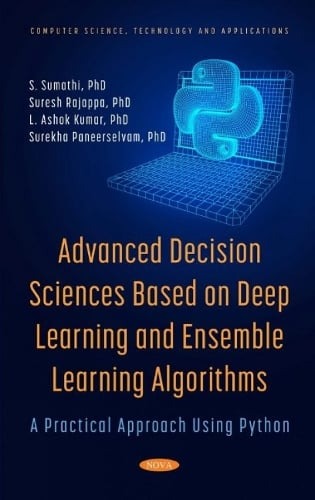
Advanced Decision Sciences Based on Deep Learning and Ensemble Learning Algorithms : A Practical Approach Using Python
Describes the deep learning models and ensemble approaches applied to decision-making problems. The authors have addressed the concepts of deep learning, convolutional neural networks, recurrent neural networks, and ensemble learning in a practical sense providing complete code and implementation for several real-world examples. The authors of this book teach the concepts of machine learning for undergraduate and graduate-level classes and have worked with Fortune 500 clients to formulate data analytics strategies and operationalise these strategies.
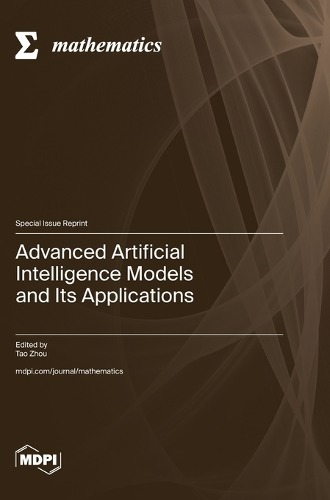
Advanced artificial intelligence models and its applications
The field of artificial intelligence (AI) has undergone enormous expansion since its inception in the mid-20th century, as demonstrated by its application across an array of engineering and scientific challenges. Particularly in the last decade, AI has witnessed a significant breakthrough with the advent of deep learning, which has facilitated the employment of various AI models across a multitude of domains. This reprint features ten papers accepted for publication in the Special Issue titled "Advanced Artificial Intelligence Models and Their Applications," published in the MDPI Mathematics journal. These papers explore numerous facets of advanced artificial intelligence models and their applications, covering areas such as cybersecurity, image classification, logistics optimization, automatic music generation, human capital investment, writer recognition, remote sensing image indexing, target tracking, and more.

Advance Concepts of Image Processing and Pattern Recognition : Effective Solution for Global Challenges
Explains the important concepts and principles of image processing to implement the algorithms and techniques to discover new problems and applications. It contains numerous fundamental and advanced image processing algorithms and pattern recognition techniques to illustrate the framework. It presents essential background theory, shape methods, texture about new methods, and techniques for image processing and pattern recognition. It maintains a good balance between a mathematical background and practical implementation. This book also contains the comparison table and images that are used to show the results of enhanced techniques. This book consists of novel concepts and hybrid methods for providing effective solutions for society. It also includes a detailed explanation of algorithms in various programming languages like MATLAB, Python, etc.

Adaptive Autonomous Secure Cyber Systems
Establishes scientific foundations for adaptive autonomous cyber systems and ultimately brings about a more secure and reliable Internet. The recent advances in adaptive cyber defense (ACD) have developed a range of new ACD techniques and methodologies for reasoning in an adaptive environment.

A vision-based system to early detection of drowning incidents in swimming pools
Being one of the leading causes of death; drowning has become a severe problem in the past few years. Our goal from this project is to focus on the comprehensive survey of drowning detection and prevention techniques. There are various methodologies put up in the domain of swimming pool safety using different intelligent control systems. Various methods have been adopted for drowning detection using the concepts of image processing, pressure and motion sensing. The main objectives of this work are to detect the drowning person in an indoor swimming pool and send an alarm to the lifeguard to rescue if the previously detected person is missing for a specific amount of time.

3D Imaging, Analysis and Applications
This textbook is designed for postgraduate studies in the field of 3D Computer Vision. It also provides a useful reference for industrial practitioners; for example, in the areas of 3D data capture, computer-aided geometric modelling and industrial quality assurance. This second edition is a significant upgrade of existing topics with novel findings. Additionally, it has new material covering consumer-grade RGB-D cameras, 3D morphable models, deep learning on 3D datasets, as well as new applications in the 3D digitization of cultural heritage and the 3D phenotyping of crops.
