



الصفحة 7
الصفحة 7

Cognitive Wireless Networks : Concepts, Methodologies and Visions Inspiring the Age of Enlightenment of Wireless Communications
Cognition, a continuous process involving sensing, reasoning, understanding and reacting, can be applied to wireless networks in order to adapt the system to the highly dynamic wireless ecosystem. The ultimate goals are to enhance the efficiency in the use of radio resources as well as to improve both link and network performance. This book presents a detailed overview of a rapidly emerging topic in modern communications: cognitive wireless networks. The key aspects of cognitive and cooperative principles in wireless networks are discussed in this book. Furthermore, Cognitive Wireless Networks advocates the concept of breaking up the cellular communication architecture by introducing cooperative strategies among wireless devices. Cognitive wireless networking is the key to success in handling the upcoming dynamic network configurations and exploiting this cross-over to the fullest extent.

Cognitive Wireless Communication Networks
this book offers a wide range of information on the subject. Topics covered include the fundamental challenges and issues in designing cognitive radio systems to the information-theoretic analysis of such systems, spectrum sensing and co-existence issues, adaptive physical layer protocols and link adaptation techniques for cognitive radio, orthogonal frequency division multiple access (OFDM) and ultra wide band (UWB)-based cognitive radio, different techniques for spectrum access by distributed cognitive radio, cognitive medium access control (MAC) protocols, decentralized learning-based dynamic spectrum access methods as well as macroeconomic models for spectrum management in cognitive radio.

Cognitive Vision Systems : Sampling the Spectrum of Approaches
This volume is a post-event proceedings volume and contains selected papers based on the presentations given, and the lively discussions that ensued, during a seminar held in Dagstuhl Castle, Germany, in October 2003. Co-sponsored by ECVision, the cognitive vision network of excellence, it was organized to further strengthen cooperation between research groups from different countries, and scientists active in related areas were invited from around the world.

Cognitive Vision ; 4th International Workshop, ICVW 2008, Santorini, Greece, May 12, 2008, Revised Selected Papers
This volume constitutes the post-conference proceedings of the 4th International Cognitive Vision Workshop, ICVW 2008, held in Santorini, Greece, on May 12, 2008.

Cognitive Systems ; Joint Chinese-German Workshop, Shanghai, China, March 7-11, 2005, Revised Selected Papers
This book organized in topical sections on multimodal human-computer interfaces, neuropsychology and neurocomputing, Chinese-German natural language processing and psycholinguistics, as well as information processing and retrieval from the semantic Web for intelligent applications.

Cognitive Supervision for Robot-Assisted Minimally Invasive Laser Surgery
This thesis lays the groundwork for the automatic supervision of the laser incision process, which aims to complement surgeons’ perception of the state of tissues and enhance their control over laser incisions. The research problem is formulated as the estimation of variables that are representative of the state of tissues during laser cutting. Prior research in this area leveraged numerical computation methods that bear a high computational cost and are not straightforward to use in a surgical setting. This book proposes a novel solution to this problem, using models inspired by the ability of experienced surgeons to perform precise and clean laser cutting. It shows that these new models, which were extracted from experimental data using statistical learning techniques, are straightforward to use in a surgical setup, allowing greater precision in laser-based surgical procedures.

Cognitive Radio, Software Defined Radio, and Adaptive Wireless Systems
This book is aimed to discuss the cognitive radio, software defined radio (SDR), and adaptive radio concepts from several aspects. Cognitive radio and cognitive networks will be investigated from a broad aspect of wireless communication system enhancement while giving special emphasis on better spectrum utilization. Applications of cognitive radio, SDR and cognitive radio architectures, spectrum efficiency and soft spectrum usage, adaptive wireless system design, measurements and awareness of various parameters including interference temperature and geo-location information are some of the important topics that will be covered in this book.
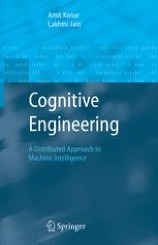
Cognitive engineering : A distributed approach to machine intelligence
Cognitive Engineering: A Distributed Approach to Machine Intelligence explores the design issues of intelligent engineering systems. Beginning with the foundations of psychological modeling of the human mind, the main emphasis is given to parallel and distributed realization of intelligent models for application in reasoning, learning, planning and multi-agent co-ordination problems. The last two chapters provide case studies on human-mood detection and control, and behavioral co-operation of mobile robots. This is the first comprehensive text of its kind, bridging the gap between Cognitive Science and Cognitive Systems Engineering. Each chapter includes plenty of numerical examples and exercises with sufficient hints, so that the reader can solve the exercises on their own. Computer simulations are also included in most chapters to give a clear idea about the application of the algorithms undertaken in the book. In addition, mathematical analysis on convergence and stability of the neuro-fuzzy models will enable the reader to pursue their research career in cognitive engineering.

Cognitive Economics
As a manifestation of a 'cognitive turn' observable in all social sciences, Cognitive Economics is concerned with the beliefs and mental operations held by actors placed within a dynamical and strategic environment. It appears as a synthesis of an educative research program, dealing with crossed expectations of actors, and an evolutionist research program on collective learning processes. The book mainly aims at extending the framework of game theory in order to better fit the results of rapidly increasing laboratory experiments concerned with individual choices and collective interactions. It also seeks to better explain some original economic phenomena involving boundedly rational agents in an institutional setting such as financial bubbles, job search or technological innovation.

Cognitive Development in Chimpanzees
From an evolutionary perspective, understanding chimpanzees offers a way of understanding the basis of human nature. This book on cognitive development in chimpanzees is the first of its kind to focus on infants reared by their own mothers within a natural setting, illustrating various aspects of chimpanzee cognition and the developmental changes that accompany them. The subjects of this book are chimpanzees of three generations inhabiting an enriched environment as well as a wild community in West Africa; and phenomena such as face recognition, concept formation, object manipulation, tool manufacture and use, decision making, learning, communication, self-awareness, intentionality, understanding others’ minds, cooperation, deception, altruism, and reciprocity observed within these groups are reported herein. Unique approaches both in the field and in the laboratory go hand in hand to illustrate the cognitive world of our closest living evolutionary relatives.

Cognitive Computing in Human Cognition : Perspectives and Applications
This edited book designs the Cognitive Computing in Human Cognition to analyze to improve the efficiency of decision making by cognitive intelligence. The book is also intended to attract the audience who work in brain computing, deep learning, transportation, and solar cell energy. Due to this in the recent era, smart methods with human touch called as human cognition is adopted by many researchers in the field of information technology with the Cognitive Computing.

Cognitive Behavioral Treatment of Insomnia : A Session-by-Session Guide
Cognitive behavior therapy which has been adapted to treat so many problems, has also brought data-driven and data-yielding treatment to insomnia. Focusing on this evidence-based modality, Cognitive Behavioral Treatment of Insomnia is a much-needed treatment manual that provides clinicians with the why’s and how’s of this approach in concise and practical terms.

Cognitive Behavioral Therapy for Chronic Illness and Disability
Severe pain, debilitating fatigue, sleep disruption, severe gastrointestinal distress – these hallmarks of chronic illness complicate treatment as surely as they disrupt patients’ lives, in no small part because of the overlap between biological pathology and resulting psychological distress. Cognitive Behavioral Therapy for Chronic Illness and Disability cuts across formal diagnostic categories to apply proven therapeutic techniques to potentially devastating conditions, from first assessment to end of treatment. Four extended clinical case examples of patients with chronic fatigue, rheumatoid arthritis, inoperable cancer, and Crohn’s disease are used throughout the book to demonstrate how cognitive-behavioral interventions can be used to effectively address ongoing medical stressors and their attendant depression, anxiety, and quality-of-life concerns. At the same time, they highlight specific patient and therapist challenges commonly associated with chronic conditions.

Cognitive Aspects of Bilingualism
A unique feature of this book is that chapters favor that line of cognitive linguistics which makes a clear distinction between real world and projected world. Information conveyed by language must be about the projected world. Both the experimental results and the systematic claims in this volume call for a weak form of whorfianism. Also, chapters add some relatively unexplored issues of bilingualism to the well-known ones, such as gender systems in the bilingual mind, context and task, synergic concepts, blending, the relationship between lexical categorization and ontological categorization among others.

Cognition, Communication and Interaction : Transdisciplinary Perspectives on Interactive Technology
This book aims to provide a trans-disciplinary research framework and methodology for interaction design. The analysis directs attention to three human capacities that our engagement with interactive technology has made salient and open to constant redefinition.

Material Agency : Towards a Non-Anthropocentric Approach
This book is a groundbreaking attempt to address questions of non-human and material agency from a wide range of perspectives and disciplines: archaeology, anthropology, sociology, cognitive science, philosophy, and economics. The editors and authors demostrate that a distributed, relational approach to agency, incorporating both humans and artifacts, has important ramifications for how we understand material culture.

Managing Nano-Bio-Info-Cogno Innovations : Converging Technologies in Society
Tremendous human progress is becoming possible through the development of converging technologies stimulated by advances in four core fields: Nanotechnology, Biotechnology Information technology, and new technologies based in Cognitive science (NBIC). This book provides a unique review of technical developments related to the unification that is rapidly taking place today among these fields.

Management of the Addicted Patient in Primary Care
لThe text is logically organized and key information is easily accessible. The introductory section offers the reader important background and rationale for evaluating and treating addiction in primary care. Following a useful presentation of addiction "basics" (i.e., definitions, neurobiology, genetics, and the disease model), the majority of the book focuses on helping the physician gain insight and develop practical skills that can be readily implemented. A wealth of clinical assessment tools is provided, and the underlying psychosocial processes common to all forms of addiction are discussed. Both pharmacologic interventions and nonpharmalogic modalities are clearly outlined. Of particular note are specific cognitive-behavioral and motivational strategies that can be administered in an office-based setting. The role of community-based recovery support systems is considered as well. Since a complete understanding of why and when to refer is critical to the management of this often life-threatening condition, criteria for referral are detailed. Bulleted clinical "pearls" further aid the reader in gaining insight into treating this difficult patient population.

Machine Learning for Cyber Physical Systems : Selected papers from the International Conference ML4CPS 2020
Presents new approaches to Machine Learning for Cyber Physical Systems, experiences and visions. It contains selected papers from the fifth international Conference ML4CPS – Machine Learning for Cyber Physical Systems, which was held in Berlin, March 12-13, 2020.

Machine Learning for Cyber Physical Systems : Selected papers from the International Conference ML4CPS 2018
Presents new approaches to Machine Learning for Cyber Physical Systems, experiences and visions. Cyber Physical Systems are characterized by their ability to adapt and to learn: They analyze their environment and, based on observations, they learn patterns, correlations and predictive models. Typical applications are condition monitoring, predictive maintenance, image processing and diagnosis. Machine Learning is the key technology for these developments.
