



الصفحة 67
الصفحة 67

Handbook of psychodiagnostic testing : Analysis of personality in the psychological report
Since the debut of the original edition, the Handbook of Psychodiagnostic Testing has been an invaluable aid to students and professionals performing psychological assessments. The new Fourth Edition continues in that tradition, taking the reader from client referral to finished report, demonstrating how to synthesize details of personality and pathology into a document that is focused, coherent, and clinically meaningful. As with the previous editions, authors Kellerman and Burry offer a systematic framework for choosing the most relevant material from seemingly overwhelming amounts of test data. Separate chapters offer clear rationales for each component of the report (e.g., cognitive functioning, interpersonal behavior, control mechanisms), and how they relate to one another. Helpful summaries follow each chapter, and tables and charts provide salient facts and findings at a glance.

Handbook of production scheduling
The HANDBOOK OF PRODUCTION SCHEDULING concentrates on real-world production scheduling in factories and industrial settings. It includes industry case studies that use innovative techniques as well as academic research results that can be used to improve real-world production scheduling. Its purpose is to present scheduling principles, advanced tools, and examples of innovative scheduling systems to persons who could use this information to improve production scheduling in their own organization.

Handbook of philosophical logic ; Vol.13 ; 2nd ed.
in this book achapter on non-monotoniclogic a chapter on combinatory logic and calculus We feltat the time(1979)that non-monotonic logic was not ready fora chapter yet and that combinatory logic and calculus was toofar re-moved.1Non-monotonic logic is now a very major area of philosophi-cal logic, alongside default logics, labelled deductive systems,fibring log-ics, multi-dimensional,multi modal and substructur allogics. Intensive re-examinations offragments of classical logic have produced fresh insights,includingat time decision procedures and equivalence with non-classical systems

Handbook of pharmacokinetics and toxicokinetics
An effort to blend the common approaches to pharmacokinetics and toxicokinetics. It integrates the principles held in common by both fields through a logical and systematic approach, which includes mathematical descriptions of physical and physiological processes employed in approaches to PK/TK modeling. It emphasizes general principles and concepts and related isolated applications and case studies observations.The systematic compilation of mathematical concepts and methodologies allows readers to decide on relevant concepts and approaches for their research, scientific or regulatory decisions, or for offering advance courses/workshops and seminars.

Handbook of Performability Engineering
The Handbook of Performability Engineering considers all aspects of performability engineering, providing a holistic view of the entire life cycle of activities of the product, along with the associated cost of environmental preservation at each stage, while maximizing the performance.

Handbook of Pediatric Eye and Systemic Disease
Concise yet comprehensive, the chapters in this handbook are reader friendly, organized with clear sub-headings to quickly guide the reader to areas of interest. Excellent, detailed color photographs and diagrams illustrate and enhance the clinical pearls. Extensive use of tables and information boxes helps to simplify and summarize complex topics.Also included is a comprehensive outline of the ocular manifestation of inherited diseases. This chapter provides a clinical snapshot of dozens of congenital conditions and their ocular manifestations.

Handbook Of Operations Research In Natural Resources
Handbook of Operations Research in Natural Resources will be the first systematic handbook treatment of quantitative modeling natural resource problems, their allocated efficient use, and societal and economic impact. Andrés Weintraub is the very top person in Natural Resource research. Moreover, he has an international reputation in OR and a former president of the International Federation of Operational Research Societies (IFORS). He has selected co-editors who are at the top of the sub-fields in natural resources: agriculture, fisheries, forestry, and mining. The book will cover these areas in terms with contributions from researchers on modeling natural research problems, quantifying data, developing algorithms, and discussing the benefits of research implementations. The handbook will include tutorial contributions when necessary.

Handbook of ocean wave energy
This book offers a concise, practice-oriented reference-guide to the field of ocean wave energy. The ten chapters highlight the key rules of thumb, address all the main technical engineering aspects and describe in detail all the key aspects to be considered in the techno-economic assessment of wave energy converters. Written in an easy-to-understand style, the book answers questions relevant to readers of different backgrounds, from developers, private and public investors, to students and researchers. It is thereby a valuable resource for both newcomers and experienced practitioners in the wave energy sector.

Handbook of obesity prevention : A resource for health professionals
Comprehensive in scope and meticulously researched, Handbook of Obesity Prevention analyzes the intricate causes of this public health crisis, and sets out concrete, multilevel strategies for meeting it head-on. This innovative handbook starts by clearly defining obesity in clinical, epidemiologic, and financial terms. From there, expert contributors provide insights on current issues, methods, and controversies in the field, focusing on new opportunities for prevention, successful interventions and initiatives, and guidelines for planning and implementing programs and evaluating results. This systematic approach to large-scale social and policy change gives all parties involved—from individual practitioners to multinational corporations—the tools to set and attain realistic goals based on solid evidence and best practice in public health.

Handbook of neurochemistry and molecular neurobiology : Neurotransmitter Systems
The brain is the organ that collects information from the environment, processes and stores the information, and generates behavior as and when needed. In essence, the brain makes us who we are. For this reason, understanding the biology of brain function is a great challenge and a major goal of modern science. The brain is one of the last great frontiers in science, and the unraveling of its mysteries is comparable in complexity to efforts in space exploration. A fundamental goal of neuroscience is to understand how neurons generate behavior and the pathophysiology of different mental and neurological diseases. This requires, among other things, information about where these neurons are located, how they are connected, and how they communicate with each other in various physiological and pathophysiological conditions. Our aim is to describe recent discoveries about the basic operations of the brain and to provide an introduction to the adaptations for specific types of information processing.

Handbook of neurochemistry and molecular neurobiology : Neuroimmunology
Neuroimmunology is one of the most rapidly developing branches of Neurobiology, and this volume contains chapters that focus on a huge range of topics including the relationship between neuroimmunology and the pathogenesis of different nervous diseases.

Handbook of neurochemistry and molecular neurobiology : Development and Aging Changes in the Nervous System
In the animal nervous system, a very high metabolic turnover, fragile but steep ionic gradients, and morphological and structural constraints - dictated by the necessity for prompt neuronal transmission of electrical impulses and necessary plasticity - result in a highly fragile organ system. Here, we address a small sampling of major constituents of neural function at the cellular and molecular level that play important roles in development and aging, two endogenous processes that embody features of allostasis or the dynamic shifts in set points for specific homeostatic mechanisms associated with development and aging. These chapters stress the dynamic features of neuronal responses to internal (developmental) cues or the more harmful external events (injury and disease) in a modern perspective.

Handbook of neurochemistry and molecular neurobiology : Degenerative Diseases of the Nervous System
The Second Edition of the Handbook of Neurochemistry, which was published about 24 years ago, consisted of 10 volumes. In addition to metabolic processes, the 17 new volumes explore the functions of peptides, transport, immunology and other processes not well understood 24 years ago.

Handbook of neurochemistry and molecular neurobiology : Amino acids and peptides in the nervous system
It is our belief that this volume of the Handbook of Neurochemistry and Molecular Neurobiology provides an excellent review of the tremendous advances of the past decades in the neurochemical and molecular biological aspects of cerebral ischemia. It is hoped that these advances will provide an impetus for basic scientists and clinicians to further their translational research and to promote the insights for development of therapeutic interventions for stroke.

Handbook of neurochemistry and molecular neurobiology : Acute Ischemic injury and repair in the nervous system
It is our belief that this volume of the Handbook of Neurochemistry and Molecular Neurobiology provides an excellent review of the tremendous advances of the past decades in the neurochemical and molecular biological aspects of cerebral ischemia. It is hoped that these advances will provide an impetus for basic scientists and clinicians to further their translational research and to promote the insights for development of therapeutic interventions for stroke.

Handbook of networked and embedded control systems
The Handbook of Networked and Embedded Control Systems, the first of its kind, provides engineers, computer scientists, mathematicians, and students a broad, comprehensive source of information and technology to address many questions and aspects of embedded and networked control. A carefully organized collection of important results, tools, software, and technology, this work unifies into a single reference many scattered articles, websites, and specification sheets—information that might otherwise be difficult to find.

Handbook of Nature-Inspired and Innovative Computing : Integrating Classical Models with Emerging Technologies
This comprehensive handbook, the first of its kind to address the connection between nature-inspired and traditional computational paradigms, is a repository of case studies dealing with different problems in computing and solutions to these problems based on nature-inspired paradigms. The "Handbook of Nature-Inspired and Innovative Computing: Integrating Classical Models with Emerging Technologies" is an essential compilation of models, methods, and algorithms for researchers, professionals, and advanced-level students working in all areas of computer science, IT, biocomputing, and network engineering.

Handbook of nanoencapsulation : Preparation, characterization, delivery, and safety of nutraceutical nanocomposites
Nutraceutical encapsulation envelopes protection of products from oxidative damage, controlled delivery of nanoencapsulated nutraceuticals and improved nutraceutical bioavailability as well as biological action. It is a promising technique to ensure the stabilization of such labile compounds and to protect the core ingredients from premature reactions and interactions In a comprehensive manner, the Handbook of Nanoencapsulation: Preparation, Characterization, Delivery and Safety of Nutraceutical Nanocomposites presents various nanosystems/nanocarriers, physical and chemical techniques used in encapsulation of various nutraceuticals, and the targeted delivery of various significant nutraceuticals.
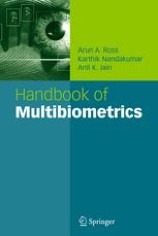
Handbook of multibiometrics
Handbook of Multibiometrics, a professional book, introduces multibiometric systems, and demonstrates the noteworthy advantages of these systems over their unimodal counterparts. In addition, this book describes in detail the various scenarios that are possible when fusing biometric evidence from multiple information sources. This comprehensive volume on multibiometric systems concisely and clearly outlines the different fusion methodologies that have been proposed by researchers to integrate multiple biometric traits.

Handbook of molecular force spectroscopy
Modern materials science and biophysics are increasingly focused on studying and controlling intermolecular interactions on the single-molecule level. Molecular force spectroscopy was developed in the past decade as the result of several unprecedented advances in the capabilities of modern scientific instrumentation, and defines a number of techniques that use mechanical force measurements to study interactions between single molecules and molecular assemblies in chemical and biological systems. Examples of these techniques, which typically target a specific range of experimental systems and geometries, include atomic force microscopy, optical tweezers, surface forces apparatus, and magnetic tweezers.
