



الصفحة 67
الصفحة 67
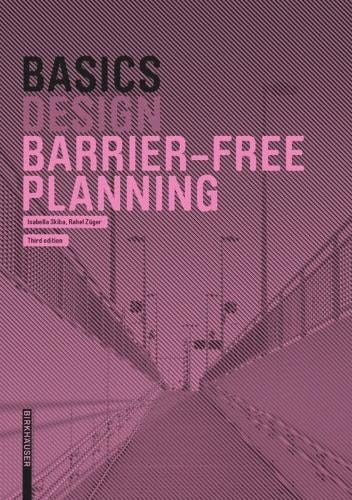
Basics Barrier-Free Planning - Basics
Buildings are not conceived solely with average people in mind; they offer a protective shell for everyone. BASICS Barrier-free Planning improves our understanding of the needs of people with disabilities such as limited mobility or impaired vision, children, and the elderly, all of whom have special requirements when using a building. The book presents possibilities for designing buildings and their spaces so they can be used by everyone.
Basic Probability Theory with Applications
This book presents elementary probability theory with interesting and well-chosen applications that illustrate the theory. An introductory chapter reviews the basic elements of differential calculus which are used in the material to follow. The theory is presented systematically, beginning with the main results in elementary probability theory. This is followed by material on random variables. Random vectors, including the all important central limit theorem, are treated next. The last three chapters concentrate on applications of this theory in the areas of reliability theory, basic queuing models, and time series. Examples are elegantly woven into the text and over 400 exercises reinforce the material and provide students with ample practice.
Basic principles and applications of probability theory
This introductory chapter discusses such notions as determinism, chaos and randomness, p- dictibility and unpredictibility, some initial approaches to formalizing r- domness and it surveys certain problems that can be solved by probability theory. This will perhaps give one an idea to what extent the theory can - swer questions arising in speci?c random occurrences and the character of the answers provided by the theory. 1. 1 The Nature of Randomness The phrase “by chance” has no single meaning in ordinary language. For instance, it may mean unpremeditated, nonobligatory, unexpected, and so on. Its opposite sense is simpler: “not by chance” signi?es obliged to or bound to (happen). In philosophy, necessity counteracts randomness. Necessity signi?es conforming to law – it can be expressed by an exact law. The basic laws of mechanics, physics and astronomy can be formulated in terms of precise quantitativerelationswhichmustholdwithironcladnecessity.
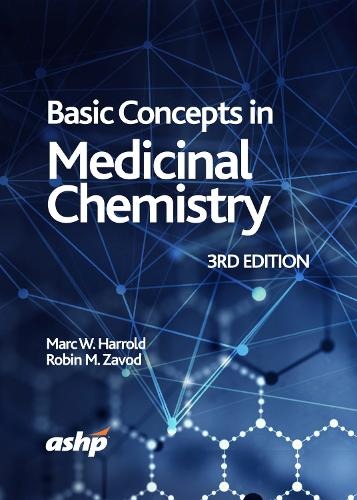
Basic concepts in medicinal chemistry
Designed to help students incrementally build their knowledge of fundamental concepts of medicinal chemistry and their applications to therapeutic decisions, it is progressively organized. Specific sections of the text have been updated to make potentially confusing concepts easier to understand. Numerous examples and review questions further reinforce learning and analytical skills.
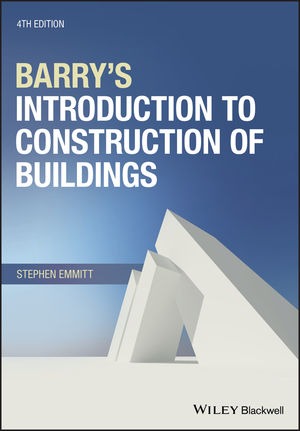
Barry's Introduction to Construction of Buildings ; 4th ed.
Based mainly on domestic and residential buildings—and filled with extensive illustrations throughout—this concise text is the ideal introduction to the subject of building construction. It provides the basic material that readers need in order to understand the construction process for the majority of low rise buildings. The book explains construction technology through the key functional and performance requirements for the main elements common to all buildings. With a strong focus on building efficiency and meeting the challenges posed by limiting the environmental impact of buildings, and new “at a glance” summaries allowing you to grasp the salient points of each chapter, readers will find the text fully up to date with the latest building regulations and construction technology. Deals with design, technology, site assembly, and environmental issues of domestic and residential buildings. Thoroughly updated, with particular attention paid to the concept of building efficiency and improved integration of the topics covered to match current student needs. New “at a glance” summaries at the beginning of each chapter.
Bank capital and risk-taking : The impact of capital regulation, charter value, and the business cycle
The aim of this study is to contribute to this understanding by answering the following questions: How do banks adjust capital and risk after an increase in capital requirements? How do banks adjust their regulatory capital buffer over the business cycle? And what is the impact of banks' charter value on the regulatory capital buffer?
Balanced Website Design : Optimising Aesthetics, Usability and Purpose
Balanced Website Design (BWD) is a new methodology that fuses the strengths of traditional structured, stepped, and iterative approaches with a sharp focus on defining and achieving the desired characteristics of purpose, usability and aesthetics – absolutely essential requirements for any website. The book includes discussions of new perspectives on usability and aesthetics in the special context of website design. BWD is suitable for all types of websites, for individual and/or team projects, and should prove to be of significant value for even the most experienced of website designers. BWD provides guidance, structure and detailed documentation/process support for the activity of designing and implementing your next website – helping you to maximise its effectiveness and relevance.

Bailey & Love's essential operations in oral and maxillofacial surgery
Covers all the surgical techniques across the entire remit of the specialty. The content encompasses coverage of safe surgical practice, including human factors, and includes detailed coverage of the major OMFS sub-specialties: Oral Surgery and Implantology, Trauma, Oncology, Reconstructive Surgery, Salivary Gland & Thyroid Surgery, Temporomandibular Joint Disorders, Orthognathic and Craniofacial Surgery, Cleft Lip and Palate, Facial Aesthetic Surgery, and Advances in Operative Oral & Maxillofacial Surgery.

Bacterial chromatin : Methods and protocols
Brings together new and updated methods to explore the structure and function of bacterial chromatin from molecular to the cellular scale. Chapters detail experimental protocols of in vivo and in vitro approaches, approaches to genome structure modeling, and data analysis. Written in the highly successful Methods in Molecular Biology series format, chapters include introductions to their respective topics, lists of the necessary materials and reagents, step-by-step, readily reproducible laboratory protocols, and key tips on troubleshooting and avoiding known pitfalls.
Axon growth and guidance
The complexarchitectureofneuronal networks togetherwith the extraordinary associated functions make the nervous system a fascinating biological structure. The considerable work performed to explore this cellular machinery is nowadays successfulbecause the mysteryofnervous system developmentisbeing unravelled. As described in their outstanding review published 10 years ago in Science.' Marc Tessier-Lavigne and Corey Goodman-the pioneers of the molecular era of axon guidance-summarized the assembly of nervous system connections as a subtle game of attraction and repulsion of neuronal growth cones. The cellular ballet ensuring the formation of billions of synapses, which ultimately gives rise to the highest cognitive functions, is primarily orchestrated by a step-by-step mechanism of growth driven by multiple molecular cues. While our general concept of axon guidance remains identical, a profound evolution ofour knowledge ofthe molecular identityofthe guidance cues together with their interactions and signalling pathways occurred over the past ten years.

Autonomous vehicles technological trends
The automotive industry has always been synonymous with research and innovation, but nowadays the industry is adding pressure and is establishing the agenda of the researchers from the field. Visions have been provided, and the hardware and the software exist; the only question remaining is: “who is going to deliver”? To answer this question, we encouraged scientists, researchers, industry specialists, and academics to share their vision of autonomous vehicles. What will the platform look like? What kind of hardware and software is most suitable? Who will make the connection between these two interdependent environments (and how), so that in the end the AI will define the process? These are the pressing issues of the current moment, and this Special Issue will help all those interested in the topic to promote their vision and ideas.
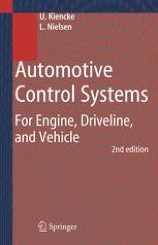
Automotive Control Systems : For Engine, Driveline, and Vehicle
Reflecting the trend to optimization through integrative approaches for engine, driveline and vehicle control, this book enables control engineers to understand engine and vehicle models necessary for controller design and also introduces mechanical engineers to vehicle-specific signal processing and automatic control. The emphasis on measurement, comparisons between performance and modelling, and realistic examples derive from the authors’ industrial experience at Bosch and interactions within IFAC and SAE. The second edition offers new or expanded topics such as diesel-engine modelling, diagnosis and anti-jerking control, and vehicle modelling and parameter estimation. The book addresses professional engineers as well as students.

Automorphic Forms and Lie Superalgebras
Most known examples of Lie superalgebras with a related automorphic form such as the Fake Monster Lie algebra whose reflection group is given by the Leech lattice arise from (super)string theory and can be derived from lattice vertex algebras. The No-Ghost Theorem from dual resonance theory and a conjecture of Berger-Li-Sarnak on the eigenvalues of the hyperbolic Laplacian provide strong evidence that they are of rank at most 26.The aim of this book is to give the reader the tools to understand the ongoing classification and construction project of this class of Lie superalgebras and is ideal for a graduate course.
Automated reasoning with analytic tableaux and related methods ; International Conference, TABLEAUX 2005, Koblenz, Germany, September 14-17, 2005, Proceedings
This volume contains the research papers presented at the International C- ference on Automated Reasoning with Analytic Tableaux and Related Methods (TABLEAUX2005)heldSeptember 2005inKoblenz,Germany. which included conferences covering a broad spectrum of topics and intere- ing ?elds of application for tableau-based methods: arti?cial intelligence (KI), multi-agent systems (MATES), automated reasoning and knowledge represen- tion (FTP), and software engineering and formal methods (SEFM).
Automated reasoning ; 4th International Joint Conference, IJCAR 2008 Sydney, Australia, August 12-15, 2008 Proceedings
This book constitutes the refereed proceedings of the 4th International Joint Conference on Automated Reasoning, IJCAR 2008, held in Sydney, Australia, in August 2008.

Automated deduction in Geometry ; 6th International Workshop, ADG 2006, Pontevedra, Spain, August 31-September 2, 2006, Revised Papers
The book show the lively variety of topics and methods and the current applicability of automated deduction in geometry to different branches of mathematics and to other sciences and technologies.

Automated deduction in Geometry ; 5th International Workshop, ADG 2004, Gainesville, FL, USA, September 16-18, 2004, Revised Papers
This book constitutes the thoroughly refereed post-proceedings of the 6th International Workshop on Automated Deduction in Geometry, ADG 2006, held at Pontevedra, Spain, in August/September 2006 as a satellite event of the International Congress of Mathematicians, ICM 2006. The 13 revised full papers presented were carefully selected from the submissions made due to a call for papers - within the scope of ADG - shortly after the meeting. The papers show the lively variety of topics and methods and the current applicability of automated deduction in geometry to different branches of mathematics and to other sciences and technologies.

Automated deduction – CADE-21 ; 21st International Conference on automated deduction, Bremen, Germany, July 17-20, 2007, Proceedings
All current aspects of automated deduction are addressed, ranging from theoretical and methodological issues to presentation and evaluation of theorem provers and logical reasoning systems. The papers are organized in topical sections on higher-order logic, description logic, intuitionistic logic, satisfiability modulo theories, induction, rewriting, and polymorphism, first-order logic, model checking and verification, termination, as well as tableaux and first-order systems.

Automated deduction – CADE-20 ; 20th International Conference on automated deduction, Tallinn, Estonia, July 22-27, 2005, Proceedings
This book constitutes the refereed proceedings of the 20th International Conference on Automated Deduction, CADE-20, held in Tallinn, Estonia, in July 2005. The 25 revised full papers and 5 system descriptions presented were carefully reviewed and selected from 78 submissions. All current aspects of automated deduction are addressed, ranging from theoretical and methodological issues to presentation and evaluation of theorem provers and logical reasoning systems.
Automated deduction – CADE 28 ; 28th International Conference on automated deduction, Virtual Event, July 12–15, 2021, Proceedings
This book constitutes the proceeding of the 28th International Conference on Automated Deduction, CADE 28, held virtually in July 2021. The 29 full papers and 7 system descriptions presented together with 2 invited papers were carefully reviewed and selected from 76 submissions. CADE is the major forum for the presentation of research in all aspects of automated deduction, including foundations, applications, implementations, and practical experience. The papers are organized in the following topics: Logical foundations; theory and principles; implementation and application; ATP and AI; and system descriptions.
