



الصفحة 66
الصفحة 66
China’s Gas Development Strategies
This book is open access under a CC BY 4.0 license. This book examines how China can increase the share of natural gas in its energy system. China’s energy strategy has global ramifications and impact, and central to this strategy is the country’s transition from coal to gas. The book presents the culmination of a two-year collaboration between the Development Research Center of the State Council (DRC) and Shell.
Children and the Dark Side of Human Experience : Confronting Global Realities and Rethinking Child Development
Synthesizing insights from psychology and philosophy with his own wide-ranging, first-hand experiences around the world, Dr. James Garbarino takes readers on a personalized journey into the dark side of human experience as it is lived by children. In these highly readable pages, Dr. Garbarino intertwines a discussion of children’s material and spiritual needs with a detailed examination of the clinical knowledge and experiential wisdom required to understand and meet complex developmental needs. Fusing anecdotal observations, empirical evidence, and an ecological perspective, he reveals a path to ensuring the fundamental human rights of all children: the right to safety, to equality, to economic parity, and to a meaningful life.
Children and Peace : From Research to Action
This book's multi-layered emphasis on context, structural determinants of peace and conflict, and use of research for action towards social cohesion for children and youth has not been brought together in other peace psychology literature to the same extent. Children and Peace: From Research to Action will be a useful resource for peace psychology academics and students, as well as social and developmental psychology academics and students, peace and development practitioners and activists, policy makers who need to make decisions about the matters covered in the book, child rights advocates and members of multilateral organizations such as the UN.
Child Neuropsychology : Assessment and Interventions for Neurodevelopmental Disorders
Child Neuropsychology guides therapists and neurologists toward common goals: early, accurate diagnosis and finely focused interventions across disciplines. By analyzing the affects of brain development on children and adolescents’ behavioral, cognitive, learning, and psychosocial abilities and deficits, this groundbreaking volume brings vital perspectives to assessment and treatment. Leading experts Ellison and Semrud-Clikeman start with the basics of child clinical neuropsychology and functional neuroanatomy, taking readers through examination protocols and assessment instruments to treatment planning and methods. In this volume, the authors address the full range of neurodevelopmental pathologies, from learning disabilities to autism, ADHD to CNS disorders, traumatic brain injury to fetal alcohol syndrome.
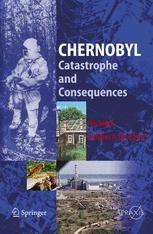
Chernobyl: Catastrophe and Consequences
The long-term effects of the Chernobyl incident on the environment are still becoming apparent, twenty years after the event. This book, written by two researchers with frontline experience in this field, provides a detailed review of these over a wide range of ecosystems. It also discusses the responses and countermeasures utilised to combat the effects of the accident, as well as considering the health, social, psychological and economic impacts on the human population. Chernobyl - Catastrophe and Consequences / provides a comprehensive assessment of the Chernobyl accident and its long-term consequences draws on the most recent measurements of contamination in the terrestrial and aquatic food chains / discusses the sociological consequences of such disasters in detail / This book adds valuable weight to the debate about the environmental cost of nuclear power and the issue of nuclear safety.
Chernobyl - What Have We Learned? : The Successes and Failures to Mitigate Water Contamination Over 20 Years
Twenty million people have been exposed to Chernobyl radionuclides through the Dnieper River aquatic pathways. This book presents a 20-year historical overview and comprehensive study results of the aquatic environment affected by the 1986 Chernobyl nuclear accident. During this time, many water quality management practices and countermeasures were enacted. The book presents in-depth analyses of these water remediation actions, using current science and mathematical modeling, and discusses why some were successful, but many others failed. The chapter entitled Where Do We Go From Here? incorporates a comprehensive discussion of the planned New Safe Confinement (NSC) structure to cover the Chernobyl plant. The book closes with a summary and conclusions drawn from these analyses, making it a valuable reference tool for the future. This book will be of interest to engineers, scientists, decision-makers, and those involved in radiation protection and radioecology, environmental protection and risk assessment, water remediation and mitigation measures, and radioactive waste disposal. In addition, the detailed, almost day-to-day, emergency responses to the Chernobyl accident described in this book will also be useful to people developing emergency and long-term responses to accidental or intentional (by terrorists) releases of radionuclides, toxic chemicals and biological agents.

Chemotherapy and pharmacology for leukemia in pregnancy : Guidelines and strategies for best practices
The book addresses a broad range of subjects, including: pregnancy and its characteristics; staging, pathology, morbidity and what to expect in each type of leukemia; chemotherapy for leukemia in pregnant women with complete trials; dose adjustment of chemotherapy for leukemia in pregnancy based on serum dosages; and pharmacokinetics and pharmacodynamics for this unique group of patients. In turn, subsequent chapters focus on protecting the fetus and neonatal management regarding chemotherapy for leukemia in pregnancy, including the treatment and risks for the fetus (for each type of leukemia), intrathecal therapy and its effects on the fetus; supportive drugs, antibiotics and antifungals for pregnant patients during chemotherapy, including intervention and dose adjustments; palliative care for women with leukemia in pregnancy; breastfeeding during treatment for leukemia; pharmacological aspects of supplements, vitamins and nutrition in pregnancy during leukemia treatment; and more.
Chemokine biology : Basic research and clinical application ; Vol.2 : Pathophysiology of chemokines
Chemokines play an important role in recruiting inflammatory cells into tissues in response to infection and inflammation. They also play an important role in coordinating the movement of T-cells, B-cells and dentritic cells, necessary to generate an immune response (response to injury, allergens, antigens, invading microorganisms). They selectively attract leukocytes to inflammatory foci, inducing both cell migration and activation. They are involved in various diseases, like atherosclerosis, lung and skin inflammation, multiple sclerosis, or HIV. Volume 2 of this two-volume set discusses the pathophysiology of chemokines. It is divided into two parts: a) chemokines in animal disease models, and b) chemokines as drug targets. Together with volume 1, which discusses the immunobiology of chemokines, both volumes give a comprehensive overview of chemokine biology.
Chemokine biology : Basic research and clinical application ; Vol.1 : Immunobiology of chemokines
The discovery of interleukin-8 close to 20 years ago initiated a new field of research touching on many aspects of immunology and inflammation. Interleukin-8 is just one member of a large class of structurally related chemoattractant proteins, known as chemokines. Chemokines are involved in the traffic control of leukocytes, which bear the corresponding chemokine receptors on their surfaces. Today, it is clear that chemokines affect all aspects of immunology and even many unrelated fields, such as tissue development and tumor cell metastasis. Their fundamental contributions to chronic inflammatory diseases make them a principal target for the development of novel, anti-inflammatory therapeutics.

Chemistry of selected natural products and heterocyclic compounds
Covers the fundamental classification, nomenclature, occurrence, isolation, extraction, occurrence, detection, biosynthesis, medicinal/industrial significance, conversion and inter-conversions, etc.
Chemistry of natural products : phytochemistry and pharmacognosy of medicinal plants
Plants produce secondary metabolites that humans harness for their own benefit. About half of drugs currently in clinical use are based on these chemicals found in nature. Chemistry of Natural Products covers secondary metabolites present in medicinal plants and their biosynthesis, biological activities, and isolation and separation techniques.
Chemistry of Biologically Potent Natural Products and Synthetic Compounds
Several novel natural product derivatives, heterocyclic and other synthetic compounds, have been reported to have shown interesting biological activities including anticancer, antimicrobial, anti-inflammatory, anti-glycemic, anti-allergy and antiviral etc. Provides up-to-date information on new developments and most recent medicinal applications of the natural products and derivatives, as well as the chemistry and synthesis of heterocyclic and other related compounds.
Chemistry from First Principles
This book examines the appearance of matter in its most primitive form, from the vacuum and the diversity that results from the fusion of elementary units in the genesis of atomic matter; considers the empirical rules of chemical affinity that regulate the synthesis and properties of molecular matter; analyzes the compatibility of the theories of chemistry with the quantum and relativity theories of physics; formulates a consistent theory, based on clear physical pictures and manageable mathematics, to account for chemical concepts such as the structure and stability of atoms and molecules, the periodicity of nuclides and elements, valence states, activation and chemical reactivity, electronegativity and general covalency, the exclusion principle, electronic energy, orbital angular momentum and spin in relation to molecular shape, torsional rigidity, chirality and molecular modeling; explains the self-similarity between space-time, nuclear structure, covalent assembly, biological growth, planetary systems and galactic conformation.

Chemistry for pharmacy students : General, organic and natural product chemistry ; 2nd ed.
Opens with an overview of the general aspects of chemistry and their importance to modern life, with emphasis on medicinal applications. The text then moves on to discuss the concepts of atomic structure and bonding and the fundamentals of stereochemistry and their significance to pharmacy in relation to drug action and toxicity. Various aspects of organic functional groups, organic reactions, heterocyclic chemistry, nucleic acids and their pharmaceutical importance are then covered in subsequent chapters, with the final chapter dealing with drug discovery and development, and natural product chemistry. Provides a student-friendly introduction to the main areas of chemistry required by pharmacy degree courses. Written at a level suitable for non-chemistry students in pharmacy, but also relevant to those in life sciences, food science, and the health sciences Includes learning objectives at the beginning of each chapter Focuses on the physical properties and actions of drug molecules
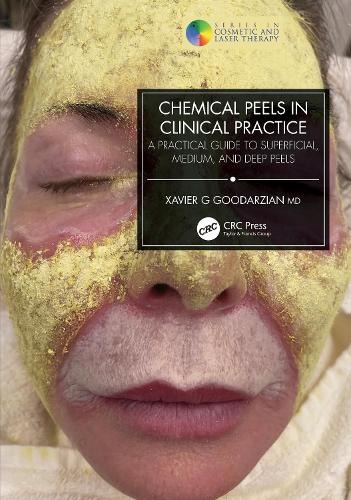
Chemical peels in clinical practice : a practical guide to superficial, medium, and deep peels
Making a practitioner's peeling experience easier and more practical. It contains sample patient forms, over 250 illustrations, and a wealth of tips for patient guidance and safe clinical practice.
Chemical and clinical applications of tempol : A marvelous molecule
A comprehensive and authoritative exploration of Tempol (4-Hydroxy-TEMPO), an exceptional chemical compound with diverse applications in both scientific research and medical practice. This book delves into Tempol's unique properties, mechanisms of action, and its potential role in combating oxidative stress-related disorders. Includes a chapter devoted to the safe handling, storage, and disposal of Tempol in compliance with pharmaceutical regulations. The authors pay particular attention to pharmaceutical regulations in the industry.
Chapel and Haeneys essentials of clinical immunology
Contains the knowledge necessary to understand the diagnosis and treatment of immunological disorders. With easy-to-read text and a wealth of colour clinical images and diagrams, this well-regarded textbook introduces complex concepts using effective pedagogical tools such as bulleted lists, key point boxes, real-life case studies, practical examples, figures and tables, chapter introductions, and keywords in bold integrated in each chapter.

Changing Land Use Patterns in the Coastal Zone : Managing Environmental Quality in Rapidly Developing Regions
Coastal ecosystems make up some of the most important, yet most endangered, regions in the world. The protection of the unique processes that take place in these ecosystems requires that partnerships be formed among ecologists, resource managers, and planners. Experienced in the challenges of coastal system analysis, the contributors to this book provide multidisciplinary guidance on the assessment and management of environmental impacts caused by development. Each chapter examines an issue important to these fragile ecosystems, first presenting a non-technical summary of the issue and a review of the current state of the knowledge, then following with data and a more detailed consideration of the topic.

Challenges to Marine Ecosystems ; Proceedings of the 41st European Marine Biology Symposium
This volume presents a representative sample of contributions to the 41st European Marine Biology Symposium held in September 2005 in Cork, Ireland. The theme of the symposium was ‘Challenges to Marine Ecosystems’ and this was divided into four sub themes; Genetics, Marine Protected Areas, Global Climate Change and Marine Ecosystems, Sustainable Fisheries and Agriculture.
Cerebral vasospasm : New strategies in research and treatment
More than 90 papers give a summary of clinical and basic studies on cerebral vasospasm, including reviews by leading researchers in this field. Several new frontiers are proposed for future research directions that will not only promote research from neurosurgery and neurology but also from other interconnecting fields of emergency medicine, electrophysiology, molecular biology, and vascular biology.
