



الصفحة 65
الصفحة 65

ITI treatment guide ; Vol.11 : Digital workflows in implant dentistry
Addressing the technology and tools necessary to incorporate DDT into a traditional workflow, along with the clinical steps required for data acquisition, such as CBCT imaging and intraoral, extraoral, and facial scanning. The software tools needed to interpret the digital data are presented, and instructions are given on how to integrate data sets to virtually reconstruct the patient s orofacial anatomy. In addition, a series of 13 clinical cases illustrate digital technologies applied to oral implantology.

Iterating Infusion : Clearer Views of Objects, Classes, and Systems
Iterating Infusion presents comprehensive tools for you to best manage and work with object orientation. These include simplified fundamental concepts, popular language comparisons, advanced designing strategies, a broad usage progression, thorough design notations (interaction algebra), and data-oriented (fundamentally-OO) languages. The title, Iterating Infusion, alludes to the fact that any system has multiple, coexisting functional levels and that new levels—both lower and higher—are continually added to the same functional area. The practical effect is to bring processes into focus, always clarifying the vague. The extreme form of this is when separate but compatible technologies are brought together to create advancements; these can be baby-steps or great leaps, with varying amounts of effort. In more general terms, the same thing in a different context can take on much more power. And actually, this phenomenon is at the heart of object-oriented software.

Issues in Bioinvasion Science: EEI 2003 : a Contribution to the Knowledge on Invasive Alien Species
Biological invasions are a global problem whose local impact can be of great magnitude. The prevention and minimization of the impact of invasive alien species has become a priority because of their negative impact on biodiversity, economy and public health. Issues in Bioinvasion Science contains key contributions of this conference. The themes included cut across different aspects of non-native species invasions. This volume is essential reading for anyone seeking an understanding of non-native species invasions.
Isotopes in Palaeoenvironmental Research
This thorough reference shows how stable isotopes can be applied to understanding the palaeoenvironment, with chapters on the interpretation of isotopes in water, tree rings, bones and teeth, lake sediments, speleothems and marine sediments.
Computational Acoustics of Noise Propagation in Fluids - Finite and Boundary Element Methods
Among numerical methods applied in acoustics, the Finite Element Method (FEM) is normally favored for interior problems whereas the Boundary Element Method (BEM) is quite popular for exterior ones. That is why this valuable reference provides a complete survey of methods for computational acoustics, namely FEM and BEM. It demonstrates that both methods can be effectively used in the complementary cases. The chapters by well-known authors are evenly balanced: 10 chapters on FEM and 10 on BEM. An initial conceptual chapter describes the derivation of the wave equation and supplies a unified approach to FEM and BEM for the harmonic case. A categorization of the remaining chapters and a personal outlook complete this introduction. In what follows, both FEM and BEM are discussed in the context of very different problems.

Computation Engineering : Applied Automata Theory and Logic
This book covers automata in depth, providing good intuitions along the way, and culminating with applications that are used every day in the field. In this respect, it is a departure from the conventional textbooks on complexity and computability, although these 'tradtional' aspects remain well represented.

COMPSTAT 2008 ; Proceedings in Computational Statistics
Presents methodological developments in Applied/Computational Statistics. This work covers a range of topics including Advances on Statistical Computing Environments, Methods for Classification and Clustering, Computation for Graphical Models and Bayes Nets, Computational Econometrics, and, Computational Statistics and Data Mining.
Comprehensive applied basic sciences : For MDS students
All the questions are answered as per the type of question (long | short) and with “to the point” answers to make it more interesting. Answers are selected authentically from standard textbooks commonly referred to by the students to avoid confusion during examinations. Each answer is explained in heading and subheadings to break the continuous text. Written in a simple, well structured and point-wise format with a comprehensive examination-oriented description along with the diagrammatic representation. An indispensable book for the ‘last minute’ revision while preparing for the examinations and for quick reference throughout the course duration.
Composites with micro- and nano-structure : Computational modeling and experiments
The book contains atomistic and continuum numerical methods and experimental validation for composite materials reinforced with particles or fibres, porous materials, homogenization and other important topics for research in this field.
Composites for building assembly : connections, members and structures
Pesents buildings developed using modular assembly approaches based on lightweight and corrosion-resistant fiber reinforced polymer (FRP) composites. Construction methods and the choice of building materials offer great opportunities for more productive and environmentally friendly solutions. This book includes valuable experimental data on large-scale structural components (beams, slabs, amd columns), connections (shear connections, wall stud connections, beam-column connections, column-column connections) and structures (composite floor system, structural sandwich assemblies, and full-scale structural demonstrations), supported with detailed numerical modelling and analytical methods.
Component-Based Digital Movie Production : Reference Model of an Integrated Production System
The ongoing digitization process affects all areas of the media industry. Within the scientific discussion, movie production is little observed although it currently faces crucial structural developments. The change to digital production processes allows new ways of cooperation and coordination in the project networks. Marcus Pankow examines the specifics of the movie production industry and its value-creating processes, reflecting the digitization and its impact on the information systems strategy. An empirical case study analysis forms the basis for the development of a reference model for a company-wide application system to support the entire movie production process. Following the concept of a Service Oriented Architecture (SOA), he encapsulates established applications in services and integrates them on one platform.
Complexity management : Optimizing product architecture of Industrial products
This book presents a complexity management model that is based on the reasoning that product architecture determines to a considerable extent how external complexity is translated into physical products. The model demonstrates a procedure to optimize a product’s architecture and is applied to several industrial products.
Complex Motion ; 1st International Workshop, IWCM 2004, Günzburg, Germany, October 12-14, 2004, Revised Papers
The world we live in is a dynamic one: we explore it by moving through it, and many of the objects which we are interested in are also moving. Trafic, for instance, is an example of a domain where detecting and processing visual motion is of vital interest, both in a metaphoric as well as in a purely literal sense. Visual communication is another important example of an area of science which is dominated by the need to measure, understand, and represent visual motion in an eficient way. Visual motion is a subject of research which forces the investigator to deal with complexity; complexity in the sense of facing efiects of motion in a very large diversity of forms, starting from analyzing simple motion in a changing envir- ment (illumination, shadows, . . . ), under adverse observation conditions, such as bad signal-to-noiseratio (low illumination, small-scaleprocesses, low-dosex-ray, etc. ), covering also multiple motions of independent objects, occlusions, and - ing as far as dealing with objects which are complex in themselves (articulated objects such as bodies of living beings). The spectrum of problems includes, but does not end at, objects which are not ‘bodies’ at all, e. g. , when anal- ing fiuid motion, cloud motion, and so on. Analyzing the motion of a crowd in a shopping mall or in an airport is a further example that implies the need to struggle against the problems induced by complexity.
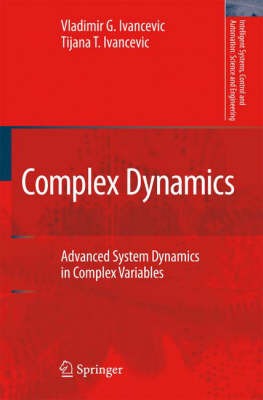
Complex dynamics : Advanced system dynamics in complex variables
Complex Dynamics: Advanced System Dynamics in Complex Variables is a graduate-level monographic textbook. It is designed as a comprehensive introduction into methods and techniques of modern complex-valued nonlinear dynamics with its various physical and non-physical applications.

Competition, innovation, and antitrust : A theory of market leaders and Its policy implications
Competition, Innovation, and Antitrust develops a theory of market leadership in the presence of endogenous entry of firms and applies it to models of competition in the market and for the market.
Competition in Marketing : Two Essays on the Impact of Information on Managerial Decisions and on Spatial Product Differentiation
In her first essay Vera Magin uses primary experimental data to explore the effects of information on marketing decisions, performance, and competition. In her second essay the author discusses several approaches to measure product differentiation in spatial contexts. In doing so, she refers to the measurement of diversity and also applies methods from disciplines like spatial statistics, forestry, and geography.
Competition Authorities in South Eastern Europe : Building Institutions in Emerging Markets
Provides answers to key open questions concerning competition policy in emerging economies, with a focus on South Eastern Europe. The contributions address two major issues. One is the design of competition policy and the national competition authorities that enforce it, including the topics of competition advocacy and state aid control; the other is the use of economic methods in competition law enforcement, especially in the cases of relevant market definition and merger control. Many lessons learned in the countries of South Eastern Europe can be applied to the emerging markets of other regions. As such, the findings presented here will be highly relevant for officials and staff at national competition authorities, advisers to legislators shaping national competition policy, competition law professionals, and university students alike.
Comparative risk assessment and environmental decision making
Decision making in environmental projects is typically a complex and confusing process characterized by trade-offs between socio-political, environmental, and economic impacts. Comparative Risk Assessment (CRA) is a methodology applied to facilitate decision making when various activities compete for limited resources. CRA has become an increasingly accepted research tool and has helped to characterize environmental profiles and priorities on the regional and national level. CRA may be considered as part of the more general but as yet quite academic field of multi-criteria decision analysis (MCDA). Considerable research in the area of MCDA has made available methods for applying scientific decision theoretical approaches to multi-criteria problems, but its applications, especially in environmental areas, are still limited. The papers show that the use of comparative risk assessment can provide the scientific basis for environmentally sound and cost-efficient policies, strategies, and solutions to our environmental challenges.
Compactifying Moduli Spaces for Abelian Varieties
This volume presents the construction of canonical modular compactifications of moduli spaces for polarized Abelian varieties (possibly with level structure), building on the earlier work of Alexeev, Nakamura, and Namikawa. This provides a different approach to compactifying these spaces than the more classical approach using toroical embeddings, which are not canonical. There are two main new contributions in this monograph: (1) The introduction of logarithmic geometry as understood by Fontaine, Illusie, and Kato to the study of degenerating Abelian varieties; and (2) the construction of canonical compactifications for moduli spaces with higher degree polarizations based on stack-theoretic techniques and a study of the theta group.
Compact Lie Groups
This book covers the structure and representation theory of compact Lie groups. The necessary Lie algebra theory is also developed in the text with a streamlined approach focusing on linear Lie groups.
