



الصفحة 63
الصفحة 63

Contemporary Empirical Methods in Software Engineering
This book presents contemporary empirical methods in software engineering related to the plurality of research methodologies, human factors, data collection and processing, aggregation and synthesis of evidence, and impact of software engineering research. The individual chapters discuss methods that impact the current evolution of empirical software engineering and form the backbone of future research.

Contemporary dental pharmacology : Evidence-based considerations ; 2nd ed.
Aims to equip practitioners with a sound understanding of both the scientific evidence for various interventions and the comparative efficacy of those interventions. The focus is on the drugs most commonly used in conjunction with dental treatment, including local anesthetics, analgesics, antibiotics, sedatives, and drugs for the management of medical emergencies. Summaries of the scientific evidence from the available published literature are provided, with assessment of the level and quality of the evidence base.

Contemporary dental pharmacology : Evidence-based considerations ; 1st ed.
This book on current approaches to the use of drugs in dentistry aims to equip practitioners with a sound understanding of both the scientific evidence for various interventions and the comparative efficacy of those interventions. The focus is on the drugs most commonly used in conjunction with dental treatment, including local anesthetics, analgesics, antibiotics, sedatives, and drugs for the management of medical emergencies.

Contaminated soils, sediments and water ; Vol.10 : Successes and challenges
Contaminated Soils, Sediments and Water: Successes and Challenges, Volume 10 contains a valuable collection of success stories (and challenges) in the areas of environmental fate, heavy metals, modeling, MTBE and oxygenates, regulatory, remediation, risk assessment, site assessment and sampling methodology. It demonstrates the progress that has been made in working together toward the optimization of established approaches, as well as embracing departures from traditional regulatory models in order to address the threats to our natural resources. The book is divided into eight sections: Part I: Environmental Fate; Part II: Heavy Metals; Part III: Modeling; Part IV: MTBE and Oxygenates; Part V: Radionuclides; Part VI: Regulatory; Part VII: Remediation; Part VIII: Risk Assessment and Remedial Approaches Towards Restoration and Management of Contaminated Rivers.

Contaminant Geochemistry : Interactions and Transport in the Subsurface Environment
This book combines earth science, subsurface hydrology and environmental geochemistry, providing a comprehensive background for specialists interested in the protection and sustainable management of the subsurface environment.The major focus of the book is on contaminant reactions in soil solutions, groundwater and porous media solid phases, accounting for their persistence and transformation in the subsurface, as they are transported from the land surface into groundwater.

Container terminals and cargo systems : Design, operations management, and logistics control issues
Significant gains in productivity can be achieved through advanced terminal layouts, more efficient IT-support and improved logistics control software systems. The primary objective of this book is to reflect these challenges and to present new insights and successful solutions to operational problems of automated container terminals and cargo systems.

Container Terminals and Automated Transport Systems : Logistics Control Issues and Quantitative Decision Support
Container transportation is the predominant mode of inter-continental cargo traffic. Since container ships and port terminals involve a huge capital investment and significant daily operating costs, it is of crucial importance to efficiently utilize the internal resources of container terminals and transportation systems. Today there is an ongoing trend to use automated container handling and transportation technology, in particular, in countries with high labour costs. This in turn requires highly sophisticated control strategies in order to meet the desired performance measures. The primary objective of this book is to reflect these recent developments and to present new insights and successful solutions to operational problems of automated container terminals and transportation systems. It comprises reports on the state of the art, applications of quantitative methods, as well as case studies and simulation results. Its contributions are written by leading experts from academia and business.

Contact Dermatitis
Covers various aspects of the modern-day management of contact dermatitis. This title also covers irritant and allergic contact dermatitis with an emphasis being given to immunological mechanisms, molecular aspects of sensitizers, atypical clinical forms, reactions to medicaments, and occupational and environmental aspects.

Consumer perception of product risks and benefits
Reflects the current thinking and research on how consumers’ perception of product risks and benefits affects their behavior. It provides the scientific, regulatory and industrial research community with a conceptual and methodological reference point for studies on consumer behavior and marketing. The contributions address various aspects of consumer psychology and behavior, risk perception and communication, marketing research strategies, as well as consumer product regulation. The book is divided into 4 parts: Product risks; Perception of product risks and benefits; Consumer behavior; Regulation and responsibility.

Consumer perception of food attributes
Objectives of this book is to summarize recent empirical findings from scholarly works on how consumers value food credence attributes. Such knowledge would benefit producers, processors, retailers, and policy makers. Another objective of this book is to discuss the effectiveness of the programs that have been introduced to strengthen the relationship between producers and consumers. Many programs have been developed to more effectively inform consumers regarding food production processes.

Consumer Packaging Strategy : Localisation in Asian Markets
Illustrates how packaging as a marketing tool is more than simply changing the label or translating the brand into vernacular language. It examines how different packaging elements (e.g. information, imagery, packaging type) can help to communicate product values to Asian consumers.

Consumer driven electronic transformation : Applying new technologies to enthuse consumers and transform the supply chain
The Symposia have become important, unique - casions in the international calendar of business research. The papers c- lected here, first presented in Athens, represent an important contribution to the research literature of modern business. The wide-scale institutional development of collaborative practices in the European consumer goods business began in 1994 with the creation of ECR (“Efficient Consumer Response”) Europe, a joint initiative of ma- facturers and retailers working together to improve the quality and p- formance of the value chain. At the heart of ECR was a business envir- ment characterised by dramatic advances in information technology, shifts in consumer demand, and the increasing movements of goods across int- national borders. This new reality required a fundamental reconsideration of the most effective way of delivering the right products to consumers at the right price.

Consumer behavior, organizational strategy and financial economics ; Proceedings of the 21st eurasia business and economics society conference
Shows selected articles from the 21st Eurasia business and economics society (EBES) conference, Which was held in Budapest (Hungary) in 2017. The theoretical and empirical papers in this volume cover various areas of business, economics, and finance from a diverse range of regions. In particular, this volume focuses on the latest trends in consumer behavior, New questions in the development of organizational strategy, And the interaction of financial economics with industrial economics and policy.

Consumer and sensory evaluation techniques : How to sense successful products
Consumer and sensory evaluation techniques speaks to management and decision-makers within organizations and addresses the main questions (eg: "How much will it cost?" and "How quickly can it be achieved?") that are faced when developing and testing new products before a launch. Chapters cover: The pillars of good consumer and sensory studies; Sensory profile of a product: Mapping internal sensory properties; The foundations of consumer evaluation; Study plans and strategy sustainable short, mid and long-term vision; Real-life anticipation with market factors: Concept, price, brand, market channel; And internal studies versus sub-contracting. Also uses examples from multiple sectors to show how to build a sustainable product evaluation strategy analyses the critical milestones to follow and the pitfalls to avoid.

Construction risk management decision making : Understanding current practices
Effective risk management is a vital component of all successful construction projects. Although quantitative tools for evaluating data and minimizing risk are readily available, construction managers commonly adopt a more innate, experience-based approach. In Construction Risk Management Decision Making, project manager and senior consultant Alex C. Arthur provides step-by-step advice on assessing and prioritizing risk using qualitative decision-making systems in the construction industry.
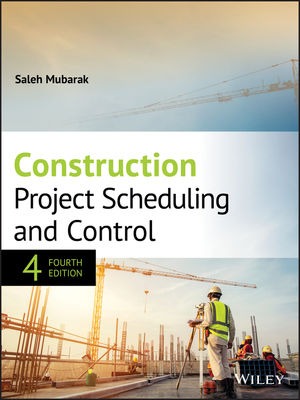
Construction Project Scheduling and Control
Introduces students to entirely new definitions and theories of the Critical Path Method (CPM), the leading scheduling method, as well as the most up-to-date information on Building Information Modeling (BIM). The new edition will include updated worked problems and scheduling software exercises, as well as revised teaching materials such as lecture slides and an instructor's manua

Construction Project Organising
Investigates the relationship between structure and action, and how patterns of action are created, recreated and maintained by scrutinising the myriad of organisational arrangements between clients, financiers, design teams, contractors, stakeholders and supply chains. It also discusses different concepts in the development and management of construction project organisations, including formation and maintenance issues.
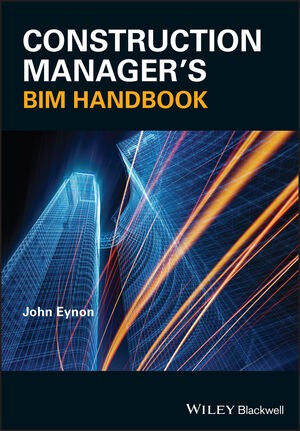
Construction Manager's BIM Handbook
Ensures the reader understands what BIM is, what the UK strategy is and what it means for key roles in the construction team. By providing concise summaries of key aspects of BIM, explaining the government documents and intentions, and providing pointers on implementation all readers will be fully aware of the implications of BIM for them and their organisations, and can begin to adopt this approach in future projects.

Construction Management
Covers a wide range of subjects, reflecting the breadth of knowledge needed to understand the dynamics of this large and complex industry. This edition includes updated chapters on planning and scheduling, a new chapter addressing linear scheduling methods, material regarding the historical background of construction as a profession, and includes an Instructor Resource of solutions to the end-of-chapter review exercises.

Construction audit: building a solid foundation
Provides real-life solutions to common problems in construction. Introduces project management techniques; while not concentrating on a special methodology, the book builds on project management fundamentals. Understanding this will help enable the reader to talk to project managers more effectively.
