



الصفحة 61
الصفحة 61

Brouwer meets Husserl : On the Phenomenology of Choice Sequences
Can the straight line be analysed mathematically such that it does not fall apart into a set of discrete points, as is usually done but through which its fundamental continuity is lost? And are there objects of pure mathematics that can change through time? The mathematician and philosopher L.E.J. Brouwer argued that the two questions are closely related and that the answer to both is "yes''. To this end he introduced a new kind of object into mathematics, the choice sequence. But other mathematicians and philosophers have been voicing objections to choice sequences from the start. This book aims to provide a sound philosophical basis for Brouwer's choice sequences by subjecting them to a phenomenological critique in the style of the later Husserl.
Brodmann's : Localisation in the Cerebral Cortex
It is one of the major "classics" of the neurological world. Even today it forms the basis for so-called "localisation" of function in the cerebral cortex. Brodmann's "areas" are still used to designate functional regions in the cortex, the part of the brain that brings the world that surrounds us into consciousness, and which governs our responses to the world. For example, we use "area 4" for the "motor" cortex, with which we control our muscles, "area 17" for "visual" cortex, with which we see, and so on. This nomenclature is used by neurologists and neurosurgeons in the human context, as well as by experimentalists in various animals. Indeed, Brodmann's famous "maps" of the cerebral cortex of humans, monkeys and other mammals must be among the most commonly reproduced figures in neurobiological publishing. The most famous of all is that of the human brain. There can be few textbooks of neurology, neurophysiology or neuroanatomy in which Brodmann is not cited, and his concepts pervade most research publications on systematic neurobiology.

Bridging Educational Leadership, Curriculum Theory and Didaktik : Non-affirmative Theory of Education
This book is open access under a CC BY 4.0 license. This volume argues for the need of a common ground that bridges leadership studies, curriculum theory, and Didaktik. It proposes a non-affirmative education theory and its core concepts along with discursive institutionalism as an analytical tool to bridge these fields. It concludes with implications of its coherent theoretical framing for future empirical research.

Bridge design for economy and durability : Concepts for new, strengthened and replacement bridges
Describes a number of new or updated bridging concepts which were developed and s"Describes a number of new or updated bridging concepts which were developed and successfully applied during the author's forty years of close involvement with UK and international bridge design, construction, maintenance and research. The concepts mainly apply to the small/medium span range of bridges and viaducts and contribute to one or more of the following features: design and construction economy in both time and money / ease of inspection and minimum maintenance / ride quality and safety / good appearance / strengthening when required with minimum traffic disruption"

Bridge Design : Concepts and Analysis
Provides a unique approach, combining the fundamentals of concept design and structural analysis of bridges in a single volume. The book provides insights into conceptual design with concrete, steel or composite bridge solutions as alternatives.

Breast cancer research and treatment : innovative concepts
Focuses on innovative treatment options for breast cancer, including surgery, radiotherapy, systemic therapy and of course immunotherapy that is changing outcomes in some aggressive breast cancer histotypes. Subsequent chapters also address the ongoing emerging research in the screening, diagnostics, and management of all subtypes of breast cancers. All current landscapes and future perspectives in each molecular subtype: luminal, HER2-positive, and triple-negative breast cancers are discussed within the different chapters. Breast cancer is still the most common cancer and cause of cancer deaths among women worldwide. The improvement of breast cancer outcome appears to be strictly related to the validation of precise biomarkers that enable us to better select personalized approaches in breast cancer management. The closing chapters deal with the challenges of low income countries of conducting research in the era of precision medicine for cancer. The book is edited and authored by leading experts in this field and will be of interest for clinicians and scientists alike

Brand hate : Navigating consumer negativity in the digital world, 2nd
Focuses on the concept of “brand hate” and consumer negativity in today’s digital markets. It explores the emotional detachment consumers generate against valued brands and how negative experiences affect their and other consumers' loyalty. The book defines consumer brand hate and discusses its dimensions, antecedents, and consequences as well as the semiotics and legality of such brand hate activities based on current brand dilution arguments. It describes the situations which lead to anti-branding and how consumers choose to express their dissatisfaction with a company on individual and social levels. This newly updated edition discusses recent research findings from brand hate literature with new cases and extended managerial analysis.

Brain tumor pathology : Current diagnostic hotspots and pitfalls
Since Bailey and Cushing (1926), all brain tumor classifications have been called histogenetic. The nosographic position that the tumor types progressively acquired in the classification systems derived from the resemblance of tumor cells to those of the cytogenesis, modified whenever new information became available from different biological research fields and especially from molecular genetics. Classically, on the basis of the rough correspondence between the mature/immature aspect of tumor cells and the benign/malignant biological behavior of the tumors, the histological labels contained a prognostic significance. The supposed origin of the tumors was thus a factor for prognosis. Later on, with the concept of anaplasia (Cox, 1933; Kernohan et al., 1949) new criteria were introduced for establishing the malignancy grades of tumors. Immunohistochemistry and later molecular genetics further refined the prognostic diagnoses, substantially increasing the opportunities to recognize the cell origin of tumors, beside revealing the pathogenetic mechanisms. Prognoses became more accurate, as required by the greater and more targeted possibilities of therapy.
Brain Death : A Reappraisal
This text is intended to provide an overview of brain death. The topics explored in this book are the concept and historical approach of human death, clinical examinations of brain-dead patients, ancillary tests in coma and brain death, bioethical discussions of brain death and its relationship with some consciousness disturbances, and the legal considerations of human death.
Botanical drug products : Recent developments and market trends
Botanicals, which have been part of human food and medicine for thousands of years, are perceived as being safer than synthetic pharmaceuticals. The global botanical drug market was expected to reach $26.6 billion by 2017. In terms of FDA regulations, botanical drugs are no different from non-botanical products, having to meet the safety and effectiveness standards of a new drug in accordance. This book comprises a complete start-to-end process from drug-idea conception, to drug development process.

Boreal Forest and Climate Change
There are several crucial feedbacks from forests to the climate system. The mechanisms for those feedbacks are elaborated in the book: they involve changes in the carbon cycle, albedo, N2O emissions and the production of aerosols. Much of this work is new and the feedback relationships have not yet been incorporated into models of the climate system. The book will be an important introduction for students and climate modellers alike, providing conceptual tools and ideas that are broadly applicable to terrestrial systems.
Blockchain, artificial intelligence, and the internet of things : Possibilities and opportunities
Provides basic concepts and deep knowledge about various security mechanisms that can be implemented in IoT through Blockchain technology. This book aids readers in gaining insight and knowledge about providing security and solutions to different challenges in IoT using Blockchain technology. This book primarily focuses on challenges to addressing the integration of the IoT with Blockchain with respect to potential benefits for IoT. This book gives descriptive analysis of Blockchain integrated with IoT applications and platforms for the development of IoT solutions along with possible topologies to that integration. Several application examples are included in a variety of industries / Provides the latest on secure IIoT communication using Blockchain technology for Industry 4.0 / Includes updates on using Blockchain technology in secure vehicular communication (VANET), healthcare, retail, and gaming / Provides the latest on secure IIoT communication using Blockchain technology for Industry 4.0

Bird species : How they arise, modify and vanish
The average person can name more bird species than they think, but do we really know what a bird “species” is? This open access book takes up several fascinating aspects of bird life to elucidate this basic concept in biology. From genetic and physiological basics to the phenomena of bird song and bird migration, it analyzes various interactions of birds – with their environment and other birds. Lastly, it shows imminent threats to birds in the Anthropocene, the era of global human impact.This book brings together various disciplines involved in observing bird species come into existence, modify, and vanish. It is a rich resource for bird enthusiasts who want to understand various processes at the cutting edge of current research in more detail. At the same time it offers students the opportunity to see primarily unconnected, but booming big-data approaches such as genomics and biogeography meet in a topic of broad interest. Lastly, the book enables conservationists to better understand the uncertainties surrounding “species” as entities of protection.
Biotechnology for the Future
One area that has attracted much attention is the use of cell factories for the production of a wide range of chemicals. This area illustrates very well the definition of biochemical engineering , and it has therefore been chosen as the focus of this volume. The use of cell factories for production of chemicals dates back to the production of penicillin, ethanol, acetone–butanol, glycerol and further to enzymes and other antibiotics. All these products were traditionally produced by cell factories that naturally produce these compounds. With the introduction of genetic engineering it has,This volume therefore contains chapters on concepts of metabolic engineering on detailed modeling of cellular systems

Biorthogonal Systems in Banach Spaces
The main theme of this book is the relation between the global structure of Banach spaces and the various types of generalized "coordinate systems" - or "bases" - they possess. In this book, the authors systematically investigate the concepts of Markushevich bases, fundamental systems, total systems and their variants.
Biophysical Techniques in Photosynthesis ; Vol. II
Since the first volume on Biophysical Techniques in Photosynthesis Research, published in 1996, new experimental techniques and methods have been devised at a rapid pace. The present book is a sequel which complements the first volume (Volume 3 in the Series) by providing a comprehensive overview of the most important new techniques developed over the past ten years, especially those that are relevant for research on the mechanism and fundamental aspects of photosynthesis. The contributions are written by leading scientists in their field. The book has 5 sections: Imaging; Structure; Optical and laser spectroscopy; Magnetic resonance; Theory. Each chapter describes the basic concepts of the technique, practical applications and scientific results. Possibilities and limitations from a technical as well as a scientific point of view are addressed, allowing the reader not only to recognize the potential of a particular method for his/her own quest, but also to assess the resources that are required for implementation. The book is intended for use by graduate students and researchers in photosynthesis as well as in (bio)physics, (bio)chemistry and biology in general.
Biopharmaceutics applications in drug development
This book introduces fundamental concepts, methods, and advances in the areas of dissolution, absorption, and permeability and their key applications in dosage form performance. Case studies are used to discuss the applications of biopharmaceutic strategies in the development of successful drugs, with a specific focus on the applications of biopharmaceutic strategies in the development of successful drugs. The book presents an integrated view in linking pharmaceutic to the biological consequences of drug products and leverages those for decision making in drug development.
Biomimetic neural learning for intelligent robots : Intelligent systems, cognitive robotics, and neuroscience
This book presents research performed as part of the EU project on biomimeticmultimodal learning in a mirror neuron-based robot (MirrorBot) and contribu-tions presented at the International AI-Workshop on NeuroBotics. The over-all aim of the book is to present a broad spectrum of current research intobiomimetic neural learning for intelligent autonomous robots. In this book we show the development of newtechniques using cell assemblies, associative neural networks, and Hebbian-typelearning in order to associate vision, language and motor concepts. We havedeveloped biomimetic multimodal learning and language instruction in a robotto investigate the task of searching for objects. As well as the research performedin this area for the MirrorBot project, the second part of this book incorporatessignificant contributions from other research in the field of biomimetic robotics.This second part of the book concentrates on the progress made in neuroscienceinspired robotic learning approaches (in short: NeuroBotics). We hope that this book stimulates and encourages new research in this in-teresting and dynamic area.
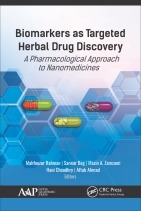
Biomarkers as targeted herbal drug discovery : A pharmacological approach to nanomedicines
Looks at the applications of biomarkers as important tools for herbal drug discovery, presenting research on phytoconstituents with advanced nanotechnological applications for healthcare benefits. Herbal drug discovery based on biomarkers is an emerging area in complementary and alternative medicine that has tremendous potential in healthcare. Conventional medications have limited efficacy and high toxicity, whereas herbal drugs are said to provide wide structural diversity that is not usually seen with conventional/synthetic drug molecules. Recognition of various herbal constituents, such as terpenoids, fatty acids, flavonoids and steroids, are well explored in the management and treatment of various disorders in this volume. These agents target various biomarkers such as nitric oxide (NO), cytokines, chemokines, adhesion molecules, NF- kβ, lipoxygenase (LOX), and arachidonic acid. Reviews the literature on inflammatory biomarkers in the treatment of diseases Looks at the development of herbal drug discovery based on biomarkers Explores emerging concepts of nanomedicines for herbal drug delivery Takes an interdisciplinary approach, with application to disciplines related to medical, pharmaceutical, biotechnological, Ayurvedic, Unani and biomedical engineering fields

Biology of orthodontic tooth movement : current concepts and applications in orthodontic practice
Presents the current knowledge and understanding of the biological processes involved in the orthodontic movement of teeth and discusses recent progress in the field. It links research advances to their immediate clinical applications and offers researchers and clinicians a state of the art reference on topical issues relating to orthodontic tooth movement.
