



الصفحة 6
الصفحة 6

Aquatic Oligochaete biology IX : Selected papers from the 9th Symposium on Aquatic Oligochaeta, 6-10 October 2003, Wageningen, The Netherlands
This volume contains selected papers from the 9th Symposium on Aquatic Oligochaeta, 6–10 October 2003, Wageningen, The Netherlands. 18 contributions deal with the biology of aquatic oligochaetes, and represents a mixture of the fields of taxonomy, anatomy, morphology and physiology, life history, ecology, sludge studies and toxicology. This wide scope is in line with the recent trends in oligochaete research, with a special interest in sludge studies.
Antisense RNA Design, Delivery, and Analysis
This volume gathers a variety of models, delivery systems, and approaches that can be used to assess RNA technology for exploiting antisense as a therapeutic intervention. Beginning with a section on the design of antisense technology and their delivery, the book continues by covering model systems developed to evaluate efficacy, both in vivo and in vitro, as well as methods to evaluate preclinically the toxicity associated with these new potential drugs, and intellectual property considerations. Written for the highly successful Methods in Molecular Biology series, chapters include introductions to their respective topics, lists of the necessary materials and reagents, step-by-step, readily reproducible laboratory protocols, and tips on troubleshooting and avoiding known pitfalls.
Anestetici locali in analgesia ostetrica : Il modello MLAC : dalla teoria alla pratica clinica = Local anesthetics in obstetric analgesia : The MLAC model : from theory to clinical practice
This monograph contains a detailed description of the MLAC method and its applications and an extensive and updated review of the most significant studies on the subject and their clinical implications. Studies that use the up-down sequential allocation method have made a significant contribution to clarifying numerous questions that the anesthetist asks himself every day in the delivery room and today rightly flank traditional studies representing, together with them, the primary source of updating and knowledge that are indispensable for good clinical practice based not only on experience but also on evidence and scientific rationale.
Analysis of seawater : A guide for the analytical and environmental chemist
It is only in the past few years that methods of adequate sensitivity have become available for true ultra-trace metal determinations in water. In the case of organics in seawater it has now become possible to resolve the complex mixtures of organics in seawater and achieve the required very low detection limits. Fortunately, the interest in micro-constituents in the seawater both from the environmental and the nutrient balance points of view has coincided with the availability of advanced instrumentation capable of meeting the analytical needs. This complete and up-to-date compilation of the currently employed proven methods for the chemical analysis of seawaters includes 45 tables and 48 figures.
Analysis file of drug-induced lung injury : expert opinion for analysis of big data
Describes the pathologic conditions of drug-induced lung injuries, monitoring strategies, and guides on how to interpret the evidence. It also dives into particular drugs that caused the disorder, such as EGFR inhibitors, anti-EGFR antibodies, mTOR inhibitors, proteasome inhibitors, immune checkpoint inhibitors, neoangiogenesis inhibitors, and other molecular targeted drugs. It outlines the analysis and interpretation of the post-marketing survey on surveillance of each drug for inducing pulmonary lesions presenting diffuse haziness. The data and analysis from this survey are valuable since a guideline is yet to be established due to limited clinical evidence and cases. As new drugs are developed, establishing treatment and event management is crucial.

Alternatives to Animal Testing : Proceedings of Asian Congress 2016
This book presents recent advances in the pure sciences that are of significance in the quest for alternatives to the use of animals in research and describes a variety of practical applications of the three key guiding principles for the more ethical use of animals in experiments – replacement, reduction, and refinement, collectively known as the 3Rs. Important examples from across the world of implementation of the 3Rs in the testing of cosmetics, chemicals, pesticides, and biologics, including vaccines, are described, with additional information on relevant regulations. The coverage also encompasses emerging approaches to alternative tests and the 3Rs.

Air Pollution Modeling and its Application XVII
This volume contains the papers and posters presented at the 27 NATO/CCMS International Technical Meeting on Air Pollution Modeling and Its Application held in Banff, Canada, 24-29 October 2004. The key topics at this ITM included: Role of Atmospheric Models in Air Pollution Policy and Abatement Strategies; Integrated Regional Modeling; Effects of Climate Change on Air Quality; Aerosols as Atmospheric Contaminants; New Developments; and Model Assessment and Verification. 104 participants from North and South America, Europe, Africa and Asia attended th the 27 ITM.

Adverse Food Reaction
Adverse food reaction is a broad term indicating a link between an ingestion of a food and an abnormal response. Adverse reactions to foods, aside from those considered toxic, are caused by a particular individual intolerance towards commonly tolerated foods. Intolerance derived from an immunological mechanism is referred to as Food Allergy, the non-immunological form is called Food Intolerance. IgE-mediated food allergy is the most common and dangerous type of adverse food reaction. It is initiated by an impairment of normal Oral Tolerance to food in predisposed individuals (atopic). Food allergy produces respiratory, gastrointestinal, cutaneous and cardiovascular symptoms but often generalized, life-threatening symptoms manifest at a rapid rate-anaphylactic shock.

Advances in the toxicity of construction and building materials
Presents the potential and toxic effects of building materials on human health, along with tactics on how to minimize exposure. Chapters are divided into four sections covering the toxicity of indoor environments, fire toxicity, radioactive materials, and toxicity from plastics, metals, asbestos, nanoparticles and construction wastes. Key chapters focus on the reduction of chemical emissions in houses with eco-labelled building materials and potential risks posed by indoor pollutants that may include volatile organic compounds (VOC), formaldehyde, semi-volatile organic compounds (SVOC), radon, NOx, asbestos and nanoparticles.
Advances in Bioactivation Research
This volume provides researchers with recent information on bioactivation reactions of drugs and toxicants. In other sections, focus is on recent applications of bioactivation research in pharmacology, toxicology, and environmental health sciences, where contributors demonstrate the integration of bioactivation research.
Advanced Environmental Monitoring
This book deals with recent developments and applications of environmental monitoring technologies, with emphasis on optical and biological methods that are rapidly progressing through the integration of emerging technologies from various disciplines.
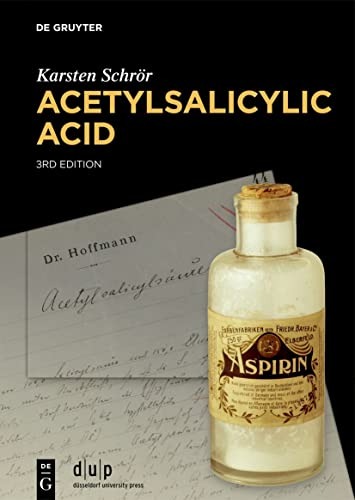
Acetylsalicylic Acid
Contains the latest results of clinical and pharmacological research on Acetylsalicylic acid, addressing the multiple pharmacological properties of this famous drug with a balanced view on their translation into clinical practice, including prevention and treatment of cardiovascular diseases, thromboinflammation and colorectal cancer. Understandable for clinicians, pharmacists, biomedical researchers and pharmacologists alike.

A Dictionary of Public Health
This dictionary covers terms used in public health science and practice, including areas such as communicable disease control, epidemiology, genetics, nutrition, toxicology, social work, sanitation and public health engineering, environmental sciences, and administration. It offers definitions, discussion, and an occasional brief commentary on the relevance of each term to people and their health.

70 Years of Levothyroxine
Presents the history, pharmacokinetics and pharmacodynamics of levothyroxine, discussing its role in the thyroid pathophysiology of patients of various ages and during pregnancy. It also describes the influence of levothyroxine on heart, bone and in cancer. When it was first synthesized in 1949, levothyroxine represented a significant advance in the treatment of hypothyroidism, providing a safe and effective treatment option for millions of hypothyroid patients around the globe. This synthetic form of thyroxine is now one of the most prescribed drugs in the world. Levothyroxine was first introduced by Merck KGaA,Darmstadt, Germany, in 1972, and since then the company has remained actively engaged in research on this mainstay of hypothyroidism treatment.
