



الصفحة 6
الصفحة 6

Microprocessor 2 : Communication in a digital system
Focuses more particularly on the first generations of microprocessors, that is to say those that handle integers in 4 and 8-bit formats. The first chapter presents the calculation function and reminds the memory function. The following is devoted to notions of calculation model and architecture. The concept of bus is then presented. Chapters 4 and 5 can then address the internal organization and operation of the microprocessor first in hardware and then software. The mechanism of the function call, conventional and interrupted, is more particularly detailed in a separate chapter. The book ends with a presentation of architectures of the first microcomputers for a historical perspective. The knowledge is presented in the most exhaustive way possible with examples drawn from current and old technologies that illustrate and make accessible the theoretical concepts. Each chapter ends if necessary with corrected exercises and a bibliography. The list of acronyms used and an index are at the end of the book.

Microprocessor 1 : Prolegomena - calculation and storage functions - models of computation and computer architecture
Presents the computation function, recalls the memory function and clarifies the concepts of computational models and architecture. A comprehensive approach is used, with examples drawn from current and past technologies that illustrate theoretical concepts, making them accessible.

Microplastic in the Environment : Pattern and Process
This book examines global plastic pollution, an issue that has become a critical societal challenge with implications for environmental and public health. This volume provides a comprehensive, holistic analysis on the plastic cycle and its subsequent effects on biota, food security, and human exposure. Importantly, global environmental change and its associated, systems-level processes, including atmospheric deposition, ecosystem complexity, UV exposure, wind patterns, water stratification, ocean circulation, etc., are all important direct and indirect factors governing the fate, transport and biotic and abiotic processing of plastic particles across ecosystem types.

Micromechanics of Contact and Interphase Layers
Micromechanics provides a link between the structure and the properties at different scales of observation. This book deals with micromechanical analysis of interfaces and interface layers and presents several modelling tools, ranging from the rigorous method of asymptotic expansions to practical finite element simulations, suitable for this class of problems. Two application areas are discussed. Boundary layers associated with contact of rough bodies are modelled by applying a scale transition approach in which a macroscopic interface of zero thickness is seen at the micro-scale as a layer with some finite thickness. Secondly, evolution of laminated microstructures accompanying stress-induced martensitic transformations in shape memory alloys (SMA) is analyzed as an illustration of the case when the local interfacial phenomena – here the propagation of phase transformation fronts – govern the macroscopic behaviour of a heterogeneous material.

Micromachined Thin-Film Sensors for SOI-CMOS Co-Integration
Co-integration of sensors with their associated electronics on a single silicon chip may provide many significant benefits regarding performance, reliability, miniaturization and process simplicity without significantly increasing the total cost. Micromachined Thin-Film Sensors for SOI-CMOS Co-integration covers the challenges and interests and demonstrates the successful co-integration of gas-flow sensors on dielectric membrane, with their associated electronics, in CMOS-SOI technology.

Microlithography/Molecular Imprinting
The series presents critical reviews of the present and future trends in polymer and biopolymer science including chemistry, physical chemistry, physics and material science. It is addressed to all scientists at universities and in industry who wish to keep abreast of advances in the topics covered.Molecular recognition is central to how biological systems work. The molecular imprinting technique is a valuable polymerisation method for preparing synthetic materials able to mimic the molecular recognition phenomena present in living systems. A molecule that acts as a template is associated with functional monomers to form a complex by means of covalent linkages or noncovalent interactions. A polymerisation-crosslinking reaction is then performed around this complex. Upon removal of the template species, functionalised cavities, that have memorized the special features and bonding preferences of the template, are left inside the polymer network.

Microgravity Two-phase Flow and Heat Transfer
Multiphase thermal systems (involving more than one phase or one component) have numerous applications in aerospace, heat-exchanger, transport of contaminants in environmental systems, and energy transport and energy conversion systems. Advances in understanding the behaviour of multiphase thermal systems could lead to higher efficiency energy production systems, improved heat-exchanger design, and safer and enhanced treatment of hazardous waste. But such advances have been greatly hindered by the strong effect of gravitational acceleration on the flow. Depending on the flow orientation and the phase velocities, gravitational forces could significantly alter the flow regime, and hence the pressure-drop and heat-transfer coefficients associated with the flow. A reduced gravity environment (or "microgravity"), provides an excellent tool to study the flow without the masking effects of gravity. This book presents for the first time a comprehensive coverage of all aspects of two-phase flow behaviour in the virtual absence of gravity.

Microbiome
Despite the increasing interest of healthy or fat as well sick people in selecting a suitable diet for them, as nutrition is becoming an interesting area recently, in contrast to that we have noticed that there is almost a rare or no interest in Microbiome field in our country by which we can be much more accurate in selecting a diet based on comparing a map of microbiomein healthy person with ill person individually to provide a patient with the right missing food to improve his immune system, or even for a child since birth, to build the best immune system as we compared the benefits of mother’s milk, and artificial one, therefore we will focus in our study on this new science for two reasons the first is to present it and secondly to integrate it in the practice by interested doctors.
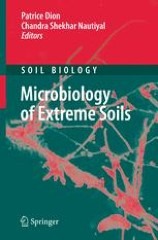
Microbiology of Extreme Soils
This volume provides an excellent introduction to the study of extreme soil micro-biology, and a variety of the challenging and fascinating environments that Earth-bound microbes face. Some are natural, and some are the result of human activity, and all of them have lessons to teach us about life’s adaptations within the “extreme” hori-zons of terrestrial soils. What’s more, each of these chapters (including the chapter on the soils of Mars by Ronald L. Crawford and David A. Newcombe) can give us insights into strategies that may make life possible beyond the safe confines of our present-day biosphere, to other worlds in this solar system and beyond

Microbial Activity in the Rhizosphere
The rhizosphere is a very complex environment in which the effects of the plant on soil microorganisms and the effects of the microorganisms on the plant are interacting and are interdependent. Plant root exudates and breakdown products attract microbes and feed them and, in turn, the plants often benefit from the microbes. Interactions among microorganisms and plant roots are essential for nutritional requirements of the plant. Plant growth, development and productivity are largely dependent on the soil environment in the root region rhizosphere. The new techniques of studying the rhizosphere enables us to get a much better understanding of the dynamics of the rhizosphere population, such rhizosphere studies being of interest to agriculturists, soilbiologists, chemists, microbiologists and molecular biologists. The rhizosphere microbes in?uence the root environment in several ways. They may change the oxidation-reduction potential, influence the availability of moisture and nutrients, produce growth inhibiting or growth promoting substances in the form of exudates, provide competition and possibly induce many other effects. My corrhizal associations are beneficial in mineral uptake and in increasing root surface area for effective ion absorption. Antagonism, ompetition and synergism in soil and the rhizoplane (rhizosphere) are the most important microbial interactions to consider in the study of rhizosphere biology. With the growing information on the production of growth regulators, competitiveness of the microbes in the rhizosphere, microsymbionts, and other factors, their effect upon plant growth will become more evident. Experiments on the introduction of microbes or their products in the rhizosphere will help to improve our understandingofthebiologyoftherhizosphere.

Microbes and oral squamous cell carcinoma : A network spanning infection and inflammation
Helps in understanding the relationship between microorganisms and oral carcinogenesis, and the possible oncogenic mechanisms enhancing the association. The book highlights the association between oral cancer, primarily oral squamous cell carcinoma (OSCC), a major global health problem with high incidence and low survival rates with infection and inflammation. Establishing the association of the oral microbiome with cancer risk may lead to significant advances in the understanding cancer etiology, potentially opening a new research paradigm for cancer prevention.

Micro and Nanomanufacturing
Engineers seeking more knowledge of how nano and micro devices are designed and fabricated will learn: Manufacturing and fabrication at the micro and nanoscales Using bulk and surface micromachining techniques, LiGA and deep x-ray lithography to manufacture semiconductors Producing master molds with micromachining The deposition of thin films, pulsed water drop machining, and nanomachining Mark J. Jackson is an Associate Professor in the Department of Mechanical Engineering Technology at Purdue University. His current research focuses on understanding the properties of materials in the field of micro scale metal cutting, micro and nano abrasive machining, and laser micro machining.

Micro- and Macro-Properties of Solids : Thermal, Mechanical and Dielectric Properties
Each of the eight chapters treats an important aspect of solid state physics, comprising a complete review of the particular field. Typically, a chapter starts with basic information about a property of a solid and the related experimental techniques. This is followed by a global overview which brings together all important contributions by different research workers in the field. This overview is comprehensive and covers essential literature over the past 60 years. Each chapter concludes with a detailed discussion of the contributions made by the chapter authors and their associates, in some cases spanning the last 45 years. In addition, Micro- and Macro-Properties of Solids provides data on new materials such as rare-earth metals, semiconductors, ferroelectrics, mixed-valence compounds, superionic conductors, optical and optoelectronic materials and biomaterials.

Michael Van Valkenburgh Associates : Allegheny Riverfront Park
Part of the "Source Books in Landscape" series, this book focuses on Michael Van Valkenburgh's Allegheny Riverfront Park project for Pittsburgh, Pennsylvania. It provides documentation of this project, following its development from conception through completion using sketches, drawings, models, renderings, working drawings, and photographs.

Mezzi di contrasto in ecografia : Applicazioni addominali = Contrast media in ultrasound : Abdominal applications
Lopera presenta unanalisi completa delle applicazioni dei mezzi di contrasto ecografici a livello addominale. La parte introduttiva di natura tecnica presenta la classificazione generale e le proprietà fisiche dei mezzi di contrasto ecografici, nonché una dettagliata classificazione delle tecniche ecografiche contrasto-specifiche; segue una parte speciale che descrive le applicazioni delle microbolle a livello del fegato, della milza e del rene. Vengono quindi presentate le applicazioni speciali e innovative dei mezzi di contrasto ecografici nellambito dei traumi delladdome, della patologia del pancreas, della parete intestinale e dei vasi addominali, e della valutazione del reflusso vescico-ureterale. Infine, viene proposta unanalisi economica relativa allapplicazione dei mezzi di contrasto ecografici nella caratterizzazione delle lesioni focali epatiche. Il libro è principalmente rivolto ai medici impegnati nellattività ecografica quotidiana, particolarmente in ambito internistico, che desiderano ampliare le proprie competenze nel settore dellecografia con mezzo di contrasto

Methods of microarray data analysis IV
As studies using microarray technology have evolved, so have the data analysis methods used to analyze these experiments. The CAMDA conference plays a role in this evolving field by providing a forum in which investors can analyze the same data sets using different methods. METHODS OF MICROARRAY DATA ANALYSIS IV is the fourth book in this series, and focuses on the important issue of associating array data with a survival endpoint. Previous books in this series focused on classification (Volume I), pattern recognition (Volume II), and quality control issues (Volume III). In this volume, four lung cancer data sets are the focus of analysis. We highlight three tutorial papers, including one to assist with a basic understanding of lung cancer, a review of survival analysis in the gene expression literature, and a paper on replication. In addition, 14 papers presented at the conference are included. This book is an excellent reference for academic and industrial researchers who want to keep abreast of the state-of-the-art of microarray data analysis.

Methods of Measuring Moisture in Building Materials and Structures : State-of-the-Art Report of the RILEM Technical Committee 248-MMB
Provides the most recent overview of methods for measuring moisture Covers major applications in civil engineering Gives both the scientific background of methods and examples of their application
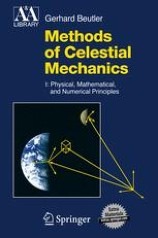
Methods of Celestial Mechanics: Vol. I: Physical, Mathematical, and Numerical Principles
G. Beutler's Methods of Celestial Mechanics is a coherent textbook for students in physics, mathematics and engineering as well as an excellent reference for practitioners. This Volume I gives a thorough treatment of celestial mechanics and presents all the necessary mathematical details that a professional would need. After a brief review of the history of celestial mechanics, the equations of motion (Newtonian and relativistic versions) are developed for planetary systems (N-body-problem), for artificial Earth satellites, and for extended bodies (which includes the problem of Earth and lunar rotation). Perturbation theory is outlined in an elementary way from generally known mathematical principles without making use of the advanced tools of analytical mechanics. The variational equations associated with orbital motion - of fundamental importance for parameter estimation (e.g., orbit determination), numerical error propagation, and stability considerations - are introduced and their properties discussed in considerable detail. Numerical methods, especially for orbit determination and orbit improvement, are discussed in considerable depth. The algorithms may be easily applied to objects of the planetary system and to Earth satellites and space debris.

Methods in Gut microbial ecology for ruminants
As a result of various human activities, such as increase in human population,decrease in arable land due to soil degradation, urbanization, industrialization and associated increase in the demand for livestock products, dramatic changes are occurring in the global ruminant livestock sector. These changes includeshift inthesize of regional livestock populations and in the types of management and feeding systems under which ruminant livestock are held, and increased demand of a wider range of quality attributes from animal agriculture, not just of the products themselves but also of the methods used in their production. The livestock sector will need to respond to new challenges of increasing live stock productivity while protecting environment and human health and conservingbiodiversity and natural resources. The micro-organisms in the digestive tracts of ruminant livestock have a profound in?uence on the conversion offeedinto end products, which can impact on the- imal and theenvironment. As the livestock sector grows particularly in developing countries, there will be an increasing need to understand these processes for b- ter management and use ofbothfeed and other natural resources that underpinthe development of sustainable feeding systems.

Metaphor and Analogy in Science Education
This book brings together powerful ideas and new developments from internationally recognised scholars and classroom practitioners to provide theoretical and practical knowledge to inform progress in science education. This is achieved through a series of related chapters reporting research on analogy and metaphor in science education. Throughout the book, contributors not only highlight successful applications of analogies and metaphors, but also foreshadow exciting developments for research and practice. Themes include metaphor and analogy: best practice, as reasoning; for learning; applications in teacher development; in science education research; philosophical and theoretical foundations. Accordingly, the book is likely to appeal to a wide audience of science educators –classroom practitioners, student teachers, teacher educators and researchers.
