



الصفحة 6
الصفحة 6

Human interactive proofs ; 2nd International workshop, HIP 2005, Bethlehem, PA, USA, May 19-20, 2005, Proceedings
Constitutes the refereed proceedings of the Second International Workshop on Human Interactive Proofs, HIP 2005, held in Bethlehem, PA, USA in May 2005. This book is devoted to the new class of security protocols called human interactive proofs. It includes sections such as: CAPTCHAs and performance analysis, and HIP architectures.

Human factors and voice interactive systems
Human Factors and Voice Interactive Systems, Second Edition provides in-depth information on current topics of major interest to speech application developers, and updates material from chapters that appeared in the previous edition.
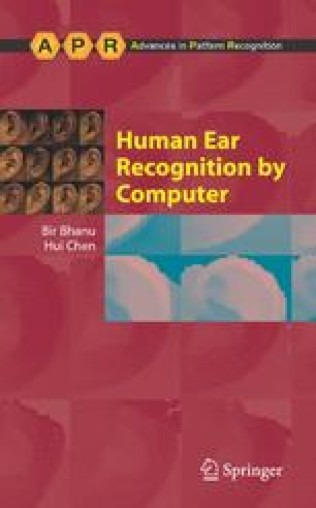
Human Ear Recognition by Computer
Human Ear Recognition by Computer is the first book on the automatic recognition of human ears. It presents an entire range of computational algorithms for recognition of humans by their ears. These algorithms have been tested and validated on the largest databases that are available today,This state-of-the-art research reference explores all aspects of 3D ear recognition, including representation, detection, recognition, indexing and performance prediction. It has been written for a professional audience of both researchers and practitioners within industry, and is also ideal as an informative text for graduate students in computer science and engineering.

Heterocyclic Supramolecules I
Contributing to this book of six chapters were 14 scientists working in the field of supramolecular chemistry, with a special focus on molecular recognition, functional materials, and nanocarbon science. … Overall, this book is an informative summary on the progress that researchers have made over the past decade toward generating useful functional materials from heterocyclic supramolecules. This is an advanced text that should be most useful to those with an established background in supramolecular sciences and engineering.
HCI and usability for education and work ; 4th Symposium of the Workgroup Human-Computer Interaction and Usability Engineering of the Austrian Computer Society, USAB 2008, Graz, Austria, November 20-21, 2008. Proceedings
This book constitutes the refereed proceedings of the 4th Usability Symposium of the Human-Computer Interaction and Usability Engineering Workgroup of the Austrian Computer Society, USAB 2008, held in Graz, Austria, in November 2008.The 7 revised full papers and 26 revised short papers presented were carefully reviewed and selected from 85 submissions. The papers are organized in topical sections on cognitive processes and end user experience, social software and collaborative knowledge development, knowledge processing, assessment and human performance.

Haptics : Perception, Devices and Scenarios ; 6th International Conference, EuroHaptics 2008 Madrid, Spain, June 10-13, 2008 Proceedings
This book constitutes the refereed proceedings of the 6th International Conference on Human Haptic Sensing and Touch Enabled Computer Applications, EuroHaptics 2008, held in Madrid, Spain, in June 2008.The 119 revised full papers presented were carefully reviewed and selected from 150 submissions. The papers are organized in topical sections on control and technology, haptic perception and psychophysics, haptic devices, haptics rendering and display, multimodal interaction and telepresence, as well as haptic applications.

Haptic and Audio Interaction Design ; 3rd International Workshop, HAID 2008 Jyväskylä, Finland, September 15-16, 2008 Proceedings
This book constitutes the refereed proceedings of the Third International Workshop on Haptic and Audio Interaction Design, HAID 2008 held in Jyväskylä, Finland, in September 2008.The 13 revised full papers presented were carefully reviewed and selected for inclusion in the book. The papers are organized in topical sections on visual impairment, applications of multimodality, evaluation, conceptual integration of audio and haptics, interaction techniques, and perception.

Haptic and Audio Interaction Design ; 2nd International Workshop, HAID 2007 Seoul, Korea, November 29-30, 2007 Proceedings
This book constitutes the refereed proceedings of the Second International Workshop on Haptic and Audio Interaction Design, HAID 2007 held in Seoul, South Korea, in November 2007. The papers are organized in topical sections on tactile displays, communication and games, accessibility and navigation, as well as design.

Handbook of vascular biometrics
This handbook provides the first comprehensive overview of biometrics exploiting the shape of human blood vessels for biometric recognition, i.e. vascular biometrics, including finger vein recognition, hand/palm vein recognition, retina recognition, and sclera recognition.
Handbook of Geometric Computing : Applications in Pattern Recognition, Computer Vision, Neuralcomputing, and Robotics
Many computer scientists, engineers, applied mathematicians, and physicists use geometry theory and geometric computing methods in the design of perception-action systems, intelligent autonomous systems, and man-machine interfaces. This handbook brings together the most recent advances in the application of geometric computing for building such systems, with contributions from leading experts in the important fields of neuroscience, neural networks, image processing, pattern recognition, computer vision, uncertainty in geometric computations, conformal computational geometry, computer graphics and visualization, medical imagery, geometry and robotics, and reaching and motion planning. For the first time, the various methods are presented in a comprehensive, unified manner.

Handbook of Face Recognition
This authoritative handbook is the first to provide complete coverage of face recognition, including major established approaches, algorithms, systems, databases, evaluation methods, and applications. After a thorough introductory chapter from the editors, 15 chapters address the sub-areas and major components necessary for designing operational face recognition systems. Each chapter focuses on a specific topic, reviewing background information, reviewing up-to-date techniques, presenting results, and offering challenges and future directions.

Handbook of Digital Face Manipulation and Detection: From DeepFakes to Morphing Attacks
Provides the first comprehensive collection of studies dealing with the hot topic of digital face manipulation such as DeepFakes, Face Morphing, or Reenactment. It combines the research fields of biometrics and media forensics including contributions from academia and industry. Appealing to a broad readership, introductory chapters provide a comprehensive overview of the topic, which address readers wishing to gain a brief overview of the state-of-the-art. Subsequent chapters, which delve deeper into various research challenges, are oriented towards advanced readers. Moreover, the book provides a good starting point for young researchers as well as a reference guide pointing at further literature. Hence, the primary readership is academic institutions and industry currently involved in digital face manipulation and detection. The book could easily be used as a recommended text for courses in image processing, machine learning, media forensics, biometrics, and the general security area.

Handbook of Biometrics
The Handbook of Biometrics -- an edited volume by prominent invited researchers in biometrics -- describes the fundamentals as well as the latest advancements in the burgeoning field of biometrics. It is designed for professionals, practitioners and researchers in biometrics, pattern recognition and computer security. The Handbook of Biometrics can be used as a primary textbook for an undergraduate biometrics class. This book is also suitable as a secondary textbook or reference for advanced-level students in computer science.

Groundwater and Ecosystems
Groundwater Dependent Ecosystems (GDEs) frequently exhibit rich biological diversity and can provide enormous economic wealth. In recent years, GDEs in many industrialized countries have shown signs of serious degradation, primarily the result of groundwater abstraction and pollution. Many such systems, including a number of well documented cases in Eastern Europe, are no longer sustainable. As a consequence, the conservation and sustainable management of GDEs has emerged as one of the most urgent environmental research priorities of our time. A large percentage of the world’s population lives in cities and either depends on, or is affected in some way, by groundwater. Moreover, groundwater has become a very important and complex issue that attracts the interest of many diverse stakeholders. Many problems related to groundwater and ecosystems are shared by countries throughout the world and there is growing recognition that much can be gained by co-operation on an international scale.

Graphics Recognition. Recent Advances and New Opportunities ; 7th International Workshop, GREC 2007, Curitiba, Brazil, September 20-21, 2007. Selected Papers
This book constitutes the thoroughly refereed post-proceedings of the 7th International Workshop on Graphics Recognition, GREC 2007, held in Curitiba, Brazil in September 2007.The 30 revised full papers presented together with a panel discussion report were carefully selected and improved during two rounds of reviewing and revision. The papers are organized in topical sections on technical documents, maps and diagrams understanding; symbol and shape description and recognition; information retrieval, indexing and spotting; sketching interfaces and on-line processing; feature and primitive analysis and segmentation; performance evaluation and ground truthing.

Graphics Recognition : TenYears Review and Future Perspectives ; 6th International Workshop, GREC 2005, Hong Kong, China, August 25-26, 2005, Revised Selected Papers
This book contains refereed and improved papers presented at the 6th IAPR Workshop on Graphics Recognition (GREC 2005). This year is the tenth anniversary of GREC, Graphics recognition is a particular field in the domain of document analysis, which combines pattern recognition and image processing techniques for the analysis of any kind of graphical information in documents from either paper or electronic formats. In its 10 year history, the graphics recognition community has extended its research topics from the analysis and understanding of graphic documents (including engineering drawings vectorization and recognition), to graphics-based information retrieval and symbol recognition, to new media analysis, and even stepped into research areas of other communities

Graph-based representations in pattern recognition ; 6th IAPR-TC-15 International Workshop, GbRPR 2007, Alicante, Spain, June 11-13, 2007, Proceedings
Constitutes the refereed proceedings of the 6th IAPR-TC-15 International Workshop on Graph-Based Representations in Pattern Recognition, GbRPR 2007, held in Alicante, Spain in June 2007.

Graph-based representations in pattern recognition ; 5th IAPR International Workshop, GbRPR 2005, Poitiers, France, April 11-13, 2005, Proceedings
Many vision problems have to deal with di?erent entities (regions, lines, line junctions, etc.) and their relationships. These entities together with their re- tionships may be encoded using graphs or hypergraphs. The structural inf- mation encoded by graphs allows computer vision algorithms to address both the features of the di?erent entities and the structural or topological relati- ships between them. Moreover, turning a computer vision problem into a graph problem allows one to access the full arsenal of graph algorithms developed in computer science. The Technical Committee (TC15, http://www.iapr.org/tcs.html) of the IAPR (International Association for Pattern Recognition) has been funded in order to federate and to encourage research work in these ?elds. Among its - tivities, TC15 encourages the organization of special graph sessions at many computer vision conferences and organizes the biennial workshop GbR.
Grammatical Inference : Algorithms and Applications ; 8th International Colloquium, ICGI 2006, Tokyo, Japan, September 20-22, 2006, Proceedings
The topics discussed range from theoretical results of learning algorithms to innovative applications of grammatical inference and from learning several interesting classes of formal grammars to applications to natural language processing.

Global perspectives on recognising non-formal and Informal Learning : Why recognition matters
This book deals with the relevance of recognition and validation of non-formal and informal learning in education and training, the workplace and society. In an increasing number of countries, it is at the top of the policy and research agenda ranking among the possible ways to redress the glaring lack of relevant academic and vocational qualifications and to promote the development of competences and certification procedures which recognise different types of learning, including formal, non-formal and informal learning. The aim of the book is therefore to present and share experience, expertise and lessons in such a way that enables its effective and immediate use across the full spectrum of country contexts, whether in the developing or developed world. It examines the importance of meeting institutional and political requirements that give genuine value to the recognition of non-formal and informal learning; it shows why recognition is important and clarifies its usefulness and the role it serves in education, working life and voluntary work; it emphasises the importance of the coordination, interests, motivations, trust and acceptance by all stakeholders.
