



الصفحة 6
الصفحة 6

Multiagent System Technologies ; 6th German Conference, MATES 2008, Kaiserslautern, Germany, September 23-26, 2008. Proceedings
This book constitutes the refereed proceedings of the 6th German Conference on Multiagent Systems Technologies, MATES 2008, held in Kaiserslautern, Germany, in September 2008 - co-located with the 31st German Conference on Artificial Intelligence, KI 2008.The 16 revised full papers presented together with 2 invited talks were carefully reviewed and selected from 35 submissions. The papers present and discuss the latest advances of research and development in the area of autonomous agents and multiagent systems ranging from theoretical and methodological issues to applications in various fields.
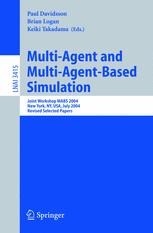
Multi-Agent and Multi-Agent-Based Simulation ; Joint Workshop MABS 2004
The aim of the workshop was to provide a forum for work in both appli- tions of multi-agent-based simulation and the technical challenges of simulating large multi-agent systems (MAS). There has been considerable recent progress in modelling and analyzing multi-agent systems, and in techniques that apply MAS models to complex real-world systems such as social systems and organi- tions. Simulation is an increasingly important strand that weaves together this work. In high-risk, high-cost situations, simulations provide critical cost/benefit leverage, and make possible explorations that cannot be carried out in situ: – Multi-agent approaches to simulating complex systems are keytools in interdisciplinary studies of social systems. Agent-based social simulation (ABSS) research simulates and synthesizes social behavior in order to understand real social systems with properties of self-organization, scalability, robustness, and openness. – In the MAS community, simulation has been applied to awide range of MAS research and design problems, from models of complex individual agents - ploying sophisticated internal mechanisms to models of large-scale societies of relatively simple agents which focus more on the interactions between agents.
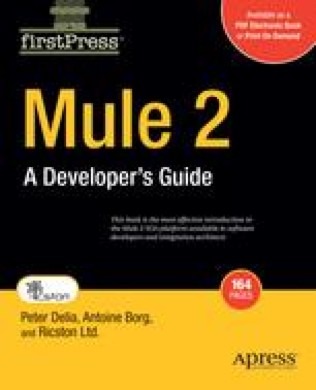
Mule 2 : A Developers Guide
Mule 2: A Developer's Guide introduces the Mule 2.0 integration platform for developers of enterprise integration applications who wish to leverage Mule as a lightweight messaging framework that contains a distributable object broker for managing communication between applications. The book is based on insight, knowledge, and experience resulting from working with Mule. The text provides support, consulting, and training to developers implementing Mule in a broad range of scenarios ranging from small projects through to large corporations developing major deployments.

Mucins : Methods and protocols
Explores the latest advancements in mucin research. The chapters in this book are organized into 8 parts and cover a wide range of topics such as mucin extraction, isolation, physicochemical property analysis, and experimental methods. The chapters also discuss the origins of mucins in jellyfish, feces, saliva and salivary glands, bronchi, stomach, and cervical tract; organic synthesis of peptides glycosylated at specific sites; analysis of mucin gene expression and methylation-specific electrophoresis of genes; imaging of mucin networks by AFM; and experimental methods using supported molecular matrix electrophoresis. Written in the highly successful Methods in Molecular Biology series format, chapters include introductions to their respective topics, lists of the necessary materials and reagents, step-by-step, readily reproducible laboratory protocols, and tips on troubleshooting and avoiding known pitfalls.

Mr Hopkins Men : Cambridge Reform and British Mathematics in the 19th Century
Tells the story of Hopkins and the education and subsequent careers of his top "wranglers", many of whom went on to have illustrious careers as bishops, judges, politicians, scientists or educators. It draws on first-hand accounts of life at Cambridge to give the reader a glimpse inside its colleges, and it charts the evolution of the curriculum and the slow, often reluctant, reforms that led to Cambridge’s dominance of British higher education. It surveys the scientific achievements of the time and considers the disproportionate contributions made by Scottish and Irish alumni in establishing a research community. Gradually, Cambridge was transformed from a near-moribund institution into a world-renowned centre for the mathematical and physical sciences.

Move : Architecture in Motion - Dynamic Components and Elements
Dynamic components and adaptive elements are becoming increasingly important in contemporary architecture, and not just because of their visual effect. If architects and engineers are engaging more and more with the issue of movement – whether in the form of sun-tracking solar cells, lowerable walls, or intelligently programmed elevators – it’s because they are busy exploring responses to three challenges: How can we control and reduce the energy requirement of buildings? How can we expand the range of possible uses? And how can we represent, illustrate, accommodate, and control dynamic movements in buildings?

Morphosemantic Number : From Kiowa Noun Classes To UG Number Features
This volume presents: the foundations of a unified morphosemantic theory of number; insight into the flow of information from the lexicon, via syntax, into the morphology; wide-ranging topics: nominal semantics, noun classes, DP syntax, agreement, suppletion, complex morphology.

Morphometrics with R
The R language and environment offers a single platform to perform a multitude of analyses from the acquisition of data to the production of static and interactive graphs. This offers an ideal environment to analyze shape variation and shape change. This open-source language is accessible for novices and for experienced users. Adopting R gives the user and developer several advantages for performing morphometrics: evolvability, adaptability, interactivity, a single and comprehensive platform, possibility of interfacing with other languages and software, custom analyses, and graphs. The book explains how to use R for morphometrics and provides a series of examples of codes and displays covering approaches ranging from traditional morphometrics to modern statistical shape analysis such as the analysis of landmark data, Thin Plate Splines, and Fourier analysis of outlines.

Moral reasoning at work : Rethinking ethics in organizations ; 2nd ed.
Moral Reasoning at Work offers a fresh perspective on how to live with them using ethics and moral psychology research. It argues that decision-makers must go beyond compliance and traditional approaches to ethics to prepare for moral dilemmas. The book has been updated with a range of examples from the author’s more recent research, to reflect current issues affecting organizations in the digital age. With two new chapters on artificial intelligence and social media, this new edition provides an up-to-date overview of ethical challenges in organizations.

Moral Education : Beyond the Teaching of Right and Wrong
This volume is unique in providing a comprehensive discussion of moral education in the light of a range of ethical theories. In a balanced, thoughtful and penetrating account, all of these are shown to have a contribution to make to our moral understanding, and hence to moral education, even if none provides a definitive criterion of moral conduct. Though divine command is rejected as a source of moral justification, the possible contribution of some religious traditions to moral education is sympathetically considered. Fashionable relativism and recent moves towards inculcatory authoritarianism are both firmly rejected. The argument is philosophically rigorous throughout. Contemporary issues addressed include the links between personal morality and citizenship, including world citizenship, family values and sexual morality.

Monograph of the Urostyloidea (Ciliophora, Hypotricha)
This monograph is the second of a series treating the hypotrichs, a major part of the spirotrichous ciliates. The urostyloids are characterised by a zigzag-arrangement of the ventral cirri. Like the first part of the series, the Oxytrichidae, it summarises the morphological, morphogenetic, faunistic, and ecological data from the past 230 years, scattered in more than 1300 references from all over the world. Dichotomous keys lead to 36 genera and subgenera comprising 153 species illustrated by more than 2100 figures, including original ones. The treatise offers taxonomists, cell biologists, and ecologists a thorough and up-to-date revision because for each species a detailed list of synonyms, a discussion of the nomenclature and systematics, and an extensive description of the morphology and ecology, including almost all published faunistic records, are provided. With the monographs of the Urostyloidea and the Oxytrichidae the interested scientist can identify more than 320 species of hypotrichs, which are an important component of the eukaryotic microbial life in limnetic, marine, and terrestrial habitats.

Monitors of Organic Chemicals in the Environment : Semipermeable Membrane Devices
Modern, industrialized societies depend on a wide range of chemical substances such as fuels, plastics, biocides, pharmaceuticals and detergents for maintaining the high quality lifestyle to which we aspire. The challenge is to ensure that while we enjoy the benetsof thes esubstances,theirinevitablereleaseintoourbiosphere does not result in unwanted human and ecosystem exposures, and the risk of - verse effects. One response to this challenge has been the extensive effort to detect and analyze or monitor a multitude of chemicals in a variety of environmental media, especially toxic organic compounds in air, water, soils and biota. An extensive literature on these traditional techniques has evolved over the years.

Monitoring Nature Conservation in Cultural Habitats : A Practical Guide and Case Studies
Monitoring Nature Conservation in Cultural Habitats presents monitoring as an integral component of responsible conservation management and as a catalyst for decision making. The early sections of the book cover key areas in the development of a monitoring project, including: - The roles of survey and surveillance - Incorporating knowledge from existing research - Identifying the conservation priority on sites - Minimising observer error - Identifying site-specific condition indicators for habitats - Collecting monitoring data The later sections of the book comprise a series of case studies covering a wide range of habitats and species. These case studies focus mostly, though not exclusively, on sites that form part of the Natura 2000 series in Europe.

Molluscs : From Chemo-ecological Study to Biotechnological Application
Marine molluscs are very promising candidates for a wide range of biotechnological applications. For example, they possess analgesic drugs more potent than morphine and very effective anticancer agents. The present book gives an up-to-date overview of the main classes of bioactive compounds from molluscs, moving from ecological observations, to chemical characterization, to biosynthesis, to large-scale synthesis, and to pharmacological applications. A truly outstanding international panel of experts from all continents provides complete coverage of the most stimulating topics related to molluscs. This knowledge of their history and current studies provides an open door to the future.

Molecular microbiology of heavy metals
Molecular Microbiology of Heavy Metals includes chapters on allocation of metals in cells, metal transporter, storage and metalloregulatory proteins, cellular responses to metal ion stress, transcription of genes involved in metal ion homeostasis, uptake of essential metals, metal efflux and other detoxification mechanisms. Also discussed are metal bioreporters for the nanomolar range of concentration and tools to address the metallome. Chapters in the second part cover specific metals such as Fe, Mn, Cu, Ni, Co, Zn and Mo as key nutrient elements and Ag, As, Cd, Hg and Cr as toxic elements.

Molecular Mechanisms of Basal Cell and Squamous Cell Carcinomas
apid progress in the understanding of carcinogenesis and pathology of epitheUal skin cancer has led to new strategies for the prevention Rand treatment of these malignancies. The goal of this volume is to comprehensively cover in a highly readable overview our present knowledge of pathogenetic mechanisms and molecular biology of Basal Cell and Squamous Cell Carcinomas. Topics that are discussed in-depth by leading researchers and clinicians range from the newest findings in epidemiology, histology, photobiology, immunology, cytogenetics, and molecular pathol ogy to new concepts for prophylaxis and treatment. Experts in the field as well as health care professionals not intimately involved in these specialized areas are provided with the most significant and timely information related to these topics. It is the aim of this book to summarize essential up-to-date information for clinicians and scientists interested in the biology of Basal Cell and Squamous Cell Carcinomas. The chapters are written by authors who are experts in their respective research areas, and I am gratefixl for their willingness to contribute to this book.

Molecular Mechanism of Congenital Heart Disease and Pulmonary Hypertension
This book focuses on the molecular mechanism of congenital heart disease and pulmonary hypertension, offering new insights into the development of pulmonary circulation and the ductus arteriosus. It describes in detail the molecular mechanisms involved in the development and morphogenesis of the heart, lungs and ductus arteriosus, covering a range of topics such as gene functions, growth factors, transcription factors and cellular interactions, as well as stem cell engineering technologies
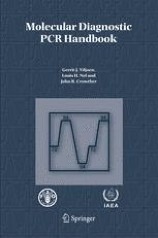
Molecular Diagnostic PCR Handbook
PREFACE The Joint FAO/IAEA Division of Nuclear Techniques in Food and Agriculture is involved in agricultural research and development and assists Member States of FAO and IAEA in improving strategies to ensure food security through the use of nuclear techniques and related biotechnologies, where such techniques have a valuable and often unique role. In particular, molecular diagnostic methods have rapidly evolved in the past twenty years, since the advent of the Polymerase Chain Reaction (PCR). They are used in a wide range of agricultural areas such as, improving soil and water management; producing better crop varieties; diagnosing plant and animal diseases; controlling insect pests and improving food quality and safety. The uses of nucleic acid-directed methods have increased significantly in the past five years and have made important contributions to disease control country programmes for improving national and international trade. These developments include the more routine use of PCR as a diagnostic tool in veterinary diagnostic laboratories. However, there are many problems associated with the transfer and particularly, the application of this technology. These include lack of consideration of: the establishment of quality-assured procedures, the required set-up of the laboratory and the proper training of staff. This can lead to a situation where results are not assured. This book gives a comprehensive account of the practical aspects of PCR and strong consideration is given to ensure its optimal use in a laboratory environment. This includes the setting-up of a PCR laboratory; Good Laboratory Practice and standardised of PCR protocols.

Molecular bio-sensors and the role of metal ions
Represents a milestone of contemporary progress and understanding of molecular bio-sensors for metal ions. It is bringing together the latest research in academia and industry, and it also emphasizes the spectrum of evolving regulations from regulatory bodies. This vibrant research area is covered by 31 internationally recognized experts. The impact of MILS-23 is manifested by more than 1300 references and close to 200 figures, more than 100 of them in color; further information is summarized in several tables. In conclusion, Volume 23 significantly advances our understanding of Molecular Bio-Sensors, it is therefore an essential resource for scientists working in the wide range from earth sciences, material sciences, physics, pharmacology, enzymology, analytical, organic, and inorganic biochemistry all the way through to medicine including the clinic.

Molecular Biomethods Handbook
Recent advances in the biosciences have led to a range of powerful new technologies, particularly nucleic acid, protein and cell-based methodologies. The most recent insights have come to affect how scientists investigate and define cellular processes at the molecular level. Molecular Biomethods Handbook, 2nd Edition expands upon the techniques included in the first edition, providing theory, outlines of practical procedures, and applications for a range of techniques. Part A of the book describes nucleic acid methods, such as gene expression profiling, microarray analysis and quantitative PCR. In Part B, protein and cell-based methods are outlined, in subjects ranging from protein engineering to high throughput screening. Written by a well-established panel of research scientists, Molecular Biomethods Handbook, 2nd Edition provides an up-to-date collection of methods used regularly in the authors’ own research programs.
