



الصفحة 6
الصفحة 6

Java for Bioinformatics and Biomedical Applications
Illustrates how individual bioinformatics applications (such as BLAST and Genscan) can be stitched together into a pipeline so that users can direct the output of one tool (for example, gene predictions using Genscan) to perform further analysis (say, homology searching using BLAST).
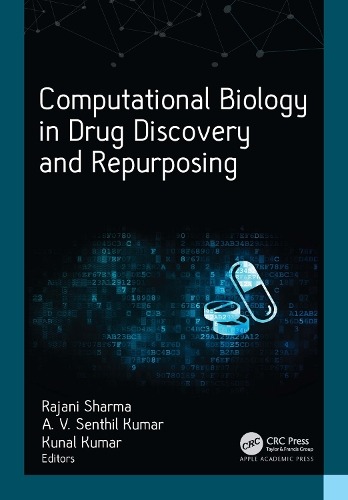
Computational biology in drug discovery and repurposing
Takes an in-depth look at the emerging and prospective field of computational biology and bioinformatics, which possesses the ability to analyze large accumulated biological data collected from sequence analysis of proteins and genes and cell population with an aim to make new predictions pertaining to drug discovery and new biology. The book explains the basic methodology associated with a bioinformatics and computational approach in drug designing. It then goes on to cover the implementation of computational programming, bioinformatics, pharmacophore modeling, biotechnological techniques, and pharmaceutical chemistry in designing drugs. The major advantage of intervention of computer language or programming is to cut down the number of steps and costs in the field of drug designing, reducing the repeating steps and saving time in screening the potent component for drug or vaccine designin

Compressor Instability with Integral Methods
Compressor Instability with Integral Methods" is a book, to bring together the quick integral approaches and advances in the field for the prediction of stall and surge problem in compressor. This book is useful for people involved in the flow analysis, design and testing of rotating machinery. For students, it can be used as a specialized topic of senior undergraduate or graduate study. The book can also be served as a self-study material to those who keen to acquire this knowledge. In brief, this book focuses on the numerical/computational analysis for the effect of distorted inlet flow propagation on the rotating stall and surge in axial compressors. It gains insight into the basic phenomena controlling these flow instabilities, and reveals the influence of inlet parameters on rotating stall and surge.

Complex Inorganic Solids : Structural, Stability, and Magnetic Properties of Alloys
One the key aspects of this volume is to cut across the traditional taxonomy of disciplines in the study of alloys. Hence there has been a deliberate attempt to integrate the different approaches taken towards alloys as a class of materials in different fields, ranging from geology to metallurgical engineering. The emphasis of this book is to highlight commonalities between different fields with respect to how alloys are studied. The topics in this book fall into several themes, which suggest a number of different classification schemes. We have chosen a scheme that classifies the papers in the volume into the categories Microstructural Considerations, Ordering, Kinetics and Diffusion, Magnetic Considerations and Elastic Considerations. The book has juxtaposed apparently disparate approaches to similar physical processes, in the hope of revealing a more dynamic character of the processes under consideration. This monograph will invigorate new kinds of discussion and reveal challenges and new avenues to the description and prediction of properties of materials in the solid state and the conditions that produce them

Clinical metabolomics applications in genetic diseases
Helps readers discover the forefront of personalized medicine on clinical metabolomics and its applications in genetic diseases. This comprehensive guide offers a functional relationship map between cell components and genetic variations in various diseases, providing insights that can be applied to personalized medicine. Covers the latest developments in metabolomics for health, with practical guidance for clinical experts looking to advance their laboratory techniques and career. The metabolomics profile is a powerful tool that has revolutionized our understanding of the relationship between genetics, clinical readouts, and disease outcomes. By integrating metabolomics with genomics and clinical phenotypes, the authors have developed diagnostic and prediction models that have vastly improved patient outcomes and deepened the understanding of disease mechanisms.
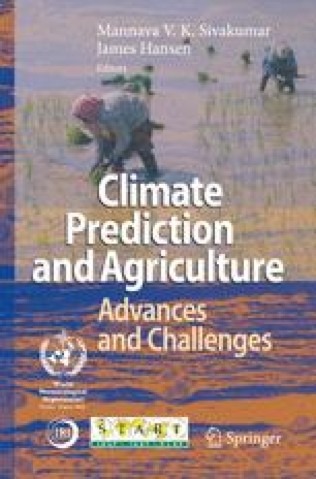
Climate prediction and agriculture : Advances and challenges
Improved adaptation of food production, particularly in areas where climate variability is large, holds the key to improving food security for human populations. Increasing climate knowledge and improved prediction capabilities facilitate the development of relevant climate information and prediction products for applications in agriculture to reduce the negative impacts due to climate variations and to enhance planning activities based on the developing capacity of climate science. This book, based on an International Workshop held in Geneva in 2005, reviews the advances made so far in seasonal climate predictions and their applications for management and decision-making in agriculture and identifies the challenges to be addressed in the next 5 to 10 years to further enhance operational applications of climate predictions in agriculture, especially in the developing countries.

Chance Rules : An informal guide to probability, risk and statistics
This second edition of Chance Rules again recounts the story of chance through history and the various ways it impacts on our lives. Here you can read about the earliest gamblers who thought that the fall of the dice was controlled by the gods, as well as the modern geneticist and quantum theory researcher trying to integrate aspects of probability into their chosen speciality. Example included in the first addition such as the infamous Monty Hall problem, tossing coins, coincidences, horse racing, birthdays and babies remain, often with an expanded discussion, in this edition. Additional material in the second edition includes, a probabilistic explanation of why things were better when you were younger, consideration of whether you can use probability to prove the existence of God, how long you may have to wait to win the lottery, some court room dramas, predicting the future, and how evolution scores over creationism. Chance Rules lets you learn about probability without complex mathematics.

Carbonate Reservoir Characterization : An Integrated Approach
One principal need in petroleum recovery from carbonate reservoirs is the description of the three-dimensional distribution of petrophysical properties in order to improve performance predictions by means of fluid-flow computer simulations. The book focuses on a rock based approach for the integration of geological, petrophysical, and geostatistical methods to construct a reservoir model suitable to input into flow simulation programs. This second edition includes a new chapter on model construction and new examples of limestone, dolostone, and touching-vug reservoir models as well as improved chapters on basic petrophysical properties, rock-fabric/petrophysical relationships, calibration of wireline logs, and sequence stratigraphy.

Browning Agents and Active Particles : Collective Dynamics in the Natural and Social Sciences
Lays out a vision for a coherent framework for understanding complex systems'' (from the foreword by J. Doyne Farmer). By developing the genuine idea of Brownian agents, the author combines concepts from informatics, such as multiagent systems, with approaches of statistical many-particle physics. This way, an efficient method for computer simulations of complex systems is developed which is also accessible to analytical investigations and quantitative predictions. The book demonstrates that Brownian agent models can be successfully applied in many different contexts, ranging from physicochemical pattern formation, to active motion and swarming in biological systems, to self-assembling of networks, evolutionary optimization, urban growth, economic agglomeration and even social systems.

Brilliantguard : AI-powered healthcare prototype for mobile & automotive integration
Brilliantguard is an AI-powered healthcare and safety prototype designed to support individuals with special needs, the elderly users, and patients with chronic conditions such as alzheimer’s disease. The system integrates augmented reality (AR), an AI based chatbot, and bitcoin-based payments into a unified platform combining mobile apps, smartwatches, and automotive sensors. It enables real-time health monitoring, predictive alerts with preliminary health suggestions, medication reminders, initial fault detection, and geofencing-based tracking for alzheimer’s patients. Emergency alerts are automatically triggered in response to abnormal health readings or car crashes.
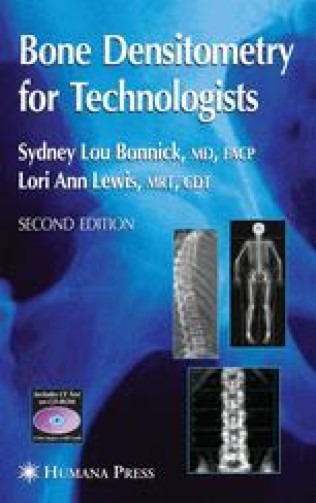
Bone densitometry for technologists
Radiologic technologists, nurse practitioners, physician assistants, and dedicated densitometry technologists can find new guidelines for bone density testing, new therapies for osteoporosis, and new treatment guidelines for osteoporosis, as well as new chapters on pediatric densitometry body composition assessments, and the use of skeletal morphometry in diagnosis and fracture risk prediction. The twelve appendices have also been updated to reflect the most current information available, including contacts for densitometry equipment manufacturers and organizations, guidelines for bone density testing and CPT codes, definitions of terms, and new conversion equations.
Biologically Inspired Algorithms for Financial Modelling
Then Part I provides a thorough guide to the various bioinspired methodologies – neural networks, evolutionary computing (particularly genetic algorithms and grammatical evolution), particle swarm and ant colony optimization, and immune systems. Part II brings the reader through the development of market trading systems. Finally, Part III examines real-world case studies where BIA methodologies are employed to construct trading systems in equity and foreign exchange markets, and for the prediction of corporate bond ratings and corporate failures.

Bioinformatics research and applications ; 3rd International Symposium,ISBRA 2007, Atlanta, GA, USA, May 7-10, 2007, Proceedings
This book including clustering and classification, gene expression analysis, gene networks, genome analysis, motif finding, pathways, protein structure prediction, protein domain interactions, phylogenetics, and software tools.

Bioinformatics of genome regulation and structure II
The conference was organized by the Laboratory of Theoretical Genetics, Institute of Cytology and Genetics, Siberian Branch of the Russian Academy of Sciences, Novosibirsk, Russia. The material covers the most recent topics in bioinformatics, including (i) regulatory genomic sequences: databases, knowledge bases, computer analysis, modeling, and recognition; (ii) large-scale genome analysis and functional annotation; (iii) gene structure detection and prediction; (iv) comparative and evolutionary genomics; (v) computer analysis of genome polymorphism and evolution; computer analysis and modeling of transcription, splicing, and translation; structural computational biology: structure- function organization of genomic DNA, RNA, and proteins; (vi) gene networks, signal transduction pathways, and genetically controlled metabolic pathways: databases, knowledge bases, computer analysis, and modeling; principles of organization, operation, and evolution; (vii) data warehousing, knowledge discovery and data mining; and (viii) analysis of basic patterns of genome operation, organization, and evolution.
Bioethics in Law
The idea for Bioethics in Law began more than a decade ago, while I was studying social science and law. I was parti- larly interested in the collaborations that comprised social s- ence in law. Economic and social data in the pioneering Brandeis brief had been used to defend an early 20th-century labor law; surveys of consumer confusion had helped resolve trademark - fringement cases; psychologists’ predictions of future violence had informed capital sentencing decisions. Additionally, Kenneth Clark’s “doll studies,” cited by the Supreme Court in Brown v. Board of Education, had helped change the course of American 1 history.

Bioanalytical aspects in biological therapeutics
The book discusses the challenges and considerations for bioanalytical support, covering a wide range of central topics in the field, including overview and basic immunology for testing of biological therapeutics, pharmacokinetic aspects, clinical immunogenicity prediction and testing, biomarker testing, biotransformation assessment for biologics, statistical aspects of bioanalytical testing, regulatory expectations, and more
Beginning Excel What-If Data Analysis tools : Getting started with goal seek, data tables, scenarios, and solver
Excels what-if data analysis tools let you experiment with your data to project future results. In turn, these predictions will lead to better decision making and unlock the mystery of many business analysis scenarios. For example, what-if data analysis tools will enable you to forecast how lowering the price per unitwhile increasing projected unit salesmight affect your profit margins. Beginning Excel What-If Data Analysis Tools explores the use of Goal Seek, Data Tables, Scenarios, and Solver to help you get insight on your data. This book is focused and to the point, and it provides tutorial treatment of what-if tools in a practical, hands-on manner.

Bayesian networks and Influence diagrams : A guide to construction and analysis
Probabilistic networks, also known as Bayesian networks and influence diagrams, have become one of the most promising technologies in the area of applied artificial intelligence, offering intuitive, efficient, and reliable methods for diagnosis, prediction, decision making, classification, troubleshooting, and data mining under uncertainty. Bayesian Networks and Influence Diagrams: A Guide to Construction and Analysis provides a comprehensive guide for practitioners who wish to understand, construct, and analyze intelligent systems for decision support based on probabilistic networks. Intended primarily for practitioners, this book does not require sophisticated mathematical skills or deep understanding of the underlying theory and methods nor does it discuss alternative technologies for reasoning under uncertainty.
Avalanche Dynamics : Dynamics of Rapid Flows of Dense Granular Avalanches
Avalanches, debris, mudflows and landslides are common and natural phenomena that occur worldwide, predominantly in mountainous regions. With an emphasis on snow avalanches, this book sets out to provide a survey and discussion about the motion of avalanche-like flows from initiation to run out. An important aspect of this book is the formulation and investigation of a simple but appropriate continuum mechanical model for the realistic prediction of geophysical flows of granular material. This will help the practitioners in the field to better understand the physical input and provide them with a tool for their work. Originating from many lectures the authors have given over the years, this instructive volume brings the reader to the forefront of research - an aim also supported by an extensive bibliogrpahy of almost 500 entries.
Autonomous Navigation in Dynamic Environments
The purpose of this book is to address the challenging problem of Autonomous Navigation in Dynamic Environments, and to present new ideas and approaches in this newly emerging technical domain. The book surveys the state-of-the-art, discusses in detail various related challenging technical aspects, and addresses upcoming technologies in this field. The aim of the book is to establish a foundation for a broad class of mobile robot mapping and navigation methodologies for indoor, outdoor, and exploratory missions.Three main topics located on the cutting edge of the state of the art are addressed, from both the theoretical and technological point of views: Dynamic world understanding and modelling for safe navigation, Obstacle avoidance and motion planning in dynamic environments, and Human-robot physical interactions. Several models and approaches are proposed for solving problems such as Simultaneous Localization and Mapping (SLAM) in dynamic environments, Mobile obstacle detection and tracking, World state estimation and motion prediction, Safe navigation in dynamic environments, Motion planning in dynamic environments, Robust decision making under uncertainty, and Human-Robot physical interactions.
