



الصفحة 6
الصفحة 6

Hybrid Intelligent Systems for Pattern Recognition Using Soft Computing : An Evolutionary Approach for Neural Networks and Fuzzy Systems
This monograph describes new methods for intelligent pattern recognition using soft computing techniques including neural networks, fuzzy logic, and genetic algorithms. Hybrid intelligent systems that combine several soft computing techniques are needed due to the complexity of pattern recognition problems.

Human-Computer Interaction : Interaction design and usability ; 12th International Conference, HCI International 2007, Beijing, China, July 22-27, 2007, Proceedings, Part I
The 12th International Conference on Human-Computer Interaction, HCI Inter- tional 2007, was held in Beijing, P.R. This volume, edited by Julie A. Jacko, contains papers in the thematic area of Human-Computer Interaction, addressing the following major topics: • Interaction Design: Theoretical Issues, Methods, Techniques and Practice • Usability and Evaluation Methods and Tools • Understanding Users and Contexts of Use • Models and Patterns in HCI

Human nutrition : University of Hawai‘i at Mānoa food science and human nutrition Program
A nutrition resource that reflects the diverse dietary patterns of people in Hawai‘i and the greater Pacific. Using the ‘ōlelo no‘eau, or Hawaiian proverb, stated above, we believe that the prin-ciples of nutrition should be taught through the context of our communities and environ-ments.

Human motion : Understanding, modeling, capture and animation ; 2nd Workshop, HumanMotion 2007, Rio de Janeiro, Brazil, October 20, 2007, Proceedings
This LNCS volume contains the papers presented at the second Workshop on Human Motion Understanding, Modeling, Capture and Animation. The accepted papers re?ect the state of the art in the ?eld and cover various topicsrelatedto humanmotiontrackingandanalysis.Thepapersinthisvolume have been classi?ed into three categories based on the topics they cover: human motion capture and pose estimation, body and limb tracking and segmentation, and activity recognition.
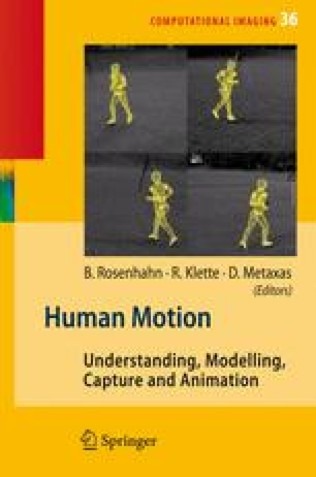
Human motion : Understanding, modeling, capture and animation
Edward Muybridge (1830–1904) is known as the pioneer in motion capt- ing with his famous experiments in 1887 called “Animal Locomotion”. Since then, the feld of animal or human motion analysis has grown in many dir- tions. However, research and results that involve human-like animation and the recovery of motion is still far from being satisfactory. Progress in human motion analysis depends on empirically anchored and grounded research in computer vision, computer graphics, and biomechanics. This book is based on a June 2006 workshop held in Dagstuhl, Germany. This workshop brought together for the frst time researchers from the afo- mentioned disciplines.
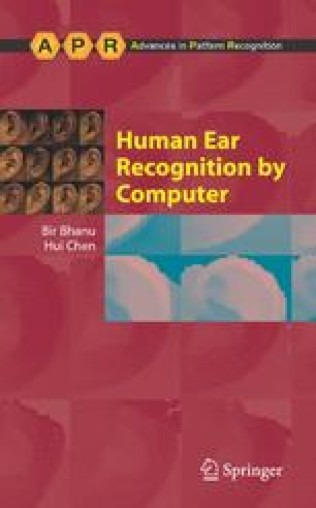
Human Ear Recognition by Computer
Human Ear Recognition by Computer is the first book on the automatic recognition of human ears. It presents an entire range of computational algorithms for recognition of humans by their ears. These algorithms have been tested and validated on the largest databases that are available today,This state-of-the-art research reference explores all aspects of 3D ear recognition, including representation, detection, recognition, indexing and performance prediction. It has been written for a professional audience of both researchers and practitioners within industry, and is also ideal as an informative text for graduate students in computer science and engineering.

How to Future : Leading and Sense-making in an Age of Hyperchange
Provides clear, practical and easy to understand tools that will help you spot trends and patterns, strategically evaluate different futures and guide your strategy Depicts a strategic framework to understand the uncertain nature of the current business world that crucially allows you to embrace hyperchange and adapt and plan for it Delivers a common language to engage stakeholders and teams with innovation practices and strategy foresight

Housing Estates in Europe : Poverty, Ethnic Segregation and Policy Challenges
Explores the formation and socio-spatial trajectories of large housing estates in Europe. Are these estates clustered or scattered? Which social groups originally had access to residential space in housing estates? What is the size, scale and geography of housing estates, their architectural and built environment composition, services and neighbourhood amenities, and metropolitan connectivity? How do housing estates contribute to the urban mosaic of neighborhoods by ethnic and socio-economic status? What types of policies and planning initiatives have been implemented in order to prevent the social downgrading of housing estates?The collection of chapters in this book addresses these questions from a new perspective previously unexplored in scholarly literature. The social aspects of housing estates are thoroughly investigated (including socio-demographic and economic characteristics of current and past inhabitants; ethnicity and segregation patterns; population dynamics; etc.), and the physical composition of housing estates is described in significant detail (including building materials; building form; architectural and landscape design; built environment characteristics; etc.).

Home decorating for dummies
All the information you need to know about décor into one easy-to-read source. Whether you want to decorate one room or make over the whole house, this book has everything you need to design like a pro. This is the only reference you’ll need to transform your home into a space you’ll love. Dummies offers no-nonsense help, so you can plan perfect projects and stay within budget. Updated with the latest on smart homes, short-term rentals, DIY décor, and more. Learn how to optimize your home’s floor plan Discover tricks for mixing patterns, colors, and textures successfully Refresh your home’s style without spending a fortune Decorate rental properties with eye-catching, trendy style Untangle the terms—mid-century modern, farmhouse, minimalism—and pinpoint your design style

Highly-Skilled Migration : Between Settlement and Mobility: IMISCOE Short Reader
This book discusses the emerging patterns of sedentary migration versus mobility of the highly-skilled thereby providing a comprehensive overview of the recent literature on highly-skilled migration. Highly-skilled migrations are arguably the only non-controversial migrant category in political and public discourse.

High Frequency Financial Econometrics : Recent Developments
This exciting volume presents cutting-edge developments in high frequency financial econometrics, spanning a diverse range of topics: market microstructure, tick-by-tick data, bond and foreign exchange markets and large dimensional volatility modelling. The chapters on market microstructure deal with liquidity, asymmetries of information, and limit order aggressiveness in pure limit order book markets. The chapters on tick-by-tick data present statistical techniques for the analysis of the discrete nature of price movements, the intraday seasonal patterns of financial durations, and the joint probability law of prices, volume and durations. Bond markets are brought into focus through the analysis of macroeconomic announcements in the future bond market as a function of the business cycle.

Hearing : From Sensory Processing to Perception
Hearing – From Sensory Processing to Perception presents the papers of the latest International Symposium on Hearing. The 59 chapters treat topics such as: the physiological representation of temporal and spectral stimulus properties as a basis for the perception of modulation patterns, pitch and signal intensity; spatial hearing and the physiological mechanisms of binaural processing in mammals.
HCI and usability for education and work ; 4th Symposium of the Workgroup Human-Computer Interaction and Usability Engineering of the Austrian Computer Society, USAB 2008, Graz, Austria, November 20-21, 2008. Proceedings
This book constitutes the refereed proceedings of the 4th Usability Symposium of the Human-Computer Interaction and Usability Engineering Workgroup of the Austrian Computer Society, USAB 2008, held in Graz, Austria, in November 2008.The 7 revised full papers and 26 revised short papers presented were carefully reviewed and selected from 85 submissions. The papers are organized in topical sections on cognitive processes and end user experience, social software and collaborative knowledge development, knowledge processing, assessment and human performance.

Hands-On Software Architecture with Java - Learn key architectural techniques and strategies to design efficient and elegant Java applications
Starts with the fundamentals of architecture and takes you through the basic components of application architecture. You'll cover the different types of software architectural patterns and application integration patterns and learn about their most widespread implementation in Java. You'll then explore cloud-native architectures and best practices for enhancing existing applications to better suit a cloud-enabled world. Later, the book highlights some cross-cutting concerns and the importance of monitoring and tracing for planning the evolution of the software, foreseeing predictable maintenance, and troubleshooting. The book concludes with an analysis of the current status of software architectures in Java programming and offers insights into transforming your architecture to reduce technical debt.

Hands-On Design Patterns with Java : Learn Design Patterns That Enable the Building of Large-Scale Software Architectures
Java design patterns are reusable and proven solutions to software design problems. This book covers over 60 battle-tested design patterns used by developers to create functional, reusable, and flexible software. Hands-On Design Patterns with Java starts with an introduction to the Unified Modeling Language (UML), and delves into class and object diagrams with the help of detailed examples. You'll study concepts and approaches to object-oriented programming (OOP) and OOP design patterns to build robust applications. As you advance, you'll explore the categories of GOF design patterns, such as behavioral, creational, and structural, that help you improve code readability and enable large-scale reuse of software. You’ll also discover how to work effectively with microservices and serverless architectures by using cloud design patterns, each of which is thoroughly explained and accompanied by real-world programming solutions. By the end of the book, you’ll be able to speed up your software development process using the right design patterns, and you’ll be comfortable working on scalable and maintainable projects of any size.

Handbook of vascular biometrics
This handbook provides the first comprehensive overview of biometrics exploiting the shape of human blood vessels for biometric recognition, i.e. vascular biometrics, including finger vein recognition, hand/palm vein recognition, retina recognition, and sclera recognition.
Handbook of Geometric Computing : Applications in Pattern Recognition, Computer Vision, Neuralcomputing, and Robotics
Many computer scientists, engineers, applied mathematicians, and physicists use geometry theory and geometric computing methods in the design of perception-action systems, intelligent autonomous systems, and man-machine interfaces. This handbook brings together the most recent advances in the application of geometric computing for building such systems, with contributions from leading experts in the important fields of neuroscience, neural networks, image processing, pattern recognition, computer vision, uncertainty in geometric computations, conformal computational geometry, computer graphics and visualization, medical imagery, geometry and robotics, and reaching and motion planning. For the first time, the various methods are presented in a comprehensive, unified manner.

Handbook of Face Recognition
This authoritative handbook is the first to provide complete coverage of face recognition, including major established approaches, algorithms, systems, databases, evaluation methods, and applications. After a thorough introductory chapter from the editors, 15 chapters address the sub-areas and major components necessary for designing operational face recognition systems. Each chapter focuses on a specific topic, reviewing background information, reviewing up-to-date techniques, presenting results, and offering challenges and future directions.

Handbook of Digital Face Manipulation and Detection: From DeepFakes to Morphing Attacks
Provides the first comprehensive collection of studies dealing with the hot topic of digital face manipulation such as DeepFakes, Face Morphing, or Reenactment. It combines the research fields of biometrics and media forensics including contributions from academia and industry. Appealing to a broad readership, introductory chapters provide a comprehensive overview of the topic, which address readers wishing to gain a brief overview of the state-of-the-art. Subsequent chapters, which delve deeper into various research challenges, are oriented towards advanced readers. Moreover, the book provides a good starting point for young researchers as well as a reference guide pointing at further literature. Hence, the primary readership is academic institutions and industry currently involved in digital face manipulation and detection. The book could easily be used as a recommended text for courses in image processing, machine learning, media forensics, biometrics, and the general security area.

Handbook of Biometrics
The Handbook of Biometrics -- an edited volume by prominent invited researchers in biometrics -- describes the fundamentals as well as the latest advancements in the burgeoning field of biometrics. It is designed for professionals, practitioners and researchers in biometrics, pattern recognition and computer security. The Handbook of Biometrics can be used as a primary textbook for an undergraduate biometrics class. This book is also suitable as a secondary textbook or reference for advanced-level students in computer science.
