



الصفحة 6
الصفحة 6

Hydrological modelling and the water cycle : Coupling the atmospheric and hydrological models
This collected work reports on the state of the art of hydrological model simulation, as well as the methods for satellite-based rainfall estimation. Mainly addressed to scientists and researchers, the contributions have the structure of a standard paper appearing in most cited hydrological, atmospheric and climate journals. Several already-known hydrological models and a few novel ones are presented, as well as the satellite-based precipitation techniques. As the field of hydrologic modeling is experiencing rapid development and transition to application of distributed models, many challenges including overcoming the requirements of compatible observations of inputs and outputs are addressed.

Hybrid Intelligent Systems for Pattern Recognition Using Soft Computing : An Evolutionary Approach for Neural Networks and Fuzzy Systems
This monograph describes new methods for intelligent pattern recognition using soft computing techniques including neural networks, fuzzy logic, and genetic algorithms. Hybrid intelligent systems that combine several soft computing techniques are needed due to the complexity of pattern recognition problems.

Hybrid Intelligent Systems : Analysis and Design
The objective of this edited volume is to offer a general view at the recent conceptual developments of Soft Computing (SC) regarded as a general methodology supporting the design of hybrid systems along with their diversified applications to modeling, simulation and control of non-linear dynamical systems. As of now, SC methodologies embrace neural networks, fuzzy logic, genetic algorithms and chaos theory. Each of these methodologies exhibits well delineated advantages and disadvantages. Interestingly, they have been found useful in solving a broad range of problems. However, many real-world complex problems require a prudent, carefully orchestrated integration of several of these methodologies to fully achieve the required efficiency, accuracy, and interpretability of the solutions. In this edited volume, an overview of SC methodologies, and their applications to modeling, simulation and control, will be given in an introductory paper by the Editors. Then, detailed methods for integrating the different SC methodologies in solving real-world problems will be given in the papers by the other authors in the book. The edited volume will cover a wide spectrum of applications including areas such as: robotic dynamic systems, non-linear plants, manufacturing systems, and time series prediction.

Hybrid Artificial Intelligent Systems ; 15th International Conference, HAIS 2020, Gijón, Spain, November 11-13, 2020, Proceedings
This book constitutes the refereed proceedings of the 15th International Conference on Hybrid Artificial Intelligent Systems, HAIS 2020, held in Gijón, Spain, in November 2020. The 65 regular papers presented in this book were carefully reviewed and selected from 106 submissions. The papers are grouped into these topics: advanced data processing and visualization techniques; bio-inspired models and optimization; learning algorithms; data mining, knowledge discovery and big data; and hybrid artificial intelligence applications.

Hormones and social behaviour
This book concentrates on two major topics: First, the molecular and neural biology of hormone actions relevant to normal social behaviors; and Second, the clinical treatment of human patients in whom these behaviors have gone wrong.

High performance computational science and engineering : IFIP TC5 Workshop on High Performance Computational Science and Engineering (HPCSE), World Computer Congress, August 22-27, 2004, Toulouse, France
The IFIP series publishes state-of-the-art results in the sciences and technologies of information and communication. The scope of the series includes: foundations of computer science; software theory and practice; education; computer applications in technology; communication systems; systems modeling and optimization; information systems; computers and society; computer systems technology; security and protection in information processing systems; artificial intelligence; and human-computer interaction. Proceedings and post-proceedings of referred international conferences in computer science and interdisciplinary fields are featured. These results often precede journal publication and represent the most current research. The principal aim of the IFIP series is to encourage education and the dissemination and exchange of information about all aspects of computing.

Hebbian Learning and Negative Feedback Networks
This book is the outcome of a decade’s research into a speci?c architecture and associated learning mechanism for an arti?cial neural network: the - chitecture involves negative feedback and the learning mechanism is simple Hebbian learning. The research began with my own thesis at the University of Strathclyde, Scotland, under Professor Douglas McGregor which culminated with me being awarded a PhD in 1995 [52], the title of which was “Negative Feedback as an Organising Principle for Arti?cial Neural Networks”. Naturally enough, having established this theme, when I began to sup- vise PhD students of my own, we continued to develop this concept and this book owes much to the research and theses of these students at the Applied Computational Intelligence Research Unit in the University of Paisley . All of Chapters 3 to 8 deal with single stream arti?cial neural networks.

Heat Shock Proteins and the Brain : Implications for Neurodegenerative Diseases and Neuroprotection
Neurodegenerative disorders such as Alzheimer’s disease, Huntington’s disease, Parkinson’s disease and amyotrophic lateral sclerosis have been termed ‘protein misfolding disorders’ that are char- terized by the neural accumulation of protein aggregates. Manipulation of the cellular stress response involving the induction of heat shock proteins offers a the- peutic strategy to counter conformational changes in neural proteins that trigger pathogenic cascades resulting in neurodegenerative diseases. Heat shock proteins are protein repair agents that provide a line of defense against misfolded, aggregati- prone proteins. Heat Shock Proteins and the Brain: Implications for Neurodegenerative Diseases and Neuroprotection reviews current progress on neural heat shock proteins (HSP) in relation to neurodegenerative diseases (Part I), neuroprotection (Part II), ext- cellular HSP (Part III) and aging and control of life span (Part IV).

Head and Neck Cancer Imaging ; 1st ed.
This book provides a comprehensive review of state-of-the-art imaging in head and neck cancer. Precise determination of tumor extent is of the utmost importance in these neoplasms, as it has important consequences for staging of disease, prediction of outcome and choice of treatment. Only the radiologist can fully appreciate submucosal, perineural, and perivascular tumor spread and detect metastatic disease at an early stage. Imaging is also of considerable benefit for patient surveillance after treatment.

Hands-on question answering systems with BERT : Applications in neural networks and natural language processing
Begins with an overview of the technology landscape behind BERT. It takes you through the basics of NLP, including natural language understanding with tokenization, stemming, and lemmatization, and bag of words. Next, you’ll look at neural networks for NLP starting with its variants such as recurrent neural networks, encoders and decoders, bi-directional encoders and decoders, and transformer models. Along the way, you’ll cover word embedding and their types along with the basics of BERT. After this solid foundation, you’ll be ready to take a deep dive into BERT algorithms such as masked language models and next sentence prediction. You’ll see different BERT variations followed by a hands-on example of a question answering system. You will: Examine the fundamentals of word embeddings / Apply neural networks and BERT for various NLP tasks / Develop a question-answering system from scratch / Train question-answering systems for your own data

Handbook on Decision Support Systems 1 : Basic Themes
Decision support systems have experienced a marked increase in attention and importance over the past 25 years. The aim of this book is to survey the decision support system (DSS) field – covering both developed territory and emergent frontiers. It will give the reader a clear understanding of fundamental DSS concepts, methods, technologies, trends, and issues. It will serve as a basic reference work for DSS research, practice, and instruction. To achieve these goals, the book has been designed according to a ten-part structure, divided in two volumes with chapters authored by well-known, well-versed scholars and practitioners from the DSS community.

Handbook of neurochemistry and molecular neurobiology : Sensory neurochemistry
This volume of the Handbook of Neurochemistry and Molecular Biology focuses on molecular events involved in synapse formation, synaptic plasticity and ongoing neural activity. The volume explores axonal growth cones, synapse development, and mechanisms of LTP and LTD, and calcium dynamics.

Handbook of neurochemistry and molecular neurobiology : Neural Protein Metabolism and Function
This volume discusses aspects of neural protein metabolism. Although this subject is clearly very important and has numerous functional aspects, it did not always get the attention it clearly deserves. Perhaps there are many explanations for researchers hesitating in the past to focus on protein metabolism.

Handbook of neurochemistry and molecular neurobiology : Neural Membranes and Transport
The first section of this volume deals with neural membranes and barriers. The second section covers ion pumps and ion transporters in neural membranes. The final section covers neural membranes and transport of neurotransmitters or other solutes.

Handbook of neurochemistry and molecular neurobiology : Development and Aging Changes in the Nervous System
In the animal nervous system, a very high metabolic turnover, fragile but steep ionic gradients, and morphological and structural constraints - dictated by the necessity for prompt neuronal transmission of electrical impulses and necessary plasticity - result in a highly fragile organ system. Here, we address a small sampling of major constituents of neural function at the cellular and molecular level that play important roles in development and aging, two endogenous processes that embody features of allostasis or the dynamic shifts in set points for specific homeostatic mechanisms associated with development and aging. These chapters stress the dynamic features of neuronal responses to internal (developmental) cues or the more harmful external events (injury and disease) in a modern perspective.

Handbook of neurochemistry and molecular neurobiology : Brain Energetics. Integration of Molecular and Cellular Processes
Focuses on aspects of energy metabolism that are unique to the brain. The goal of each chapter is to provide a fundamental overview of each area, to define the state-of-the-art in that area as it relates to brain, and, where appropriate, describe models that portray poorly understood and apparently contradictory data sets with the goal of helping focus attention to experimental resolution of controversial issues.

Handbook of Nature-Inspired and Innovative Computing : Integrating Classical Models with Emerging Technologies
This comprehensive handbook, the first of its kind to address the connection between nature-inspired and traditional computational paradigms, is a repository of case studies dealing with different problems in computing and solutions to these problems based on nature-inspired paradigms. The "Handbook of Nature-Inspired and Innovative Computing: Integrating Classical Models with Emerging Technologies" is an essential compilation of models, methods, and algorithms for researchers, professionals, and advanced-level students working in all areas of computer science, IT, biocomputing, and network engineering.

Handbook of Marketing Decision Models
The HANDBOOK OF MARKETING DECISION MODELS presents the state of the art in marketing decision models, dealing with new modeling areas such as customer relationship management, customer value and online marketing, but also describes recent developments in other areas. In the category of marketing mix models, the latest models for advertising, sales promotions, sales management, and competition are dealt with. New developments are presented in consumer decision models, models for return on marketing, marketing management support systems, and in special techniques such as time series and neural nets. Not only are the most recent models discussed, but the book also pays attention to the implementation of marketing models in companies and to applications in specific industries.
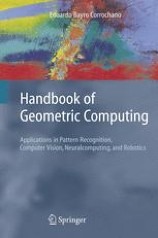
Handbook of Geometric Computing : Applications in Pattern Recognition, Computer Vision, Neuralcomputing, and Robotics
Many computer scientists, engineers, applied mathematicians, and physicists use geometry theory and geometric computing methods in the design of perception-action systems, intelligent autonomous systems, and man-machine interfaces. This handbook brings together the most recent advances in the application of geometric computing for building such systems, with contributions from leading experts in the important fields of neuroscience, neural networks, image processing, pattern recognition, computer vision, uncertainty in geometric computations, conformal computational geometry, computer graphics and visualization, medical imagery, geometry and robotics, and reaching and motion planning. For the first time, the various methods are presented in a comprehensive, unified manner.

Handbook of big data analytics ; Vol.2 : Applications in ICT, security and business analytics
Big Data analytics is the complex process of examining big data to uncover information such as correlations, hidden patterns, trends and user and customer preferences, to allow organizations and businesses to make more informed decisions. These methods and technologies have become ubiquitous in all fields of science, engineering, business and management due to the rise of data-driven models as well as data engineering developments using parallel and distributed computational analytics frameworks, data and algorithm parallelization, and GPGPU programming. However, there remain potential issues that need to be addressed to enable big data processing and analytics in real time.
