



الصفحة 6
الصفحة 6

Content Infrastructure management : Results of an empirical study in the print industry
Alexander Benlian explores the question of whether to centralize or to decentralize media content. The findings basically emphasize the need to design publishing organizations that follow certain patterns of congruency and consistency in order to realize greater effectiveness. These observed patterns or invariabilities may provide infrastructure managers with a benchmark against which to reassess the design of their own content allocation configuration. Aligned content infrastructures can be considered to dramatically increase the smoothness of content flows and to enhance production and bundling capabilities.

Contemporary Reflections on Business Ethics
Ronald F. Duska, who began his career as a philosopher, has, over the last 30 years, established himself as one of the leading scholars in the field of business ethics. In the past decade, he has concentrated on ethics in the financial services industry because of his affiliation with The American College in Bryn Mawr, Pennsylvania, an institution that specializes in educating financial services professionals. This affiliation gives Duska regular interaction with producers, managers, and top executives in the financial services industry. This book includes a selection of the articles Duska has written throughout the years on ethics, business ethics, teaching ethics, agency theory, postmodernism, employee rights, and ethics in accounting and the financial services industry. The articles reflect Duska’s underlying philosophical concerns and their application to the real-world challenges of practitioners—an overarching method that might be called an Aristotelian common-sense approach to ethical decision making.

Construction risk management decision making : Understanding current practices
Effective risk management is a vital component of all successful construction projects. Although quantitative tools for evaluating data and minimizing risk are readily available, construction managers commonly adopt a more innate, experience-based approach. In Construction Risk Management Decision Making, project manager and senior consultant Alex C. Arthur provides step-by-step advice on assessing and prioritizing risk using qualitative decision-making systems in the construction industry.

Construction Manager's BIM Handbook
Ensures the reader understands what BIM is, what the UK strategy is and what it means for key roles in the construction team. By providing concise summaries of key aspects of BIM, explaining the government documents and intentions, and providing pointers on implementation all readers will be fully aware of the implications of BIM for them and their organisations, and can begin to adopt this approach in future projects.

Construction audit: building a solid foundation
Provides real-life solutions to common problems in construction. Introduces project management techniques; while not concentrating on a special methodology, the book builds on project management fundamentals. Understanding this will help enable the reader to talk to project managers more effectively.

Conflict prevention in project management : Strategies, methods, checklists, and case studies
This handbook is about the handling of external conflicts in international technical projects written for Project Managers and Engineers, Sales Managers, Executives and Legal Managers as seen from the client's as well as from the contractor's side. It is also for students seeking to become leaders in these disciplines and not to reproduce mistakes that others have made before them. The book does not try to give legal advice, but it helps engineers and project managers how to plan and execute their project in order to avoid major conflicts during the project.

Marketing Management
The world of marketing is changing every day ― and in order for students tohave a competitive edge, they need a text that reflects the best and mostrecent marketing theory and practices. Marketing Management collectivelyuses a managerial orientation, an analytical approach, a multidisciplinaryperspective, universal applications, and balanced coverage to distinguish itfrom all other marketing management texts out there.

Maritime Archaeology : Australian Approaches
Subject areas discussed in this book include shipwrecks and abandoned vessels, The application of National and State legislation and management regimes to these underwater cultural heritage sites is also highlighted, together with the important role of avocational divers and training programs in raising the profile of underwater and maritime heritage sites.The book includes a comprehensive bibliography of work conducted both in Australia and by Australian maritime archaeologists in the Asia-Pacific region. This book will be of interest to students and practitioners of maritime and historical archaeology and cultural heritage managers throughout the world .
Managing public services : Making informed choices
Chapters provide a valuable frame of reference for the 21st-century manager of public services by assessing the renewal of existing practices such as strategic costing, performance management, digitization and procurement and innovations in management practices, including branding, Lean Management, resilience and risk management. The book suggests that, as the management of public services is imbued with financial, social, economic and political uncertainties, management needs to be flexible and responsive to new ideas and practices to fulfil its purpose. This book ultimately supports the reflective manager, those who think about their job and are open to new ideas on how their job can be done better, by revisiting existing practices and examining innovations in public management.

Managing Multiple Projects : How Project Managers Can Balance Priorities, Manage Expectations and Increase Productivity
Develop the skills and knowledge to juggle multiple projects, deal with conflicting priorities and manage expectations while avoiding burnout.

Managing Information Systems Security and Privacy
The book deals with the management of information systems security and privacy, based on a model that covers technological, organizational and legal views. This is the basis for a focused and methodologically structured approach that presents "the big picture" of information systems security and privacy, while targeting managers and technical profiles. The book addresses principles in the background, regardless of a particular technology or organization. It enables a reader to suit these principles to an organization's needs and to implement them accordingly by using explicit procedures from the book. Additionally, the content is aligned with relevant standards and the latest trends.
Managing Humans : Biting and Humorous Tales of a Software Engineering Manager
Managing Humans is a selection of the best essays from Michael Lopp's web site, Rands in Repose. Drawing on Lopp's management experiences at Apple, Netscape, Symantec, and Borland, this book is full of stories based on companies in the Silicon Valley where people have been known to yell at each other. It is a place full of dysfunctional bright people who are in an incredible hurry to find the next big thing so they can strike it rich and then do it all over again. Among these people are managers, a strange breed of people who through a mystical organizational ritual have been given power over your future and your bank account.
Managing Dynamic Networks : Organizational Perspectives of Technology Enabled Inter-firm Collaboration
Collaboration of organizations reshapes traditional managerial practices and creates new inter-organizational contexts for strategy, coordination and control, information and knowledge management. Heralded as organizational forms of the future, networks are at the same time fragile and precarious organizational arrangements, which regularly fail. In order to investigate the new realities created by technology-enabled forms of network organizations and to address the emerging managerial challenges, this book introduces an integrative view on inter-firm network management. Centred on a network life cycle perspective, strategic, economic and relational facets of business networking are explored.

Managing Corporate Brands : A new approach to corporate communication
Marcos Ormeño introduces both behavioural science theory and decision analysis into corporate brand management using corporate communication. He develops a managerial decision-making model that outdoes existing approaches for selecting communication tools due to its high degree of formalisation and its strong behavioural basis. An illustrative study supports the author's model and shows the importance of communication in building a corporate brand.
Managerial Uses of Accounting Information
“Joel Demski’s book is an excellent book in accounting that provides an insightful and comprehensive study on managerial accounting using issues through a new approach based on economic theory and quantitative methods. … this book is very insightful and worth reading. The book is recommended as teaching and research material since it motivates readers to study thoughtfully the philosophy and principles of managerial accounting, in addition addressing how to solve managerial problems based on accounting information.”
Management Quality and Competitiveness : Lessons from the Industrial Excellence Award
This book showcases examples of excellent manufacturing companies who have succeeded in creating value and job growth in Western Europe. The examples show managers of industrial firms how a clearly articulated strategic position can be combined with excellent execution to achieve competitiveness in Europe, in spite of the usually cited disadvantage of high labor costs and rigidity. Not every company is alike — strategic positions differ, and the means of execution differ, but what is common is a clear plan together with mobilization of all employees to apply their abilities in supporting this common plan. The book is indispensable reading for all managers that are interested in improving competitiveness.

Management Planning for Nature Conservation : A Theoretical Basis & Practical Guide
The book provides historical and rational background which helps to explain what makes a really effective management plan, and it presents a detailed practical guide to developing such a plan. It concludes with a series of case studies which clearly illustrate the underlying principles drawn out in the text, while highlighting the different approaches demanded by very different sites. Drawing on the expertise of leaders in both conservation research and wildlife management, and with a combined experience from around the world, this book is essential reading for professional conservation managers and any student studying management planning for conservation within a range of degree and postgraduate courses.
Management of Convergence in Innovation : Strategies and Capabilities for Value Creation Beyond Blurring Industry Boundaries
Throughout the past decade, the phenomenon of technological convergence has increasingly gained managerial attention. In this special form of technological change, the coming-together of previously distinct knowledge bases gives rise to the creation of new applications and business models. When such innovations emerge at the intersection of industries, the resulting creative destruction may exceed previously established industry boundaries. As a consequence, convergence does not only promise the creation of new value, but may imply significant disruptions to established industries. Based on investigating 26 firms within the ICT industry, this book highlights implications of the convergence phenomenon on firms’ innovation management practices, and derives strategic guidelines for building and sustaining business models beyond blurring industry boundaries.
Management Methods and Tools : Practical Know-how for Students, Managers, and Consultants.
This textbook includes the most important management methods and tools. The author does not restrict himself to describing the scientific methods but also shows how to apply them to real-life situations. The management tools he introduces have been successfully tested during 20 years of experience. The various methods are described and analyzed in detail, and many examples illustrate their application. Thus, the textbook gives a fundamental and comprehensive insight into the practice of successful management. It is clearly structured and provides essential in-depth knowledge for students as well as for managers and consultants.
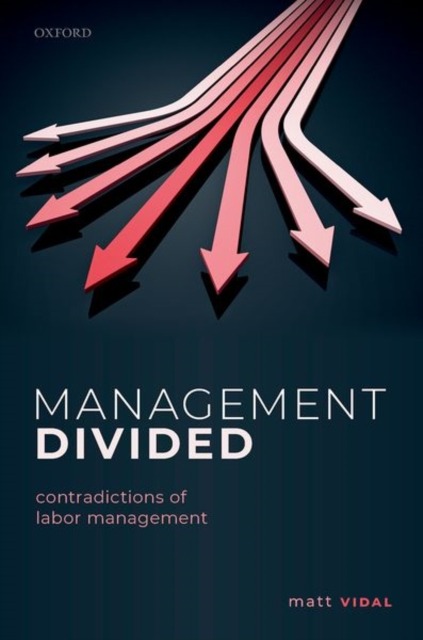
Management divided : Contradictions of labor management
One of the central dynamics shaping organizations is a contradiction managers face between ensuring workforce discipline and harnessing worker creativity. In this rich study of American manufacturing, Matt Vidal offers a theory of 'organizational political economy', integrating concepts from organization theory into a classical Marxist framework
