



الصفحة 6
الصفحة 6

Introduction to Reconfigurable Computing : Architectures, Algorithms, and Applications
“Introduction to Reconfigurable Computing” provides a comprehensive study of the field Reconfigurable Computing. It provides an entry point to the novice willing to move in the research field reconfigurable computing, FPGA and system on programmable chip design. The book can also be used as teaching reference for a graduate course in computer engineering, or as reference to advance electrical and computer engineers. It provides a very strong theoretical and practical background to the field of reconfigurable computing, from the early Estrin’s machine to the very modern architecture like coarse-grained reconfigurable device and the embedded logic devices.

Introduction to Operating System Design and Implementation : The OSP 2 Approach
This book exposes students to many essential features of operating systems while at the same time isolating them from low-level, machine-dependent concerns. With its accompanying software, the book contains enough projects for up to three semesters.

Introduction to Machine Learning with Applications in Information Security
Provides a classroom-tested introduction to a wide variety of machine learning and deep learning algorithms and techniques, reinforced via realistic applications. The book is accessible and doesn't prove theorems, or dwell on mathematical theory. The goal is to present topics at an intuitive level, with just enough detail to clarify the underlying concepts. The book covers core classic machine learning topics in depth, including Hidden Markov Models (HMM), Support Vector Machines (SVM), and clustering. Additional machine learning topics include k-Nearest Neighbor (k-NN), boosting, Random Forests, and Linear Discriminant Analysis (LDA). The fundamental deep learning topics of backpropagation, Convolutional Neural Networks (CNN), Multilayer Perceptrons (MLP), and Recurrent Neural Networks (RNN) are covered in depth. A broad range of advanced deep learning architectures are also presented, including Long Short-Term Memory (LSTM), Generative Adversarial Networks (GAN), Extreme Learning Machines (ELM), Residual Networks (ResNet), Deep Belief Networks (DBN), Bidirectional Encoder Representations from Transformers (BERT), and Word2Vec.
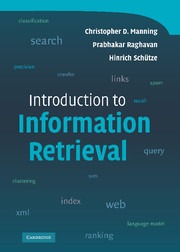
Introduction to information retrieval
Teaches classical and web information retrieval, including web search and the related areas of text classification and text clustering from basic concepts. It gives an up-to-date treatment of all aspects of the design and implementation of systems for gathering, indexing, and searching documents; methods for evaluating systems; and an introduction to the use of machine learning methods on text collections. All the important ideas are explained using examples and figures, making it perfect for introductory courses in information retrieval for advanced undergraduates and graduate students in computer science.

Introduction to Genetic Algorithms
This book is designed to provide an in-depth knowledge on the basic operational features and characteristics of Genetic Algorithms. The various operators and techniques given in the book are pertinent to carry out Genetic Algorithm Research Projects. The book also explores the different types are Genetic Algorithms available with their importance. Implementation of Genetic Algorithm concept has been performed using the universal language C/C++ and the discussion also extends to Genetic Algorithm MATLAB Toolbox. Few Genetic Algorithm problems are programmed using MATLAB and the simulated results are given for the ready reference of the reader. The applications of Genetic Algorithms in Machine learning, Mechanical Engineering, Electrical Engineering, Civil Engineering, Data Mining, Image Processing, and VLSI are dealt to make the readers understand where the concept can be applied.
Introduction to Data Mining and its Applications
This book explores the concepts of data mining and data warehousing, a promising and flourishing frontier in data base systems and new data base applications and is also designed to give a broad, yet in-depth overview of the field of data mining. Data mining is a multidisciplinary field, drawing work from areas including database technology, AI, machine learning, NN, statistics, pattern recognition, knowledge based systems, knowledge acquisition, information retrieval, high performance computing and data visualization.

Introduction to Assembly Language Programming : For Pentium and RISC Processors
Assembly language continues to hold a core position in the programming world because of its similar structure to machine language and its very close links to underlying computer-processor architecture and design. These features allow for high processing speed, low memory demands, and the capacity to act directly on the system’s hardware. This completely revised second edition of the highly successful Introduction to Assembly Language Programming introduces readers to assembly language programming and its role in computer programming and design. It focuses on providing a firm grasp of the main features of assembly programming, and how it can be used to improve a computer's performance. The revised edition covers a broad scope of subjects and adds valuable material on protected-mode Pentium programming, MIPS assembly language programming, and use of the NASM and SPIM assemblers for a Linux orientation. All of the language's main features are covered in depth. The book requires only some basic experience with a structured, high-level language.

Introduction to Agricultural Engineering Technology : A Problem Solving Approach
Agricultural Engineering Technology: A problem Solving Approach is an invaluable text for agriculture students at the introductory level. The third edition has been thoroughly updated and reorganized to meet the current units and standards of the American Society of Agricultural and Biological Engineers (ASABE).The book aims to: Familiarize students with a wide range of applications of engineering principles to agriculture, Discuss a selection of independent but related topics, Advance students’ problem solving abilitiesEach chapter lists education objects, introductory material, and example problems where appropriate. In addition problems using ISO (metric) units, are now included.

Internet of Things and Machine Learning in Agriculture
Machine Learning (ML) and the Internet of Things (IoT) can play a very promising role in the agricultural industry. Some examples include: an AI-powered drone to monitor the field, an IoT-designed automated crop watering system, sensors embedded in the field to monitor temperature and humidity, etc. The agriculture industry is the largest in the world, but when it comes to innovation there is a lot more to explore. IoT devices can be used to analyze the status of crops. For instance, with soil sensors, farmers can detect any irregular conditions such as high acidity and efficiently tackle these issues to improve their yield. In this book, we will point out the challenges facing the agro-industry that can be addressed by ML and IoT and explore the impacts of these technologies in the agriculture sector.

Interactive drink machine company - (IDM company)
This project is a continuation of our previous project for a hot drink machine by adding the capability for electronic payment and developing the company's management system and making the hot drink machine linkable with the company's server via the Internet and more interactive with the customer through the development of this project according to several aspects. On the software level: An integrated system that allows recording customer requests and executed operations, in addition to information about users, including their personal information, current balance, and executed requests. On the level of employees, their personal information, their work tasks and the operations carried out by them (Receipt and delivery of materials and servicing of machines).
Interactive Computation : The New Paradigm
The interaction paradigm provides a new conceptualization of computational phenomena that emphasizes interaction rather than algorithms, thus reflecting the shift in technology from number-crunching on mainframes to distributed intelligent networks with graphical user interfaces.

Intelligent Virtual Agents ; Vol.4133 ; 6th International Conference, IVA 2006, Marina Del Rey, CA; USA, August 21-23, 2006, Proceedings
This volume contains the proceedings of the 6th International Conference on Intelligent Virtual Agents, IVA 2006, held in Marina del Rey, California, USA from August 21–23.For the second year in a row,IVA also hosted the Gathering of Animated Lifelike Agents (GALA 2006), an annual festival to showcase the latest animated lifelike agents created by university students and academic or industrial research groups. IVA 2006 received 73 submissions from Europe, the AmericasandAsia.Thepaperspublishedherearethe24fullpapersand11short papers presented at the conference, as well as one-page descriptions of posters and the featured invited talks by Brian Parkinson of Oxford University, Rod Humble of Electronic Arts, and Michael Mateas of the University of California, Santa Cruz and Andrew Stern of Procedural Arts.

Intelligent tutoring systems ; 9th International Conference, ITS 2008, Montreal, Canada, June 23-27, 2008 Proceedings
This book constitutes the refereed proceedings of the 9th International Conference on Intelligent Tutoring Systems, ITS 2008, held in Montreal, Canada, in June 2008.The 63 revised full papers and 61 poster papers presented together with abstracts of 5 keynote talks were carefully reviewed and selected from 207 submissions. The papers are organized in topical sections on emotion and affect, tutor evaluation, student modeling, machine learning, authoring tools , tutor feedback and intervention, data mining, e-learning and Web-based ITS, natural language techniques and dialogue, narrative tutors and games, semantic Web and ontology, cognitive models, and collaboration.
Intelligent Systems and Signal Processing in Power Engineering
Power engineering has become a multidisciplinary field ranging from linear algebra, electronics, signal processing to artificial intelligence including recent trends like bio-inspired computation, lateral computing and so on. In this book, Ukil builds the bridge between these inter-disciplinary power engineering practices. The book looks into two major fields used in modern power systems: intelligent systems and the signal processing. The intelligent systems section comprises of fuzzy logic, neural network and support vector machine. The author looks at relevant theories on the topics without assuming much particular background. Following the theoretical basics, he studies their applications in various problems in power engineering, like, load forecasting, phase balancing, or disturbance analysis.

Intelligent systems and applications ; Proceedings of the 2020 intelligent systems Conference (IntelliSys) Vol.3
The book Intelligent Systems and Applications - Proceedings of the 2020 Intelligent Systems Conference is a remarkable collection of chapters covering a wider range of topics in areas of intelligent systems and artificial intelligence and their applications to the real world. This book collects both theory and application based chapters on all aspects of artificial intelligence, from classical to intelligent scope.

Intelligent systems and applications ; Proceedings of the 2020 intelligent systems Conference (IntelliSys) Vol.2
The book Intelligent Systems and Applications - Proceedings of the 2020 Intelligent Systems Conference is a remarkable collection of chapters covering a wider range of topics in areas of intelligent systems and artificial intelligence and their applications to the real world. This book collects both theory and application based chapters on all aspects of artificial intelligence, from classical to intelligent scope.
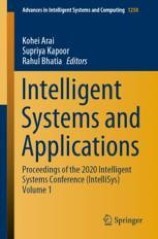
Intelligent systems and applications ; Proceedings of the 2020 intelligent systems Conference (IntelliSys) Vol.1
The book Intelligent Systems and Applications - Proceedings of the 2020 Intelligent Systems Conference is a remarkable collection of chapters covering a wider range of topics in areas of intelligent systems and artificial intelligence and their applications to the real world. This book collects both theory and application based chapters on all aspects of artificial intelligence, from classical to intelligent scope.

Intelligent system algorithms and applications in science and technology
Explores the application of intelligent techniques in various fields of engineering and technology. It addresses diverse topics in such areas as machine learning-based intelligent systems for healthcare, applications of artificial intelligence and the Internet of Things, intelligent data analytics techniques, intelligent network systems and applications, and inequalities and process control systems. The authors explore the full breadth of the field, which encompasses data analysis, image processing, speech processing and recognition, medical science and healthcare monitoring, smart irrigation systems, insurance and banking, robotics and process control, and more.

Intelligent robotics and applications ; 1st International Conference, ICIRA 2008, Wuhan, China, October 15-17, 2008, Proceedings, Part I
These two volumes constitute the refereed proceedings of the First International Conference on Intelligent Robotics and Applications, ICIRA 2008, held in Wuhan, China, in October 2008.The 265 revised full papers presented were thoroughly reviewed and selected from 552 submissions; they are devoted but not limited to robot motion planning and manipulation; robot control; cognitive robotics; rehabilitation robotics; health care and artificial limb; robot learning; robot vision; human-machine interaction & coordination; mobile robotics.
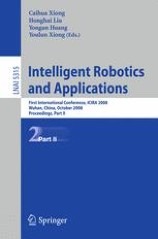
Intelligent robotics and applications ; 1st International Conference, ICIRA 2008 Wuhan, China, October 15-17, 2008 Proceedings, Part II
This two volumes constitute the refereed proceedings of the First International Conference on Intelligent Robotics and Applications, ICIRA 2008, held in Wuhan, China, in October 2008.The 265 revised full papers presented were thoroughly reviewed and selected from 552 submissions; they are devoted but not limited to robot motion planning and manipulation; robot control; cognitive robotics; rehabilitation robotics; health care and artificial limb; robot learning; robot vision; human-machine interaction & coordination; mobile robotics.
