



الصفحة 6
الصفحة 6

Multi-objective Management in Freight Logistics : Increasing Capacity, Service Level and Safety with Optimization Algorithms
Multi-objective Management in Freight Logistics provides decision makers with new methods and tools to implement multi-objective optimization models in logistics. The book combines theoretical aspects with applications, showing the advantages and the drawbacks of adopting scalarization techniques, and when it is worthwhile to reduce the problem to a goal programming one. The book also shows applications where more than one decision maker evaluates the effectiveness of the logistic system and thus a multilevel programming approach is sought to attain meaningful solutions.

Multi-Objective Machine Learning
This monograph presents a selected collection of research work on multi-objective approach to machine learning, including multi-objective feature selection, multi-objective model selection in training multi-layer perceptrons, radial-basis-function networks, support vector machines, decision trees, and intelligent systems.

Multi-Objective Evolutionary Algorithms for Knowledge Discovery from Databases
The present volume provides a collection of seven articles containing new and high quality research results demonstrating the significance of Multi-objective Evolutionary Algorithms (MOEA) for data mining tasks in Knowledge Discovery from Databases (KDD). These articles are written by leading experts around the world. It is shown how the different MOEAs can be utilized, both in individual and integrated manner, in various ways to efficiently mine data from large databases.
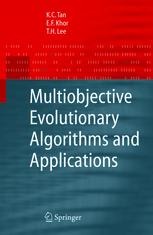
Multiobjective Evolutionary Algorithms and Applications
Multiobjective Evolutionary Algorithms and Applications provides comprehensive treatment on the design of multiobjective evolutionary algorithms and their applications in domains covering areas such as control and scheduling. Emphasizing both the theoretical developments and the practical implementation of multiobjective evolutionary algorithms, a profound mathematical knowledge is not required. Written for a wide readership, engineers, researchers, senior undergraduates and graduate students interested in the field of evolutionary algorithms and multiobjective optimization with some basic knowledge of evolutionary computation will find this book a useful addition to their book case.
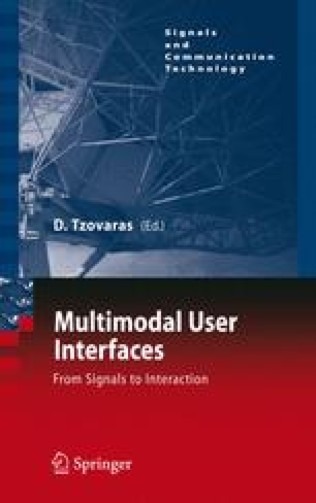
Multimodal User Interfaces : From Signals to Interaction
The book presents a common theoretical framework for fusion and fission of multimodal information using the most advanced signal processing algorithms constrained by HCI rules, described in detail and integrated in the context of a common distributed software platform for easy and efficient development and usability assessment of multimodal tools. The book also demonstrates the use of the multimodal framework for the development of a set of applications in the areas of edutainment, interfaces for disabled people and interfaces for medical applications.
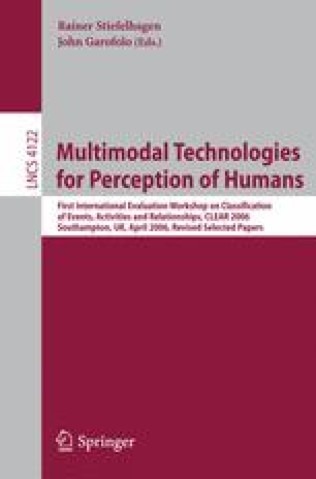
Multimodal Technologies for Perception of Humans ; 1st International Evaluation Workshop on Classification of Events, Activities and Relationships, CLEAR 2006, Southampton, UK, April 6-7, 2006, Revised Selected Papers
This book constitutes the thoroughly refereed post-proceedings of the First International CLEAR 2006 Evaluation Campaign and Workshop on Classification of Events, Activities and Relationships for evaluation of multimodal technologies for the perception of humans, their activities and interactions. The workshop was held in the UK in April 2006.

Multimedia security : Algorithm development, analysis and applications (algorithms for intelligent systems)
Provides an insight about various techniques used in multimedia security and identifies its progress in both technological and algorithmic perspectives. In the contemporary world, digitization offers an effective mechanism to process, preserve and transfer all types of information. The incredible progresses in computing and communication technologies augmented by economic feasibility have revolutionized the world. The availability of efficient algorithms together with inexpensive digital recording and storage peripherals have created a multimedia era bringing conveniences to people in sharing the digital data that includes images, audio and video. The ever-increasing pace, at which the multimedia and communication technology is growing, has also made it possible to combine, replicate and distribute the content faster and easier, thereby empowering mankind by having a wealth of information at their disposal.
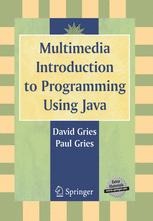
Multimedia Introduction to Programming Using Java
Although vital to modern software development, Java and object-oriented programming can pose significant challenges to newcomers. This text, unique in both scope and approach and accompanied by interactive content that you may find on extras.springer.com, addresses that learning curve by providing a careful, classroom-tested presentation of Java -- from the fundamentals of variables, types, and expressions to procedural concepts like loops and sophisticated object-oriented ideas. Additional key features of this work Introduces objects and classes early in the exposition, rendering object-oriented programming intuitive and natural. Develops programs, rather than simply showcasing them. Supports all concepts through complementary lectures on the zip-file featured on extras.springer.com. Contains numerous self-help exercises that encourage readers to practice programming. With its comprehensive appendices and bibliography, systematic approach, and helpful interactive programs on extras.springer.com, this exciting work provides the key tools they needed for successful object-oriented programming. It is ideal for use at the undergraduate and graduate beginning level, whether in the classroom or for distance learning; furthermore, the text will also be a valuable self-study resource or reference volume in any programmer’s library.

Multimedia Encryption and Watermarking
Multimedia Encryption and Watermarking presents a comprehensive survey of contemporary multimedia encryption and watermarking techniques, which enable a secure exchange of multimedia intellectual property. Part I, Digital Rights Management (DRM) for Multimedia, introduces DRM concepts and models for multimedia content protection, and presents the key players. Part II, Multimedia Cryptography, provides an overview of modern cryptography, with the focus on modern image, video, speech, and audio encryption techniques. This book also provides an advanced concept of visual and audio sharing techniques. Part III, Digital Watermarking, introduces the concept of watermarking for multimedia, classifies watermarking applications, and evaluates various multimedia watermarking concepts and techniques, including digital watermarking techniques for binary images. Multimedia Encryption and Watermarking is designed for researchers and practitioners, as well as scientists and engineers who design and develop systems for the protection of digital multimedia content. This volume is also suitable as a textbook for graduate courses on multimedia security.

Multimedia big data computing for IoT applications : Concepts, paradigms and solutions
This book considers all aspects of managing the complexity of Multimedia Big Data Computing (MMBD) for IoT applications and develops a comprehensive taxonomy. It also discusses a process model that addresses a number of research challenges associated with MMBD, such as scalability, accessibility, reliability, heterogeneity, and Quality of Service (QoS) requirements, presenting case studies to demonstrate its application. Further, the book examines the layered architecture of MMBD computing and compares the life cycle of both big data and MMBD. Written by leading experts, it also includes numerous solved examples, technical descriptions, scenarios, procedures, and algorithms.
Multilingual Information Access for Text, Speech and Images ; 5th Workshop of the Cross-Language Evaluation Forum, CLEF 2004, Bath, UK, September 15-17, 2004, Revised Selected Papers
The ?fth campaign of the Cross-Language Evaluation Forum (CLEF) for Eu- pean languages was held from January to September 2004. Participation in the CLEF campaigns has increased each year and CLEF 2004 was no exception: 55 groups submitted results for one or more of the di?erent tracks compared with 42 groups in the previous year. CLEF 2004 also marked a breaking point with respect to previous campaigns. The focus was no longer mainly concentrated on multilingual document retrieval as in previous years but was diversi?ed to include di?erent kinds of text retrieval across languages (e. g. , exact answers in the question-answering track) and retrieval on di?erent kinds of media (i. e. , not just plain text but collections containing image and speech as well). In ad- tion, increasing attention was given to issues that regard system usability and user satisfaction with tasks to measure the e?ectiveness of interactive systems or system components being included in both the cross-language question - swering and image retrieval tasks with the collaboration of the coordinators of the interactive track. The campaign culminated in a two-and-a-half-day workshop held in Bath, UK, 15–17 September, immediately following the 8th European Conference on Digital Libraries. The workshop was attended by nearly 100 researchers and s- tem developers.

Multilevel Block Factorization Preconditioners : Matrix-based Analysis and Algorithms for Solving Finite Element Equations
This monograph is the first to provide a comprehensive, self-contained and rigorous presentation of some of the most powerful preconditioning methods for solving finite element equations in a common block-matrix factorization framework. Topics covered include the classical incomplete block-factorization preconditioners and the most efficient methods such as the multigrid, algebraic multigrid, and domain decomposition. Additionally, the author discusses preconditioning of saddle-point, nonsymmetric and indefinite problems, as well as preconditioning of certain nonlinear and quadratic constrained minimization problems that typically arise in contact mechanics. The book presents analytical as well as algorithmic aspects.

Multifield Problems in Solid and Fluid Mechanics
This book summarizes the main scientific results of the Collaborative Research Center on Multifield Problems in Continuum Mechanics. The book is divided into three main sections: A: Volume-Coupled Problems, devoted to fields which are coupled inside the processing domain or volume, B: Boundary-Coupled Problems, here physical fields and processes are coupled via domain boundaries, C: Fundamental Methods, search into the mathematical concepts and backgrounds of multifield and multiscale modeling.

Multidisciplinary Methods for Analysis, Optimization and Control of Complex Systems
Consists of lecture notes of a summer school named after the late Jacques Louis Lions. The summer school was designed to alert both Academia and Industry to the increasing role of multidisciplinary methods and tools for the design of complex products in various areas of socio-economic interest.

Multicriteria Scheduling : Theory, Models and Algorithms
Scheduling and multicriteria optimisation theory have been subject, separately, to numerous studies. Since the last twenty years, multicriteria scheduling problems have been subject to a growing interest. However, a gap between multicriteria scheduling approaches and multicriteria optimisation field exits. This book is an attempt to collect the elementary of multicriteria optimisation theory and the basic models and algorithms of multicriteria scheduling. It is composed of numerous illustrations, algorithms and examples which may help the reader in understanding the presented concepts. This book covers general concepts such as Pareto optimality, complexity theory, and general method for multicriteria optimisation, as well as dedicated scheduling problems and algorithms: just-in-time scheduling, flexibility and robustness, single machine problems, parallel machine problems, shop problems, etc.

Motion Planning in Medicine : Optimization and Simulation Algorithms for Image-Guided Procedures
The monograph written by Ron Alterovitz and Ken Goldberg combines ideas from robotics, physically-based modeling, and operations research to develop new motion planning and optimization algorithms for image-guided medical procedures. A challenge clinicians commonly face is compensating for errors caused by soft tissue deformations that occur when imaging devices or surgical tools physically contact soft tissue. A number of methods are presented which can be applied to a variety of medical procedures, from biopsies to anaesthesia injections to radiation cancer treatment. They can also be extended to address problems outside the context of medical robotics, including nonholonomic motion planning for mobile robots in field or manufacturing environments.

Molecular Imaging : Computer Reconstruction and Practice
This book reports the majority of lectures given during the NATO Advanced Study Institute ASI-982440, which was held at the European Scienti?c Institute of Archamps (ESI, Archamps – France) from November 9 to November 21, 2006. The ASI course was structured in two parts, the ?rst was dedicated to individual imaging techniques while the second is the object of this volume and focused on data modelling and processing and on image archiving and distribution. Courses devoted to nuclear medicine and digital imaging techniques are collected in a c- plementary volume of NATO Science Series entitled “Physics for Medical Imaging Applications”

Modular Algorithms in Symbolic Summation and Symbolic Integration
Brings together two streams in computer algebra: symbolic integration and summation on the one hand, and fast algorithmics on the other hand. In many algorithmically oriented areas of computer science, the analysis of al gorithms placed into the lime light by DonKnuth’stalkat the 1970ICM –provides a crystal-clear criterion for success. The researcher who designs an algorithm that is faster (asymptotically, in the worst case) than any previous method receives instant gratification : her result will be recognized as valuable. Al as, the downside is that such results come along quite infrequently, despite our best efforts. An alternative evaluation method is to run a new algorithm on examples; this has its obvious problems, but is sometimes the best we can do. George Collins, one of the fathers of computer algebra and a great experimenter,wrote in 1969: “I think this demonstrates again that a simple analysis is often more revealing than a ream of empirical data (although both are important). ” Within computer algebra, some areas have traditionally followed the former methodology, notably some parts of polynomial algebra and linear algebra. Other areas, such as polynomial system solving, have not yet been amenable to this - proach. The usual “input size” parameters of computer science seem inadequate, and although some natural “geometric” parameters have been identified (solution dimension, regularity), not all (potential) major progress can be expressed in this framework. Symbolic integration and summation have been in a similar state.
Modern parallel programming with C++ and assembly language : X86 SIMD development using AVX, AVX2, and AVX-512
Understand the essential details about x86 SIMD architectures and instruction sets including AVX, AVX2, and AVX-512. / Master x86 SIMD data types, arithmetic instructions, and data management operations using both integer and floating-point operands. / Code performance-enhancing functions and algorithms that fully exploit the SIMD capabilities of a modern x86 processor. Employ C++ intrinsic functions and x86-64 assembly language code to carry out arithmetic calculations using common programming constructs including arrays, matrices, and user-defined data structures. Harness the x86 SIMD instruction sets to significantly accelerate the performance of computationally intense algorithms in applications such as machine learning, image processing, computer graphics, statistics, and matrix arithmetic. / Apply leading-edge coding strategies and techniques to optimally exploit the x86 SIMD instruction sets for maximum possible performance.

Modern Multidimensional Scalin : Theory and Applications
The book provides a comprehensive treatment of multidimensional scaling (MDS), a family of statistical techniques for analyzing the structure of (dis)similarity data. This book may be used as an introduction to MDS for students in psychology, sociology, and marketing. The prerequisite is an elementary background in statistics. The book is also well suited for a variety of advanced courses on MDS topics. All the mathematics required for more advanced topics is developed systematically. This second edition adds some 140 pages of new material. Many chapters are revised or have sections reflecting new insights and developments in MDS. There are two new chapters, one on asymmetric models and the other on unfolding. There are also numerous exercises that help the reader to practice what he or she has learned, and to delve deeper into the models and its intricacies.
