



الصفحة 6
الصفحة 6
Lines of Inquiry in Mathematical Modelling Research in Education
The book addresses the “balancing act” between developing students’ modelling skills on the one hand, and using modelling to help them learn mathematics on the other, which arises from the integration of modelling into classrooms. In addition the book highlights professional learning and development for in-service teachers, particularly in systems where the introduction of modelling into curricula means reassessing how mathematics is taught.
Lifelong Learning : Interpretations of an Education Policy in Europe
In Europe, the idea of Lifelong Learning has developed from an education policy to the most important pedagogic paradigm. The concept was created as an answer to the international education crisis, diagnozed by Philip H. Coombs in 1967. Since the European Year of Lifelong Learning in 1996, it has been regarded as an alternative to deal with the rapid social, political and economic changes of the modern world. Andrea Óhidy shows the genesis of the concept and its development towards a pedagogic paradigm. She investigates the relations between the concept of Lifelong Learning and school education and points out the most important links between Lifelong Learning and adult education.
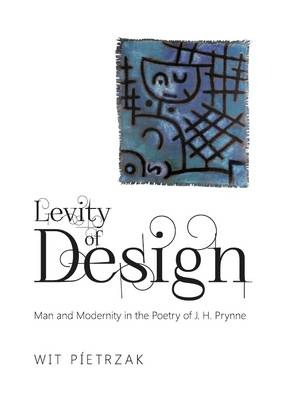
Levity of Design : Cambridge Scholars Publishing
How can poetry embrace morality through focusing on metaphrasts? What is the relation between an allummette and the alpha rhythm? Why is it that money has turned into a metonym of goodness and success? And above all, is it still possible to think of the human subject as a viable category in late modernity? These are some of the questions that J.
Leibniz and the natural world : Activity, passivity and corporeal substances in Leibniz's Philosophy
In the present book, Pauline Phemister argues against traditional Anglo-American interpretations of Leibniz as an idealist who conceives ultimate reality as a plurality of mind-like immaterial beings and for whom physical bodies are ultimately unreal and our perceptions of them illusory. Re-reading the texts without the prior assumption of idealism allows the more material aspects of Leibniz's metaphysics to emerge. Leibniz is found to advance a synthesis of idealism and materialism. His ontology posits indivisible, living, animal-like corporeal substances as the real metaphysical constituents of the universe; his epistemology combines sense-experience and reason; and his ethics fuses confused perceptions and insensible appetites with distinct perceptions and rational choice. In the light of his sustained commitment to the reality of bodies, Phemister re-examines his dynamics, the doctrine of pre-established harmony and his views on freedom.
Leibniz : What Kind of Rationalist?
The chapters of the book are the result of intense discussion in the course of an international conference focused on the title question of this book, and were selected in view of their contribution to this topic. They are clustered in thematically organized parts. No effort has been made to hide the controversies underlying the different interpretations of Leibniz’s “rationalism” – in each particular domain and as a whole. On the contrary, the editor firmly believes that only through a variety of conflicting interpretive perspectives can the multi-faceted nature of an oeuvre of such a magnitude and variety as Leibniz’s be brought to light and understood as it deserves.

Le forme spastiche della paralisi cerebrale infantile : Guida all'esplorazione delle funzioni adattive = Spastic forms of cerebral palsy : A guide to exploring adaptive functions
Offers "travel notes" on the topics covered, to spark reflection and comparisons with the readers' experience. The authors address the topics from a pathophysiological perspective that guides their interpretation of the nature of the defect (functional diagnosis), the problems related to prognosis (as a natural history hypothesis), and rehabilitation (as a modification of the architecture of the function in an adaptive sense).The text is accompanied by an extensive glossary of terms used and a DVD with clinical cases, organized according to the authors' classification. This material also highlights the volume's great educational value, both for those already working in this field (physicians, child neuropsychiatrists and physiatrists, rehabilitation therapists) and for students completing their first and second level degrees in rehabilitation and attending postgraduate schools.
Language, Meaning, Interpretation
Philosophy of logic and language, and of meaning and communication are central to this volume. The discussion of these issues involves analytical approaches, including semantics and semiotics, philosophy of science, mathematical logic, phenomenology, hermeneutics and some aspects of philosophical anthropology and aesthetics. Philosophy of the Absolute also belongs to this broad repertoire of philosophical problems and disciplines. A number of problems and viewpoints derive from the metaphysical system; any relativistic view on ethical values, for instance, makes sense in relation to some absolute. Metaphysical system building may have come to an end, but after all it belongs to philosophy to remind us of our past.
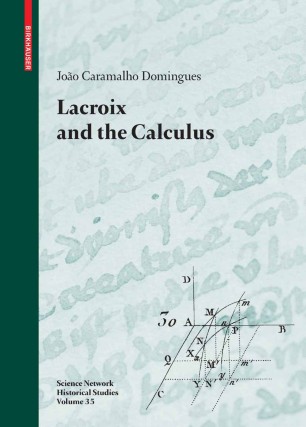
Lacroix and the Calculus
Lacroix and the Calculus is the first major study of Lacroix’s large Traité. It uses the unique and massive bibliography given by Lacroix to explore late 18th-century calculus, and the way it is reflected in Lacroix’s account. Several particular aspects are addressed in detail, including: the foundations of differential calculus, analytic and differential geometry, conceptions of the integral, and types of solutions of differential equations (singular/complete/general integrals, geometrical interpretations, and generality of arbitrary functions).
Knowledge and Civil Society
Focuses on the role of civil society in the creation, dissemination, and interpretation of knowledge in geographical contexts. It offers original, interdisciplinary and counterintuitive perspectives on civil society. The book includes reflections on civil and uncivil society, the role of civil society as a change agent, and on civil society perspectives of undone science. Conceptual approaches go beyond the tripartite division of public, private and civic sectors to propose new frameworks of civic networks and philanthropic fields, which take an inclusive view of the connectivity of civic agency across sectors.
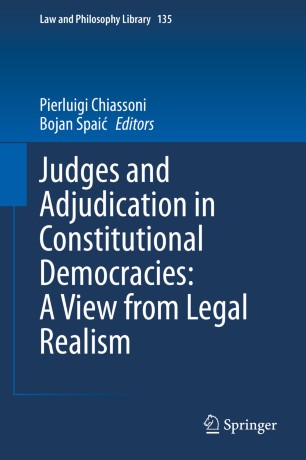
Judges and Adjudication in Constitutional Democracies : A View from Legal Realism
Offers contributions to a philosophical and realistic approach to the place of adjudication in contemporary constitutional democracies. Bringing together scholars from different legal and philosophical backgrounds, purports to cast light on the role(s) of judges and the function of judicial interpretation inside of constitutional states, from the standpoint of legal realism as a revisited and sophisticated jurisprudential outlook. In so doing, also copes with a few major jurisprudential issues, like, e.g., determining the ideas that make up the core of legal realism, exploring the relation between legal realism and legal positivism, identifying the boundaries of judicial interpretation as they appear from a realist standpoint, as well as considering some skeptical outlooks on the very claims of contemporary legal realism.
Isotopes in Palaeoenvironmental Research
This thorough reference shows how stable isotopes can be applied to understanding the palaeoenvironment, with chapters on the interpretation of isotopes in water, tree rings, bones and teeth, lake sediments, speleothems and marine sediments.
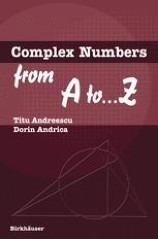
Complex Numbers from A to … Z
It is impossible to imagine modern mathematics without complex numbers. Complex Numbers from A to . . . Z introduces the reader to this fascinating subject that, from the time of L. Euler, has become one of the most utilized ideas in mathematics.The exposition concentrates on key concepts and then elementary results concerning these numbers. The reader learns how complex numbers can be used to solve algebraic equations and to understand the geometric interpretation of complex numbers and the operations involving them.The theoretical parts of the book are augmented with rich exercises and problems at various levels of difficulty. A special feature of the book is the last chapter, a selection of outstanding Olympiad and other important mathematical contest problems solved by employing the methods already presented.The book reflects the unique experience of the authors. It distills a vast mathematical literature, most of which is unknown to the western public, and captures the essence of an abundant problem culture.
Common interests, uncommon goals : Histories of the world council of comparative education societies and its members
This book presents histories of the WCCES and its member societies. It shows ways in which the field has changed over the decades, and the forces which have shaped it in different parts of the world. The book demonstrates that while comparative education can be seen as a single global field, it has different characteristics in different countries and cultures. In this sense, the book presents a comparison of comparisons.
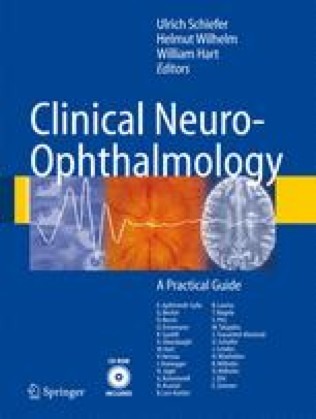
Clinical Neuro-Ophthalmology : A Practical Guide
Clinical Neuro-Ophthalmology is a challenge for residents and experienced clinicians alike. This book covers all relevant techniques of diagnosis as well as interpretations of clinical signs. All information is highly structured, highlighting ‘definition’, ‘note’ and ‘pearl’, so that it can also be used by the physician during the patient encounter. The included flow chart posters remind the physician of the most important information.

Clinical Cardiac MRI
MRI has become the preferred noninvasive imaging modality for the heart and great vessels. The substantial technological progress achieved in recent years has provided the user with state of the art MRI systems, but their optimal use can be limited by restricted awareness of the potential patient benefit and the necessity for teaching. This extensively illustrated volume, has been specifically compiled to meet these needs. Essential theoretical background information is provided, and imaging acquisition and potential pitfalls are considered in detail. Most importantly, structured guidelines are provided on the interpretation of clinical data in the wide range of cardiac pathology that can be encountered. Throughout, the emphasis is on the implementation of cardiac MRI in clinical practice.
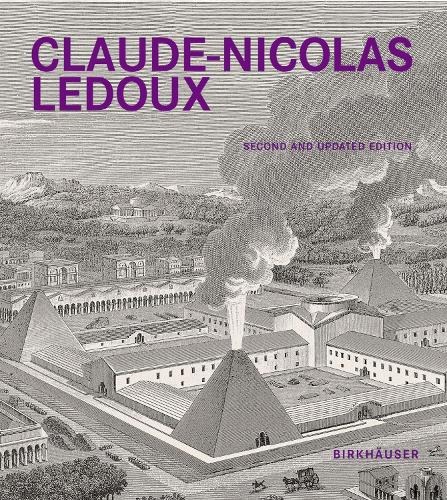
Claude-Nicolas Ledoux : Architecture and uopia in the era of the French revolution
Claude-Nicolas Ledoux (1736-1806) is today regarded as chief representative of French revolutionary architecture. With his extraordinary inventiveness he projected the architectural ideals of his era. Ledoux's influential buildings and projects are presented and interpreted both aesthetically and historically in this book. His best-known projects - the Royal Saltwords of Arc-et-Senans, the tollgates of Paris, the ideal city of Chaux - reveal the architect's allegiance to the principles of antiquity and Renaissance but also illustrate the evolution of his own utopian language. With the French Revolution, Ledoux ceased building as his contemporaries perceived him as a royal architect. He focused on the development of his architectural theory and redefined the vision of the modern architect

Chemical Leasing Goes Global : Selling Services Instead of Barrels : A Win-Win Business Model for Environment and Industry
Chemical Leasing is an innovative business model within the sustainable management of chemicals. The economic benefit is achieved by selling chemicals services instead of increasing the sales volume. This book contains detailed descriptions and evaluations based on existing projects in Austria, Egypt, Russia and Mexico where in a broard range of sectors and companies the application of Chemical leasing was assisted. The book also contains political and scientific interpretations and analyses.
Chance : The life of games and the game of life
With its many easy-to-follow mathematical examples, this book takes the reader on an almost chronological trip through the fascinating and amazing laws of chance, omnipresent in the natural world and in our daily lives. Along the route many fascinating topics are discussed, such as: challenging probability paradoxes; "paranormal" coincidences; game odds; causes and effects; interpretation of opinion polls; winning chances as a game proceeds; the nature of randomness; entropy and randomness; randomness in life; algorithmic complexity and the undecidability of randomness; possibilities and limitations of learning the laws of a Universe immersed in chance events. This charming book will inform and entertain the scientist and non-scientist alike.
Challenges in Language Testing Around the World : Insights for language test users
This book combines insights from language assessment literacy and critical language testing through critical analyses and research about challenges in language assessment around the world. It investigates problematic practices in language testing which are relevant to language test users such as language program directors, testing centers, and language teachers, as well as teachers-in-training in Graduate Diploma and Master of Arts in Applied Linguistics programs. These issues involve aspects of language testing such as test development, test administration, scoring, and interpretation/use of test results.
Cardiovascular MRI in practice : A teaching file approach
This text resource outlines the systematic approach to CMR interpretation. The depiction of a "core exam" and the modifications used for a variety of patient circumstances are demonstrated using simple visual assessment of the images. Special emphasis on the advantages of CMR relative to other modalities reinforces practical learning objectives, organized so that the reader starts with patient images – as one would in a clinical scenario – and works back to the didactic material.
