



الصفحة 6
الصفحة 6

Irreversible Phenomena : Ignitions, Combustion and Detonation Waves
Ideals are simple and able to be easily understood, but never exist in reality. In this book a theory based on the second law of thermodynamics and its applications are described. In thermodynamics there is a concept of an ideal gas which satisfies a mathematical formula PV = RT. This formula can appro- mately be applied to the real gas, so far as the gas has not an especially high pressure and low temperature. In connection with the second law of thermo- namics there is also a concept of reversible and irreversible processes. The reversible process is a phenomenon proceeding at an infinitely low velocity, while the irreversible process is that proceeding with a finite velocity. Such a process with an infinitely slow velocity can really never take place, and all processes observed are always irreversible, therefore, the reversible process is an ideal process, while the irreversible process is a real process.

Irreversible Decisions under Uncertainty : Optimal Stopping Made Easy
In real life, as well as in economic models, individuals often make decisions in an uncertain environment. In many cases, a problem which an optimizing agent faces can be formulated or reformulated as a problem of optimal timing of a certain irreversible or partially reversible action or optimal stopping problem. In this book, the authors present an alternative approach to optimal stopping problems. The basic ideas and techniques of the approach can be explained much simpler than the standard methods in the literature on optimal stopping problems. The monograph will teach the reader to apply the technique to many problems in economics and finance, including new ones. From the technical point of view, the method can be characterized as option pricing via the Wiener-Hopf factorization.

IP Traffic Theory and Performance
This book presents different approaches in IP traffic theory and classifies them, especially towards applications in the Internet. It comprises the state of the art in this area, which is currently presented only by numerous research papers and overview articles. The book provides an ideal starting point for detailed studies of traffic analysis in IP networks. It gives the reader the possibility to judge on different models and to select the appropriate for his individual needs in applications.

Inverse Problems for Partial Differential Equations
The topic of the inverse problems is of substantial and rapidly growing interest for many scientists and engineers. The second edition covers most important recent developments in the field of inverse problems, describing theoretical and computational methods, and emphasizing new ideas and techniques. It also reflects new changes since the first edition, including some corrections. This edition is considerably expanded, with some concepts such as pseudo-convexity, and proofs simplified. New material is added to reflect recent progress in theory of inverse problems.This book is intended for mathematicians working with partial differential equations and their applications, and physicists, geophysicists and engineers involved with experiments in nondestructive evaluation, seismic exploration, remote sensing and tomography.

Inventive Thinking through TRIZ : A Practical Guide
This is the second edition of the Michael Orloff's successful practical introduction to TRIZ (Theory of Inventive Problem Solving) - a strategy and methods for breaking out of rigid thought patterns to achieve truly creative engineering solutions. Written for self-study, the book provides the reader in the most vivid and systematic manner with the key ideas, techniques, and paradigms of the quite complex TRIZ method. The author is experienced in many practical applications of TRIZ in various fields.

Invariant Manifolds for Physical and Chemical Kinetics
By bringing together various ideas and methods for extracting the slow manifolds the authors show that it is possible to establish a more macroscopic description in nonequilibrium systems. The book treats slowness as stability. A unifying geometrical viewpoint of the thermodynamics of slow and fast motion enables the development of reduction techniques, both analytical and numerical. Examples considered in the book range from the Boltzmann kinetic equation and hydrodynamics to the Fokker-Planck equations of polymer dynamics and models of chemical kinetics describing oxidation reactions. Special chapters are devoted to model reduction in classical statistical dynamics, natural selection, and exact solutions for slow hydrodynamic manifolds. The book will be a major reference source for both theoretical and applied model reduction. Intended primarily as a postgraduate-level text in nonequilibrium kinetics and model reduction, it will also be valuable to PhD students and researchers in applied mathematics, physics and various fields of engineering.

Introduction to Systems Biology
Informative and cutting-edge, this volume presents a clear and intuitive illustration of the biological systemic approaches and introduces ideal computational methods for research. Introduction to Systems Biology is an indispensable resource, providing a first glimpse into the state-of-the-art in systems biology.

Introduction to Symplectic Dirac Operators
One of the basic ideas in differential geometry is that the study of analytic properties of certain differential operators acting on sections of vector bundles yields geometric and topological properties of the underlying base manifold. Symplectic spinor fields are sections in an L^2-Hilbert space bundle over a symplectic manifold and symplectic Dirac operators, acting on symplectic spinor fields, are associated to the symplectic manifold in a very natural way. Hence they may be expected to give interesting applications in symplectic geometry and symplectic topology. These symplectic Dirac operators are called Dirac operators, since they are defined in an analogous way as the classical Riemannian Dirac operator known from Riemannian spin geometry. They are called symplectic because they are constructed by use of the symplectic setting of the underlying symplectic manifold. This volume is the first one that gives a systematic and self-contained introduction to the theory of symplectic Dirac operators and reflects the current state of the subject. At the same time, it is intended to establish the idea that symplectic spin geometry and symplectic Dirac operators may give valuable tools in symplectic geometry and symplectic topology,

Introduction to Sustainability : Road to a Better Future
This book provides the tools to navigate this Road to a Better Future by explaining concepts, giving ideas, proposing methods, and suggesting actions. To illustrate the utilization of techniques there are many examples, applied to a variety of activities, and to wrap up concepts, the last chapter is dedicated to the analysis of a community in search of a sustainable environment. A thematic index has been designed to help a person quickly find information on relevant topics.

Introduction to Singularities and Deformations
This book presents the basic singularity theory of analytic spaces, including local deformation theory, and the theory of plane curve singularities. Plane curve singularities are a classical object of study, rich of ideas and applications, which still is in the center of current research and as such provides an ideal introduction to the general theory. Deformation theory is an important technique in many branches of contemporary algebraic geometry and complex analysis. This introductory text provides the general framework of the theory while still remaining concrete.

Introduction to Modern Number Theory: Fundamental Problems, Ideas and Theories
"Introduction to Modern Number Theory" surveys from a unified point of view both the modern state and the trends of continuing development of various branches of number theory. Motivated by elementary problems, the central ideas of modern theories are exposed. Some topics covered include non-Abelian generalizations of class field theory, recursive computability and Diophantine equations, zeta- and L-functions. This substantially revised and expanded new edition contains several new sections, such as Wiles' proof of Fermat's Last Theorem, and relevant techniques coming from a synthesis of various theories. Moreover, the authors have added a part dedicated to arithmetical cohomology and noncommutative geometry, a report on point counts on varieties with many rational points, the recent polynomial time algorithm for primality testing, and some others subjects.

Introduction to Logic and Theory of Knowledge : Lectures 1906/07
This course on logic and theory of knowledge fell exactly midway between the publication of the Logical Investigations in 1900-01 and Ideas I in 1913. It constitutes a summation and consolidation of Husserl’s logico-scientific, epistemological, and epistemo-phenomenological investigations of the preceding years and an important step in the journey from the descriptivo-psychological elucidation of pure logic in the Logical Investigations to the transcendental phenomenology of the absolute consciousness of the objective correlates constituting themselves in its acts in Ideas I. In this course Husserl began developing his transcendental phenomenology as the genuine realization of what had only been realized in fragmentary form in the Logical Investigations.
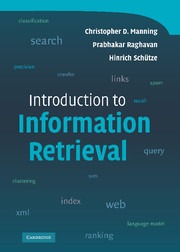
Introduction to information retrieval
Teaches classical and web information retrieval, including web search and the related areas of text classification and text clustering from basic concepts. It gives an up-to-date treatment of all aspects of the design and implementation of systems for gathering, indexing, and searching documents; methods for evaluating systems; and an introduction to the use of machine learning methods on text collections. All the important ideas are explained using examples and figures, making it perfect for introductory courses in information retrieval for advanced undergraduates and graduate students in computer science.
Introduction to Geometric Computing
The geometric ideas in computer science, mathematics, engineering, and physics have considerable overlap and students in each of these disciplines will eventually encounter geometric computing problems. The topic is traditionally taught in mathematics departments via geometry courses, and in computer science through computer graphics modules. This text isolates the fundamental topics affecting these disciplines and lies at the intersection of classical geometry and modern computing.

Introduction to Classical Geometries
This book follows Felix Klein’s proposal of studying geometry by looking at the symmetries (or rigid motions) of the space in question. In this way the classical geometries are studied: Euclidean, affine, elliptic, projective and hyperbolic. For simplicity the focus is on the two-dimensional case, which is already rich enough, though some aspects of the 3- or n-dimensional geometries are included. Once plane geometry is well understood, it is much easier to go into higher dimensions.

Introduction to Calculus and Classical Analysis
This text is intended for an honors calculus course or for an introduction to analysis. Involving rigorous analysis, computational dexterity, and a breadth of applications, it is ideal for undergraduate majors. This second edition includes corrections as well as some additional material.The text is completely self-contained and starts with the real number axioms; the integral is defined as the area under the graph, while the area is defined for every subset of the plane; there is a heavy emphasis on computational problems.

Introduction to C++ Programming and Graphics
Introduction to C++ Programming and Graphics offers a venue for rapidly learning the language by concisely revealing its grammar, syntax and main features, and by explaining the key ideas behind object oriented programming (OOP), with emphasis on scientific computing.

Introducing Blockchain with Java : Program, Implement, and Extend Blockchains with Java
Includes numerous exercises and test questions to help you solidify what you have learned as you progress through the book, and provides ideas on expanding the codebase to make it your own. You will have access to a fully-functioning repository with Java code. You will have the knowledge necessary to program your own blockchains with Java and you will have a completed project for your portfolio. You will: Know the most important theoretical concepts of the blockchain / Code the blockchain in Java / Create a user interface with JavaFX / Implement SQLite DB using JDBC Driver / Create a P2P multi-threaded app / Create your own cryptocurrency app with full functionality / Implement blockchain technology on a P2P network from scratch using Java, JavaFX, and SQL

Intraspecific Genetic Diversity : Monitoring, Conservation, and Management
Population and evolutionary genetics have been quickly developing ?elds of biological research over the past decades. This book compiles our current understanding of genetic processes in natural populations. In addition, the book provides the author’s original ideas and concepts based on the data obtained by himself and his close coworkers. The author introduces his pioneering concept of population genetic stability,and much of thebook is concerned with the factors and conditions of such stability. Why does genetic stability matter so much? Altukhov argues that the sustainable use of natural resources, including genetic resources of popu- tions, critically depends on the maintenance of their stability. The preser- tion of well-adapted genetic characteristics from one generation to the next is essential for this stability. Traditionally, population genetics has been - cusedonevolution andthe role of evolutionary factorsinshapinggenetic structures of populations. While the idea of a population as a dynamic unit of evolution has been widely accepted, the signi?cance of genetic stability and its implications for the long-term survival of populations and species have not been fully appreciated.

Internationalizing Higher Education : Critical Explorations of Pedagogy and Policy
Globalization is a multifaceted phenomenon, and one of its major components is the internationalization of education. The Increasing pace and complexity of global knowledge flows, and the accelerating exchange of educational ideas, practices and policies, are important drivers of globalization. Higher Education is a key site for these flows and exchanges. This book casts a critical eye on the internationalization of higher education. It peels back taken-for-granted practices and beliefs, explores the gaps and silences in current pedagogy and practices, and addresses the ambiguities, tensions and contradictions in internationalization. In this volume, scholars from a range of disciplines and regions critically examine the co modification of higher education, teaching and support for international students, international partnerships for aid and trade, and the impacts on academics’ work.
