



الصفحة 6
الصفحة 6

Managing Large-Scale Service Deployment ; 19th IFIP/IEEE International Workshop on Distributed Systems : Operations and Management, DSOM 2008, Samos Island, Greece, September 22-26, 2008. Proceedings
Contains all papers accepted for presentation at the 19th IFIP/IEEE International Workshop on Distributed Systems: Operations and Management (DSOM 2008),which was held September 25-26, 2008 on the island of Samos, Greece. DSOM 2008 was the 19th event in a series of annual workshops. It followed in the footsteps of previous s- cessful meetings, the most recent of which were held in San Jos´ e, California, USA (DSOM 2007), Dublin, Ireland (DSOM 2006), Barcelona, Spain (DSOM 2005), Davis, California, USA (DSOM 2004), Heidelberg, Germany (DSOM 2003), and Montreal, Canada (DSOM 2002).
Listeria Monocytogenes : Pathogenesis and Host Response
This comprehensive volume, written by experts in the field, includes concise and timely reviews of Listeria monocytogenes, one of the most intensively studied bacterial pathogens. Listeria monocytogenes is the cause of listeriosis, a potentially fatal disease that arises from the consumption of contaminated food. During the past two decades, studies of this organism have uncovered a wealth of information on its virulence factors, its genome organization, and its interactions with host cells and the immune system.

Legitimacy in International Law
In recent years the question of the legitimacy of international law has been discussed quite intensively. Such questions are, for example, whether international law lacks legitimacy in general; whether international law or a part of it has yielded to the facts of power; whether adherence to international legal commitments should be subordinated to self-defined national interests; whether international law or particular rules of it – such as the prohibition of the use of armed force – have lost their ability to induce compliance (compliance pull); and what is the relevance of non-enforcement or failure to obey for the legitimacy of that particular international norm? This book contains fresh perspectives on these questions, offered at an international and interdisciplinary conference hosted by the Max Planck Institute for Comparative Law and International Law.
Left-right asymmetry in vertebrate development
A host of studies has unravelled the involvement of many genes in the left right patterning pathway. Based on this knowledge the genetic basis of human laterality defects are beginning to be revealed. It is a major challenge now to understand how all these genes control left right development as well as the complex set of interactions established between them.

Learning Classifier Systems ; International Workshops, IWLCS 2003-2005, Revised Selected Papers
The work embodied in this volume was presented across three consecutive e- tions of the International Workshop on Learning Classi?er Systems that took place in Chicago (2003), Seattle (2004), and Washington (2005). The Genetic and Evolutionary Computation Conference, the main ACM SIGEvo conference, hosted these three editions.

Learning Classifier Systems ; 10th International Workshop, IWLCS 2006, Seattle, MA, USA, July 8, 2006 and 11th International Workshop, IWLCS 2007, London, UK, July 8, 2007, Revised Selected Papers
Constitutes the thoroughly refereed joint post-conference proceedings of two consecutive International Workshops on Learning Classifier Systems that took place in Seattle, WA, USA in July 2006, and in London, UK, in July 2007 - all hosted by the Genetic and Evolutionary Computation Conference, GECCO.The 14 revised full papers presented were carefully reviewed and selected from the workshop contributions. The papers are organized in topical sections on knowledge representation, analysis of the system, mechanisms, new directions, as well as applications.

Knowledge discovery in databases : PKDD 2006 ; 10th European Conference on Principles and practice of knowledge discovery in databases, Berlin, Germany, September 18-22, 2006, Proceedings
The European Conference on Principles and Practice of Knowledge Discovery in Databases celebrates its tenth anniversary ; the first PKDD took place in 1997 in Trondheim, Norway. Over the years, the ECML/PKDD series has evolved into one of the largest and most selective international conferences in these areas, the only one that provides a common forum for the two closely related ?elds. In 2006, the 6th collocated ECML/PKDD took place during September 18-22, when the Humboldt-Universität zu Berlin hosted the 17th European Conference on Machine Learning (ECML) and the 10th European Conference on Principles and Practice of Knowledge Discovery in Databases (PKDD). The successful model of a hierarchical reviewing process that was introduced last year for the ECML/PKDD 2005 in Porto has been taken over in 2006.

Common Law, Civil Law, and Colonial Law : Essays in Comparative Legal History from the Twelfth to the Twentieth Centuries
This volume is a selection of essays taken from the excellent range of papers presented at the British Legal History Conference hosted by the Institute for Legal and Constitutional Research at the University of St Andrews, 10-13 July 2019. The theme of the conference gives this book its title: 'comparative legal history'. The topic came easily to the organisers because of their association with the St Andrews-based European Research Council Advanced grant project 'Civil law, common law, customary law: consonance, divergence and transformation in Western Europe from the late eleventh to the thirteenth centuries'.
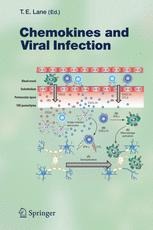
Chemokines and Viral Infection
This edition of Current Topics in Microbiology and Immunology examines the role of chemokines and chemokine receptors in host defense and disease development following viral infection. Chemokines represent a family of over 40 small proteins that, for the most part, are secreted into the environment and function by binding to G protein-coupled receptors (GPCRs) that are expressed on numerous different cell types. When initially identified close to 30 years ago, these molecules were associated with various human inflammatory diseases and it was recognized that expression may be integral in leukocyte recruitment to inflamed tissue. There are now four sub-families of chemokines identified based on defined structural criteria relating to the positional location of conserved cysteine residues within the amino-terminus of the protein. Chemokines are now recognized as important in numerous biological processes ranging from maintaining the organizational integrity of secondary lymphoid tissue to participating in various aspects of both innate and adaptive immune responses following microbial infection. With this in mind, this book highlights the functional roles of chemokines and their receptors in participating in various aspects of the immune response against well-known viral pathogens.
Chemistry and pharmacology of drug discovery
Illustrates how chemistry, biology, pharmacokinetics, and a host of disciplines come together to produce successful medicines, discussing a total of 20 drugs that are all FDA-approved post 2021. Cover Infectious Disease, Cancer Drugs, CNS Drugs, and Miscellaneous Drugs. Each chapter covers background material on the drug class and/or disease indication and key aspects relevant to the discovery of the drug, including structure-activity relationships, pharmacokinetics, drug metabolism, efficacy, and safety.
Chemical Signals in Vertebrates 11
Presents the proceedings of "Chemical Signals in Vertebrates 11", hosted by the University of Liverpool and held July 25 - 28, 2006 at the University of Chester in the United Kingdom. Chemical Signals in Vertebrates 11 contains the latest research on chemical communication relevant to vertebrates, particularly focusing on new research since the last meeting in 2003. Topics covered include chemical ecology, biochemistry, behavior and neurobiology of both the main olfactory and vomeronasal systems of vertebrates, from amphibia to mammals including humans. A broad range of taxonomic groups and topics are discussed, including sections on new directions in semiochemistry, olfactory response and function, recognition within species, sexual communication, maternal-offspring communication, communication between species, and applications for zoo animal enrichment and pest control. The volume is dedicated to the memory of Dr. Bets Rasmussen and includes a special tribute chapter on her ground-breaking research on elephant communication.
Chemical Signals in Vertebrates 10
This book also represents the tenth in a series of books on chemical communication, chemical ecology, olfactory and vomeronasal research in vertebrate species. The species covered in the chapters herein range from fish to mammals including humans. By taxonomic breakdown the mammals are the most represented in number of species and chapter contributions. However, the hosts of the meeting endeavored to have some representative contributions covering all of the major vertebrate taxa.
Cell Culture Engineering
Many patients suffering with life-threatening diseases or chronic dysfunctions, which were medically untreatable not long ago, can attest to the wonder these drugs have achieved. Although the first generation of p- tein therapeutics was produced in recombinant Escherichia coli, most recent products use mammalian cells as production hosts. Not long after the first p- duction of recombinant proteins in E. coli, it was realized that the complex tasks of most post-translational modifications on proteins could only be efficiently carried out in mammalian cells.

Cathodic Arcs : From Fractal Spots to Energetic Condensation
Cathodic Arcs: From Fractal Spots to Energetic Condensation is the first book in over a decade dedicated to the physics and technology of cathodic arcs. It includes a detailed account of arc history, a textbook-like introduction to cathode phenomena, and some basic physics of expanding plasmas; it deals with the infamous macroparticle issue and describes a host of practical plasma filter solutions. In contrast to previous books on cathodic arcs, the focus is on the relation of arc plasmas and their properties to surface modification and thin film deposition. The book contains sections on basic plasma physics and thin film materials science. It also deals with practical issues of coatings such as stress control and the often-underrated issue of the coating’s color. By stressing the fractal nature of cathode spots, the theme of fluctuations can be found throughout the book: fluctuations affect all plasma properties and thereby have consequences for plasma-based surface modifications and film growth.
Buruli Ulcer : Mycobacterium Ulcerans disease
A major objective of this book is to summarize the current status of Buruli Ulcer (BU) research for the first time. It will identify gaps in our knowledge, stimulate research and support control of the disease by providing insight into approaches for surveillance, diagnosis, and treatment of Buruli Ulcer. Book chapters will cover the history, epidemiology diagnosis, treatment and disease burden of BU and provide insight into the microbiology, genomics, transmission and virulence of Mycobacterium ulcerans.

Building design, construction and performance in tropical climates
Outlines: the functional requirements of buildings in tropical climates; the challenges associated with the sustainability of the built environment, building form and whole life performance in the context of a tropical setting; the impact of potentially hostile tropical conditions upon building pathology and the durability of components, structure and fabric; the tasks which face those responsible for appraising the design, condition, maintenance and conservation of built heritage in tropical regions; the facilities management issues faced in tropical climates; and the refurbishment, upgrade and renewal of the tropical built environment.

Blast effects on buildings
Provides the latest practical guidance on designing buildings to optimise their resilience to blast loading. Focused specifically on the design of commercial buildings, it is an indispensible guide to help engineers reduce the risks posed to building occupants and businesses from terrorist and other explosions. This book provides the engineer with a single and comprehensive source of reference for all the main elements of blast engineering design in modern practice. Industry-accepted methods for the design of glazing to resist blast loading are published for the first time, as well as a new chapter on hostile vehicle mitigation techniques. Guidance on structural steelwork and reinforced concrete design is extended and enhanced, supplemented with material on design in new materials such as steel-concrete-steel composites, this latter addition being published for the first time.
Bioprocessing Technology for Production of Biopharmaceuticals and Bioproducts
Written for industrial and academic researchers and development scientists in the life sciences industry, Bioprocessing Technology for Production of Biopharmaceuticals and Bioproducts is a guide to the tools, approaches, and useful developments in bioprocessing. This important guide: •Summarizes state-of-the-art bioprocessing methods and reviews applications in life science industries •Includes illustrative case studies that review six milestone bio-products •Discuses a wide selection of host strain types and disruptive bioprocess technologies
Basic principles of drug discovery and development ; 2nd ed.
Presents the multifaceted process of identifying a new drug in the modern era, which requires a multidisciplinary team approach with input from medicinal chemists, biologists, pharmacologists, drug metabolism experts, toxicologists, clinicians, and a host of experts from numerous additional fields. Enabling technologies such as high throughput screening, structure-based drug design, molecular modeling, pharmaceutical profiling, and translational medicine are critical to the successful development of marketable therapeutics. Given the wide range of disciplines and techniques that are required for cutting edge drug discovery and development, a scientist must master their own fields as well as have a fundamental understanding of their collaborator’s fields.

Bacteriophage therapy : a potential solution for antibiotic resistance crisis
For many years, humans have been fighting with bacteria, in a matter of fact, bacteria have been winning for the last decade, becoming resistant to every weapon we have; The antibiotics. In order to win the fight humans had to think of alternative ways, like viruses. There is a special type of viruses that have been in a war with bacteria for millenniums, Bacteriophages. Bacteriophages (or phages), the most abundant viral entity of the planet. On the basis of their unique characteristics and anti-bacterial property, phages are being the freshly evaluated taxonomically. Phages replicate inside the host either by lytic or lysogenic mode after infecting and using the cellular machinery of a bacterium. Phage became an important agent for combating pathogenic bacteria in clinical treatments and its related research gained momentum. However, due to recent rise of bacterial resistance on antibiotics, applications of phage (phage therapy) become an unavoidable option of research. In this dissertation, the advantage and limitations of Bacteriophages for use in humans will be discussed. Furthermore, this dissertation deals with recent development of its application in the areas of biotechnology.
