



الصفحة 6
الصفحة 6

Aulton's pharmaceutics : The design and manufacture of medicines
Offers a complete course in one book for students in all years of undergraduate pharmacy and pharmaceutical sciences degrees. Thoroughly revised, updated and extended by experts in their fields and edited by Professors Kevin Taylor and Michael Aulton, this new edition includes the science of formulation, pharmaceutical manufacturing and drug delivery. All aspects of pharmaceutics are covered in a clear and readily accessible way and extensively illustrated throughout, providing an essential companion to the entire pharmaceutics curriculum from day one until the end of the course. Fully updated throughout, with the addition of new chapters, to reflect advances in formulation and drug delivery science, pharmaceutical manufacturing and medicines regulation Designed and written for newcomers to the design and manufacture of dosage forms Relevant pharmaceutical science covered throughout Includes the science of formulation and drug delivery Reflects current practices and future applications of formulation and drug delivery science to small drug molecules, biotechnology products and nanomedicines Key points boxes throughout Over 400 online multiple choice questions

Aspirin and omeprazole pellets
The objective of this study was to combine Aspirin and Omeprazole which are often used together in a singular capsule. Aspirin is a common drug for relieving minor aches, pains, and fevers. People also use it as an anti-inflammatory or a blood thinner. Because of its regular and continuous usage, it may cause peptic ulcers. Peptic ulcers are open sores that develop on the inside lining of your stomach and the upper portion of your small intestine which can be uncomfortable and painful. Consequently, people with ulcers resort to omeprazole to treat them...
Artificial intelligence based cancer nanomedicine : Diagnostics, therapeutics and bioethics
Nanomedicine is evolving with novel drug formulations devised for multifunctional approaches towards diagnostics ad therapeutics. Nanomedicine-based drug therapy is normally explored at a fixed dose. The drug action is time-dependent, dose-dependent and patient-specific. To overcome challenges of nanomedicine testing, artificial intelligence (AI) serves as a helping tool for optimizing the drug and dose parameters. Real time conversions between these two features enables upgradation of patient data acquisition and improved design of nanomaterials. In this scenario, AI-based pattern analysis and algorithms models can greatly improve accuracy of diagnostics and therapeutics.
Applications of nanotechnology in drug discovery and delivery
Presents complete coverage of the application of nanotechnology in the discovery of new drugs and efficient target delivery of drugs. The book highlights recent advances of nanotechnology applications in the biomedical sciences, starting with chapters that provide the basics of nanotechnology, nanoparticles and nanocarriers. Part II deals with the application of nanotechnology in drug discovery, with an emphasis on enhanced delivery of pharmaceutical products, with Part III discussing toxicological and safety issues arising from the use of nanomaterials

Ansel's pharmaceutical dosage forms
Reflects the CAPE, APhA, and NAPLEX® competencies, and covers physical pharmacy, pharmacy practice, pharmaceutics, compounding, and dosage forms and the clinical application of the various dosing forms in patient care.

Angiogenesis and Direct Myocardial Revascularization
In Angiogenesis and Direct Myocardial Revascularization, an interdisciplinary panel of pioneers and opinion leaders review the basic, preclinical, clinical, and developmental pathways to new treatment strategies, such as therapeutic angiogenesis and myogenesis.
Alginates in drug delivery
Alginates in Drug Delivery explores the vital precepts, basic and fundamental aspects of alginates in pharmaceutical sciences, biopharmacology, and in the biotechnology industry. The use of natural polymers in healthcare applications over synthetic polymers is becoming more prevalent due to natural polymers’ biocompatibility, biodegradability, economic extraction and ready availability. To fully utilize and harness the potential of alginates, this book presents a thorough understanding of the synthesis, purification, and characterization of alginates and their derivative. This book collects, in a single volume, all relevant information on alginates in health care, including recent advances in the field.

Advances of novel formulations in drug delivery
This is an endeavor to bring all the nanotechnology-based drug carriers under the umbrella of a single text. The drug carriers made up using natural as well as synthetic polymers are described in detail. The drug carriers include (though not limited to) particulates, vesicular, dendrimers, quantum dots, carbon nano tubes, nanocrystals, nanoemulsions, nanofibers
Advances in pharmacokinetics and pharmacodynamics
Provides a concise overview of recent advances in Pharmacokinetics (PK) and Pharmacodynamics (PD). The pharmacokinetics section covers the state of the art in Physiologically Based Pharmacokinetic (PBPK) modeling (Chapter 1) as well as the assessment of food effect on drug absorption using PBPK modeling (Chapter 2). Chapters 3 and 4 describe the recent development of Physiologically Based Finite Time Pharmacokinetic (PBFTPK) models and their applications to pharmacokinetic data. The pharmacodynamics section focuses on PK/PD modeling. Chapter 5 provides an overview of PK/PD modeling and simulation in clinical practice and studies. Chapter 6 deals with the subject/physiology variability issue encountered in PK/PD studies, while Chapter 7 reviews the influence of clinical pharmacology in the modernization of drug development and regulation. This book is an essential reference for pharmaceutical scientists.
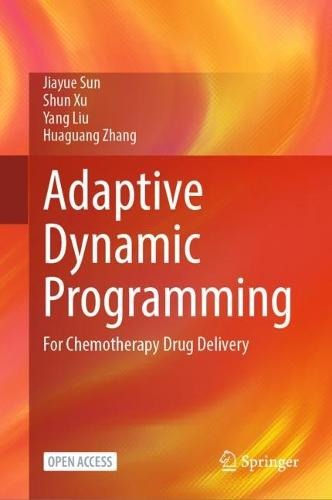
Adaptive dynamic programming for chemotherapy drug delivery
Focuses on the practical application of Adaptive Dynamic Programming (ADP) in chemotherapy drug delivery, taking into account clinical variables and real-time data. ADP's ability to adapt to changing conditions and make optimal decisions in complex and uncertain situations makes it a valuable tool in addressing pressing challenges in healthcare and other fields. As optimization technology evolves, we can expect to see even more sophisticated and powerful solutions emerge.
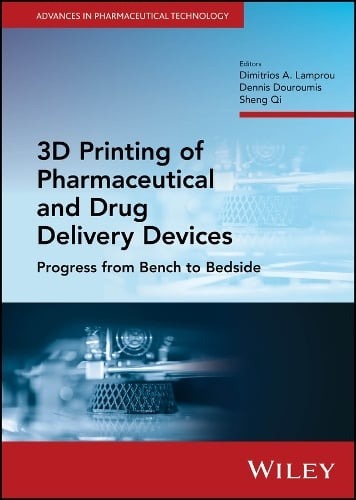
3D printing of pharmaceutical and drug delivery devices progress from bench to bedside
Discover the latest, fast-developing technology to help move towards more cost-effective, small-batch, decentralized manufacturing of personalized systems . 3D printing has revolutionized manufacturing. Its precision and flexibility have enabled the large-scale production of materials and devices too complex for conventional industrial manufacturing. This has been particularly revolutionary in the field of pharmaceutical production, where 3D printing is being integrated into the manufacture of both drugs and drug delivery devices. It has never been more important for industry professionals to understand this form of production.
