



الصفحة 6
الصفحة 6

Environmental Chemistry : Green Chemistry and Pollutants in Ecosystems
Environmental chemistry is a new, fast developing science aimed at deciphering fundamental mechanisms ruling the behaviour of pollutants in ecosystems. Applying this knowledge to current environmental issues leads to the remediation of environmental media, and to new, low energy, low emission, sustainable processes. This book describes the state-of-the-art advances regarding the pollution of water, soils, atmosphere, food and living organisms by toxic metals, fossil fuels, pesticides and other organic pollutants. Furthermore, the eco-toxicology section presents novel bio-assays to assess the toxicity of various pollutants such as dioxins and endocrine disrupters within complex media. The green chemistry section highlights novel chemical reactions based upon environmentally friendly conditions. The analytical chemistry section describes very sensitive methods which trace the fate of pollutants in complex ecosystems.

Environmental and Microbial Relationships
After the publication of Volume IV in 1997, the introduction of molecular methods into ecology led to significant new findings. Emphasizing these advances, the chapters for the second edition have been completely updated and revised. This volume provides insight into current research on fungal populations and communities. It focuses on fungal responses to the physical environment, interactions with other fungi, microorganisms and invertebrates, the role of fungi in ecosystem processes such as decomposition and nutrient cycling, and aspects of biogeography and conservation. Several chapters deal with various applications in, e.g. biological pest control, natural products discovery, and the degradation of toxic organic compounds. This is an invaluable source of information both for scientists who wish to update their knowledge of current progress and for graduate students interested in obtaining a first overview of this field of research.

Enabling things to talk : Designing IoT solutions with the IoT architectural reference model
The Internet of Things (IoT) is an emerging network superstructure that will connect physical resources and actual users. It will support an ecosystem of smart applications and services bringing hyper-connectivity to our society by using augmented and rich interfaces. Whereas in the beginning IoT referred to the advent of barcodes and Radio Frequency Identification (RFID), which helped to automate inventory, tracking and basic identification, today IoT is characterized by a dynamic trend toward connecting smart sensors, objects, devices, data and applications. The next step will be “cognitive IoT,” facilitating object and data re-use across application domains and leveraging hyper-connectivity, interoperability solutions and semantically enriched information distribution.

Embedded Firmware Solutions : Development Best Practices for the Internet of Things
Embedded Firmware Solutions is the perfect introduction and daily-use field guide--for the thousands of firmware designers, hardware engineers, architects, managers, and developers--to Intel’s new firmware direction (including Quark coverage), showing how to integrate Intel® Architecture designs into their plans. Featuring hands-on examples and exercises using Open Source codebases, like Coreboot and EFI Development Kit (tianocore) and Chromebook, this is the first book that combines a timely and thorough overview of firmware solutions for the rapidly evolving embedded ecosystem with in-depth coverage of requirements and optimization.

Ecotoxicology, Ecological Risk Assessment and Multiple Stressors
The science of ecotoxicology and the practice of ecological risk assessment are evolving rapidly. Ecotoxicology as a subject area came into prominence in the 1960s after the publication of Rachel Carson's book on the impact of pesticides on the environment. The rise of public and scientific concern for the effects of chemical pollutants on the environment in the 1960s and 1970s led to the development of the discipline of ecotoxicology, a science that takes into account the effects of chemicals in the context of ecology. Until the early 1980s, in spite of public concern and interest among scientists, the assessment of ecological risks associated with natural or synthetic pollutants was not considered a priority issue by most government. However, as the years passed, a better understanding of the importance of ecotoxicology emerged and with it, in some countries, the progressive formalization of an ecological risk assessment process.

Ecosystem-Based Management, Ecosystem Services and Aquatic Biodiversity : Theory, Tools and Applications
Aquatic ecosystems are rich in biodiversity and home to a diverse array of species and habitats, providing a wide variety of benefits to human beings. Many of these valuable ecosystems are at risk of being irreversibly damaged by human activities and pressures, including pollution, contamination, invasive species, overfishing and climate change. Such pressures threaten the sustainability of these ecosystems, their provision of ecosystem services and ultimately human well-being.

Ecosystem Services for Well-Being in Deltas : Integrated Assessment for Policy Analysis
Answers key questions about environment, people and their shared future in deltas. It develops a systematic and holistic approach for policy-orientated analysis for the future of these regions. It does so by focusing on ecosystem services in the world’s largest, most populous and most iconic delta region, that of the Ganges-Brahmaputra delta in Bangladesh. The book covers the conceptual basis, research approaches and challenges, while also providing a methodology for integration across multiple disciplines, offering a potential prototype for assessments of deltas worldwide.

Ecosystem Organization of a Complex Landscape : Long-Term Research in the Bornhöved Lake District, Germany
Presents the major findings of a 12-year ecological study of the Bornhöved Lake District, situated some 30 km south of Kiel. Historically speaking, the present research scheme, like comparable long-term ecosystem studies at Göttingen, Bayreuth, München, and Berchtesgaden, has been conceived as the core of a comprehensive ecological surveillance system for Germany (Ellenberg et al. 1978). Comprising three interrelated components, namely an ecological monitoring network, comparative ecosystem research, and an environmental specimen bank, this system is intended to promote both ecological science and planning and policy. In this connection the geo- and bioscientifically based ecosystem research aims at understanding the structure and functions of systems, the natural equilibrium and stress tolerance of singular components and the entire system against changes and disturbances from within and from outside, and the relationships between diversity, productivity, and stability. Thus, ecosystem research forms the indispensable basis for the rational analysis of the comprehensive data sets made available by ecological monitoring networks and for the adequate selection of plant, animal, and soil specimens for environmental specimen banking purposes.

Ecosystem Function in Heterogeneous Landscapes
The book elucidates the challenges faced by ecosystem scientists working in spatially heterogeneous systems, relevant conceptual approaches used in other disciplines and in different ecosystem types, and the importance of spatial heterogeneity in conservation resource management. The distinguished authors discuss how how much heterogeneity needs to be taken into account for specific types of scientific and management issues. Their chapters cover the spectrum from proposing novel conceptual approaches to detailing the practical implications of heterogeneous landscapes for fire management, water management and conservation planning.

Economics of Land Degradation and Improvement : A Global Assessment for Sustainable Development
This volume deals with land degradation, which is occurring in almost all terrestrial biomes and agro-ecologies, in both low and high income countries and is stretching to about 30% of the total global land area. About three billion people reside in these degraded lands. However, the impact of land degradation is especially severe on livelihoods of the poor who heavily depend on natural resources. The annual global cost of land degradation due to land use and cover change (LUCC) and lower cropland and rangeland productivity is estimated to be about 300 billion USD. Sub-Saharan Africa (SSA) accounts for the largest share (22%) of the total global cost of land degradation.

Ecology, Planning, and Management of Urban Forests : International Perspective
Ecology, Planning, and Management of Urban Forests contains studies and perspectives on urban forests from a broad array of basic and applied scientific disciplines including ecosystem ecology, biogeochemistry, landscape ecology, plant community ecology, geography, and social science. The book contains contributions from experts in Asia, Europe, and North America, allowing the reader to evaluate methods and management that are appropriate for particular geographic, environmental, and socio-political contexts. Urban forests are also approached on regional and landscape scales to encompass more natural environments in and around cities, rather than within arbitrary municipal boundaries. The studies provided are intended to motivate scientists, planners, and managers to work together and to adopt a broader landscape ecology approach to urban forestry, and in so doing, better address the pressing needs for improving the quality of life in urban environments.

Ecology of Tidal Freshwater Swamps of the Southeastern United States
This book draws together the latest findings from investigators focusing on the hydrological processes, community organization, and stress physiology of freshwater, tidally influenced land-margin forests of the southeastern United States. It describes the land use history that led to the restricted distribution of these wetlands, and provides descriptions of the hydrology, soils, biogeochemistry, and physiological ecology of these systems, highlighting the similarities shared among tidal freshwater forested wetlands.

Ecology of Riparian Forests in Japan : Disturbance, Life History, and Regeneration
It presents the dynamics and mechanisms that govern the coexistence of riparian tree species, tree demography, the response to water stress of trees, and the conservation of endangered species, and focuses on natural disturbances, life-history strategies, and the ecophysiology of trees. Because many riparian landscapes have been degraded and are disappearing at an alarming rate, the regeneration of the remaining riparian ecosystems is urgent. With contributions by more than 20 experts in diverse fields, this book offers useful information for the conservation, restoration, and rehabilitation of riparian ecosystems that remain in world streams and rivers.
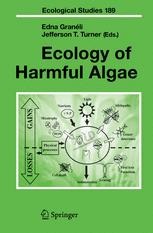
Ecology of Harmful Algae
Harmful algal blooms are one of the consequences of the human impact on aquatic ecosystems, particularly the process of eutrophication. They can cause a variety of deleterious effects, including the poisoning of fish and shellfish, habitat disruptions for many organisms, water discolouration, beach fouling, and even toxic effects for humans. This volume is a comprehensive synthesis of the latest research achievements concerning harmful algae (HA) ecology. International experts provide an in-depth analysis of HA topics including: global distribution, ecology of major HA groups, ecology and physiology of HA, HA and the food web, studying and mitigating HA, the human impact on HA and HA impact on human activity. This volume is an invaluable source of information for researchers in HA ecology as well as for advanced students, lecturers, and environmental managers.

Ecology of Baltic Coastal Waters
The Baltic Sea is one of the most investigated water bodies in the world. For decades, the many highly industrialised nations around the Baltic have financed basic and applied investigations, as well as the building and development of research stations and vessels. After World War II, research in the Baltic Proper was intensified and investi- tions became much more international. The main goals of such investigations were analysis of the eutrophication and pollution of the Baltic Sea, and development of mitigating strategies (e.g. the HELCOM-Program). In contrast, research into the coastal zones was carried out mainly under national sovereignty by individual governments due to differing political regimes. Consequently, there was a lack of international collaboration and publications regarding these regions. This changed following the collapse of the former socialist governments. Nevertheless, research activities in the coastal regions still lag behind those in the Baltic Proper. A general description is further hampered by the great variety of coastal water ecosystems. The aim of this book is to overcome this lack by presenting the important Baltic coastal zones in the form of “ecological case studies”. In this way the book rep- sents an important supplement to literature concerning the Baltic Proper.
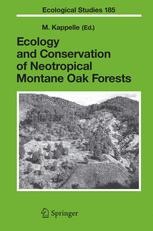
Ecology and Conservation of Neotropical Montane Oak Forests
Covers the range of natural and managed oak forests in the highlands of tropical America. Providing an understanding of ecological patterns and processes that determine the structure and functioning of these forests, this volume aims to serve as a basis for sustainable forest management and biodiversity conservation.

Ecological risks associated with the destruction of chemical weapons ; Proceedings of the NATO ARW on ecological risks associated with the destruction of chemical weapons, Lüneburg, Germany, from 22-26 October 2003
Chemical Weapons Convention after the First Review Conference -- Implementation of Russia’s Obligation to Destroy chemical Weapons in the Udmurt Republic -- The CWC after the Review Conference . Prof. Dr. Vladimir Mikhailovitsh Kolodkin , Prof. Dr.-Ing. Wolfgang Ruck 1 Institute of Natural and Technogenic Disasters, Udmurt State University, Izhevsk (Russia), 2 Institute of Ecology and Environmental Chemistry, University Lüneburg (Germany) During the Cold War a whole arsenal of deadly chemical weapons was allowed to build up on both sides of the ideological divide. Happily, today the problems are reversed. Expertise is now required in the field of safe and environment-friendly disposal of chemical weapons and cleaning up of contaminated sites all around the world, but not least in the ex-Soviet-led countries. In all, there were 57 participants, of which 11 dispatched from the TACIS project “The development of the chemical weapons” facility at the detached plant No 4 of OAO Khimprom, Novocheboksarsk.

Ecological Responses to the 1980 Eruption of Mount St. Helens
The eruption of Mount St. Helens on May 18, 1980, had a momentous impact on the fungal, plant, animal, and human life from the mountain to the far reaches of the explosion's ash cloud and mudflows. Although this intense natural event caused loss of substantial life and property, it also created a unique opportunity to examine a huge disturbance of natural systems and their subsequent responses. Based on one of the most studied areas of volcanic activity, this book synthesizes the ecological research that has been conducted for twenty-five years since the eruption.

Ecological Informatics : Scope, Techniques and Applications
Ecological Informatics promotes interdisciplinary research between ecology and computer science on elucidation of principles of information processing in ecosystems, ecological sustainability by informed decision making, and bio-inspired computation. The 2nd edition of the book consolidates the scope, concepts, and techniques of this newly emerging discipline by a new preface and additional chapters on cellular automata, qualitative reasoning, hybrid evolutionary algorithms and artificial neural networks. It illustrates numerous applications of Ecological Informatics for aquatic and terrestrial ecosystems, image recognition at micro- and macro-scale as well as computer hardware design.
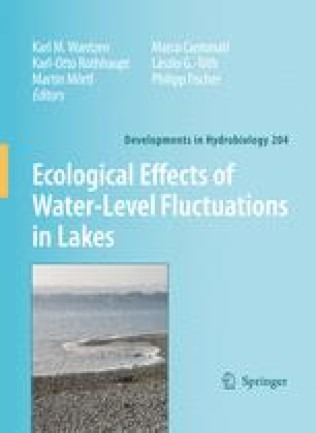
Ecological Effects of Water-Level Fluctuations in Lakes
It presents selected papers on the ecological effects of WLF in lakes, resulting from a workshop at the University of Konstanz in winter 2005. Issues addressed here include the extent of WLF, and analyses of their effects on different groups of biota from microorganisms to vertebrates. Applied issues include recommendations for the hydrological management of regulated lakes to reduce negative impacts, and a conceptual framework is delivered by an extension of the floodpulse concept for lakes. Current impacts on water use, including increasing demands on drinking and irrigation water, hydropower etc., and climate change effects on WLF make this book an essential resource for aquatic ecologists, engineers, and decision-makers dealing with the management of lake ecosystems and their catchments.
