



الصفحة 6
الصفحة 6
Clinical oral anatomy : A comprehensive review for dental practitioners and researchers
Presents the most current and comprehensive review of oral anatomy for clinicians and researchers alike. In 26 chapters, the reader is taken on a unique anatomical journey, starting with the oral fissure, continuing via the maxilla and mandible to the tongue and floor of the mouth, and concluding with the temporomandibular joint and masticatory muscles. Each chapter offers a detailed description of the relevant anatomical structures and their spatial relationships, provides quantitative morphological assessments, and explains the relevance of the region for clinical dentistry. All dental health care professionals require a sound knowledge of anatomy for the purposes of diagnostics, treatment planning, and therapeutic intervention. A full understanding of the relationship between anatomy and clinical practice is the ultimate objective, and this book will enable the reader to achieve such understanding as the basis for provision of the best possible treatment for each individual patient as well as recognition and comprehension of unexpected clinical findings.
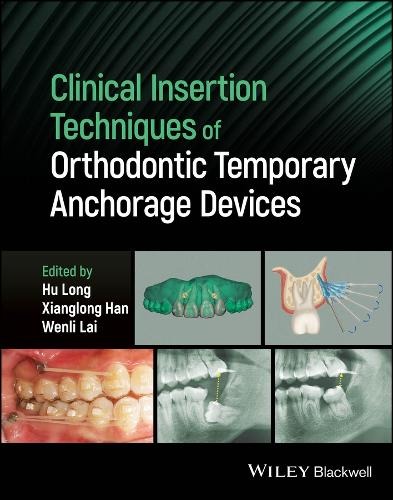
Clinical insertion techniques of orthodontic temporary anchorage devices
Clinical Insertion Techniques of Orthodontic Temporary Anchorage Devices is the first comprehensive guide to the clinical insertion techniques for temporary anchorage devices (TADs) and the clinical applications of TADs according to different anatomic regions. It provides detailed clinical insertion instructions and applications, as well as guidance on choosing an optimal insertion site, detailed insertion techniques, and potential complications and their solutions.

Clinical Cases in Periodontics ; 2nd ed.
Clinical Cases in Periodontics offers: A thorough introduction to periodontic examination and diagnosis, including documentation, plaque, and non-plaque induced gingivitis A comprehensive exploration of non-surgical periodontal therapy, including local anatomic factors contributing to periodontal disease and local drug delivery Practical discussions of resective periodontal therapy, including gingivectomy and flap osseous surgery In-depth examinations of regenerative therapy, including the treatment of furcation and guided bone regeneration The latest advances in inter-disciplinary care, encompassing orthodontics, prosthodontics, and implant dentistry
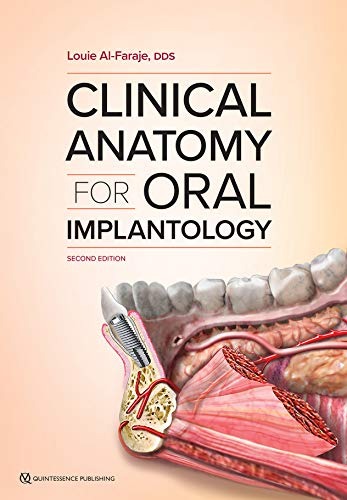
Clinical Anatomy for Oral Implantology
Designed with the practicing implantologist in mind, and it has been revitalized to have the utmost relevance to the clinical reality of oral implantology today. Impeccable full-page illustrations demonstrate a detailed view of each anatomical area, and clinical photos, radiographs, CBCT scans, and cadaver specimens provide a complete picture of what the clinician can expect to encounter.

Click chemistry
In chemical synthesis, click chemistry is a class of simple atomic economy reactions commonly used to join two selected molecular entities. Click chemistry is not one specific reaction, but describes a method for generating products that follow examples in nature, which also generates substances by joining small modular units. In many applications, click interactions that join a biomolecule and a reporter molecule. Click chemistry is not limited to biological conditions: the concept of a 'click' reaction has been used in protein chemistry, pharmacokinetics, and many biomimetic applications. However, they have been made remarkably useful in the discovery, localization and qualification of biomolecules.

Chemistry from First Principles
This book examines the appearance of matter in its most primitive form, from the vacuum and the diversity that results from the fusion of elementary units in the genesis of atomic matter; considers the empirical rules of chemical affinity that regulate the synthesis and properties of molecular matter; analyzes the compatibility of the theories of chemistry with the quantum and relativity theories of physics; formulates a consistent theory, based on clear physical pictures and manageable mathematics, to account for chemical concepts such as the structure and stability of atoms and molecules, the periodicity of nuclides and elements, valence states, activation and chemical reactivity, electronegativity and general covalency, the exclusion principle, electronic energy, orbital angular momentum and spin in relation to molecular shape, torsional rigidity, chirality and molecular modeling; explains the self-similarity between space-time, nuclear structure, covalent assembly, biological growth, planetary systems and galactic conformation.

Chemistry for pharmacy students : General, organic and natural product chemistry ; 2nd ed.
Opens with an overview of the general aspects of chemistry and their importance to modern life, with emphasis on medicinal applications. The text then moves on to discuss the concepts of atomic structure and bonding and the fundamentals of stereochemistry and their significance to pharmacy in relation to drug action and toxicity. Various aspects of organic functional groups, organic reactions, heterocyclic chemistry, nucleic acids and their pharmaceutical importance are then covered in subsequent chapters, with the final chapter dealing with drug discovery and development, and natural product chemistry. Provides a student-friendly introduction to the main areas of chemistry required by pharmacy degree courses. Written at a level suitable for non-chemistry students in pharmacy, but also relevant to those in life sciences, food science, and the health sciences Includes learning objectives at the beginning of each chapter Focuses on the physical properties and actions of drug molecules

Charged Particle Traps : Physics and Techniques of Charged Particle Field Confinement
This book provides an introduction and guide to modern advances in charged particle (and antiparticle) confinement by electromagnetic fields. Confinement in different trap geometries, the influence of trap imperfections, classical and quantum mechanical description of the trapped particle motion, different methods of ion cooling to low temperatures, and non-neutral plasma properties (including Coulomb crystals) are the main subjects. They form the basis of such applications of charged particle traps as high-resolution optical and microwave spectroscopy, mass spectrometry, atomic clocks, and, potentially, quantum computing.

Characterization of Corrosion Products on Steel Surfaces
It is well known that corrosion products, i.e. rust, on iron and steel surfaces cannot be assigned a typical crystallographic structure with long-range order. In fact, the structure of rust is considered to be very complicated, and some forms of rust are assigned to the amorphous state for this reason. Accurate information about the atomic-scale structure of rust is important to shed light on corrosion mechanisms of metallic materials. And, since life of steel structures is often dominated by environmental degradation or corrosion of the surface, the structure of the rust formed on iron and steel surfaces during prolonged exposure to air is of great interest. This book describes the fundamental aspects of materials characterization for the ferric oxyhydroxides formed on steel surfaces.

Cathodic Arcs : From Fractal Spots to Energetic Condensation
Cathodic Arcs: From Fractal Spots to Energetic Condensation is the first book in over a decade dedicated to the physics and technology of cathodic arcs. It includes a detailed account of arc history, a textbook-like introduction to cathode phenomena, and some basic physics of expanding plasmas; it deals with the infamous macroparticle issue and describes a host of practical plasma filter solutions. In contrast to previous books on cathodic arcs, the focus is on the relation of arc plasmas and their properties to surface modification and thin film deposition. The book contains sections on basic plasma physics and thin film materials science. It also deals with practical issues of coatings such as stress control and the often-underrated issue of the coating’s color. By stressing the fractal nature of cathode spots, the theme of fluctuations can be found throughout the book: fluctuations affect all plasma properties and thereby have consequences for plasma-based surface modifications and film growth.

Carbon Nanotubes : From Basic Research to Nanotechnology
A nanotube can bend easily but still is very robust. The nanotubes can be manipulated and contacted to external electrodes. Their diameter is in the nanometer range, whereas their length may exceed several micrometers, if not several millimeters. In diameter, the nanotubes behave like molecules with quantized energy levels, while in length, they behave like a crystal with a continuous distribution of momenta. Depending on its exact atomic structure, a single-wall nanotube –that is to say a nanotube composed of just one rolled-up graphene sheet– may be either a metal or a semiconductor. The nanotubes can carry a large electric current, they are also good thermal conductors.

Capital Punishment and the Criminal Corpse in Scotland, 1740–1834
This book provides the most in-depth study of capital punishment in Scotland between the mid-eighteenth and early nineteenth century to date. Based upon an extensive gathering and analysis of previously untapped resources, it takes the reader on a journey from the courtrooms of Scotland to the theatre of the gallows. It introduces them to several of the malefactors who faced the hangman’s noose and explores the traditional hallmarks of the spectacle of the scaffold. It demonstrates that the period between 1740 and 1834 was one of discussion, debate and fundamental change in the use of the death sentence and how it was staged in practice. In addition, the study provides an innovative investigation of the post-mortem punishment of the criminal corpse. It offers the reader an insight into the scene at the foot of the gibbets from which criminal bodies were displayed, and around the dissection tables of Scotland’s main universities where criminal bodies were used as cadavers for anatomical demonstration. In doing so it reveals an intermediate stage in the long-term disappearance of public bodily punishment.
Cancer Metastasis and the Lymphovascular System : Basis for Rational Therapy
Sentinel lymph node (SLN) procedures have opened a window of opportunity for the study of micrometastasis. In eighty percent (80%) of metastasis there lies an orderly pattern of progression via the lymphatic network, while 20% of the time systemic metastasis occurs, bypassing the lymphatic system. During the past two decades, significant progress has been achieved in understanding the anatomical, functional, cellular and molecular aspects of the lymphovascular system and the metastasis process.Molecular imaging advances help to localize early cancers more precisely.

Brain and Human Body Modeling 2020 : Computational Human Models Presented at EMBC 2019 and the BRAIN Initiative® 2019 Meeting
This book describes modern applications of computational human modeling in an effort to advance neurology, cancer treatment, and radio-frequency studies including regulatory, safety, and wireless communication fields.
Brain and Human Body Modeling : Computational Human Modeling at EMBC 2018
This book describes modern applications of computational human modeling with specific emphasis in the areas of neurology and neuroelectromagnetics, depression and cancer treatments, radio-frequency studies and wireless communications. Special consideration is also given to the use of human modeling to the computational assessment of relevant regulatory and safety requirements. Readers working on applications that may expose human subjects to electromagnetic radiation will benefit from this book’s coverage of the latest developments in computational modelling and human phantom development to assess a given technology’s safety and efficacy in a timely manner.
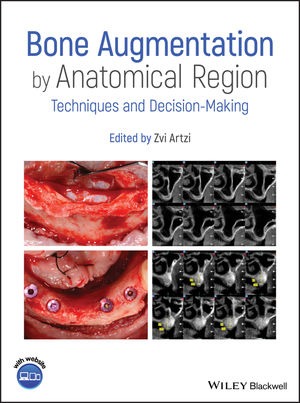
Bone augmentation by anatomical region : Techniques and decision-making
It's a unique, evidence-based guide focusing on each specific anatomical region – anterior maxilla, posterior maxilla, anterior mandible, and posterior mandible – in order to emphasize the correct implemented procedures needed to successfully perform oral osseous reconstruction.
Biomedical Simulation ; 3rd International Symposium, ISBMS 2006, Zurich, Switzerland, July 10-11, 2006, Proceedings
This book contains the written contributions to the Third International Sym- sium on Biomedical Simulation (ISBMS), which was held in Zurich, Switzerland, on July 10-11, 2006. The manuscripts are organized around three thematic sections which cover several of the major aspects of our rapidly growing ?eld: anatomical modeling and tissue properties, simulation of biophysical processes, as well as systems and applications. The symposium provided an international forum for researchers interested in using biomedical simulation technology for the improvement of patient care. It was held in the spirit and continuation of the symposia on Surgical Simulation and Soft Tissue Modeling (IS4TM) organized in 2003 by INRIA, and on Medical Simulation (ISMS) in 2004 by CIMIT.

Atoms, molecules and photons : An introduction to atomic- molecular- and quantum physics
This introduction to Atomic and Molecular Physics explains how our present model of atoms and molecules has been developed over the last two centuries both by many experimental discoveries and, from the theoretical side, by the introduction of quantum physics to the adequate description of micro-particles. It illustrates the wave model of particles by many examples and shows the limits of classical description. The interaction of electromagnetic radiation with atoms and molecules and its potential for spectroscopy is outlined in more detail and in particular lasers as modern spectroscopic tools are discussed more thoroughly. Many examples and problems with solutions are offered to encourage readers to actively engage in experimentation.
Atomistic modeling of materials failure
Atomistic Modeling of Materials Failure is an introduction to molecular and atomistic modeling techniques applied to solid deformation and fracture. Focusing on a variety of brittle, ductile and geometrically confined materials, this detailed overview includes computational methods at the atomic scale, and describes how these techniques can be used to model the dynamics of cracks, dislocations and other deformation mechanisms.

Atomic structure theory : Lectures on atomic physics
This is a textbook for students with a background in quantum mechanics. The text is designed to give hands-on experience with atomic structure calculations. Material covered includes angular momentum methods, the central field Schrödinger and Dirac equations, Hartree-Fock and Dirac-Hartree-Fock equations, multiplet structure, hyperfine structure, the isotope shift, dipole and multipole transitions, basic many-body perturbation theory, configuration interaction, and correlation corrections to matrix elements.
