



الصفحة 6
الصفحة 6

Molecular Processes in Plasmas : Collisions of Charged Particles with Molecules
Molecular Processes in Plasmas describes elementary collision processes in plasmas, particularly those involving molecules or molecular ions. Those collision processes (called molecular processes) maintain plasmas, produce reactive species and emissions, and play a key role in energy balance in plasmas or more specifically in determining the energy distribution of plasma particles.

Molecular Pathology of Gynecologic Cancer
This book focuses on putting successful molecular strategies into practice for the treatment of gynecologic cancer. The volume begins with an explication of the editors’ hypothesis that cancer is mainly a disease of the cell cycle, based on the deregulation of the physiological process of cell reproduction. The following eleven chapters focus on specific issues in gynecologic cancers, including: a proposed model of ovarian serous carcinogenesis, molecular markers for ovarian epithelial cancer, an overview of the pathology of endometrial cancer, molecular genetic aspects of endometrial carcinoma and cervical cancer, a natural history of Human Papilloma Virus (HPV) as it relates to cervical cancer, and hereditary issues in gynecologic cancers. The concluding chapter proposes and outlines a holistic approach to the treatment of female cancer patients.

Molecular Pain
This book focus on molecular and synaptic mechanisms for pain transmission, modulation and plasticity. Unlike traditional textbooks about pain, this book covers recent progress in neuroscience and relates these developments to the basic mechanisms of chronic pain. The book also discusses current pain medicine and alternative pain treatments such as acupuncture.

Molecular Mechanisms of Basal Cell and Squamous Cell Carcinomas
apid progress in the understanding of carcinogenesis and pathology of epitheUal skin cancer has led to new strategies for the prevention Rand treatment of these malignancies. The goal of this volume is to comprehensively cover in a highly readable overview our present knowledge of pathogenetic mechanisms and molecular biology of Basal Cell and Squamous Cell Carcinomas. Topics that are discussed in-depth by leading researchers and clinicians range from the newest findings in epidemiology, histology, photobiology, immunology, cytogenetics, and molecular pathol ogy to new concepts for prophylaxis and treatment. Experts in the field as well as health care professionals not intimately involved in these specialized areas are provided with the most significant and timely information related to these topics. It is the aim of this book to summarize essential up-to-date information for clinicians and scientists interested in the biology of Basal Cell and Squamous Cell Carcinomas. The chapters are written by authors who are experts in their respective research areas, and I am gratefixl for their willingness to contribute to this book.

Molecular Gas Dynamics : Theory, Techniques, and Applications
This self-contained work is an up-to-date treatment of the basic theory of molecular gas dynamics and its various applications. Recent progress in the field has greatly enhanced the original theory and stimulated interesting and critical gas dynamic phenomena and problems. This book, unique in the literature, presents working knowledge, theory, techniques, and typical phenomena in rarefied gases for theoretical development and applications.

Molecular Biology of Human Cancers: An Advanced Student's Textbook
Presents many of the molecules and mechanisms generally important in human cancers. Following an overview on the cancer problem, individual chapters deal with cancer genetics and epigenetics, DNA damage and repair, oncogenes, tumor suppressors, regulatory pathways in cancer, apoptosis, cellular senescence, tumor invasion, and metastasis. A consensus is emerging that while these common mechanisms and molecules are all relevant to human cancers, in each cancer type (or even subtype) a selection of them are extremely important. For selected cancers, the route from genetic and epigenetic changes to their biological and clinical behavior can already be traced. Part II of the book presents a broad, but exemplary selection of cancers that serve as paradigms to illustrate this point. In fact, cancer research has now reached a critical stage, in which the accumulated knowledge on molecular mechanisms is gradually translated into improved prevention, diagnosis, and treatment. The state, pitfalls, and potential of these efforts are summarized in Part III. More than ever, cancer research is now an interdisciplinary effort which requires a basic knowledge of commonly used terms, facts, issues, and concepts. The aim of this book is to provide advanced students and practitioners of different disciplines with this basis, bridging the gap between standard textbooks of molecular biology, pathology, and oncology on the one hand and the specialized cancer literature on the other.

Molecular Basis of Thyroid Cancer
Molecular Basis of thyroid Cancer brings together top-flight experts from across the globe to consider present state of the art treatment and techniques and what the future holds. The product of this effort is invaluable to endocrinologists, particularly those with an interest in the thyroid, molecular oncologists, nuclear medicine physicians and those in biotechnology intent on devising innovative therapies for cancer. "Significant advances in our understanding of thyroid cancer have occurred over the previous decade. This text discusses the molecular alterations and pathologic manifestations seen in this disease. Distinguished investigators address both the basic biology and clinical issues pertinent to our understanding and management of patients with thyroid cancer."

Molecular autoimmunity
The autoimmune disease paroxysmal cold hemoglobinuria, a rare hemolytic disorder. After a century of research, the list of autoimmune diseases has become impressive. With a prevalence of approximately 5% of the world-wide population, these chronic, debilitating conditions affect almost every major organ of the body and, for reasons that remain unclear, are much more prevalent in woman than in men. Despite our rapidly expanding knowledge of the cellular and molecular pathways that govern a normal immune response, deciphering the precise etiology of autoimmune diseases remains an important challenge. Over the last few years, our understanding of the pathogenesis of autoimmune diseases has improved rapidly, leading to the emergence of elegant immunointervention strategies. Molecular Autoimmunity illustrates how cutting-edge research is continuing to advance our understanding of autoimmune disease mechanisms and identifies novel therapeutic targets that provide a hope for effective future treatments. This volume contains a selected number of exciting advances in unraveling autoimmune reactions, and the resulting new armory of experimental immunotherapies that may lead to new ways of controlling autoimmune reactions.

Molar Incisor Hypomineralization : A Clinical Guide to Diagnosis and Treatment
This book is a wide-ranging reference on current clinical and scientific knowledge regarding the various aspects of molar incisor hypomineralization (MIH). Background information is first presented on the structural properties of hypomineralized enamel, the prevalence of MIH, and potential etiological factors.
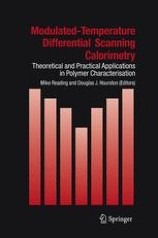
Modulated Temperature Differential Scanning Calorimetry : Theoretical and Practical Applications in Polymer Characterisation
This book provides both a basic and advanced treatment of the theory of the technique followed by a detailed exposition of its application to reacting systems, blends and semicrystalline polymers by the leaders in all of these fields. It is an essential text for anybody interested in calorimetry or polymer characterization, especially if they have found that conventional DSC cannot help them with their problems.

Modern treatments for chronic blood diseases
Blood is a body fluid in humans and other animals that delivers necessary substances such as nutrients and oxygen to the cells and transports metabolic waste products away from those same cells. In vertebrates, it is composed of blood cells suspended in blood plasma. Plasma, which constitutes 55% of blood fluid, is mostly water (92% by volume), and contains proteins, glucose, mineral ions, hormones, carbon dioxide (plasma being the main medium for excretory product transportation), and blood cells themselves. Albumin is the main protein in plasma, and it functions to regulate the colloida osmotic pressure of blood. The blood cells are mainly red blood cells (also called RBCs or erythrocytes), white blood cells (also called WBCs or leukocytes) and platelets (also called thrombocytes). Thalassemias are inherited blood disorders characterized by decreased hemoglobin production Symptoms depend on the type and can vary from none to severe. Often there is mild to severe anemia (low red blood cells or hemoglobin). Anemia can result in feeling tired and pale skin. There may also be bone problems, an enlarged spleen, yellowish skin, and dark urine. Slow growth may occur in children.

Modern tools and methods of water treatment for improving living standards ; Proceedings of the NATO Advanced Research Workshop on modern tools and methods of water treatment for improving living standards, Dnepropetrovsk, Ukraine, November 19-22, 2003
In 2001, one in seven of the water samples taken from Ukrainian industrial and drinking water supply systems did not meet sanitary-hygienic standards, and one in twelve did not meet microbiological standards.

Modern Sports Dentistry
A one-stop reference that will assist primary care community dentists, sports physicians, athletic trainers, and emergency room physicians in meeting the needs of athletes when managing facial and dental trauma and sports-related oral diseases. The opening chapters provide a complete review of sports-related dentoalveolar trauma, with coverage of emergent care, the role of endodontics, surgical issues, and restorative considerations. Prevention of dental trauma by means of mouthguards is then examined, with attention to materials and design, public policy concerning the use of mouthguards, and the role of mouthguards in relation to the ever more pressing issue of concussion in sport. Dental erosion in athletes, for example due to energy drinks, is discussed, as are the possible sequelae of use of spit tobacco, performance-enhancing drugs, and ergogenic aids. The new topic of the potential value of dental appliances in enhancing sports performance is also addressed.

Modern Portfolio Optimization with NuOPT™, S-PLUS®, and S+Bayes™
This book fills the gap between current university instruction and current industry practice by providing a comprehensive computationally-oriented treatment of modern portfolio optimization and construction methods. The computational aspect of the book is based on extensive use of S-Plus®, the S+NuOPT™ optimization module, the S-Plus Robust Library and the S+Bayes™ Library, along with about 100 S-Plus scripts and some CRSP® sample data sets of stock returns. A special time-limited version of the S-Plus software is available to purchasers of this book.

Modern Operative Dentistry : Principles for Clinical Practice
Provides the theoretical knowledge required by students when learning how to diagnose oral diseases, plan treatment, and perform various types of dental restoration. It is also useful for clinicians wishing to update their treatment skills and broaden their understanding operative dentistry. Adopting an evidence-based approach, and in accordance with the philosophy of minimally invasive dentistry, it explains in detail the use of both classic and new restorative materials in various clinical situations. It also discusses the principles of smile analysis, as well the technique for esthetic composite restorations on posterior and anterior teeth, including direct and indirect veneers.

Modern Multidimensional Scalin : Theory and Applications
The book provides a comprehensive treatment of multidimensional scaling (MDS), a family of statistical techniques for analyzing the structure of (dis)similarity data. This book may be used as an introduction to MDS for students in psychology, sociology, and marketing. The prerequisite is an elementary background in statistics. The book is also well suited for a variety of advanced courses on MDS topics. All the mathematics required for more advanced topics is developed systematically. This second edition adds some 140 pages of new material. Many chapters are revised or have sections reflecting new insights and developments in MDS. There are two new chapters, one on asymmetric models and the other on unfolding. There are also numerous exercises that help the reader to practice what he or she has learned, and to delve deeper into the models and its intricacies.

Modern Methods in the Calculus of Variations : L^p Spaces
This is the first of two books on methods and techniques in the calculus of variations. Contemporary arguments are used throughout the text to streamline and present in a unified way classical results, and to provide novel contributions at the forefront of the theory.This book addresses fundamental questions related to lower semicontinuity and relaxation of functionals within the unconstrained setting, mainly in L^p spaces. It prepares the ground for the second volume where the variational treatment of functionals involving fields and their derivatives will be undertaken within the framework of Sobolev spaces.

Modern implant dentistry
A comprehensive look at the state of implant dentistry today, equipping beginners and seasoned clinicians alike to improve their skills and practice implant dentistry safely and predictably. The early chapters focus on the biology of dental implants as well as medical considerations required prior to placing them, followed by chapters dedicated to documentation, treatment planning, and digital workflow. Surgical concepts are then described in detail, from single-tooth extraction to guided All-on-X treatment, followed by detailed discussion of the prosthetic options available in implant dentistry. The final chapters include relevant topics such as soft tissue management in implant dentistry, treatment of peri-implant disease, the socket shield technique, and marketing of dental implant therapy. Written by experienced clinicians from all over the world, the book includes over 60 surgical and clinical videos (linked via QR codes) to demonstrate what the procedures and techniques and products look like in real life, not in a photograph taken in ideal conditions, so readers can be confident in their understanding.

Modern Food Microbiology
With 30 revised and updated chapters, the new edition of this classic text brings benefits to professors and students alike who will find new sections on proteobacteria, bottled water, food sanitizers (eletrolyzed oxidating water, ozone, chlorine, activin, chitosans, endolysins, etc.), bicontrol, biosensors quorum sensing, molecular genetic methods of analysis, food safety objectives, noroviruses, and prions. The book builds on the trusted and established sections on food preservation by modified atmosphere, high pressure and pulsed electric field processing, food-borne pathogens, food regulations, fresh-cut produce, new food products, and risk assessment and analysis. In-depth references, appendixes, illustrations, index and thorough updating of taxonomies make this an essential for every food scientist.

Modern Econometric Analysis : Surveys on Recent Developments
The importance of empirical economics and econometric methods has greatly in creased during the last 20 years due to the availability of better data and the improved performance of computers. In an information-driven society such as ours we need quickly to obtain complete and convincing statistical results. This is only possible if the appropriate econometric methods are applied. Traditional econometric analysis concentrates on classical methods which are far from suitable for handling actual economic problems.
