



الصفحة 59
الصفحة 59
Linear Partial Differential Equations for Scientists and Engineers
This significantly expanded fourth edition is designed as an introduction to the theory and applications of linear PDEs. The authors provide fundamental concepts, underlying principles, a wide range of applications, and various methods of solutions to PDEs. In addition to essential standard material on the subject, the book contains new material that is not usually covered in similar texts and reference books, including conservation laws, the spherical wave equation, the cylindrical wave equation, higher-dimensional boundary-value problems, the finite element method, fractional partial differential equations, and nonlinear partial differential equations with applications.
Linear Models for Optimal Test Design
Begins with a reflection on the history of test design--the core activity of all educational and psychological testing. It then presents a standard language for modeling test design problems as instances of multi-objective constrained optimization. The main portion of the book discusses test design models for a large variety of problems from the daily practice of testing, and illustrates their use with the help of numerous empirical examples. The presentation includes models for the assembly of tests to an absolute or relative target for their information functions, classical test assembly, test equating problems, item matching, test splitting, simultaneous assembly of multiple tests, tests with item sets, multidimensional tests, and adaptive test assembly. Two separate chapters are devoted to the questions of how to design item banks for optimal support of programs with fixed and adaptive tests. Linear Models for Optimal Test Design, which does not require any specific mathematical background, has been written to be a helpful resource on the desk of any test specialist.
Linear Estimation and Detection in Krylov Subspaces
Focuses on the foundations of linear estimation theory which is essential for effective signal processing. In its first part, it gives a comprehensive overview of several key methods like reduced-rank signal processing and Krylov subspace methods of numerical mathematics. Based on the derivation of the multistage Wiener filter in its most general form, the relationship between statistical signal processing and numerical mathematics is presented. In the second part, the theory is applied to iterative multiuser detection receivers (Turbo equalization) which are typically desired in wireless communication systems.
Linear and Nonlinear Programming
"Linear and Nonlinear Programming" is considered a classic textbook in Optimization. While it is a classic, it also reflects modern theoretical insights. These insights provide structure to what might otherwise be simply a collection of techniques and results, and this is valuable both as a means for learning existing material and for developing new results. One major insight of this type is the connection between the purely analytical character of an optimization problem, expressed perhaps by properties of the necessary conditions, and the behavior of algorithms used to solve a problem. This was a major theme of the first and second editions. Now the third edition has been completely updated with recent Optimization Methods. Yinyu Ye has written chapters and chapter material on a number of these areas including Interior Point Methods.
Linear Algebraic Monoids
The theory of linear algebraic monoids culminates in a coherent blend of algebraic groups, convex geometry, and semigroup theory. The book discusses all the key topics in detail, including classification, orbit structure, representations, universal constructions, and abstract analogues. An explicit cell decomposition is constructed for the wonderful compactification, as is a universal deformation for any semisimple group. A final chapter summarizes important connections with other areas of algebra and geometry. The book will serve as a solid basis for further research. Open problems are discussed as they arise and many useful exercises are included.

Light Scattering from Polymer Solutions and Nanoparticle Dispersions
Light scattering is a very powerful method to characterize the structure of polymers and nanoparticles in solution. Recent technical developments have strongly enhanced the possible applications of this technique, overcoming previous limitations like sample turbidity or insufficient experimental time scales. However, despite their importance, these new developments have not yet been presented in a comprehensive form. In addition, and maybe even more important to the broad audience, there lacks a simple-to-read textbook for students and non-experts interested in the basic principles and fundamental techniques of light scattering. As part of the Springer Laboratory series, this book tries not only to provide such a simple-to-read and illustrative textbook about the seemingly very complicated topic of light scattering from polymers and nanoparticles in dilute solution, but also intends to cover some of the newest technical developments in experimental light scattering.

Light scattering by systems of particles : Null-field method with discrete sources : Theory and programs
Light Scattering by Systems of Particles comprehensively develops the theory of the null-field method, while covering almost all aspects and current applications. The "Null-field Method with Discrete Sources" is an extension of the Null-field Method (also called T-Matrix Method) to compute light scattering by arbitrarily shaped dielectric particles. This book incorporates FORTRAN programs and exemplary simulation results that demonstrate all aspects of the latest developments of the method. Worked examples of the application of the FORTRAN programs show readers how to adapt or modify the programs for their specific application.

Light earth building : a handbook for building with wood and earth
Light clay, which is light in weight and easy to work, is presented here as a versatile and forward-looking building material for modern computer-aided timber construction and the renewal of historic timber-framed buildings with clay infill. The balanced building physics properties of the material, which can be controlled through the mixing proportions, make it suitable for resource-efficient building in various different climate zones. Thermal storage, sound insulation, protection against moisture and fire in conventional timber construction are improved, and the construction is simplified.

Light and Light Sources : High-Intensity Discharge Lamps
Light and Light Sources gives an introduction to the working principles of high-intensity discharge (HID) lamps and points out challenges and problems associated with the development and operation of HID lamps. The state-of-the-art in electrode and plasma diagnostics as well as numerical methods used for the understanding of HID lamps are described. This volume addresses students as well as scientists and researchers at universities and in industry.

Life System Modeling and Simulation; International Conference on Life System Modeling, and Simulation, LSMS 2007, Shanghai, China, September 14-17, 2007. Proceedings
The International Conference on Life System Modeling and Simulation (LSMS) was formed to bring together international researchers and practitioners in the field of life system modeling and simulation as well as life system-inspired theory and methodology. The arrival of the 21st century has been marked by a resurgence of research interest both in arriving at a systems-level und- standing of biology and in applying such knowledge in complex real-world appli- tions. Consequently, computational methods and intelligence in systems, biology, as well as bio-inspired computational intelligence, have emerged as key drivers for new computational methods. For this reason papers dealing with theory, techniques and real-world applications relating to these two themes were especially solicited.
Lie Theory Vol.229 : Unitary Representations and Compactifications of Symmetric Spaces
It focuses on two fundamental questions in the theory of semisimple Lie groups: the geometry of Riemannian symmetric spaces and their compactifications; and branching laws for unitary representations, i.e., restricting unitary representations to (typically, but not exclusively, symmetric) subgroups and decomposing the ensuing representations into irreducibles.Ji's introductory chapter motivates the subject of symmetric spaces and their compactifications with carefully selected examples. A discussion of Satake and Furstenberg boundaries and a survey of the geometry of Riemannian symmetric spaces in general provide a good background for the second chapter, namely, the Borel–Ji authoritative treatment of various types of compactifications useful for studying symmetric and locally symmetric spaces. Borel–Ji further examine constructions of Oshima, De Concini, Procesi, and Melrose, which demonstrate the wide applicability of compactification techniques. Kobayashi examines the important subject of branching laws. Important concepts from modern representation theory, such as Harish–Chandra modules, associated varieties, microlocal analysis, derived functor modules, and geometric quantization are introduced. Concrete examples and relevant exercises engage the reader.
Lie Groups : An Approach through Invariants and Representations
Lie groups has been an increasing area of focus and rich research since the middle of the 20th century. Procesi's masterful approach to Lie groups through invariants and representations gives the reader a comprehensive treatment of the classical groups along with an extensive introduction to a wide range of topics associated with Lie groups: symmetric functions, theory of algebraic forms, Lie algebras, tensor algebra and symmetry, semisimple Lie algebras, algebraic groups, group representations, invariants, Hilbert theory, and binary forms with fields ranging from pure algebra to functional analysis.
Lie Algebras and Applications
This book, designed for advanced graduate students and post-graduate researchers, provides an introduction to Lie algebras and some of their applications to the spectroscopy of molecules, atoms, nuclei and hadrons. In the first part, a concise exposition is given of the basic concepts of Lie algebras, their representations and their invariants. The second part contains a description of how Lie algebras are used in practice in the treatment of bosonic and fermionic systems. Physical applications considered include rotations and vibrations of molecules (vibron model), collective modes in nuclei (interacting boson model), the atomic shell model, the nuclear shell model, and the quark model of hadrons. One of the key concepts in the application of Lie algebraic methods in physics, that of spectrum generating algebras and their associated dynamic symmetries, is also discussed. The book contains many examples that help to elucidate the abstract algebraic definitions. It provides a summary of many formulas of practical interest, such as the eigenvalues of Casimir operators and the dimensions of the representations of all classical Lie algebras.

Les prothèses tricompartimentaires du genou de première intention : Techniques opératoires. Problèmes et solutions = Primary tricompartmental knee replacement : Surgical techniques, problems, and solutions
It seems difficult and presumptuous to want to write a book on total knee replacement. There are many quality works dealing with this subject. The knee prosthesis has, from its origin, particularly in the United States, given rise to considerable studies in all directions: biomechanical, physiological, biological and industrial. Our goal is to offer the youngest a book of simple knowledge without pretension of completeness or prejudice as to long debated subjects (conservation or not of the posterior cruciate ligament, cement or without cement, resurfacing or not of the patella, fixed plate or mobile platform, etc.), and to give practical advice based on our experience. Why limit yourself to first-line tricompartmentals? Because it is the most common solution to the usual degenerative knee problems. In addition, unicompartment and revision prostheses will be the subject of further literature. Everyone knows that to put a knee prosthesis model, and therefore to a system. However, it is important to be able to keep your freedom of analysis in order to maintain your freedom of choice. You have to know how to put on a knee prosthesis without compromise or fanaticism. Convictions are more dangerous enemies of truth than lies. Nietzsche

Leptin
The discovery of leptin little more than a decade ago, as a hormone produced in white adipose tissue with an important role in satiety and energy expenditure, was a seminal event in our understanding of adiposity. This initial advance in the new endocrinology of obesity was soon followed by the realization that leptin was not only produced in adipose tissue, but in many different tissues of the body, and that receptors were similarly distributed. Additionally, the early recognition of infertility that was associated with leptin deficiency prompted research that identified roles for the polypeptide in virtually every area of reproductive biology.

LEGO® MINDSTORMS® NXT-G Programming Guide
LEGO MINDSTORMS NXT-G Programming Guide provides programming techniques simple enough to be understood by young programmers, ages 10 and up, and provides a test robot (with instructions) in the appendix for running the programs

Legitimacy Needs as Drivers of Business Exit
A diversified firm’s withdrawal from a business unit, i.e. business exit, is a significant phenomenon in management practice. Although divestitures are highly relevant in practice, the acquisition of business units attracts much more attention in strategic management research. Carolin Decker develops and empirically applies a framework in which business exits serve the purpose of re-establishing a firm’s previously harmed legitimacy. She suggests four types of legitimacy needs that are to be satisfied with the divestiture of a business unit and the simultaneous pursuit of strategic reorientation. The author tests the theoretical framework with secondary data on 213 business exits. Her findings support the idea that legitimacy needs drive the likelihood of fit-enhancing business exits in divesting firms.
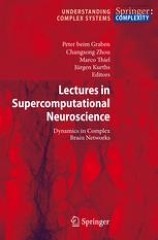
Lectures in Supercomputational Neurosciences : Dynamics in Complex Brain Networks
The present volume is an introduction, largely from the physicists' perspective, to the subject matter with in-depth contributions by system neuroscientists. A conceptual model for complex networks of neurons is introduced that incorporates many important features of the real brain, such as various types of neurons, various brain areas, inhibitory and excitatory coupling and the plasticity of the network. The computational implementation on supercomputers, which is introduced and discussed in detail in this book, will enable the readers to modify and adapt the algortihm for their own research.
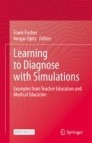
Learning to Diagnose with Simulations : Examples from Teacher Education and Medical Education
Presents 8 novel approaches to measure and improve diagnostic competences with simulation. The book compares the effects of interventions on these diagnostic competences in both teacher and medical education. It includes analyses showing that important aspects of diagnostic competences and effects of instructional interventions aiming to facilitate them are comparable for teachers and doctors.

Learning Theory ; Vol. 4005 ; 19th Annual Conference on Learning Theory, COLT 2006, Pittsburgh, PA, USA, June 22-25, 2006, Proceedings
Constitutes the refereed proceedings of the 19th Annual Conference on Learning Theory, COLT 2006, held in Pittsburgh, Pennsylvania, USA in June 2006. The 43 revised full papers presented together with 2 articles on open problems and 3 invited lectures were carefully reviewed and selected from a total of 102 submissions. The papers cover a wide range of topics including clustering, un- and semisupervised learning, statistical learning theory, regularized learning and kernel methods, query learning and teaching, inductive inference, learning algorithms and limitations on learning, online aggregation, online prediction and reinforcement learning.
