



الصفحة 59
الصفحة 59
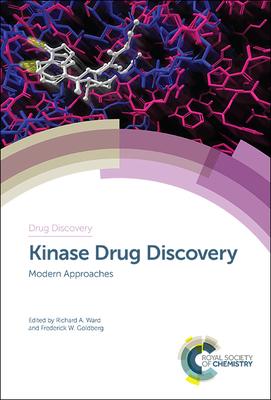
Kinase Drug Discovery : Modern Approaches
Kinase inhibition remains an area of significant interest, and growing importance, across academia and the pharmaceutical industry. There are now many marketed drugs that target kinases and a significant number of compounds are currently in various stages of clinical development. This book is a forward-looking analysis of a number of key areas for kinase inhibition in the coming years and builds on the first volume. This includes topics such as screening approaches to target kinases along with different modes of inhibition such as allosteric and covalent. Novel approaches such as macrocyclisation are considered along with how the properties of kinase inhibitors have evolved, including the potential for brain penetration. Recent areas of great importance also covered include cutting edge molecular modelling approaches and the importance of kinase mutations.
Key Clinical Trials in Erectile Dysfunction
Represents a critical appraisal of the major clinical trials that have had a significant impact on clinical research and practice during the last decade. Each trial follows a strict format, starting with reference to the original source of publication, details on the key investigators and their methods of research. The strengths and weaknesses of each trial are discussed as well as their influence on clinical practice. Articles are complemented by a diagrammatic summary of the trial design and the key findings.

Keva Beauty Clinic
يبحث المشروع بتصميم الشعارات (لوغو) والملصقات الجدارية و الإعلانات والدعاية و بطاقات العمل و تصميم الظروف و البروشورات

Ketamine for Treatment-Resistant Depression : Neurobiology and Applications
Ketamine for Treatment-Resistant Depression: Neurobiology and Applications provides a simple, evidence-based overview for neuropsychiatrists and translational researchers on this medication, its mechanisms of actions, eligibility of patients for treatment, and the preparation and implementation of ketamine clinics.
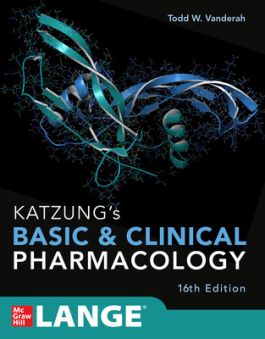
Katzung's basic and clinical pharmacology
The most comprehensive and authoritative pharmacology text --updated with new content and USMLE-style questions Presented in full-color and packed with hundreds of illustrations, Basic and Clinical Pharmacology is the wide-ranging, engaging guide students have counted on for decades. To be as clinically relevant as possible, the book includes sections that specifically address the clinical choice and use of drugs in patients and the monitoring of their effects, along with case studies that introduce clinical problems. Each chapter opens with a case study, covers drug groups and prototypes, and closes with summary tables and diagrams that encapsulate important information. Updated to reflect the latest research, this sixteenth edition features a new chapter on cannabinoids, USMLE-style questions, new drug tables, and more. Basic and Clinical Pharmacology, Sixteenth Edition features: * 330 full-color illustrations * NEW: 100 drug tables * NEW: 50 USMLE-style questions * NEW: Chapter on cannabinoids * A strong emphasis on drug groups and prototypes * Case studies and chapter-ending summary tables * Organization that reflects the syllabi of pharmacology courses * Descriptions of important new drugs
Java Design Patterns : A Hands-On Experience with Real-World Examples
Covers classical design patterns with the latest editions of Java and Eclipse Includes implementation of the Java design patterns in real-world applications Each chapter has a Q&A section to help you understand the pros and cons of each design pattern

ITI treatment guide, Vol.14 : Immediate implant placement and loading-single or multiple teeth requiring replacement
Outlines the current literature on immediate implant placement and immediate loading and elaborates on our understanding of the biology surrounding tooth extraction and osseointegration that underpin these treatment concepts. The importance of patient and site selection in conjunction with comprehensive treatment planning is highlighted and a risk assessment tool to aid decision making is provided. All key aspects of both the surgical and loading procedures are described in order to provide protocols that optimize the final treatment outcome. This volume also presents 9 step-by-step clinical cases performed by experts in the field, and typical complications of immediate implants are discussed, along with recommendations on how these can be prevented.

ITI treatment guide ; Vol.8 : Biological and hardware complications in implant dentistry
Provides clinicians with the latest evidence-based information on the origins and treatment of biological as well as hardware complications
ITI treatment guide ; Vol.7 : Ridge augmentation procedures in implant patients: a staged approach
Provides clinicians with the latest evidence-based information on the techniques and materials used for ridge augmentation. Twelve clinical cases demonstrate the planning and treatment principles required to successfully rehabilitate patients with varying degrees of ridge atrophy.

ITI treatment guide ; Vol.6 : Extended edentulous spaces in the esthetic zone
Provides clinical recommendations for implant-supported prosthodontic treatments in patients with multiple missing adjacent teeth in the esthetic zone. The authors review the current literature before detailing the treatment alternatives and procedures based on the scientific and clinical evidence. Special emphasis is given to preoperative evaluation, treatment planning, and assessment of risk factors for the complex indications of the esthetic zone. Descriptions of the surgical and prosthodontic procedures include step-by-step clinical case presentations. Complications of various etiologies are also highlighted with preventive measures as well as clinical cases that document their management.

ITI treatment guide ; Vol.5 : Sinus floor elevation procedures
Provides clinicians with evidence-based data and practical information relating to sinus floor elevation procedures to ensure adequate bone volume for implant placement. This guide places emphasis on proper case selection based on a comprehensive clinical and radiologic examination of the patient.

ITI treatment guide ; Vol.3 : Implant placement in post-extraction sites : treatment options
The ITI Treatment Guide series is a compendium of evidence-based implant therapy techniques in daily practice. Using an illustrated step-by-step approach, renowned clinicians demonstrate how to manage different clinical situations with an emphasis on sound diagnostics, evidence-based treatment, and predictable outcomes.

ITI treatment guide ; Vol.2 : Loading protocols in implant dentistry : Partially dentate patients
ITI Treatment Guide series is a compendium of evidence-based implant therapy techniques in daily practice. Using an illustrated step-by-step approach, renowned clinicians demonstrate how to manage different clinical situations with an emphasis on sound diagnostics, evidence-based treatment, and predictable outcomes.

ITI treatment guide ; Vol.13 : Prevention and management of peri-implant diseases
Provides clinicians with the latest evidence-based information on the prevention and management of peri-implant diseases. This information is based in part on the proceedings of the 6th ITI Consensus Conference held in Amsterdam in 2018, as well as on a review of the current literature. Seventeen clinical cases presented by experienced clinicians from all over the world illustrate the diagnosis and treatment of peri-implant diseases.

ITI treatment guide ; Vol.11 : Digital workflows in implant dentistry
Addressing the technology and tools necessary to incorporate DDT into a traditional workflow, along with the clinical steps required for data acquisition, such as CBCT imaging and intraoral, extraoral, and facial scanning. The software tools needed to interpret the digital data are presented, and instructions are given on how to integrate data sets to virtually reconstruct the patient s orofacial anatomy. In addition, a series of 13 clinical cases illustrate digital technologies applied to oral implantology.

ITI treatment guide ; Vol.10 : Implant therapy in the esthetic zone: Current treatment modalities and materials for single-tooth replacements
Dental implants are used routinely throughout the world to replace missing teeth. With the broadening of treatment options and an increasing number of clinicians who provide implant therapy, it is important to ensure that the treatment methods used meet the highest clinical standards. The ITI Treatment Guide series is a compendium of evidence-based implant-therapy techniques and procedures for daily practice.

ITI treatment guide ; Vol 4 : Loading protocols in implant dentistry : Edentulous patients
The ITI Treatment Guide series is a compendium of evidence-based implant therapy techniques in daily practice. Using an illustrated step-by-step approach, renowned clinicians demonstrate how to manage different clinical situations with an emphasis on sound diagnostics, evidence-based treatment, and predictable outcomes.
Isotopes in the Water Cycle : Past, Present and Future of a Developing Science
This monograph presents state of the art applications and new developments of isotopes in hydrology, environmental disciplines and climate change studies. Coverage ranges from the assessment of groundwater resources in terms of recharge and flow regime to studies of the past and present global environmental and climate changes.
Isotopes in Palaeoenvironmental Research
This thorough reference shows how stable isotopes can be applied to understanding the palaeoenvironment, with chapters on the interpretation of isotopes in water, tree rings, bones and teeth, lake sediments, speleothems and marine sediments.

Computational and Statistical Approaches to Genomics
Computational and Statistical Approaches to Genomics, 2nd Edition, aims to help researchers deal with current genomic challenges. During the three years after the publication of the first edition of this book, the computational and statistical research in genomics have become increasingly more important and indispensable for understanding cellular behavior under a variety of environmental conditions and for tackling challenging clinical problems. In the first edition, the organizational structure was: data à analysis à synthesis à application. In the second edition, the same structure remains, but the chapters that primarily focused on applications have been deleted.
