



الصفحة 57
الصفحة 57
Analysing Ecological Data
This book provides a practical introduction to analysing ecological data using real data sets collected as part of postgraduate ecological studies or research projects. The first part of the book gives a largely non-mathematical introduction to data exploration, univariate methods (including GAM and mixed modelling techniques), multivariate analysis, time series analysis (e.g. common trends) and spatial statistics. The second part provides 17 case studies, mainly written together with biologists who attended courses given by the first authors. The case studies include topics ranging from terrestrial ecology to marine biology.

Analgesia
Analgesics are among the oldest drugs described, albeit not necessarily for medicinaluse. Forexample,theSumeriansisolatedopioids(probablyfortheir euphoric effects) in the third millennium b. c. and the use of willow bark (salicin) for fever was ?rst reported in the eighteenth century. Both types of drugs are still in use, but today they are supplemented by a wide array of substances ranging from antidepressants to ion channel blockers. Not all of theseareprescribedbyphysicians. Manycompoundsaresoldoverthecounter and thus available to the public for self-medication. As a result, analgesics are also the most misused class of drugs and are the culprit for a multitude of healthproblemsdueto untoward sideeffects. Thisvolumeattemptstosummarizethecurrentstateofknowledgeonme- anisms underlying the various effects of these drugs, their side effect pro?les, and their indications and contraindications in clinical use.

Anaesthesia, pain, intensive care and emergency medicine - A.P.I.C.E. ; Proceedings of the 20th Postgraduate Course in Critical Care Medicine, Trieste, Italy - November 18-21, 2005
The main objective of modern medicine has been the acquisition of increased skills and highly specialised knowledge in the various disciplines. At the same time, there has been a progressive multidisciplinary and multi-professional interest in acute disease conditions that place the patient in potential or real life-threatening situations. The state of the art of intensive medicine comprises a wide range of sophisticated interventions and collaboration between different medical disciplines, both of which give the patient access to the most advanced forms of treatment that are currently available.
An Introduction to Sequential Dynamical Systems
This text is the first to provide a comprehensive introduction to SDS. Driven by numerous examples and thought-provoking problems, the presentation offers good foundational material on finite discrete dynamical systems which leads systematically to an introduction of SDS. Techniques from combinatorics, algebra and graph theory are used to study a broad range of topics, including reversibility, the structure of fixed points and periodic orbits, equivalence, morphisms and reduction. Unlike other books that concentrate on determining the structure of various networks, this book investigates the dynamics over these networks by focusing on how the underlying graph structure influences the properties of the associated dynamical system.
An Introduction to Scientific Computing : Twelve Computational Projects Solved with MATLAB
This book provides twelve computational projects aimed at numerically solving problems from a broad range of applications including Fluid Mechanics, Chemistry, Elasticity, Thermal Science, Computer Aided Design, Signal and Image Processing. For each project the reader is guided through the typical steps of scientific computing from physical and mathematical description of the problem, to numerical formulation and programming and finally to critical discussion of numerical results. Considerable emphasis is placed on practical issues of computational methods. The last section of each project contains the solutions to all proposed exercises and guides the reader in using the MATLAB scripts.
An Introduction to Programming and Numerical Methods in MATLAB
The book covers numerical methods for solving a wide range of problems, from integration to the numerical solution of differential equations or the stimulation of random processes. Examples of programmes that solve problems directly, as well as those that use MATLAB’s high-level commands are given. Each chapter includes extensive examples and tasks, at varying levels of complexity. For practice, the early chapters include programmes that require debugging by the reader, while full solutions are given for all the tasks. The book also includes: A glossary of MATLAB commands / Aappendices of mathematical techniques used in numerical methods / Designed as a text for a first course in programming and algorithm design, as well as in numerical methods courses, the book will be of benefit to a wide range of students from mathematics and engineering, to commerce."

An Introduction to Kolmogorov Complexity and Its Applications
Written by two experts in the field, this book is ideal for advanced undergraduate students, graduate students, and researchers in all fields of science. It is self-contained: it contains the basic requirements from mathematics, probability theory, statistics, information theory, and computer science. Included are history, theory, new developments, a wide range of applications, numerous (new) problem sets, comments, source references, and hints to solutions of problems. This is the only comprehensive treatment of the central ideas of Kolmogorov complexity and their applications.
An introduction to bioanalysis of biopharmaceuticals
Provides a comprehensive review of the fundamental and practical aspects of bioanalytical support and the integral role it plays in the development of safe and efficacious biopharmaceutical drugs with speed and cost-effectiveness. Focuses on a broad range of conventional and emerging biopharmaceutical modalities including monoclonal antibody-based therapeutics, gene therapy, cell therapy, peptides and oligonucleotides.

Alzheimers disease : Cellular and molecular aspects of Amyloid beta
This book contains a survey of present-day research into the biomedical fundamentals of Alzheimer’s disease (AD). It contains 20 chapters dealing with widely ranging topics, all of which have a bearing upon the understanding and treatment of AD. Starting with a broad survey of the contribution that the various microscopical techniques (light microscopy, electron microscopy, atomic force microscopy)
All of Nonparametric Statistics
The goal of this text is to provide the reader with a single book where they can find a brief account of many, modern topics in nonparametric inference. The book is aimed at Master's level or Ph.D. level students in statistics, computer science, and engineering. It is also suitable for researchers who want to get up to speed quickly on modern nonparametric methods.This text covers a wide range of topics including: the bootstrap, the nonparametric delta method, nonparametric regression, density estimation, orthogonal function methods, minimax estimation, nonparametric confidence sets, and wavelets. The book has a mixture of methods and theory.
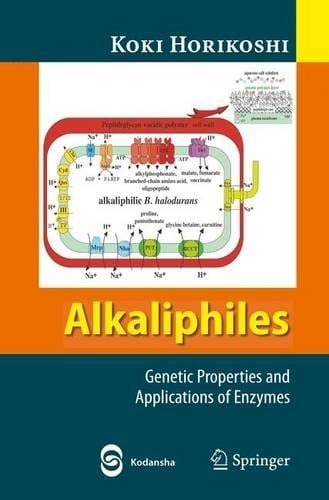
Alkaliphiles : Genetic properties and applications of enzymes
The pioneering work of Dr. Koki Horikoshi on the discovery, research and applications of alkaliphilic bacteria are described here in their entirety. The isolation, distribution and taxonomy of alkaliphilic microorganisms as well as their cell structure and physiology are discussed for a basic understanding of these entities. The molecular biology and genome sequencing of some alkaliphilic bacterial strains are also presented. Part II of the volume focuses on enzymes of alkaliphiles and their applications. These include alkaline proteases, starch-degrading enzymes and numerous others. Some of these enzymes are currently in wide commercial use as laundry detergent additives and in wastewater treatment. Alkaliphiles are a relatively recent field of research that will no doubt provide avenues to a wide range of further discoveries and applications for a new generation of workers in bioscience and technology.
Algorithms in Bioinformatics ; Vol.4175 : 6th International Workshop, WABI 2006, Zurich, Switzerland, September 11-13, 2006, Proceedings
This book constitutes the refereed proceedings of the 6th International Workshop on Algorithms in Bioinformatics, WABI 2006, held in Zurich, Switzerland in September 2006 in the course of the ALGO 2006 conference meetings. The 36 revised full papers presented were carefully reviewed and selected from 100 submissions. All current issues of algorithms in bioinformatics are addressed, ranging from mathematical tools to experimental studies of approximation algorithms and reports on significant computational analyses. Numerous biological problems are dealt with, including genetic mapping, sequence alignment and sequence analysis, phylogeny, comparative genomics, and protein structure. For the first time also machine-learning approaches along with combinatorial optimization are covered.

Algorithms in Bioinformatics ; 7th International Workshop, WABI 2007, Philadelphia, PA, USA, September 8-9, 2007, Proceedings
All current issues of algorithms in bioinformatics are addressed, ranging from mathematical tools to experimental studies of approximation algorithms and reports on significant computational analyses. Numerous biological problems are dealt with, including genetic mapping, sequence alignment and sequence analysis, phylogeny, comparative genomics, and protein structure. Furthermore the papers feature high-performance computing approaches to computationally hard learning and optimization problems in bioinformatics and cover methods, software and dataset repositories for development and testing of such algorithms and their underlying models.
Algorithms for Decision Making
A broad introduction to algorithms for decision making under uncertainty, introducing the underlying mathematical problem formulations and the algorithms for solving them. Automated decision-making systems or decision-support systems—used in applications that range from aircraft collision avoidance to breast cancer screening—must be designed to account for various sources of uncertainty while carefully balancing multiple objectives. This textbook provides a broad introduction to algorithms for decision making under uncertainty, covering the underlying mathematical problem formulations and the algorithms for solving them.

Algorithms and computation ; 15th international symposium, ISAAC 2004, Hong Kong, China, December 20-22, 2004, Proceedings
This volume contains the proceedings of the 15th Annual International Sym- sium on Algorithms and Computation (ISAAC 2004), held in Hong Kong, 2004. ISAAC is an annual international symposium that covers a wide range of topics,namelyalgorithmsandcomputation. aftar review process the committee selected 76 papers, the decisions being based on originality and relevance to the ?eld of algorithms and computation.
Algebraic Methods for Nonlinear Control Systems
A self-contained introduction to algebraic control for nonlinear systems suitable for researchers and graduate students.The most popular treatment of control for nonlinear systems is from the viewpoint of differential geometry yet this approach proves not to be the most natural when considering problems like dynamic feedback and realization. Professors Conte, Moog and Perdon develop an alternative linear-algebraic strategy based on the use of vector spaces over suitable fields of nonlinear functions. This algebraic perspective is complementary to, and parallel in concept with, its more celebrated differential-geometric counterpart.Algebraic Methods for Nonlinear Control Systems describes a wide range of results, some of which can be derived using differential geometry but many of which cannot.

Algebraic Methodology and Software Technology ; 11th International Conference, AMAST 2006, Kuressaare, Estonia, July 5-8, 2006, Proceedings
This is the proceedings of the 11th edition of the Algebraic Methodology and Software Technology (AMAST) conference series. The rst conference was held in the USA in 1989, and since then AMAST conferences have been held on (or near) fve diferent continents and have been hosted by many of the most prominent people and organizations in the ?eld. The AMAST initiative has always sought to have practical efects by dev- oping the science of software and basing it on a ?rm mathematical foundation. AMAST hasinterpretedsoftwaretechnologybroadly,andhas, for example, held AMAST workshops in areas as diverse as real-time systems and (natural) l- guage processing. Similarly, algebraic methodology is interpreted broadly and includes abstract algebra, category theory, logic, and a range of other ma- ematical subdisciplines.

Algebraic Geometry and Number Theory : In Honor of Vladimir Drinfeld's 50th Birthday
One of the most creative mathematicians of our times, Vladimir Drinfeld received the Fields Medal in 1990 for his groundbreaking contributions to the Langlands program and to the theory of quantum groups.These ten original articles by prominent mathematicians, dedicated to Drinfeld on the occasion of his 50th birthday, broadly reflect the range of Drinfeld's own interests in algebra, algebraic geometry, and number theory.

Algebraic Geometry : An Introduction
The book starts with easily-formulated problems with non-trivial solutions – for example, Bézout’s theorem and the problem of rational curves – and uses these problems to introduce the fundamental tools of modern algebraic geometry: dimension; singularities; sheaves; varieties; and cohomology. The treatment uses as little commutative algebra as possible by quoting without proof (or proving only in special cases) theorems whose proof is not necessary in practice, the priority being to develop an understanding of the phenomena rather than a mastery of the technique. A range of exercises is provided for each topic discussed, and a selection of problems and exam papers are collected in an appendix to provide material for further study.
Algebraic Combinatorics : Lectures at a Summer School in Nordfjordeid, Norway, June 2003
This book is based on two series of lectures given at a summer school on algebraic combinatorics at the Sophus Lie Centre in Nordfjordeid, Norway, in June 2003, one by Peter Orlik on hyperplane arrangements, and the other one by Volkmar Welker on free resolutions.
