



الصفحة 56
الصفحة 56

Detection of Liquid Explosives and Flammable Agents in Connection with Terrorism
The organization of an Advanced Research Workshop with the title “Detection and Disposal of Liquid Explosives and Flammable Agents in Connection with Terrorism” was motivated by international findings about activities in this field of application. This ARW followed a meeting about the “Detection of Disposal Improvised Explosives” (St. Petersburg, 2005). Both items show the logistic problems as one of the lessons, terrorists have to overcome. These problems are connected with the illegal supply and transport of explosives and fuels and as counter-measure the detection of these materials. The invention of liquid explosives goes back to the middle of the 19th century and was used for special purposes in the commercial field of application. Because of the high sensitivity of liquid explosives against mechanical shock, caused by adiabatic compression of air-bobbles producing “hot spots” as origin of initiation the commercial application was not very successful. Because of this high risk, liquid explosives are not used in military or commercial application with some exceptions. In the commercial field explosives as slurries or emulsions consisting of suitable salts (Ammoniumnitrate etc.) and water are used to a large extend because of their high insensitivity. In many cases these slurries or emulsions were unfit for terrorist actions, because of their low sensitivity, large critical diameter and using in confinement. In the military field liquid explosives are used in World War I and II as bomb-fillings.

Designing sustainable cities
Emphasizes new ways of designing for a sustainable city and urban environment. From several angles the future of our urbanism is illuminated. From a philosophical point of view, the city is seen as an organism, following complex ecosystemic principles, shining light on indigenous perspectives to become beneficial for sustainable design and core questions are asked whether current architectural practice is really sustainable. Simultaneously concrete practices are presented for cities in transformation, focusing on green infrastructure, smart city principles and health.

Designing sustainable and resilient cities : Small interventions for stronger urban food-water-energy management
Explores the link between the food-water-energy nexus and sustainability, and the extraordinary value that small tweaks to this nexus can achieve for more resilient cities and communities. Using data from Urban Living Labs in six participating cities (Eindhoven, Gdansk, Miami, Southend-on-Sea, Taipei and Uppsala) to co-define context-specific challenges, the results from each city are collated into an Integrated Decision Support System to guide and improve robust decision making on future urban development. The book presents contributions from CRUNCH, a transdisciplinary team of scholars and practitioners whose expertise spans urban climate modelling; food, water and energy management; the design of resilient public space; collecting better urban data; and the development of smart city technology. Whilst previous works on the food-water-energy nexus have focused on large, transnational cases, this book explores local ways to use the food-water-energy nexus to improve urban resilience.

Designing Embedded Processors : A Low Power Perspective
Designing Embedded Processors examines the many ways in which processor based systems are designed to allow low power devices. It looks at processor design methods, memory optimization, dynamic voltage scaling methods, compiler methods, and multi processor methods. Each section has an introductory chapter to give a breadth view, and have a few specialist chapters in the area to give a deeper perspective. The book provides a good starting point to engineers in the area, and to research students embarking upon the exciting area of embedded systems and architectures.

Designing Democracy : Ideas for Better Rules
While liberal democracies are the best systems of self-governance for societies, they rarely invoke great enthusiasm. On the one hand, democracies have been known to fail in achieving efficient or fair allocations. On the other hand, many citizens take the democratic system for granted as they have yet to experience an alternative. In this book the vision we propose is that the potential of democ racies has not yet been exhausted, and that optimal democracies are both the Utopia for societies and the aim that scientists should be committed to. We present a number of ideas for drawing up new rules to im prove the functioning of democracies. The book falls into two parts. The first part examines ways of combining incentive contracts with democratic elections. We suggest that a judicious combina tion of these two elements as a dual mechanism can alleviate a wide range of political failures, while at the same time adhering to the founding principles of democracies. The second part presents new rules for decision-making and agenda setting. Together with modern communication devices, these rules can sometimes transcend the limitations of liberal VI Preface democracies in achieving desirable outcomes. Examples of such rules include the flexible majority rule where the size of the ma jority required depends on the proposal, or the rule that only those belonging to the winning majority can be taxed.
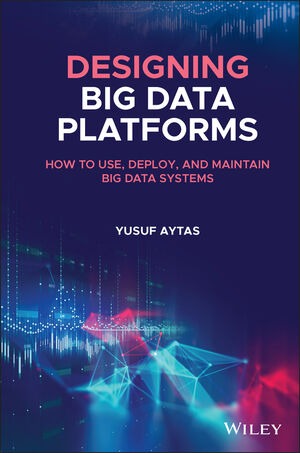
Designing big data platforms : How to use, deploy, and maintain big data systems
Provides expert guidance and valuable insights on getting the most out of Big Data systems. Helps readers understand how to process large amounts of data with well-known Linux tools and database solutions, use effective techniques to collect and manage data from multiple sources, transform data into meaningful business insights, and much more. Author Yusuf Aytas, a software engineer with a vast amount of big data experience, discusses the design of the ideal Big Data platform: one that meets the needs of data analysts, data engineers, data scientists, software engineers, and a spectrum of other stakeholders across an organization. Detailed yet accessible chapters cover key topics such as stream data processing, data analytics, data science, data discovery, and data security. This real-world manual for Big Data technologies: Provides up-to-date coverage of the tools currently used in Big Data processing and management / Offers step-by-step guidance on building a data pipeline, from basic scripting to distributed systems / Highlights and explains how data is processed at scale / Includes an introduction to the foundation of a modern data platform

Designed for Digital : How to Architect Your Business for Sustained Success
Designed for Digital offers practical advice on digital transformation, with examples that include Amazon, BNY Mellon, DBS Bank, LEGO, Philips, Schneider Electric, USAA, and many other global organizations. Drawing on five years of research and in-depth case studies, the book is an essential guide for companies that want to disrupt rather than be disrupted in the new digital landscape.

Design of Wireless Autonomous Datalogger ICs
The book starts with a comprehensive introduction on the most important design aspects and trade-offs for miniaturized low-power telemetric dataloggers. After the general introduction follows an in-depth case study of an autonomous CMOS datalogger IC for the registration of in vivo loads on oral implants. After tackling the design of the datalogger on the system level, the design of the different building blocks is elaborated in detail, with emphasis on low power

Design of Ultra Wideband Antenna Matching Networks : Via Simplified Real Frequency Technique
Design of Ultra Wideband Antenna Matching Networks: via Simplified Real Frequency Technique (SRFT) is the first of its kind and expected to fill a very important gap in the field of wireless communication.

Design of Integrally-Attached Timber Plate Structures
Outlines a new design methodology for digitally fabricated spatial timber plate structures, presented with examples from recent construction projects. It proposes an innovative and sustainable design methodology, algorithmic geometry processing, structural optimization, and digital fabrication; technology transfer and construction are formulated and widely discussed. The methodology relies on integral mechanical attachment whereby the connection between timber plates is established solely through geometric manipulation, without additional connectors, such as nails, screws, dowels, adhesives, or welding.

Design of Hybrid Structures : Where Steel Profiles Meet Concrete
Focuses on design approaches for concrete structures reinforced in an unconventional way by steel profiles. It explains force transfer mechanisms of steel profiles and oncrete interfaces, and an analysis of the characteristics of hybrid structures, including slendercomponents. Several types of hybrid designs are addressed: walls and columns with several embedded steel profiles, connections strengthened by steel profiles between steel and composite or reinforced concrete components, including the specific case of shear keys connecting deep beams or flat slabs to columns. The transition zones in partly reinforced concrete and partly composite columns are also covered.

Design and Optimization of Passive UHF RFID Systems
Radio Frequency Identification (RFID) is an automatic identification method, relying on storing and remotely retrieving data using devices called RFID tags or transponders. An RFID tag is an object that can be attached to or incorporated into a product, animal, or person for the purpose of identification using radio waves. Chip-based RFID tags contain silicon chips and antennas. Active tags require an internal power source, while passive tags do not.

Design and modeling of millimeter-wave CMOS circuits for wireless transceivers : Era of sub-100nm technology
Design and Modeling of Millimeter-wave CMOS Circuits for Wireless Transceivers describes in detail some of the interesting developments in CMOS millimetre-wave circuit design. This includes the re-emergence of the slow-wave technique used on passive devices, the license-free 60GHz band circuit blocks and a 76GHz voltage-controlled oscillator suitable for vehicular radar applications.

Desert Dust in the Global System
Dust storms, produced by the removal of surface materials from the world’s drylands, are a vital component of the environment. This is because of their role in biogeochemical cycling, their potential influence on climate, their role in sediment accumulation and their influence on human affairs. This book, which is exhaustively referenced, explores and summarises recent research on where dust storms originate, why dust storms are generated, where dust is transported and deposited, the nature of dust deposits and the changing frequency of dust storms over a range of time-scales.

Dependable Systems : Software, Computing, Networks : Research Results of the DICS Program
The present volume documents the results of a research program on Dependable Information and Communication Systems (DICS). The members of the project met in two workshops organized by the Hasler Foundation. This state-of-the-art survey contains 3 overview articles identifying major issues of dependability and presenting the latest solutions, as well as 10 carefully selected and revised papers depicting the research results originating from those workshops. The first workshop took place in Münchenwiler, Switzerland, in March 2004, and the second workshop, which marked the conclusion of the projects, in Löwenberg, Switzerland, in October 2005. The papers are organized in topical sections on surveys, dependable software, dependable computing, and dependable networks.

Dendritic Neurotransmitter Release
This book presents recent developments in the neurophysiology of dendritic release of several chemical classes of transmitters in a number of different areas of the mammalian central nervous system. Once released from a neuron, these substances can act as neurotransmitters and/or neuromodulators, to autoregulate the original neuron, its synaptic inputs, and adjacent cells or, by volume transmission, to affect distant cells.

Dendritic Cells in Clinics
Great advances have taken place in basic research and the clinical usefulness of dendritic cells (DCs). It has now been clearly established, for instance, that these cells play a crucial role in immune responses against infectious diseases and cancers. Antigen-presenting DCs are widely distributed in the body and regulate both immunity and immune tolerance. Experimental studies have provided important insights into DCs and how they can be used for treating animal models of various diseases that occur in humans. The role of these cells in pathogenesis and the treatment of human diseases is elaborately set forth in this valuable book. Researchers in the field are optimistic that DCs, already in use for treating patients with cancers, soon can be used therapeutically for patients with chronic infections, autoimmune diseases, and allergic manifestations. This volume provides a working definition of DCs and also explains the phenotypes and functions of DCs so that these can be readily understood not only by clinicians but by immunologists, researchers, and students as well.

Dendrimer Catalysis
catalytically active dendrimers have emerged as a class of molecular catalysts that has substantially enriched the field of homogeneous (and in part heterogeneous) catalysis. A general survey of transition metal dendrimer catalysts and the way they have developed is followed by in-depth discussions of dendritic transition metal catalysis based on non-covalent catalyst-support interaction and an overview of the rapidly growing field of stereoselective dendrimer catalysis. The development of dendrimer-encapsulated bimetallic nanoparticles has provided the interface with heterogeneous colloid catalysis. As cheaper and readily accessible alternatives to regular dendrimers, hyperbranched polymers are increasingly being used as catalyst platforms. These topics are complemented by a review of metallodendritic exoreptors for the redox recognition of oxo-anions and halides.

Demographic Transition Theory
This study addresses these issues. Part I addresses the situation among hunters and gatherers, traditional farmers and classical civilizations. Part II examines the modern transition, while an introductory chapter synthesizes the findings. An emphasis is placed upon the transmuting of the industrial revolution and rising incomes into longer lives and smaller families. Finally, explanations are sought for below-replacement fertility in Europe and elsewhere. The book has a strong theoretical focus and is unique in addressing both mortality and fertility over the full span of human history.

Demographic and Family Transition in Southeast Asia
The book is structured into two parts. Part A includes three segments preceded by a briefing on Southeast Asia. The first segment focuses on marital and partnership status in the region, particularly marriage rates, age at marriage, incidence of singlehood, cohabitation, and divorce. The second segment focuses on fertility indicators such as fertility rates (total, age-specific, adolescent), age at childbearing, and childlessness. The third presents information on household structures in the region by examining household sizes, and incidence of one-person households, single-parent families, as well as extended and composite households. Part B presents indicators of children and youth’s well-being.
