



الصفحة 56
الصفحة 56

Human-Computer Interaction and Cybersecurity Handbook - Human Factors and Ergonomics
Covers all areas of human–computer interaction and human factors in cybersecurity Includes information for IT specialists, who often desire more knowledge about the human side of cybersecurity Provides a reference for other disciplines such as psychology, behavioral science, software engineering, and security management Offers a source of information for cybersecurity practitioners in government agencies and private enterprises Presents new areas such as smart networking and devices

Human-computer interaction – INTERACT 2007 ; 11th IFIP TC 13 International Conference, Rio de Janeiro, Brazil, September 10-14, 2007, Proceedings, Part II
This book is part of a two-volume work that constitutes the refereed proceedings of the 11th IFIP TC13 International Conference on Human-Computer Interaction, INTERACT 2007, held in Rio de Janeiro, Brazil in September 2007. It covers tangible user interfaces and interaction; as well as software engineering and HCI.

Human-computer interaction – INTERACT 2007 ; 11th IFIP TC 13 International Conference, Rio de Janeiro, Brazil, September 10-14, 2007, Proceedings, Part I
The two volume set LNCS 4662 and LNCS 4663 constitutes the refereed proceedings of the 11th IFIP TC13 International Conference on Human-Computer Interaction, INTERACT 2007, held in Rio de Janeiro, Brazil, in September 2007.

Human-computer interaction – INTERACT 2005 ; IFIP TC 13 International Conference, Rome, Italy, September 12-16, 2005, Proceedings
We will be, sooner or later, not only handling personal computers but also mul- purpose cellular phones, complex personal digital assistants, devices that will be context-aware, and even wearable computers stitched to our clothes…we would like these personal systems to become transparent to the tasks they will be performing. In fact the best interface is an invisible one, one giving the user natural and fast access to the application he (or she) intends to be executed. The working group that organized this conference (the last of a long row!) tried to combine a powerful scientific program (with drastic refereeing) with an entertaining cultural program, so as to make your stay in Rome the most pleasant one all round: I do hope that this expectation becomes true. July 2005 Stefano Levialdi, IEEE Life Fellow INTERACT 2005 General Chairman [1] Peter J. Denning, ACM Communications, April 2005, vol. 48, N° 4, pp. 27-31. Editors’ Preface INTERACT is one of the most important conferences in the area of Human-Computer Interaction at the world-wide level. We believe that this edition, which for the first time takes place in a Southern European country, will strengthen this role, and that Rome, with its history and beautiful setting provides a very congenial atmosphere for this conference. The theme of INTERACT 2005 is Communicating Naturally with Computers.

Human-centered software engineering - Integrating usability in the software development lifecycle
Human-CenteredSoftwareEngineering: BridgingHCI,UsabilityandSoftwareEngineering From its beginning in the 1980’s, the ?eld of human-computer interaction (HCI) has beende?nedasamultidisciplinaryarena. BythisImeanthattherehas beenanexplicit recognition that distinct skills and perspectives are required to make the whole effort of designing usable computer systems work well. Thus people with backgrounds in Computer Science (CS) and Software Engineering (SE) joined with people with ba- grounds in various behavioral science disciplines (e. g. , cognitive and social psych- ogy, anthropology) in an effort where all perspectives were seen as essential to creating usable systems. But while the ?eld of HCI brings individuals with many background disciplines together to discuss a common goal - the development of useful, usable, satisfying systems - the form of the collaboration remains unclear.

Human work interaction design : Designing for human work ; The 1st IFIP TC 13.6 WG Conference: Designing for Human Work, February 13-15, 2006, Madeira, Portugal
International Federation for Information Processing The IFIP series publishes state-of-the-art results in the sciences and technologies of information and communication. The scope of the series includes: foundations of computer science; software theory and practice; education; computer applications in technology; communication systems; systems modeling and optimization; information systems; computers and society; computer systems technology; security and protection in information processing systems; artificial intelligence; and human-computer interaction. Proceedings and post-proceedings of referred international conferences in computer science and interdisciplinary fields are featured. These results often precede journal publication and represent the most current research. The principal aim of the IFIP series is to encourage education and the dissemination and exchange of information about all aspects of computing.

Human vision and the night sky : How to improve your observing skills
This book is not for beginners. Nor is it for experts – instead it addresses the needs of practical amateur astronomers who want to make the jump to the new challenges of serious visual observing. Second Steps in Observational Astronomy begins by teaching you, as an amateur astronomer, to use the most important tool you have: your eyes. Visual observing is very definitely a skill that can be learned. Of course it is important to have your other optical equipment – telescope and accessories – set up and operating as perfectly as possible. This book describes how. After these vital preliminaries, subsequent chapters include a series of observing challenges that will entertain you and push your observing skills to continually higher levels of excellence for years to come. Take a tour of the solar-system as you never viewed it before, then beyond into the realm of deep space – using just your own eyes to reveal more detail than you ever thought possible.

Human Rights and the Moral Responsibilities of Corporate and Public Sector Organisations
All students and advocates of human rights will be interested in this concerted exploration of the human rights moral obligations that fall, not directly on states, but on private and public organisations. Such an approach to human rights opens up the possibility of holding corporations and bureaucracies to account for human rights violations even when they have acted in accordance with the law. This interdisciplinary and international project brings together eminent philosophers, lawyers, social scientists and practitioners to articulate theoretically and develop in practical contexts the moral implications of human rights for non-state actors. What emerges from the book as a whole is a distinctive contemporary vision of the emerging moral impact of human rights and its significance for organisational behaviour and performance.

Human Resource Management in Consulting Firms
This book presents insider reports from high-profile international consultancies which allow practitioners, scholars and graduates to gain an authentic insight into the people management in business consulting. Additionally to the overview of existing hr systems, the book provides details of practices dealing with issues such as value oriented corporate culture, gender diversity management, employability, leadership development, knowledge management and employer branding.

Human resource management : An update
Human resource management - an update deals with the major theoretical and practical issues of managing people in different kinds of businesses in different countries around the world. chapters address such topics as theoretical bases for human resource management in the new work age, performance management and organizational management, leadership and job analysis, diversity, work–life balance, and sexual harassment, among others.

Human reliability and error in transportation systems
Each year billions of dollars are being spent to develop, manufacture, and operate transportation systems such as aircraft, ships, trains, and motor vehicles throughout the world. During their operation thousands of lives are lost annually due to various types accidents. Needless to say, approximately 70 to 90 percent of transportation crashes are the result of human error to a certain degree. Moreover, it may be added that human errors contribute significantly to most transportation crashes across all modes of transportation. Human Reliability and Error in Transportation Systems is the first book to cover the subject of human reliability across all types of transportation systems. The material will be accessible to readers with no previous knowledge in the field, and is supported with a full explanation of the necessary mathematical concepts together with numerous examples and test problems.

Human origins and environmental backgrounds
Human Origins and Environmental Backgrounds is a benchmark compendium of research that presents itself at a major paradigm shift in paleoanthropology. The editors offer a variety of theoretical approaches to puzzles on the place of the Hominidae, particularly Homo sapiens, among the Primates, including our unique bipedal positional behavior and social structure and the selective factors that might have been involved in our evolution in the broad context of Miocene and later environments. The contributors represent several generations of pioneering laboratory and field researchers from Japan, France and the United States, who have worked together over the past 40 years and who have trained future leaders in evolutionary anthropology and experimental primatology. This volume, compiled by the leading experts in the field, explores the interface between hominid origins and palaeoenvironments.

Human nutrition : University of Hawai‘i at Mānoa food science and human nutrition Program
A nutrition resource that reflects the diverse dietary patterns of people in Hawai‘i and the greater Pacific. Using the ‘ōlelo no‘eau, or Hawaiian proverb, stated above, we believe that the prin-ciples of nutrition should be taught through the context of our communities and environ-ments.
Human Nucleotide Expansion Disorders
Human neurological and neuromuscular disorders caused by nucleotide expansion, first discovered in 1991, are the focus of growing interest of practicing physicians and of interested biomedical researchers. This volume represents a comprehensive and up-to-date description of many of the better-studied disorders. The expert authors discuss molecular, clinical and pathological aspects of the diseases as well as our current understanding of their underlying mechanisms. Of special interest are ideas and initial results of the different therapeutic strategies that can be employed to overcome some of the disorders. As a summary of the state-of-the-art research in this field, this book is of value to human geneticists, molecular biologists and biochemists as well as to practicing neurologists and pediatricians.
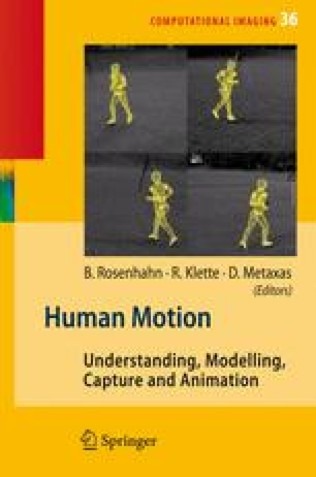
Human motion : Understanding, modeling, capture and animation
Edward Muybridge (1830–1904) is known as the pioneer in motion capt- ing with his famous experiments in 1887 called “Animal Locomotion”. Since then, the feld of animal or human motion analysis has grown in many dir- tions. However, research and results that involve human-like animation and the recovery of motion is still far from being satisfactory. Progress in human motion analysis depends on empirically anchored and grounded research in computer vision, computer graphics, and biomechanics. This book is based on a June 2006 workshop held in Dagstuhl, Germany. This workshop brought together for the frst time researchers from the afo- mentioned disciplines.

Human interactive proofs ; 2nd International workshop, HIP 2005, Bethlehem, PA, USA, May 19-20, 2005, Proceedings
Constitutes the refereed proceedings of the Second International Workshop on Human Interactive Proofs, HIP 2005, held in Bethlehem, PA, USA in May 2005. This book is devoted to the new class of security protocols called human interactive proofs. It includes sections such as: CAPTCHAs and performance analysis, and HIP architectures.

Human histology : A text and atlas for physicians and scientists
Presents full-page high-definition photomicrographs for organs and tissues, followed by a compact and simple-to-read description of the structures identified on the micrographs, offering a clear, visual understanding of this complex subject.
Human Haptic Perception : Basics and Applications
Active touch perception – also known as haptic perception – is of primary importance for the planning, direction and execution of everyday actions. This most complex of human sensory systems is gaining ever more importance for various scientific disciplines as well as practical industrial applications.In this book an international team of 80 authors presents a comprehensive collection of writings on both aspects of research on human haptic perception. After a theoretical and historical introduction, the chapters are dedicated to neurophysiological basics as well as the psychological, clinical and neuropsychological aspects of haptic perception. Results of studies into human haptic perception in the fields of virtual haptics and robotics are also included. In the final section, contributions from the applied and industrial sectors illustrate the practical uses of knowledge about the human sense of touch.

Human fungal diseases : Diagnostics, pathogenesis, drug resistance and therapeutics
Reviews the latest advancements in the fungal infections and their impact on human health. It presents epidemiology, diagnosis, pathogenesis, risk factors, virulence mechanisms, treatment, and strategies for the disease management and prevention of fungal infections. The book further reviews host-pathogen interactions, biofilm formation, and quorum sensing. It also covers the clinical manifestations, diagnostic approaches, and management strategies of opportunistic fungal infections, emerging fungal infections, and allergic fungal infections. It presents the latest advancements in diagnostic methods and therapeutic strategies, covering both conventional techniques and state-of-the-art approaches. Further, the book elucidates antifungal stewardship, nanotechnology, and omics technologies, providing insights into cutting-edge strategies for prevention, control, and management of multidrug-resistant fungi. This book is useful for researchers, students, and health professionals working in the fields of mycology, infectious diseases, immunology, dermatology, and pulmonology.

Human Cytomegalovirus
The golden age of cytomegalovirus research was ushered in during the late 1970s and early 1980s by a set of powerful new technologies that included restriction enzymes, DNA cloning, DNA sequencing, and open reading frame prediction. The genetic manipulation and propagation of novel CMV strains was accelerated with the app- cation of bacterial artificial chromosome technology. Today, we still struggle to understand the full spectrum of disease associated with human CMV. To the molecular biologist, CMV is a master of regulation in the eukaryotic cell where it either replicates or remains latent. To the immunologist, CMV is a master of immune evasion with tools to escape both the innate and acquired immune responses. The use of animal models with non-human CMVs has become significantly more sophisticated and tied to a more certain understanding of the interrelationships of non-human and human CMV genes.
