



الصفحة 52
الصفحة 52
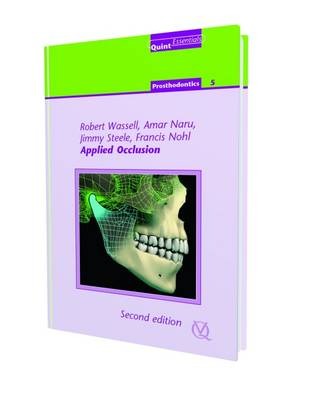
Applied Occlusion : QuintEssentials of Dental Practice ; Vol. 29
Includes many new illustrations, highlighted practical tips, and updates to the text with the most recent advances in the literature. The narrated 3D animations on the accompanying DVD clarify the effects of jaw movement, and comprehensive clinical videos demonstrate the process of investigating and managing real-life occlusal problems. The authors of this practical guide bring occlusal concepts and techniques to life and demystify them for dentists and students alike.
Applied Graph Theory in Computer Vision and Pattern Recognition
It presents the application of graph theory to low-level processing of digital images, presents graph-theoretic learning algorithms for high-level computer vision and pattern recognition applications, and provides detailed descriptions of several applications of graph-based methods to real-world pattern recognition tasks.
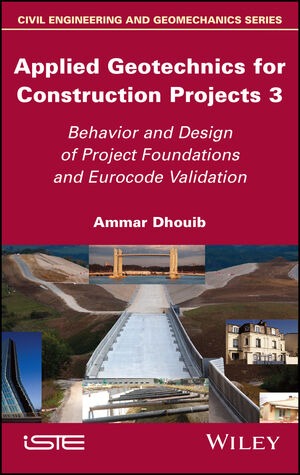
Applied geotechnics for construction projects ; Vol. 3 : Behavior and Design of Project Foundations and Eurocode Validation
Applied Geotechnics for Construction Projects 3 first presents the basic theoretical principles and rules governing the designing and validation of foundations; shallow, semi-deep and deep, then presents real foundation projects with a detailed comparison of the approaches and methods of calculating foundations in relation to the reference systems and rules in force, closely compared to and validated by the Eurocodes. The third chapter presents examples of foundation projects, covering high-side building rafts, strip footings, piles and embankments, enriched by an unprecedented level of experience in the field of foundations for civil and industrial construction projects.
Applied computational materials modeling : Theory, simulation and experiment
this book provides the average person working in the materials field with a more balanced perspective of the role that computational modeling can play in every day research and development efforts. This is done by presenting a series of examples of the successful application of various computational modeling procedures (everything from first principles to quantum approximate to CALPHAD methods) to real life surface and bulk alloy problems.This book should have a large appeal in the materials community, both for experimentalists who would greatly benefit from adding computational methods to their everyday research regimes, as well as for those scientists/engineers familiar with a particular computational method who would like to add complementary techniques to their arsenal of research and development tools
Applications of Specification and Design Languages for SoCs : Selected papers from FDL 2005
This book provides detailed insights into recent works dealing with a large spectrum of issues in system-on-chip design, namely: assertion-based design, mapping on network-on-chip architectures, use of C/C++/SystemC design methodologies, hardware/software integration, mixing heterogeneous models of computation, analog/mixed-signal/mixed-technology system design and verification, UML/XML-based synthesis of analog and mixed-signal systems, UML to VHDL mapping, UML-based performance modeling, model transformation and formal verification, real-time system models, and Model Driven Architecture.

Applications of evolutionary computing ; Vol. 3907 : EvoWorkshops 2006: EvoBIO, EvoCOMNET, EvoHOT, EvoIASP, EvoINTERACTION, EvoMUSART, and EvoSTOC, Budapest, Hungary, April 10-12, 2006, Proceedings
This book constitutes the refereed joint proceedings of seven workshops on evolutionary computing, EvoWorkshops 2006, held in Budapest, Hungary, in April 2006. The 65 revised full papers and 13 revised short papers presented were carefully reviewed and selected from a total of 149 submissions. In accordance with the seven workshops covered, the papers are organized in topical sections on evolutionary bioinformatics, evolutionary computation in communications, networks, and connected systems, evolutionary computation in hardware optimization, evolutionary computation in image analysis and signal processing, interactive evolution and humanized computational intelligence, evolutionary music and art, and evolutionary algorithms in stochastic and dynamic environments.

Applications of evolutionary computing ; Vol. 3449 ; Evoworkshops : EvoBIO, EvoCOMNET, EvoHot, EvoIASP, EvoMUSART, and EvoSTOC
Evolutionary computation (EC) techniques are e?cient nature-inspired pl- ning and optimization methods based on the principles of natural evolution and genetics. Due to their e?ciency and the simple underlying principles, these methods can be used for a large number of problems in the context of problem solving,optimization,andmachinelearning. Alargeandcontinuouslyincreasing number of researchers and practitioners make use of EC techniques in many - plication domains. The book at hand presents a careful selection of relevant EC applications combined with thorough examinations of techniques for a successful application of EC. The presented papers illustrate the current state of the art in the application of EC and should help and inspire researchers and practitioners to develop e?cient EC methods for design and problem solving.
Applications of evolutionary computing ; EvoWorkshops 2008 : EvoCOMNET, EvoFIN, EvoHOT, EvoIASP, EvoMUSART, EvoNUM, EvoSTOC, and EvoTransLog, Naples, Italy, March 26-28, 2008. Proceedings
This volume presents a careful selection of relevant EC examples combined with a thorough examination of the techniques used in EC. The papers in the volume illustrate the current state of the art in the application of EC and should help and - spire researchers and professionals to develop e?cient EC methods for design and problem solving.

Applications of evolutionary computing ; EvoWorkshops 2007 : EvoCOMNET, EvoFIN, EvoIASP, EvoINTERACTION, EvoMUSART, EvoSTOC, and EvoTransLog, Valencia, Spain, April 11-13, 2007, Proceedings
This volume contains contributions for EvoCOMNET, EvoFIN, EvoIHOT, EvoMUSART, EvoSTIM, and EvoTRANSLOC. The 51 revised full papers presented were carefully reviewed and selected from numerous submissions. This volume presents an overview about the latest research in EC. Areas where evolutionary computation techniques have been applied range from telecommunication networks to complex systems, finance and economics, games, image analysis, evolutionary music and art, parameter optimization, scheduling, and logistics. These papers may provide guidelines to help new researchers tackling their own problem using EC.
Antibiotic pharmacokinetic : Pharmacodynamic considerations in the critically Ill
Provides unique insights into the issues that drive modified dosing regimens for antibiotics in the critically ill. Leading international authors provide their commentary alongside a summary of existing evidence on how to effectively dose antibiotics. Severe infection frequently necessitates admission to the intensive care unit (ICU). Equally, nosocomial sepsis often complicates the clinical course in ICU. Early, appropriate application of antibiotic therapy remains a cornerstone of effective management. However, this is challenging in the critical care environment, given the significant changes in patient physiology and organ function frequently encountered. Being cognisant of these factors, prescribers need to consider modified dosing regimens, not only to ensure adequate drug exposure, and therefore the greatest chance of clinical cure, but also to avoid encouraging drug resistance.

Another side of drugs
Drug interactions remain an important consequence of pharmacologic intervention. It is clear that the pharmacologic response of a drug can be markedly influenced by concurrent administration of another therapeutic agent or food. These interactions may result in a decreased therapeutic effect or in an increase in the amount and extent of untoward reactions. Despite the well-described and real clinical consequences of certain drug interactions, this aspect of patient care often continues to be overlooked.
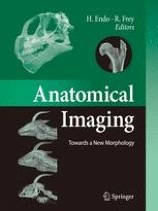
Anatomical Imaging : Towards a New Morphology
This book presents selected works of contemporary evolutionary morphologists and includes such topics as broad scale reconstructions of the brain and ear of dinosaurs, inference of locomotor habits from cancellous bone architecture in fossil primates, and a comparison of the independently evolved manipulating apparatuses in the lesser and giant pandas. Insight is provided into the application of modern noninvasive technologies, including digital imaging techniques and virtual 3D reconstruction, to the investigation of complex anatomical features and coherences. In combination with traditional methods, this allows for the formulation of improved hypotheses on coordinated function and evolution. The creation of virtual translucent specimens makes it possible to realize the age-old dream of the classical anatomists: looking through the skin into the inner organization of an organism. On full display here is the dramatic and promising impact that modern imaging techniques have on scientific progress in evolutionary morphology.

Analytical Techniques in the Oil and Gas Industry for Environmental Monitoring
The book discusses the conventional analyses for oil and natural gas feeds, along with their limitations. It offers detailed descriptions of advanced analytical techniques that are commercially available, plus explanations of gas and oil industry equipment and instrumentation. You’ll find technique descriptions supplemented with a list of references as well as with real-life application examples. With this book as a reference, you can prepare to apply specific analytical methods in your organization’s lab environment. Analytical Techniques can also serve as your comprehensive resource on key techniques in the characterization of oil and gas samples, within both refinery and environmental contexts.
Analytical Dynamics : Theory and Applications
This book takes a traditional approach to the development of the methods of analytical dynamics, using two types of examples throughout: simple illustrations of key results and thorough applications to complex, real-life problems
Analysis, design and construction of foundations
Outlines methods for analysis and design the construction of shallow and deep foundations with particular reference to case studies in Hong Kong and China, as well as a discussion of methods used in other countries. It introduces the main approaches used by geotechnical and structural engineers, and the precautions required for planning and designing foundation structures. Some computational methods and computer programs are reviewed to provide tools for performing more realistic analysis of foundation systems.
Analysis of integrated and cointegrated time series with R
The analysis of integrated and co-integrated time series can be considered as the main methodology employed in applied econometrics. This book not only introduces the reader to this topic but enables him to conduct the various unit root tests and co-integration methods on his own by utilizing the free statistical programming environment R. The book encompasses seasonal unit roots, fractional integration, coping with structural breaks, and multivariate time series models. The book is enriched by numerous programming examples to artificial and real data so that it is ideally suited as an accompanying text book to computer lab classes.
Analysis II
As with the first, the second volume contains substantially more material than can be covered in a one-semester course. Such courses may omit many beautiful and well-grounded applications which connect broadly to many areas of mathematics. We of course hope that students will pursue this material independently; teachers may find it useful for undergraduate seminars. For an overview of the material presented, consult the table of contents and the chapter introductions. As before, we stress that doing the numerous exercises is indispensable for understanding the subject matter, and they also round out and amplify the main text. In writing this volume, we are indebted to the help of many.
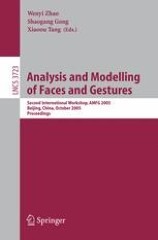
Analysis and Modelling of Faces and Gestures ; 2nd International workshop, AMFG 2005, Beijing, China, October 16, 2005, Proceedings
During the last 30 years, face recognition and related problems such as face detection/tracking and facial expression recognition have attracted researchers from both the engineering and psychology communities. In addition, extensive research has been carried out to study hand and body gestures. The understanding of how humans perceive these important cues has significant scientific value and extensive applications. this one-day workshop (AMFG 2005) provided a focused international forum to bring together well-known researchers and research groups to review the status of recognition, analysis and modeling of faces and gestures, to discuss the challenges that we are facing, and to explore future directions. Overall, 30 papers were selected from 90 submitted manuscripts. The topics of these papers range from feature representation, robust recognition, learning, and 3D modeling to psychology.
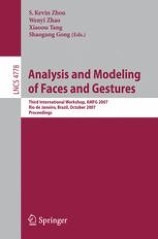
Analysis and Modeling of Faces and Gestures ; 3rd International Workshop, AMFG 2007 Rio de Janeiro, Brazil, October 20, 2007 Proceedings
The book covered by these accepted papers include feature representation, 3D face, robust recognition under pose and illumination variations,video-basedface recognition,learning,facial motion analysis, body pose estimation, and sign recognition.
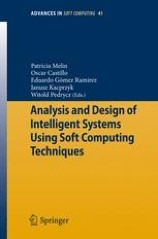
Analysis and Design of Intelligent Systems Using Soft Computing Techniques
This book comprises a selection of papers from IFSA 2007 on new methods for analysis and design of hybrid intelligent systems using soft computing techniques. Soft Computing (SC) consists of several computing paradigms, including fuzzy logic, neural networks, and genetic algorithms, which can be used to produce powerful hybrid intelligent systems for solving problems in pattern recognition, time series prediction, intelligent control, robotics and automation. Hybrid intelligent systems that combine several SC techniques are needed due to the complexity and high dimensionality of real-world problems. Hybrid intelligent systems can have different architectures, which have an impact on the efficiency and accuracy of these systems, for this reason it is very important to optimize architecture design. The architectures can combine, in different ways, neural networks, fuzzy logic and genetic algorithms, to achieve the ultimate goal of pattern recognition, time series prediction, intelligent control, or other application areas.
