



الصفحة 52
الصفحة 52

Clinical Trials in Osteoporosis
A practical handbook on clinical trials in the growing field of osteoporosis. Topics covered include study design, technical issues, data collection, quality assurance, data analysis and presentation. It takes the user through the process step-by-step from start to finish, also providing a background on regulatory guidelines, ethical implications, endpoints, current therapies and the ideal drug to use.

Clinical trial registries : A practical guide for sponsors and researchers of medicinal products
A necessary addition to the library of all researchers who plan to publish their results in top-tier, peer-reviewed journals. ICMJE editors and other journal editors require registration of clinical trial information on publicly available Web sites before enrollment of study subjects and some countries and regions also require this information, as well as timely publication of study results. Not only does this book discuss the genesis of these requirements, it also provides practical information for researchers and sponsors on how to establish a workflow for a clinical registry project, how to file to a registry, and how to post results. More than 25 current Web addresses for registries are provided as well as a comprehensive annotated bibliography of papers on the topic of clinical trial registries. This book is a valuable source of information for all sponsors of medicinal products.

Clinical toxicology : Principles and mechanisms ; 2nd ed.
Addresses the current principles and mechanisms of clinical toxicology. It examines the complex interactions associated with clinical toxicological events and chemical exposure and drug administration. The author places special emphasis on signs and symptoms of diseases and pathology caused by toxins and clinical drugs. He covers contemporary issues in clinical toxicology, such as biological and chemical toxins, changes in protocols for managing toxic ingestions, new antidotes, and changes in particular treatments. The chapters contain numerous drawings, figures, and tables to aid in comprehension.

Clinical textbook of mood disorders
Mood disorders affect around 1 in 5 people, but the diagnosis and management of these conditions can be challenging. This practical handbook presents a comprehensive overview of these disorders, as well as detailed guidelines for their treatment. The handbook takes a transdisciplinary approach to mood disorders, focusing not only on the biological aspects but also on psychosocial features of importance for optimal diagnosis and management. Content covers nosological considerations, historical aspects, peculiarities along the lifespan, and the associations between mood disorders and other conditions, with a focus on their implications for the optimal management of patients. Practical and evidence-based information is discussed on the role of guidelines related to treatment in selected population groups, including youth, the elderly, and women. With a practical, reader-friendly approach, this book will be invaluable for mental health professionals involved in the treatment of patients with mood disorders, including trainees from different mental health areas.

Clinical text mining : Secondary use of electronic patient records
Describes the results of natural language processing and machine learning methods applied to clinical text from electronic patient records. It is divided into twelve chapters. Chapters 1-4 discuss the history and background of the original paper-based patient records, their purpose, and how they are written and structured. These initial chapters do not require any technical or medical background knowledge. The remaining eight chapters are more technical in nature and describe various medical classifications and terminologies such as ICD diagnosis codes, SNOMED CT, MeSH, UMLS, and ATC. Chapters 5-10 cover basic tools for natural language processing and information retrieval, and how to apply them to clinical text. The book’s closing chapters present a number of applications in clinical text mining and summarise the lessons learned from the previous chapters.

Clinical Research Methods for Surgeons
The text addresses the clinical research questions facing 21st century surgeons, and provides clear direction on how to incorporate sophisticated research techniques into practice. In addition to the surgical generalist, this practical volume is specifically oriented to surgeons who treat unique diseases, yet have no single resource to facilitate clinical research in these specific areas. This comprehensive and easy-to-use guide encompasses the entire process of clinical study design, application, and assessment. Part One is aimed at the young surgeon about to engage in new studies, and gives a general overview of the infrastructure of clinical research. Parts Two and Three are geared towards experienced investigators interested in pursuing clinical research and surgeons reviewing the literature for practical application. Part Two focuses on study design and related statistical issues, while Part Three is concerned with measuring and assessing the outcome of clinical studies. Part Four presents topics of interest to the active investigator, such as quality of care and cost-effectiveness analyses. Clinical Research Methods for Surgeons is relevant to both beginning investigators and established researchers, and addresses the unique concerns of surgical diseases and acknowledges that they require special approaches to deal with clinical questions.

Clinical psychology and heart disease
The publication offers a thorough and up-to-date review of scientific research supporting evidence of the relationship between cardiac disease and psychological condition, and offers practical suggestions for developing a clinical practice, and directions for future research in the new field of "cardiac psychology". Every chapter is authored by world-renowned researchers in the field.

Clinical pharmacy education, practice and research clinical pharmacy, drug information, pharmacovigilance, pharmacoeconomics and clinical research
Stresses educational approaches that empower pharmacists with patient care and research competencies. The learning objectives and writing style of the book focus on clarifying the concepts comprehensively for a pharmacist, from regular patient counseling to pharmacogenomics practice. It covers all interesting topics a pharmacist should know. This book serves as a basis to standardize and coordinate learning to practice, explaining basics and using self-learning strategies through online resources or other advanced texts. With an educational approach, it guides pharmacy students and pharmacists to learn quickly and apply. Clinical Pharmacy Education, Practice and Research provides an essential foundation for pharmacy students and pharmacists globally.

Clinical pharmacy and therapeutics ; 6th ed.
Combines the skills of an interdisciplinary team of clinicians, pharmacists and nurses to present an integrated understanding of disease processes, evidence-based clinical pharmacology and optimal drug regimes.

Clinical pharmacy and therapeutics ; 5th ed.
Multi-disciplinary textbook continues to draw on the skills of pharmacists, clinicians and nurses to present optimal drug regimens. The authors integrate an understanding of the disease processes with an appreciation of the pathophysiological processes, clinical pharmacy and the evidence base. Each chapter is co-written by a pharmacist and a clinician, and each chapter begins with key points and ends with cases to test understanding.

Clinical Pharmacology of Sleep
This volume covers the clinical and pharmacological treatment of several important sleep disorders such as insomnia, sleep apnea, narcolepsy, restless legs syndrome, and periodic limb movement syndrome. It further addresses the use of sleep medications in children, adolescents, and in the elderly. It offers a comprehensive overview of the currently available hypnotic medications and covers aspects of chronopharmacology and its implications for the pharmacology of sleep. It also reviews the basic science of sleep and sleep disorders, and thus the potential development of new pharmacological approaches. The book will be useful for physicians, psychopharmacologists, psychiatrists, sleep disorder specialists and other healthcare professionals such as nurses, social workers and graduate medical students.

Clinical Pharmacology for Prescribing
Provides key points of basic pharmacology to explain drug actions / Shows clear relationship between pathophysiology and prescribing / Illustrations explain pharmacological mechanisms / Practical prescribing boxes highlight therapies for common conditions / 'Prescribing warnings' help readers to avoid adverse reactions and minimise side effects / Clear links to current medical guidelines throughout / Clear consistent structure in every chapter helps navigation and learning

Clinical Pharmacology ; 12th ed.
Balancing science and practice for improved evidence-based drug therapy and good prescribing in therapeutic settings increasingly complicated by intercurrent disease and polypharmacy.

Clinical PET and PET
A practical manual covering the full spectrum of PET and PET/CT imaging, now in common clinical practice, this book includes images of normal variants, artifacts, and pathologic conditions. Indications for and the relative clinical value of PET in the armamentarium of diagnostic medical imaging are reviewed. The information in the book is organized to be brief, concise, easy-to-understand and readily accessed.

Clinical Pathways in Stroke Rehabilitation : Evidence-based Clinical Practice Recommendations
This book focuses on practical clinical problems that are frequently encountered in stroke rehabilitation. Consequences of diseases, e.g. impairments and activity limitations, are addressed in rehabilitation with the overall goal to reduce disability and promote participation.
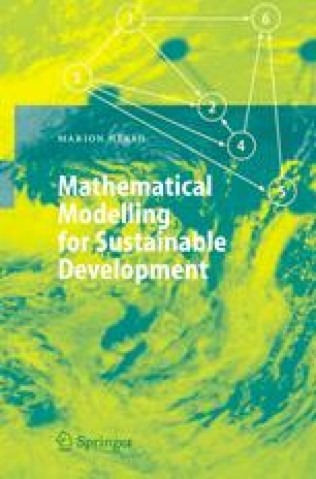
Mathematical Modelling for Sustainable Development
Mathematics needs Sustainable Development. When science was gradually reinvented in European medieval societies, it was legitimised as contributing to the disclosure of God’s divine creation. The conflicts that emerged became well known as a result of the clash between Galileo and the Church. Science found a new legitimacy through recognition that it was a powerful force against superstition. In the Enlightenment the argument was pushed forward by attributing Progress to the advancement of science: science could produce a better world by promoting rationality. In our modern society, science has become intimately linked to technology. Science for its own sake unfortunately rarely has positive outcomes in terms of research grant applications. Meanwhile, science and technology, and the progress they are supposed to produce, meet with wide scale scepticism. We all know of the current global problems: climate change, resource depletion, a thinning ozone layer, space debris, declining biodiversity, malnutrition, dying ecosystems, global inequity, and the risk of unprecedented nuclear wars
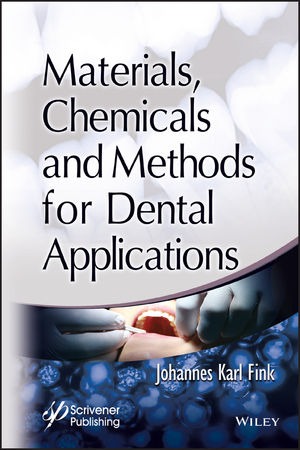
Materials, Chemicals and Methods for Dental Applications
Focuses on the materials used for dental applications looking at the fundamental issues and the developments that have taken place the past decade. While it provides a broad overview of dental materials, the chemicals that are used for the preparation and fabrication of dental materials are explained as well. Also, the desired properties of these materials are discussed and the relevance of the chemical, physical, and mechanical properties is elucidated. Methods for the characterization and classification, as well as clinical studies are reviewed here. In particular, materials for dental crowns, implants, toothpaste compositions, mouth rinses, as well as materials for toothbrushes and dental floss are discussed. For example, in toothpaste compositions, several classes of materials an chemcials are incorporated, such as abrasives, detergents, humectants, thickeners, sweeteners, coloring agents, bad breath reduction agents, flavoring agents, tartar control agents, and others. These chemicals, together with their structures, are detailed in the text.
Materials science for dentistry
A standard resource for undergraduate and postgraduate courses in dentistry. It provides fundamental coverage of the materials on which dentistry depends, covering the structure and chemistry that govern the behavior and performance of materials. Particular classes of materials include gypsum, polymers, acrylic, cements, waxes, ceramics and metals. Other chapters review surfaces, corrosion, mixing, casting, cutting and bonding, and mechanical testing. This updated edition, which includes substantial chapters on chemistry, has been extensively revised with new material on temporary restoration resins, hydraulic silicate cements and the practical aspects of wetting surfaces. Mindfully written to provide explanations for behavior, formulation, clinical and laboratory instructions and procedures, there is no comparable resource for researchers, students, teachers and practitioners in the field of dentistry.

Materials for medical applications : Principles and practices
Discusses advanced knowledge about the synthesis and application of materials in the medical field for diagnostic and therapeutic conditions. These materials have been extensively used in various biological and medical applications, especially in drug delivery, tumor screening, bioimaging, diagnosis, and therapies. Materials for Medical Applications provides comprehensive but concise information about materials and their medical applications. The readers will get information about the trends in materials and their medical applications, as well as current material-based products that are used in the medical field. The book also discusses how materials are tested in research laboratories, preclinical (animal) trials, and clinical (human) trials, and how material-based products go through various regulatory and safety phases before reaching patients. It also discusses topics such as materials delivery, imaging, and treatments for various diseases. It includes a chapter dedicated to regulatory guidelines and policies in the application of nanomaterials and will include current clinical trial information on the materials. Finally, the book has topics such as health safety, toxicity, dosages, and long-term implications of materials.
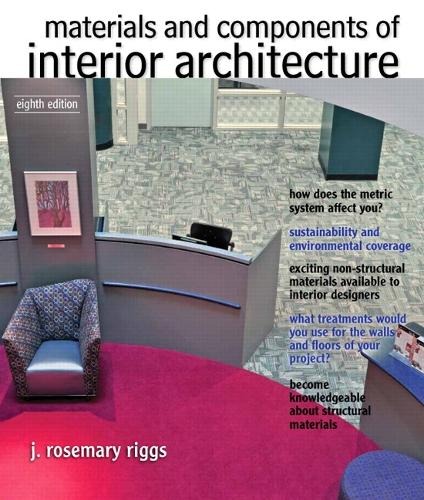
Materials and Components of Interior Architecture
Offers a unique look at interior design,fully covering the exciting breadth of nonstructural materials available to interior designers. With an eye on the environment, it instills a firm understanding of the products, properties, and uses of all materials—from floors, walls, and ceilings to installation and recycling. Going beyond paint and carpet, it explores over 27 different floorings and devotes separate chapters to kitchens and baths. Filled with the latest information from manufacturers, suppliers, and associations, it provides students with the knowledge to creatively engage the “nuts and bolts” of interior design—both in terms of structure and style.
